
David Gilbert (1)
Author of & Sons
For other authors named David Gilbert, see the disambiguation page.
Works by David Gilbert
Associated Works
Tagged
Common Knowledge
- Other names
- GILBERT, David
- Gender
- male
- Nationality
- USA
- Places of residence
- New York, New York, USA
- Associated Place (for map)
- New York, USA
Members
Discussions
Recent American novel, two word title, first word "But" in Name that Book (August 2015)
Reviews
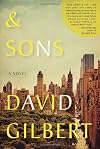
& Sons is a brilliant portrayal of the duality of fathers and sons while at the same time piercing the myth behind the American author. A.N. Dyer attends the funeral of his lifelong friend Charlie Topping. Phillip, Charlie’s son, narrates our story. What comes out of it is an examination of who we are as sons and later as fathers going over the same territory twice with a difference lens. We are also witness to some ugly truths of storytelling. The author is a well of creativity. There show more isn't a single story or character that is thrown away. They creep up on you. He could press his hand in the earth and grow an orchard. There is some truly brilliant writing here.
Each chapter is a story arc within itself, peeling back layer after layer of each of the characters. The works of A.N. Dyer is interspersed within the narrative to provide context. I love that technique as it reminds of me of Vonnegut, Borges, and most recently The Shadow of the Wind by Carlos Ruiz Zafon. It’s the ability to provide a flash of brilliant writing. It’s not enough to overtake the story, but enough to make you want more. Each chapter is its own short story and builds pieces to the puzzle leading to the shocking ending (that’s purposely misleading). It’s also interesting to look at the title. It’s a play on Ampersand. It’s a duality of And Sons (such as Fathers & Sons) and Ampersand, which is a book written by A.N. Dyer in & Sons. I keep seeing it spelled out as And Sons and I wonder if it should be spelled out Ampersand Sons.
A.N. Dyer reminds me a little of Vonnegut even though the author is an amalgam (J.D. Salinger being a more obvious comparison). It might be because I read the Vonnegut biography not too long ago. It was interesting to read that and find the all too human man behind the writing. Gilbert exploits that point beautifully. It's not just the one author, but all of them. They all are the little man behind the curtain.
Gilbert covers almost every reference to late 20th century white male literature. Hardly a reference is missed even in passing. It's a kaleidoscope. He then dissects them and reveals the vampiric nature of all authors and memory. Is every memory a fiction?
Setting this aside, the strongest aspect of the book is the relationship between fathers and sons, knowing yourself as a son and then as a father. Seeing yourself through both lenses can be terrifying and Gilbert captures the apprehension of being in between both worlds. A son becomes a certain age and you remember what you thought of your father, it's like staring at your own reflection and being afraid to see the truth.
There's also a loathing towards these writers. What they take from people and how they twist it into our entertainment. Real people trapped in stories. Eventually the loathing turns towards the reader. Aren't we entertained?
Overall, this is a brilliant book that will probably be breakthrough this summer when it is released. I won this book through the LibraryThing Early Reviewer giveaway and I think this is one of the best books I’ve ever won.
Favorite Passages:
The prospect of inheritance had made them both accountants. P. 21
Please let me go back, I'll plead to the darkness, please let me guide my younger self away from this present mess, let me unlink him from my past so I might fade from his view, a retroactive suicide. The stupid things I've done, the outright bad things. My memory can seem like a series of kicks in the gut, including this beaut: my father on his death-bed and here I am a foundling on my own doorstep. P.25
"...liberal sin...please give me a tragedy so I might swim in more human waters..."p 81
And even if this was miscalculation on his part, his miscalculations often ended in success, his thoughtlessness bringing on his greatest triumphs. No doubt about it, his life would have been happier with less luck."p 112
"We all know how meeting a favorite writer can often be a disappointment, but imagine being that favorite writer who understands the disappointment intimately, who might manage to charm you by signing your book with one of twenty time-tested witticisms but who in the end knows the truth all too well, that this thing of beauty, this kind solace in a dying hour, is nothing more than a well-crafted ruse." P 116
Our oldest friends, their faces, never really change, as we both travel at the same speed of life. Parents and children are different. They help us measure our existence, like the clock on the wall or the watch on our wrist. But old friends carry with them a braided constant, part and whole, of all the days in the calendar contained in a glance." P. 124
It can seem like adolescence opens a small hole in which the rest of our lives drain. P. 158
"I imagine the brothers sitting at the table as if sudden participants in a séance, the otherworld entering the room and creating another world right here in Melon's where not only do you understand your parents as a combination of everyday delusions and misapprehensions, but now that you're older, as old as they were when you first glimpsed the truth about them, the flaws and foibles, you understand something else, something more as your eyes wobble on the gingham blur of the tablecloth: you understand that without this deception the crystal ball reveals nothing but your own misshapen eye." P. 272
“Let me be ten years old again with a solid construct of home." P. 272
"Christopher Denslow was too young to properly convey shock, only good fortune as a reasonable fate." P.275
"All of them had to gone to nifty schools; all of them had chosen the love of books over straight commerce; and all of them realized, as every year their horizon grew shorter, not the mistake they had made...but the miscalculation in terms of their place within the transit of passing times. Publishing would survive, they all agreed. It's not as if people were going to stop reading books. But then a stumped pause would follow as though they had been handed two pieces of wood and told to make fire." P. 281
"Youth has a power often unrecognized by the young. It might land as a paltry blow but there is a vastness to its sting." P. 289
“What does it mean to be happy? I don’t particularly trust happy adults. But sometimes I find myself running into unexplained and unexpected happiness. Like a particular late-afternoon light. A song overheard in passing. A pleasant stroll around the boat pond. A big snow. Brief moments where time and space seem to conspire for my sole enjoyment. Like childhood, I suppose, and I’m happy until it remind me of what’s been lost, the distance I’ve traveled from that point to this point. The bitter reason for the warm feeling. Better to go and lock myself in a room and focus on work and hope that might excuse my irredeemably shit existence. A shit father. A shit husband. A shit friend. Writing was just an alibi.” P. 339
“I should really go, totally the third wheel here,” he said, starting to sense the lack of a future past, even sex with Jeanie was always theoretical and whatever love seemed dubiously attached, still, it was love, if a lesser form, and the longer he stood by that bed the more he could feel how desire pushed back, often harder than the initial force, and whatever the gain could seem miniscule when compared to the loss.” P. 381
"What a cruel joke, to stick him in a closet, to tease and torture him, to twist his blameless love into the deformed heart of an ampersand." p. 374
It became one of those stories, never told honestly. P421 show less
Each chapter is a story arc within itself, peeling back layer after layer of each of the characters. The works of A.N. Dyer is interspersed within the narrative to provide context. I love that technique as it reminds of me of Vonnegut, Borges, and most recently The Shadow of the Wind by Carlos Ruiz Zafon. It’s the ability to provide a flash of brilliant writing. It’s not enough to overtake the story, but enough to make you want more. Each chapter is its own short story and builds pieces to the puzzle leading to the shocking ending (that’s purposely misleading). It’s also interesting to look at the title. It’s a play on Ampersand. It’s a duality of And Sons (such as Fathers & Sons) and Ampersand, which is a book written by A.N. Dyer in & Sons. I keep seeing it spelled out as And Sons and I wonder if it should be spelled out Ampersand Sons.
A.N. Dyer reminds me a little of Vonnegut even though the author is an amalgam (J.D. Salinger being a more obvious comparison). It might be because I read the Vonnegut biography not too long ago. It was interesting to read that and find the all too human man behind the writing. Gilbert exploits that point beautifully. It's not just the one author, but all of them. They all are the little man behind the curtain.
Gilbert covers almost every reference to late 20th century white male literature. Hardly a reference is missed even in passing. It's a kaleidoscope. He then dissects them and reveals the vampiric nature of all authors and memory. Is every memory a fiction?
Setting this aside, the strongest aspect of the book is the relationship between fathers and sons, knowing yourself as a son and then as a father. Seeing yourself through both lenses can be terrifying and Gilbert captures the apprehension of being in between both worlds. A son becomes a certain age and you remember what you thought of your father, it's like staring at your own reflection and being afraid to see the truth.
There's also a loathing towards these writers. What they take from people and how they twist it into our entertainment. Real people trapped in stories. Eventually the loathing turns towards the reader. Aren't we entertained?
Overall, this is a brilliant book that will probably be breakthrough this summer when it is released. I won this book through the LibraryThing Early Reviewer giveaway and I think this is one of the best books I’ve ever won.
Favorite Passages:
The prospect of inheritance had made them both accountants. P. 21
Please let me go back, I'll plead to the darkness, please let me guide my younger self away from this present mess, let me unlink him from my past so I might fade from his view, a retroactive suicide. The stupid things I've done, the outright bad things. My memory can seem like a series of kicks in the gut, including this beaut: my father on his death-bed and here I am a foundling on my own doorstep. P.25
"...liberal sin...please give me a tragedy so I might swim in more human waters..."p 81
And even if this was miscalculation on his part, his miscalculations often ended in success, his thoughtlessness bringing on his greatest triumphs. No doubt about it, his life would have been happier with less luck."p 112
"We all know how meeting a favorite writer can often be a disappointment, but imagine being that favorite writer who understands the disappointment intimately, who might manage to charm you by signing your book with one of twenty time-tested witticisms but who in the end knows the truth all too well, that this thing of beauty, this kind solace in a dying hour, is nothing more than a well-crafted ruse." P 116
Our oldest friends, their faces, never really change, as we both travel at the same speed of life. Parents and children are different. They help us measure our existence, like the clock on the wall or the watch on our wrist. But old friends carry with them a braided constant, part and whole, of all the days in the calendar contained in a glance." P. 124
It can seem like adolescence opens a small hole in which the rest of our lives drain. P. 158
"I imagine the brothers sitting at the table as if sudden participants in a séance, the otherworld entering the room and creating another world right here in Melon's where not only do you understand your parents as a combination of everyday delusions and misapprehensions, but now that you're older, as old as they were when you first glimpsed the truth about them, the flaws and foibles, you understand something else, something more as your eyes wobble on the gingham blur of the tablecloth: you understand that without this deception the crystal ball reveals nothing but your own misshapen eye." P. 272
“Let me be ten years old again with a solid construct of home." P. 272
"Christopher Denslow was too young to properly convey shock, only good fortune as a reasonable fate." P.275
"All of them had to gone to nifty schools; all of them had chosen the love of books over straight commerce; and all of them realized, as every year their horizon grew shorter, not the mistake they had made...but the miscalculation in terms of their place within the transit of passing times. Publishing would survive, they all agreed. It's not as if people were going to stop reading books. But then a stumped pause would follow as though they had been handed two pieces of wood and told to make fire." P. 281
"Youth has a power often unrecognized by the young. It might land as a paltry blow but there is a vastness to its sting." P. 289
“What does it mean to be happy? I don’t particularly trust happy adults. But sometimes I find myself running into unexplained and unexpected happiness. Like a particular late-afternoon light. A song overheard in passing. A pleasant stroll around the boat pond. A big snow. Brief moments where time and space seem to conspire for my sole enjoyment. Like childhood, I suppose, and I’m happy until it remind me of what’s been lost, the distance I’ve traveled from that point to this point. The bitter reason for the warm feeling. Better to go and lock myself in a room and focus on work and hope that might excuse my irredeemably shit existence. A shit father. A shit husband. A shit friend. Writing was just an alibi.” P. 339
“I should really go, totally the third wheel here,” he said, starting to sense the lack of a future past, even sex with Jeanie was always theoretical and whatever love seemed dubiously attached, still, it was love, if a lesser form, and the longer he stood by that bed the more he could feel how desire pushed back, often harder than the initial force, and whatever the gain could seem miniscule when compared to the loss.” P. 381
"What a cruel joke, to stick him in a closet, to tease and torture him, to twist his blameless love into the deformed heart of an ampersand." p. 374
It became one of those stories, never told honestly. P421 show less
 This review was written for LibraryThing Early Reviewers.
A famed recluse of an author near the end of his days and the satellite characters basking in his talent and legacy, including three sons and the son of a lifelong friend, discover their importance to each other in David Gilbert's wise novel & Sons.
A.N. Dyer is the dying author whose first novel, Ampersand, is renowned and taught and read even on their own by succeeding generations. Dyer's sons include two with his former wife, grown men who have not quite become adults, and a younger son show more whose surprise existence ended his marriage and who may resemble his father far more than the average son. Dyer's apparent wish to be a better father to his youngest than he was to the first two boys both spurs several actions that dictate the destiny of characters and displays the ways in which fathers and sons let each other down.
Another once-young man, son of Dyer's best friend whose funeral opens the novel, wishes he was Dyer's son. He is both a bystander who reports incidents he shouldn't know about and a character that expresses the futility of yearning for something that will always be beyond one's reach. Neither aspect of this character is a detriment -- it all works.
The world of publishing is as important to the scope of the story as family ties. Devastatingly, Gilbert reveals the significance of Dyer's first novel's title and how at least one of the next generation of characters has lived a lie when the story behind the novel is made clear. That novel, with its Exeter setting and student cruelty, is haunted by both A Separate Peace and The Secret History. Gilbert's ability to bring to mind various segments of publishing in the 20th century and today (including an ambitious publishing employee), real novels and writers, and the compulsion of creative people to create are well-drawn.
Inferring plays a huge role in how the characters feel and on what they base their decisions, with results not always predictable but which always feel right within the context of this novel. Gilbert has written a smart story about how we fill in the blanks in our lives through this tale of what one writer has created. show less
A.N. Dyer is the dying author whose first novel, Ampersand, is renowned and taught and read even on their own by succeeding generations. Dyer's sons include two with his former wife, grown men who have not quite become adults, and a younger son show more whose surprise existence ended his marriage and who may resemble his father far more than the average son. Dyer's apparent wish to be a better father to his youngest than he was to the first two boys both spurs several actions that dictate the destiny of characters and displays the ways in which fathers and sons let each other down.
Another once-young man, son of Dyer's best friend whose funeral opens the novel, wishes he was Dyer's son. He is both a bystander who reports incidents he shouldn't know about and a character that expresses the futility of yearning for something that will always be beyond one's reach. Neither aspect of this character is a detriment -- it all works.
The world of publishing is as important to the scope of the story as family ties. Devastatingly, Gilbert reveals the significance of Dyer's first novel's title and how at least one of the next generation of characters has lived a lie when the story behind the novel is made clear. That novel, with its Exeter setting and student cruelty, is haunted by both A Separate Peace and The Secret History. Gilbert's ability to bring to mind various segments of publishing in the 20th century and today (including an ambitious publishing employee), real novels and writers, and the compulsion of creative people to create are well-drawn.
Inferring plays a huge role in how the characters feel and on what they base their decisions, with results not always predictable but which always feel right within the context of this novel. Gilbert has written a smart story about how we fill in the blanks in our lives through this tale of what one writer has created. show less
At its best, & Sons is amazing. Not only does David Gilbert write prose with beautiful construction, but he crafts excellent scenes and interesting characters. Along the way, he travels unexpected avenues, adding twists and turns that may be jarring for some readers; personally I found them to be creative, well-placed, and fun. & Sons is a multi-layered novel, and is probably best enjoyed at a slow pace, among readers who take time to dissect its many meanings. That being said, it can be an show more overwhelming novel. Had I the time, I probably would've chosen to crack open & Sons further, explore its inner mysteries, but I didn't feel the need. I took it at its face value and considered it a worthwhile experience.
At its worst, & Sons drags on. Personally, I would've elected for tighter editing, though I see why a book such as this might suffer from harsher cuts. Readers needing constant movement may give up on this novel before reaching its end. When & Sons moves, however, it certainly moves. Although the characters and their dynamics are interesting, I do think it is a bit too easy to keep them at a distance. They're interesting, but not necessarily accessible—it was as though they were part of an alien culture I could never understand or relate to.
Overall, I liked & Sons, but I didn't enjoy it nearly as much as I thought I might. I believe part of this was the narrative voice of Philip Topping. I won't say the choice of narrator was wrong, but it did make me uncomfortable throughout the story. Every time he referenced himself or jumped into the first person, I was jarred from the otherwise smooth flow. I think Topping was an interesting choice, and certainly added another layer to the story, but his presence did not make for the most pleasant read.
& Sons got significant pre-pub hype, and that can certainly be damaging to a book, especially one that primarily targets the literati. It's a good book, and one you might consider if you're looking for something to read. Ampersand—the fictitious novel at the core of & Sons—is a must read, however. According to many of the characters in & Sons, you're either a fan of Catcher in the Rye or a fan of Ampersand; I am fairly confident I would be in the company of the latter. show less
At its worst, & Sons drags on. Personally, I would've elected for tighter editing, though I see why a book such as this might suffer from harsher cuts. Readers needing constant movement may give up on this novel before reaching its end. When & Sons moves, however, it certainly moves. Although the characters and their dynamics are interesting, I do think it is a bit too easy to keep them at a distance. They're interesting, but not necessarily accessible—it was as though they were part of an alien culture I could never understand or relate to.
Overall, I liked & Sons, but I didn't enjoy it nearly as much as I thought I might. I believe part of this was the narrative voice of Philip Topping. I won't say the choice of narrator was wrong, but it did make me uncomfortable throughout the story. Every time he referenced himself or jumped into the first person, I was jarred from the otherwise smooth flow. I think Topping was an interesting choice, and certainly added another layer to the story, but his presence did not make for the most pleasant read.
& Sons got significant pre-pub hype, and that can certainly be damaging to a book, especially one that primarily targets the literati. It's a good book, and one you might consider if you're looking for something to read. Ampersand—the fictitious novel at the core of & Sons—is a must read, however. According to many of the characters in & Sons, you're either a fan of Catcher in the Rye or a fan of Ampersand; I am fairly confident I would be in the company of the latter. show less
I really enjoyed & Sons by David Gilbert. It’s the kind of book that feels grounded and real, especially in how it looks at family relationships and personal goals. The writing is clear and approachable, and the characters feel like people you might actually know, complete with flaws and complicated motivations. What stood out to me most was how the story shows the ripple effects of decisions made years earlier, both professionally and personally. It’s engaging without being heavy, and show more it stays with you after you finish in a quiet, thoughtful way. show less
This review was written for LibraryThing Early Reviewers.Lists
Awards


You May Also Like


Associated Authors
Statistics
- Works
- 8
- Also by
- 1
- Members
- 850
- Popularity
- #30,104
- Rating
- 3.5
- Reviews
- 62
- ISBNs
- 117
- Languages
- 5
- Favorited
- 2
