
Ken Kalfus
Author of A Disorder Peculiar to the Country: A Novel
About the Author
Ken Kalfus is an American writer who has lived in Paris, Dublin, Belgrade, and most recently, Moscow. His first book, Thirst (also available from WSP), was one of the most celebrated story collections in recent years, meriting inclusion in the best-of-the-year lists of the New York Times, Salon, show more the Village Voice, and The Philadelphia Inquirer. (Bowker Author Biography) show less
Image credit: Photograph by Michael Ahearn. From Philadelphia Stories
Works by Ken Kalfus
Associated Works
Tagged
Common Knowledge
- Birthdate
- 1954-04-09
- Gender
- male
- Education
- Sarah Lawrence College (did not graduate)
New York University - Occupations
- writer
- Relationships
- Saffron, Inga (wife)
- Nationality
- USA
- Birthplace
- The Bronx, New York, USA
- Places of residence
- Long Island, New York, USA
Belgrade, Yugoslavia
Dublin, Ireland
Moscow, Russia
Paris, France
Members
Reviews
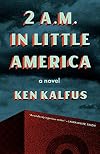
This book is speculative fiction that imagines a future in which the US has been split apart by a civil war based on the political divide. Many Americans are forced to relocate to other countries. Protagonist Ron Patterson is an American refugee. He finds work as an inspecting and repairing mysterious electrical boxes. Ron keeps a low profile but eventually gets prevailed upon by local authorities to provide information about the two groups of Americans, who have carried their divisive show more politics to the new (unnamed) country. He learns more about horrible war atrocities committed in his hometown. It is structured in two segments. The first provides Ron Patterson’s experience in the US prior to fleeing, and the second shows his life as a refugee in the new country. The two are tied together by an enigmatic woman.
This book is intentionally vague. Ron has a rare condition that inhibits facial recognition (prosopagnosia). The storyline does not specify the causes of the war, the countries involved in accepting refugees, or even whether or not the characters are the same people referenced in earlier scenes. Ron is an extreme version of an unreliable narrator. He confuses the women in his life to a degree that it occasionally provides comic relief.
The author does a great job of portraying Americans as refugees. They live in an area that is designated “Little America.” The host country’s population has trouble distinguishing one American from another. They are treated as a lesser class. It turns the tables, and I found it an extremely effective technique. The prose is atmospheric, bordering on surrealistic. The climax of the book involves Ron’s espionage for local authorities. He must eventually choose among unpleasant alternatives. The author takes America to task for our divisiveness. It is a social commentary approached from an atypical perspective. show less
This book is intentionally vague. Ron has a rare condition that inhibits facial recognition (prosopagnosia). The storyline does not specify the causes of the war, the countries involved in accepting refugees, or even whether or not the characters are the same people referenced in earlier scenes. Ron is an extreme version of an unreliable narrator. He confuses the women in his life to a degree that it occasionally provides comic relief.
The author does a great job of portraying Americans as refugees. They live in an area that is designated “Little America.” The host country’s population has trouble distinguishing one American from another. They are treated as a lesser class. It turns the tables, and I found it an extremely effective technique. The prose is atmospheric, bordering on surrealistic. The climax of the book involves Ron’s espionage for local authorities. He must eventually choose among unpleasant alternatives. The author takes America to task for our divisiveness. It is a social commentary approached from an atypical perspective. show less
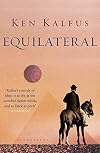
In the late 1800s, Giovanni Schiaparelli's discovery of "canals" on Mars has allowed a (fictional) astronomer to fan interest in Mars into worldwide financial and political support for the building of a massive equilateral triangle in the deserts of Egypt. Over three hundred miles to a side, with a paved roadway filled with liquid oil, it is to be set on fire when Earth and Mars are close, in order to alert Martians that the inhabitants of Earth are ready to take their place among the show more universe's intelligent species. Our intelligence will be demonstrated by various astronomical and geometrical signs, including the timing of the fire, the exact shape of the image, and the directions the triangle points. 900,000 African workers have toiled for two years at the time the book opens, and despite mutinies and thefts, public support is still high and the image is set to be finished more or less on time.
Although these events never happened, of course, the author uses the notions and prejudices of the day to spin a delightful story which leaves today's reader in wonderment at what was believed at the time: that the "canals" indicated a highly developed and ancient civilization on Mars which would recognize the symbolism of the Equilateral and want to contact us. Particularly wonderful here are the portrayals of parallel Western biases which presume to understand the natures of both the Martians and the workers, the latter of whom are considered an underclass, destined to provide labor but incapable of understanding the significance of the endeavor. In fact, the astronomer is certain the Martians have long ago evolved into two species (intellectuals and laborers), to enable works as grand as the canal system to be built, and he is sure they will see the need for force in dealing with the workers as a phase they too will have had in their past. The astronomer thinks a great deal about what Martian society is like and how the two planets can best communicate.
In many ways this seemed to me a companion piece to Arthur Phillips's "The Egyptologist", a book I loved and keep on my shelves. Phillips' protagonist is an archaeologist who is determined to prove that a little hillock he's excavating holds as important a burial site as the Tut tomb, which has just been discovered. Madness ensues. The astronomer has a much more willing audience and is not reduced to the same measures, but his quest is still a fantastical undertaking which we of the 21st century can observe with humor and some shaking of our heads. His ability to bring off the political and economic alliances necessary does seem a bit unlikely, but aside from that this is a delightful tale which extrapolates from history to describe an absurd conclusion and jumps off from there. Very entertaining. show less
Although these events never happened, of course, the author uses the notions and prejudices of the day to spin a delightful story which leaves today's reader in wonderment at what was believed at the time: that the "canals" indicated a highly developed and ancient civilization on Mars which would recognize the symbolism of the Equilateral and want to contact us. Particularly wonderful here are the portrayals of parallel Western biases which presume to understand the natures of both the Martians and the workers, the latter of whom are considered an underclass, destined to provide labor but incapable of understanding the significance of the endeavor. In fact, the astronomer is certain the Martians have long ago evolved into two species (intellectuals and laborers), to enable works as grand as the canal system to be built, and he is sure they will see the need for force in dealing with the workers as a phase they too will have had in their past. The astronomer thinks a great deal about what Martian society is like and how the two planets can best communicate.
In many ways this seemed to me a companion piece to Arthur Phillips's "The Egyptologist", a book I loved and keep on my shelves. Phillips' protagonist is an archaeologist who is determined to prove that a little hillock he's excavating holds as important a burial site as the Tut tomb, which has just been discovered. Madness ensues. The astronomer has a much more willing audience and is not reduced to the same measures, but his quest is still a fantastical undertaking which we of the 21st century can observe with humor and some shaking of our heads. His ability to bring off the political and economic alliances necessary does seem a bit unlikely, but aside from that this is a delightful tale which extrapolates from history to describe an absurd conclusion and jumps off from there. Very entertaining. show less
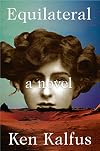
This is a most unusual book. I would compare it to a recipe that calls for flour, celery, cherries, hot pepper sauce, and coffee grinds and then declare it delicious. This book is a strange combination of history, romance, cultural differences (East vs. West), astronomy, comedy, math, and science fiction.
The main character of Thayer, the British astronomer, is comedic yet pathetic. Other characters, both major and minor, are unique but believable. The clash between Eastern thinking and show more Western "reasoning" is a major part of how the plot is drawn. The very idea of attempting to communicate with Martians via a perfectly drawn triangle is far-fetched, but history has recorded more than one far-fetched (or horrifying) idea that seemed perfectly acceptable at the time. With all our scientific knowledge and rational thinking, are we being just as foolish today?
I would never have thought that mathematical drawings would interest me, but the drawings in this book are fascinating and necessary additions to this very strange but very enjoyable novel. Probably not for everyone, but if you are inclined to see humor in the most unusual places, try this. show less
The main character of Thayer, the British astronomer, is comedic yet pathetic. Other characters, both major and minor, are unique but believable. The clash between Eastern thinking and show more Western "reasoning" is a major part of how the plot is drawn. The very idea of attempting to communicate with Martians via a perfectly drawn triangle is far-fetched, but history has recorded more than one far-fetched (or horrifying) idea that seemed perfectly acceptable at the time. With all our scientific knowledge and rational thinking, are we being just as foolish today?
I would never have thought that mathematical drawings would interest me, but the drawings in this book are fascinating and necessary additions to this very strange but very enjoyable novel. Probably not for everyone, but if you are inclined to see humor in the most unusual places, try this. show less
This is a most unusual book. I would compare it to a recipe that calls for flour, celery, cherries, hot pepper sauce, and coffee grinds and then declare it delicious. This book is a strange combination of history, romance, cultural differences (East vs. West), astronomy, comedy, math, and science fiction.
The main character of Thayer, the British astronomer, is comedic yet pathetic. Other characters, both major and minor, are unique but believable. The clash between Eastern thinking and show more Western "reasoning" is a major part of how the plot is drawn. The very idea of attempting to communicate with Martians via a perfectly drawn triangle is far-fetched, but history has recorded more than one far-fetched (or horrifying) idea that seemed perfectly acceptable at the time. With all our scientific knowledge and rational thinking, are we being just as foolish today?
I would never have thought that mathematical drawings would interest me, but the drawings in this book are fascinating and necessary additions to this very strange but very enjoyable novel. Probably not for everyone, but if you are inclined to see humor in the most unusual places, try this. show less
The main character of Thayer, the British astronomer, is comedic yet pathetic. Other characters, both major and minor, are unique but believable. The clash between Eastern thinking and show more Western "reasoning" is a major part of how the plot is drawn. The very idea of attempting to communicate with Martians via a perfectly drawn triangle is far-fetched, but history has recorded more than one far-fetched (or horrifying) idea that seemed perfectly acceptable at the time. With all our scientific knowledge and rational thinking, are we being just as foolish today?
I would never have thought that mathematical drawings would interest me, but the drawings in this book are fascinating and necessary additions to this very strange but very enjoyable novel. Probably not for everyone, but if you are inclined to see humor in the most unusual places, try this. show less
Lists
Awards


You May Also Like


Associated Authors
Statistics
- Works
- 10
- Also by
- 4
- Members
- 1,226
- Popularity
- #20,943
- Rating
- 3.5
- Reviews
- 48
- ISBNs
- 58
- Languages
- 9
- Favorited
- 1