
Donald Antrim
Author of Elect Mr. Robinson for a Better World: A novel
About the Author
Image credit: Photo by Nigel Beale / flickr
Series
Works by Donald Antrim
Associated Works
Tagged
Common Knowledge
- Canonical name
- Antrim, Donald
- Legal name
- Antrim, Donald
- Birthdate
- 1958-09-16
- Gender
- male
- Education
- Brown University
- Occupations
- novelist
professor (Columbia University) - Awards and honors
- MacArthur Fellowship (2013)
- Relationships
- Leness, Terry (brother)
- Nationality
- USA
- Birthplace
- Sarasota, Florida, USA
- Places of residence
- Brooklyn, New York, USA
- Associated Place (for map)
- USA
Members
Reviews
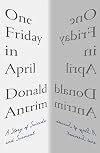
I read Bibliophobia last week, and in that book about the author's mental illness, including suicidal ideation, she referenced this short memoir about Donald Antrim's illness, which he calls "suicide", eschewing the label "depression." I was curious, and when I saw my library had the audiobook, which (I listen on 1.5x) was just over 2 hours long, I chose to listen. I am glad I did. The memoir is frank, hard to hear sometimes, but so insightful. The audio is read by the author. It is clear show more that he is speaking to others who might have the same illness, that he is telling them the truth in the hope that the illness will let them hear it and get help, and in the hope that our society will invest in providing help to people in need. This feels necessary.
As long as we see suicide as a rational act taken after rational deliberation, it will remain incomprehensible. Stigma, society's unacknowledged violence toward the sick, will remain strong. But if we accept that the suicide is trying to survive, then we can begin to describe an illness.show less
This is not one for the downhearted; it's quite depressing and the uplift at the end is more of a "well, maybe, for now." Antrim, a fairly successful writer, begins by describing in detail a night in 2006 spent on the roof of his apartment building, hanging from the fire escape, trying to decide whether or not to let go. This incident leads to a series of hospitalizations, therapy, clinical trials, and, after initial resistance, a course of ECT ("shock treatment"). Ironically, it was a phone show more call from the celebrated David Foster Wallace--an author that Antrim admired but with whom he had only slight acquaintance--that persuaded him to give ECT a go. Wallace himself committed suicide in 2008. Antrim details his "recovery" (or "recoveries"), each inevitably followed by another setback. Resisting the diagnosis of "depression," he proposes that the inclination towards suicide is a condition in itself, perhaps kicked off by childhood experiences but not subject to the usual treatments for depression. Antrim's parents were both alcoholic, and both were also abusers; his beloved mother took her rage at her husband out on her son. At the time of his suicide attempt, lost in grief but with mixed feeling about her death, he was working on a a memoir of his mother. It's no surprise that Antrim's relationships with women were, for the most part, unsuccessful. Although he appears to be in a goo relationship at the memoir's end, one can't help but wonder for how long.
Antrim's memoir is an honest one, holding nothing back. One Friday in April has been well received and compared to William Styron's Darkness Visible. It's a difficult book to say one "enjoyed" reading, but Antrim's insights were illuminating. show less
Antrim's memoir is an honest one, holding nothing back. One Friday in April has been well received and compared to William Styron's Darkness Visible. It's a difficult book to say one "enjoyed" reading, but Antrim's insights were illuminating. show less
This would be 3 1/2 stars if Goodreads had a better scale (why not out of a hundred? If you can't make such fine distinctions, rank books as 0/20/40/60/80/100 like they do on Criticker sometimes) ... it's very well-written, held my interest throughout, but I have to really enjoy a book to give it 4 stars, not just find it worthy. But it succeeds at what it set out to do and I have no editing suggestions, so I'm rounding up. (5 stars are for all-time favourites--the creme-de-la-creme).
This show more weird, strange book shows how to do weird and strange in a compelling and elegant manner (take that, Welcome to Night Vale!). There is a central conceit (society has collapsed in some unspecified way and Americans have increasingly turned violent) that is played out in a polite suburban setting, and then there is a dollop of extra weirdness (some dangerous identification with a spirit animal) that may be related to the central conceit, or may not, but if it was I didn't see it. And all the strangeness and weirdness springs naturally from the central conceit (aside from the spirit animal business), and makes sense, given the context (whereas Night Vale, which I also just finished, has a zillion inexplicable unrelated oddities that I found offputting).
It's an amusing book, but also a very dark book (it would have to be), with an especially upsetting ending (although it could be worse, I guess). As others have said, this one will stay with you. Not my cup of tea, because I vastly prefer Pride and Prejudice to Pride and Prejudice with Zombies, put I appreciated the satire, and have learned that I do prefer my post-apocalyptic fiction to be suburban-set rather than upon miles of dusty roads.
Oh, and because this may make a difference either way to undecided potential readers, this reads like Literature and not like Genre Fiction, not to suggest in any way that Literature is automatically better than Genre Fiction (any more than Classical Music beats Pop Music), just that they're not the same thing at all (see many, many essays on the increasingly blurred difference). show less
This show more weird, strange book shows how to do weird and strange in a compelling and elegant manner (take that, Welcome to Night Vale!). There is a central conceit (society has collapsed in some unspecified way and Americans have increasingly turned violent) that is played out in a polite suburban setting, and then there is a dollop of extra weirdness (some dangerous identification with a spirit animal) that may be related to the central conceit, or may not, but if it was I didn't see it. And all the strangeness and weirdness springs naturally from the central conceit (aside from the spirit animal business), and makes sense, given the context (whereas Night Vale, which I also just finished, has a zillion inexplicable unrelated oddities that I found offputting).
It's an amusing book, but also a very dark book (it would have to be), with an especially upsetting ending (although it could be worse, I guess). As others have said, this one will stay with you. Not my cup of tea, because I vastly prefer Pride and Prejudice to Pride and Prejudice with Zombies, put I appreciated the satire, and have learned that I do prefer my post-apocalyptic fiction to be suburban-set rather than upon miles of dusty roads.
Oh, and because this may make a difference either way to undecided potential readers, this reads like Literature and not like Genre Fiction, not to suggest in any way that Literature is automatically better than Genre Fiction (any more than Classical Music beats Pop Music), just that they're not the same thing at all (see many, many essays on the increasingly blurred difference). show less
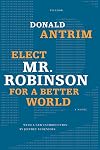
My Young Gentleman Caller hefted a bin for me today, its lid slipped, and this book bonked his noggin. Bin safely deposited, piffling nature of injury established (to my satisfaction if not his, I suspect he was angling for sympathy/guilt banana bread as his desire for more of that comestible is a refrain in our recent conversations), I picked up the book and was right back in the Sixth Avenue B. Dalton circa 1994. (The receipt tells me I bought the book December 8, 1994. Computer POS show more precision noted.)
At that time I was gadding about Lower Manhattan in a haze of grief for my dead lover, mid-30s-male sexual hunger, and frustrated seeking for a hit in my newish career as a literary agent. Numbing pain via reading was an old, old habit of mine. This novel's premise, which nowadays we'd call bizarro, was so askew that I was sure I'd be diverted and possibly edified.
Like so many expectations....
So the read itself was successful, I kept the book somehow in spite of literally thousands of others falling away; but damned if I want to re-read it. Antrim's first novel is jam-packed with brio. His narrative voice isn't assured, it tries too hard to clever-clever its way out of some cul-de-sacs with limited success, but still tells a true story. Ours was then a country of receding community ethic, a sense of a destiny shared was eroding ever-faster, and its lack of usability as a ground-cover in the garden we're supposed to be maintaining was alarming to many of us.
As a reminder, the first government shut-down was almost a year away but had already been set in motion by the politically tone-deaf Clintons proposing a National Health Insurance Plan that would've saved tens of thousands from death or debilitating debt. (I never said they were wrong, just tone-deaf.) Antrim's Civil War fit beautifully into that deep and accelerating fault line's growth under the national garden's soil. His satirical intentions were spot-on. His storytelling voice wasn't quite up to the task but he was close enough for me at that time.
So today (post-boo boo kissing) I picked the book up for the first time in many long years, flipped around, and was chuckling again. I told the mildly sulky YGC Rob why I wasn't continuing to fuss over him and, I am gratified to report, sent the book home with him after I sold it by mentioning missile attacks on a gated community and drawing-and-quartering by Subaru.
Since it's a story with far greater relevance to today's 20-somethings than even to my then-30-something self, I'm hopeful it will reinforce his sense that the morality he sees enacted around him is pathological and not emulatable. And I'm enormously tickled in the vanity area that owning a book that I demonstrably bought for myself on a particular date before he was born made him covet the object.
Everybody wins. Like it should be. show less
At that time I was gadding about Lower Manhattan in a haze of grief for my dead lover, mid-30s-male sexual hunger, and frustrated seeking for a hit in my newish career as a literary agent. Numbing pain via reading was an old, old habit of mine. This novel's premise, which nowadays we'd call bizarro, was so askew that I was sure I'd be diverted and possibly edified.
Like so many expectations....
So the read itself was successful, I kept the book somehow in spite of literally thousands of others falling away; but damned if I want to re-read it. Antrim's first novel is jam-packed with brio. His narrative voice isn't assured, it tries too hard to clever-clever its way out of some cul-de-sacs with limited success, but still tells a true story. Ours was then a country of receding community ethic, a sense of a destiny shared was eroding ever-faster, and its lack of usability as a ground-cover in the garden we're supposed to be maintaining was alarming to many of us.
As a reminder, the first government shut-down was almost a year away but had already been set in motion by the politically tone-deaf Clintons proposing a National Health Insurance Plan that would've saved tens of thousands from death or debilitating debt. (I never said they were wrong, just tone-deaf.) Antrim's Civil War fit beautifully into that deep and accelerating fault line's growth under the national garden's soil. His satirical intentions were spot-on. His storytelling voice wasn't quite up to the task but he was close enough for me at that time.
So today (post-boo boo kissing) I picked the book up for the first time in many long years, flipped around, and was chuckling again. I told the mildly sulky YGC Rob why I wasn't continuing to fuss over him and, I am gratified to report, sent the book home with him after I sold it by mentioning missile attacks on a gated community and drawing-and-quartering by Subaru.
Since it's a story with far greater relevance to today's 20-somethings than even to my then-30-something self, I'm hopeful it will reinforce his sense that the morality he sees enacted around him is pathological and not emulatable. And I'm enormously tickled in the vanity area that owning a book that I demonstrably bought for myself on a particular date before he was born made him covet the object.
Everybody wins. Like it should be. show less
Lists
Awards


You May Also Like


Associated Authors
Statistics
- Works
- 14
- Also by
- 5
- Members
- 1,614
- Popularity
- #15,966
- Rating
- 3.5
- Reviews
- 34
- ISBNs
- 75
- Languages
- 7
- Favorited
- 6