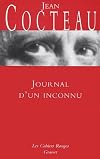
Diary of an Unknown
by Jean Cocteau
On This Page
Description
This important new translation brings the diary of Jean Cocteau to America for the first time. Diary of an Unknown was started in 1951, at about the time Cocteau begin his famous journals. This more personal document is at once intensely intimate and deeply philosophical. In these essays - which often recall the essays of Montaigne with their strictness of form, theme, and syntax - Cocteau reveals himself as never before. Like the Surrealists, Cocteau thrived upon, and solicited, public show more attention. But behind the flamboyance and the mystique, behind the public persona, there was the private self. Here we glimpse the private Jean Cocteau, playing with ideas and musing on all manner of subjects: nature ("I am more fascinated by the underside than by the topside"); New York ("a city that abides neither contempt nor pity"); poetry ("a religion without hope"); and beauty ("The beautiful is always the result of an accident"). Cocteau ruminates on psychoanalysis, the Nuremberg trials, the Trinity, freedom and the death penalty. He also returns to familiar Coctelian themes - angels, invisibility, friendship, memory, and the birth of ideas. He writes of Proust, Picasso, Stravinsky and Sartre, remembering conversations or recording his own observations on their work with extraordinary freshness of insight. In its breadth, its beauty, and its intimacy, DIary of an Unknown deepens our understanding of one of the most original artists of the century. -- from dust jacket. show lessTags
Recommendations



















Member Reviews
This book demonstrates the poetic skills of the author in prose format. It is less a memoir, less a diary, than it is a series of essays about topics of interest to the author. Some of these topics may not be of interest to the reader, but the style of the writing brings the reader around, not necessarily to the author's viewpoint, but to the level of interest in seeing what this author has to say. Quotable passages permeate the work. While much of the attitude of the author to science and pseudoscience is discordant to a reader based in 21st century science, the sheer poetry of the work helps to overcome that, and it also serves as a reminder (if one is needed) that those who accept strange, pseudoscientific beliefs are not of show more necessity "dumb". The author is a highly intelligent and literate individual who is adopting a stance not uncommon in the decades immediately following World War II, where the development and use of the atomic bomb created a lot of fear of science. Overall, it was a great read and I feel my life has been enriched for having opened its pages. show less
Ratings
Members
- Recently Added By
Author Information

379+ Works 6,656 Members
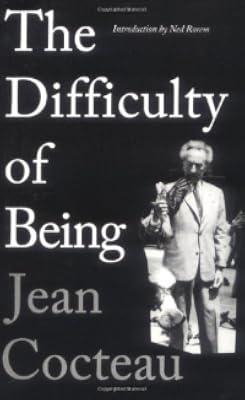
Born in Maisons-Lafitte, France, on July 5, 1889, Jean Cocteau was a poet, actor, film director, and playwright. Cocteau's first volume of verse, La Lampe d'Aladian, established him as an important contemporary writer. During recuperation from an opium addiction, Cocteau produced some of his best-known work, including his first motion picture, show more Blood of a Poet, the play Orpheus, and the novel Les Enfants Terribles. Cocteau later published Difficulty of Being, a loose collection of autobiographical observations. Jean Cocteau died on October 11, 1963, at the age of 74. (Bowker Author Biography) show less
Classifications
Statistics
- Members
- 103
- Popularity
- 315,184
- Reviews
- 1
- Rating
- (4.14)
- Languages
- English, French, Italian
- Media
- Paper, Ebook
- ISBNs
- 8
- ASINs
- 3