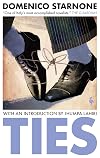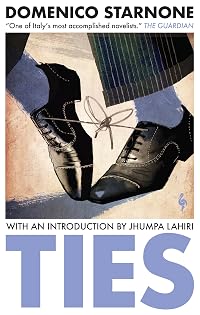
Ties
by Domenico Starnone
On This Page
Description
Translated by Pulitzer Prize-winning author Jhumpa Lahiri, Ties is a compulsively readable and provocative novel about marriage and family by one of Italy's bestselling novelists. Like many marriages, Vanda and Aldo's has been subject to strain, to attrition, to the burden of routine. Yet it has survived intact. Or so things appear. The rupture in their marriage lies years in the past, but if one looks closely enough, the fissures and fault lines are evident. It is a cracked vase that may show more shatter at the slightest touch. Or perhaps it has already shattered, and nobody is willing to acknowledge the fact. Domenico Starnone's thirteenth work of fiction is a powerful short novel about relationships, family, love, and the ineluctable consequences of one's actions. Known as a consummate stylist and beloved as a talented storyteller, Domenico Starnone is the winner of Italy's most prestigious literary award, The Strega. show lessTags
Recommendations













Member Reviews
This is such a good story on so many levels. As the translator points out, this is a story about containers, and how little the containers we normally associate with (including mothers, fathers, husbands, and children) so little represent the humans who fill these roles in our lives. There is also the inherent irony in the story's title: Ties. Why is it that the father ties his shoelaces so differently from everybody else? Does he really, or is this just a categorization that is politically intended to maim him in the family structure? Starnone does so much to raise the stakes in these human relationships that I am as tempted to expand them into commentary about history and the universe as to see them solely in the context of the show more narrative itself. Again, this is another story that makes the universe appear so lonely and cold, so structured and unforgiving. show less
This book received extra exposure in the English-speaking world by being translated by Jhumpa Lahiri, who has spoken at length about the experience. This extra bit of publicity got a copy onto the shelves of my local library, so I'm grateful. Lahiri's translation is lovely.
This short novel tells the story of an unhappy family, in the form of three segments, one less than a decade into the marriage, when the husband leaves his wife and two young children for a younger woman. The second and meatiest part of the novel takes place when the couple are in their seventies and a traumatic experience throws old secrets into the open. The third section is the weakest and wraps things up a little too neatly through the eyes of their two show more now-middle-aged children.
Despite the tidiness of the ending, this was a powerful novel about how the fault-lines in a marriage may be smoothed over and life continued, but how those fractures remain under the surface, ready to reveal themselves at moments of stress. And how parental discord affects children, who have no say in the way things play out but who are nevertheless the people most affected.
This wasn't a cheerful book, but it was compelling and thought-provoking. show less
This short novel tells the story of an unhappy family, in the form of three segments, one less than a decade into the marriage, when the husband leaves his wife and two young children for a younger woman. The second and meatiest part of the novel takes place when the couple are in their seventies and a traumatic experience throws old secrets into the open. The third section is the weakest and wraps things up a little too neatly through the eyes of their two show more now-middle-aged children.
Despite the tidiness of the ending, this was a powerful novel about how the fault-lines in a marriage may be smoothed over and life continued, but how those fractures remain under the surface, ready to reveal themselves at moments of stress. And how parental discord affects children, who have no say in the way things play out but who are nevertheless the people most affected.
This wasn't a cheerful book, but it was compelling and thought-provoking. show less
This is one of those lovely Europa editions. *sigh* It is a novella, and it is really well done. Nice and tight with fully developed characters in a mere 150 pages. The story is divided into three parts and covers decades in the life of a family of four that has been forever damaged by the father having an affair and leaving. This is not a spoiler - we find this out in the first few sentences of the letter that opens the book. The letter is from a wife writing to her straying husband, and part one is from her (Vanda's) point of view. In the second part, we meet the husband, in the present - many years have passed and the children are grown and off on their own. The husband's narrative takes up the bulk of this novella, and I was stunned show more by his honesty and his objectivity in bringing us up to date with how the couple went from there (the wife's opening narrative) to here (present day). The final part is the daughter's narrative, and it is alive with anger and hurt and spite. It rings true, and as I caught where the story was going, I could not turn the pages fast enough. There is a bit of a mystery thrown in that surfaces during the father's narrative - I won't say more because I do not want to spoil it, but let's just say that the author does an excellent job of building the tension and then unraveling the truth. Highly recommended. show less
I love the way this novella is composed. It is divided into three books. The first is written in Vanda's voice in the late 1970's. Mother of two children she weeps for her marriage and all her newly estranged husband, Aldo, has put her and the children through. Her pain is evident and it's heartbreaking. Book Two is in the voice of Aldo spoken in relatively current times. It is when he is faced with a crisis that he ruminates and laments about his life, his choices, his women. Lastly, Book Three gives the reader the point of view of the children, Sandro and Anna. Their adult voices reverberate with the toll a broken and misguided marriage has indelibly left upon their lives.
I was extremely impressed by this novella. Written by Starnone show more and translated by Jhumpa Lahiri it is partially a mystery, and partially a thought provoking window into a troubled marriage. For such a short story, the characters are well defined and deep. I would not have discovered this book had it not been for the Tournament of Books 2018 long list. Very worthy work to advance. show less
I was extremely impressed by this novella. Written by Starnone show more and translated by Jhumpa Lahiri it is partially a mystery, and partially a thought provoking window into a troubled marriage. For such a short story, the characters are well defined and deep. I would not have discovered this book had it not been for the Tournament of Books 2018 long list. Very worthy work to advance. show less
Házassági mélyfúrások. Avagy: van, amit jobb lett vón nem tudni. Starnone szakszerűen lekaparja az illúziókat az emberi kapcsolatokról, bevisz minket a szégyen, az elhallgatás, megcsalás és megcsalatás bugyraiba. A technikai végrehajtás pazar: előbb kibont egy réteget, aztán kibont még egy réteget, és amikor már azt hisszük, nincs több réteg, ő előhúz még egyet a cilinderből egy frenetikus lezárás formájában. (De azért remélem, a macskának nem esett baja.) Nincs szépítés, nincs kecmec, szégyelljük magunkat.
Különben meg kivagyok az utóbbi pár naptól: hasmenéses vírus, Térey-ösztöndíj, „rasszizmussal a rasszizmus ellen” tüntetés, egy pusztulat az egész hét. Jó lenne valami show more felemelőt, valami vidámat olvasni. De úgyis egy norvég regényt fogok. show less
Különben meg kivagyok az utóbbi pár naptól: hasmenéses vírus, Térey-ösztöndíj, „rasszizmussal a rasszizmus ellen” tüntetés, egy pusztulat az egész hét. Jó lenne valami show more felemelőt, valami vidámat olvasni. De úgyis egy norvég regényt fogok. show less
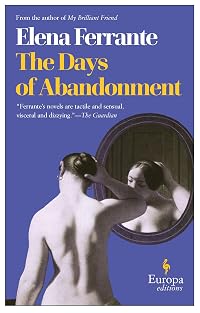
I read Elena Ferrante’s Days of Abandonment late last year. When I discovered that some commentators view Starnone’s Ties as a counterpoint / rebuttal of Ferrante’s story, my interest was peaked. Even though I hated Days of Abandonment, I am one of those readers who like to be exposed to varying POVs of the same event, hence the motivation to read Starnone’s story. Ties is broken down into three parts, exposing the reader to different POV’s, from the wife to the husband and then the two children, now adults. The story punches high right from the start with sharp, barbed and accusatory correspondence from the wife to the husband, taking readers of Days of Abandonment down very familiar ground, even if the characters names have show more been changed. The majority of the story is told from the husband’s point of view and is really a very sad commentary on a loveless marriage and the destruction wreaked on the entire family. It is obvious from the books I have read so far that Starnone has a fixation for puzzles, secrets, and the bonds – the Ties of the title – that can cripple us if we let them.
Translated from the Italian by the American author Jhumpa Lahiri, it is clear that Lahiri went to great pains to produce an English translation that captures the subtle Italian meanings. I definitely recommend that readers read both books. It doesn’t matter which one you start with. While both books capture the wife as a self-absorbed, angry and emotionally destructive individual, the husband has his faults and, IMO doesn’t deserve any pity. I found Starnone’s book to be more subtly nuanced and, I don’t know, more “even keel” and not as emotionally dramatic as Ferrante’s stories tend to be.
Overall, an interesting examination of marriage and fidelity. show less
Translated from the Italian by the American author Jhumpa Lahiri, it is clear that Lahiri went to great pains to produce an English translation that captures the subtle Italian meanings. I definitely recommend that readers read both books. It doesn’t matter which one you start with. While both books capture the wife as a self-absorbed, angry and emotionally destructive individual, the husband has his faults and, IMO doesn’t deserve any pity. I found Starnone’s book to be more subtly nuanced and, I don’t know, more “even keel” and not as emotionally dramatic as Ferrante’s stories tend to be.
Overall, an interesting examination of marriage and fidelity. show less
Positively Lahirian. This was a great read and an interesting follow up to Lahiri's own book about learning Italian. She introduces her own translation here and explains why the book attracted her. There are certainly similarities of tone. Unknowable people who barely know themselves. Lives spent with emotions held back, denied, hidden. This was a layered novella that used different points of view within a fractured family to tell a connected story of brokenness and togetherness. It's not a tale about happy people, but did offer some pleasure to the reader.
Members
- Recently Added By
Lists

Italian Literature
558 works; 42 members

Books Set in Rome
98 works; 2 members

Kirkus Starred Fiction Reviews of Books Published in 2017
412 works; 7 members
Author Information

44+ Works 1,553 Members
Some Editions
Awards and Honors
Awards
Common Knowledge
- Canonical title*
- Strikken
- Original title
- Lacci
- Original publication date
- 2014
- People/Characters
- Vanda; Aldo
- Important places
- Naples, Italy; Rome, Italy
- First words
- In case it slipped your mind, Dear Sir, let me remind you: I am your wife.
- Last words
- (Click to show. Warning: May contain spoilers.)The cat won't. See how happy he is?
- Original language
- Italian
*Some information comes from Common Knowledge in other languages. Click "Edit" for more information.
Classifications
- Genres
- Fiction and Literature, General Fiction
- DDC/MDS
- 853.914 — Literature & rhetoric Italian, Romanian & related literatures Italian fiction 1900- 20th Century 1945-1999
- LCC
- PQ4879 .T345 .L35 — Language and Literature French, Italian, Spanish and Portuguese literatures Italian literature Individual authors, 1961-2000
- BISAC
Statistics
- Members
- 384
- Popularity
- 81,567
- Reviews
- 21
- Rating
- (3.88)
- Languages
- 13 — Danish, Dutch, English, Finnish, French, German, Hungarian, Italian, Portuguese, Croatian, Spanish, Swedish, Turkish
- Media
- Paper, Ebook
- ISBNs
- 25
- ASINs
- 5