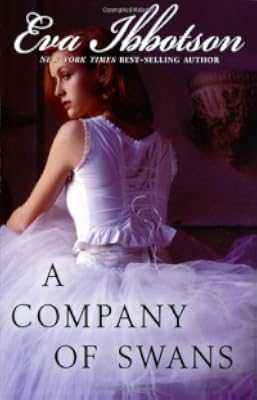
A Company of Swans
by Eva Ibbotson
On This Page
Description
Weekly ballet classes are Harriet Morton's only escape from her intolerably dull life. So when she is chosen to join a corps de ballet which is setting off on a tour of the Amazon, she leaps at the chance to run away for good. Performing in the grand opera houses is everything Harriet dreamed of, and falling in love with an aristocratic exile makes her new life complete. Swept away by it all, she is unaware that her father and intended fiance have begun to track her down...Tags
Recommendations













Member Reviews
Harriet Morton, raised by a strict father and parsimonious aunt, has only one joy left: her weekly dancing lessons. When a friend of her ballet instructor offers her a place in a touring troupe, Harriet longs to accept, but of course, her family absolutely forbids it. When Harriet runs away, she is transported into the world of dance, set against the lush backdrop of South America. While performing at the Manaus Opera House, she meets Rom Verney, an English expatriate and patron of the arts, and is drawn to him immediately. The two are overwhelmed with love for each other, but Harriet always knows that it will end -- after all, that's what happens to ballet dancers with wealthy lovers...
This is an old comfort read for me. I really enjoy show more the characters Ibbotson writes, and the scenarios she puts them in (there's a certain cake scene that's not to be missed). This book does make use of the "if they would only talk to each other" trope, but it does it in a self-deprecating way, with the characters acknowledging that it's a thing. This isn't my favorite of Ibbotson's romances, but it's still a highly enjoyable read. show less
This is an old comfort read for me. I really enjoy show more the characters Ibbotson writes, and the scenarios she puts them in (there's a certain cake scene that's not to be missed). This book does make use of the "if they would only talk to each other" trope, but it does it in a self-deprecating way, with the characters acknowledging that it's a thing. This isn't my favorite of Ibbotson's romances, but it's still a highly enjoyable read. show less
This may be one of the most awesomely insane things I've ever read: A beautifully threaded complex plot, pretty much all the tropes stirred in liberally and craftily bent to new purposes. Believable characters, from major to minor, fabulously crafted detail, and the best upending of upper class academic puritanism I've seen in ages.
Seriously: Ibbotson has no truck with shaming people for happiness, and it's utterly enthralling throughout.
Seriously: Ibbotson has no truck with shaming people for happiness, and it's utterly enthralling throughout.
This book follows the usual Ibbotson formula for Cinderella-style romances but this time much of it takes place in Manaus on the Amazon, rather than in Britain or Vienna. Manaus, Brazil and its famed opera house will be familiar to readers of The State of Wonder by Ann Patchett, but Ibbotson’s Amazon is a paradise rather than a dark and threatening milieu as in Patchett.
It is 1912 and Harriet Morton, 18, whose mother died when she was two, lives in Cambridge, England with her much older, narrow-minded, and unloving father, as well as his sister, her Aunt Louisa, who resents Harriet and treats her poorly. Her only joy is taking ballet at the Sonia Lavarre Academy of Dance. One day one of Madame’s old friends arrives, a Monsieur show more Dubrov, looking for outstanding pupils to join his corps de ballet soon traveling to Manaus to perform. He is intrigued by Harriet, and invites her, but Harriet knows she will not be allowed to go. By chance, however, she befriends a little boy, Henry, who is obsessed with the Amazon, and desperately wants Harriet to go there and help find his uncle, rumored to be there. Harriet, like any Ibbotson heroine, could never deny the requests of a little child.
Harriet claims to be going to stay with a school chum, and joins the Dubrov Ballet Company. The opening night in Manaus, she catches the eye of Rom Verney, the chairman of the Opera House trustees, and coincidentally the very man she promised Henry she would find. Rom is rich and charming, but isn’t he rumored to be in love with someone else?
Discussion: The scaffolding of every adult book by Eva Ibbotson is the same:
1. a lovely fresh and innocent young girl instantly beloved by all who meet her
2. encounters an older, wealthy, unmarried man (with inner pain but good at heart) who becomes convinced she is what he needs
3. but there is at least one terrible misunderstanding that pulls them apart
4. until the very end when suddenly the clouds of misunderstanding break and love conquers all
On top of this underlying and pretty much unerring plan, the distinctive elements of each book change and tend to reflect the author’s passions: opera, ballet, classical literature, and so on.
Does that mean the books are too predictable to read more than one? Absolutely not. That is, absolutely they are predictable but each one of them is still a joy.
In this book, I loved the exotic setting of Manaus with its riotous color and picturesque foreign landscape, and the details of the rigors of ballet training that are so lovingly depicted. And as is very much the usual case with Ibbotson, the side characters are memorably and delightfully drawn, from young Henry, whom Harriet befriends, to the imperious but so understandable Simonova, the aging star of the ballet company. And the romance in this book is more fully explored than in the others by Ibbotson, and so enchantingly!
Though set in 1912, there isn’t much to the historical fiction aspects of this book, unlike Ibbotson’s others. But again, no complaints – the story is pleasurable regardless.
Evaluation: This book follows the usual Ibbotson formula for romance, which means it is a bit of a Cinderella story. But I hope no one holds predictability against it. Like Ibbotson’s other books, it is engaging and endearing, and the character portrayals, especially those of the minor characters, are especially well-done. show less
It is 1912 and Harriet Morton, 18, whose mother died when she was two, lives in Cambridge, England with her much older, narrow-minded, and unloving father, as well as his sister, her Aunt Louisa, who resents Harriet and treats her poorly. Her only joy is taking ballet at the Sonia Lavarre Academy of Dance. One day one of Madame’s old friends arrives, a Monsieur show more Dubrov, looking for outstanding pupils to join his corps de ballet soon traveling to Manaus to perform. He is intrigued by Harriet, and invites her, but Harriet knows she will not be allowed to go. By chance, however, she befriends a little boy, Henry, who is obsessed with the Amazon, and desperately wants Harriet to go there and help find his uncle, rumored to be there. Harriet, like any Ibbotson heroine, could never deny the requests of a little child.
Harriet claims to be going to stay with a school chum, and joins the Dubrov Ballet Company. The opening night in Manaus, she catches the eye of Rom Verney, the chairman of the Opera House trustees, and coincidentally the very man she promised Henry she would find. Rom is rich and charming, but isn’t he rumored to be in love with someone else?
Discussion: The scaffolding of every adult book by Eva Ibbotson is the same:
1. a lovely fresh and innocent young girl instantly beloved by all who meet her
2. encounters an older, wealthy, unmarried man (with inner pain but good at heart) who becomes convinced she is what he needs
3. but there is at least one terrible misunderstanding that pulls them apart
4. until the very end when suddenly the clouds of misunderstanding break and love conquers all
On top of this underlying and pretty much unerring plan, the distinctive elements of each book change and tend to reflect the author’s passions: opera, ballet, classical literature, and so on.
Does that mean the books are too predictable to read more than one? Absolutely not. That is, absolutely they are predictable but each one of them is still a joy.
In this book, I loved the exotic setting of Manaus with its riotous color and picturesque foreign landscape, and the details of the rigors of ballet training that are so lovingly depicted. And as is very much the usual case with Ibbotson, the side characters are memorably and delightfully drawn, from young Henry, whom Harriet befriends, to the imperious but so understandable Simonova, the aging star of the ballet company. And the romance in this book is more fully explored than in the others by Ibbotson, and so enchantingly!
Though set in 1912, there isn’t much to the historical fiction aspects of this book, unlike Ibbotson’s others. But again, no complaints – the story is pleasurable regardless.
Evaluation: This book follows the usual Ibbotson formula for romance, which means it is a bit of a Cinderella story. But I hope no one holds predictability against it. Like Ibbotson’s other books, it is engaging and endearing, and the character portrayals, especially those of the minor characters, are especially well-done. show less
Ehh...it was okay. As a former ballerina, I absolutely loved how ballet was incorporated into the story; it wasnt just used as a way to describe the characters, but it had its own place in the story. But past this general positive, my feelings about the book get a little more confused. This is the only Eva Ibbotson I've read (and you know, while it wasnt an awful read, I certainly dont feel the impulse to go out and read more of her stuff) and her writing style is descriptive and at times even elegant but her characters are very vacillated and her story pacing is really, REALLY weird. This is first and foremost a romance story (there's little to no actual "HISTORY" here) and so therefore the romantic aspect should be the most important show more and the one that carries the weight of the story. Well, the whole thing just left me feeling rather confused: the relationship is way WAY too rushed at the expense of a moderately-paced blossoming love story in which the reader gets to know the characters well and really see their relationship grow. What could have been sweet and "romantic" gets questionable and downright tawdry. And I consider myself one of the last true Romantics running around today. I love "happily-ever-afters." I love "true love" and all that jazz. But this is just weird. Now granted, there were some good dialogue segments here and there, but not evenly or properly spaced throughout the story. And this is just a personal pet peeve of mine, but I don't understand why authors feel the need to include "previous encounters" of the love interest... THIS IS NOT A CARFAX HISTORY REPORT! I dont want to know all the other people who have driven your car!!! And I am certainly not a progressive, but I found it just a bit weird that this seemingly good-natured, innocent but grounded character would be so quick to tramp herself up. Girls, when you're shacking up with someone on a regular basis (well, that is what "shacking up" means), that's trampy. When the main character (who is at the ripe old age of 18 i might add) communicates a willingness to live as a "kept woman," that's trampy. that's adultery, also. How is that romantic? Like I said before, the characters' profiles just seem to constantly contradict each other. The ballerina in me was satisfied, and there were SOME parts of the harriett-rom romance that i thought was sweet (i like it when guys "rescue" girls--not because girls cant do anything for themselves, but because guys need to get off their butts and be productive! Not because we're weak, because WE'RE WORTH IT!) but overall, not one of my favorites. Ann Rinaldi is still the queen of "HISTORYCAL FICTION" in my book! show less
Harriet is stifling in her excessively academic home, penned in between her professor father's stiffness and her aunt's stinginess. Her one escape is ballet. But when even her weekly lessons have been cut off, Harriet finds the courage to escape her colorless life and journey to Brazil.
I liked Harriet as a character, and I liked the romance. I was a little disappointed with the way the story twisted, bringing Harriet and Rom together in such a way. The setting and the characters were well written, but it could have been so much better.
Update: I decided that I was being just a little hard on the book. I really liked epilogue. So I'd give it 3 1/2 stars.
I liked Harriet as a character, and I liked the romance. I was a little disappointed with the way the story twisted, bringing Harriet and Rom together in such a way. The setting and the characters were well written, but it could have been so much better.
Update: I decided that I was being just a little hard on the book. I really liked epilogue. So I'd give it 3 1/2 stars.
I completely adore this book. It is one of my comfort books. If I've had a bad week, or I'm sick, I'll pull out my worn copy of A Company of Swans and just nestle into it. I love all of the characters, even when they are at their most infuriating. I love to just enjoy this book, with all of its twists and turns, its interweaving themes and plots, and its obviously happy ending. I'm a sucker for a happy ending and Eva Ibbotson is a goddess of happy endings. It is almost like a fairy tale, which I am much contented with.
This was the first Eva Ibbotson book I read, a fact that contributed to its five-star rating (she did tend to use similar structures in her romance stories, which means that subsequent books could seem a bit formulaic). I found it delightful and charming and fairytale-like; I also believe it was an insightful evocation of a bygone era. I also loved the exotic setting: not just the Amazon; but also the world of ballet and of Cambridge; and also the surprising quirky elements in the story (how many romances feature a manatee? and I loved how Harriet communicated with the Amazonian natives in Latin - nerdy and weirdly believable).
Members
- Recently Added By
Lists

Best Young Adult
399 works; 101 members

Favourite Books
1,819 works; 308 members

Favorite Literary Love Stories
182 works; 100 members

KayStJ's to-read list
1,616 works; 11 members

Dance!
41 works; 1 member

Books Read in 2017
4,249 works; 130 members

Latin America
45 works; 6 members

Ballet Books
71 works; 3 members

Top Five Books of 2019
387 works; 107 members
Author Information

40+ Works 22,442 Members
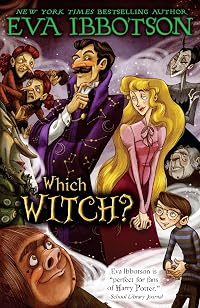
Eva Ibbotson was born in Vienna, Austria, on January 21, 1925. She graduated from Bedford College, London with a degree in physiology in 1945 and the University of Durham with a degree in education in 1965. Her first book, The Great Ghost Rescue, was published in 1975. She primarily wrote children's book and romance novels for adults and young show more adults. Her other works include The Secret of Platform 13, The Star of Kazan, Which Witch?, Island of the Aunts, Dial-a-Ghost, The Ogre of Oglefort, A Company of Swans, and A Song For Summer. She won the Nestlé Smarties Book Prize for Journey to the River Sea. She died on October 20, 2010 at the age of 85. (Bowker Author Biography) show less
Awards and Honors
Work Relationships
Common Knowledge
- Canonical title
- A Company of Swans
- Original title
- A Company of Swans
- Original publication date
- 1985
- People/Characters
- Harriet Morton; Rom Verney; Professor Morton; Louisa Morton; Madame Sonia Lavarre
- Important places
- Manaus, Brazil; London, England, UK; Cambridge, Cambridgeshire, England, UK
- Important events
- 1912
- First words
- There was no lovelier view in England, Harriet knew this.
- Last words
- (Click to show. Warning: May contain spoilers.)The spectacle was a disgusting one, the sighting useless...and turning away, she retraced her steps and shooed the oncoming ladies firmly back to the house for tea.
Classifications
Statistics
- Members
- 1,057
- Popularity
- 24,339
- Reviews
- 36
- Rating
- (3.98)
- Languages
- English, German, Spanish, Swedish
- Media
- Paper, Audiobook, Ebook
- ISBNs
- 37
- ASINs
- 8