On This Page
Description
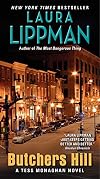
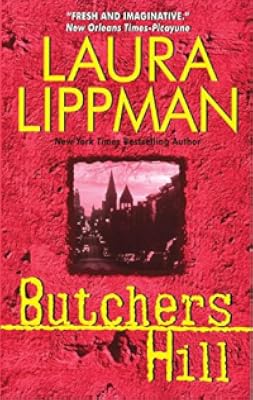
Tess Monaghan has finally made the move and hung out her shingle as a PI-for-hire, complete with an office in Butchers Hill. Maybe it's not the best address in Baltimore, but you gotta start somewhere, and Tess' greyhound Esskay has no trouble taking marathon naps anywhere there's a roof. Then in walks Luther Beale, the notorious vigilante who five years ago shot a boy for vandalizing his car. Just out of prison, he says he wants to make reparations to the kids who witnessed his crime, so he show more needs Tess to find them. But once she starts snooping, the witnesses start dying. Is the Butcher of Butchers Hill at it again? Like it or not, Tess is embroiled in a case that encompasses the powers-that-be, a heartless system that has destroyed the lives of children, and a nasty trail of money and lies leading all the way back to Butchers Hill. show lessTags
Recommendations

Member Reviews
In the third book in the Tess Monaghan series, Tess embarks on her first case as a licensed private investigator. She's opened an office on Butchers Hill and the first person through her door is the "Butcher of Butchers Hill." Luther Beale was recently released from prison after a warning shot he fired at some kids destroying property in his neighborhood resulted in the death of one of the kids. He'd like Tess to find the other kids who were present that night so he can "help them out" with some money and an apology. However, the first few Tess manages to track down are soon murdered and the police suspect Beale is behind it again, punishing the kids who put him away.
Meanwhile, Tess' second client wants her to track down the baby she show more gave up for adoption.
Laura Lippman does an excellent job with characterization, plotting, and suspense. The situations are realistic and the reasons her non-Law Enforcement heroine gets herself in dangerous situations are a lot more plausible than in other authors' works *cough* Kathy Reichs *cough*. Tess is a very genuine and genuinely flawed character who is growing as an investigator and as a person as the series develops. Her secondary characters; friends, family and clients, are all very well-drawn and dynamic as well. In particular, Tess' Aunt Kitty and Uncle Donald who just crack me up. I look forward to continuing the reading of this series! show less
Meanwhile, Tess' second client wants her to track down the baby she show more gave up for adoption.
Laura Lippman does an excellent job with characterization, plotting, and suspense. The situations are realistic and the reasons her non-Law Enforcement heroine gets herself in dangerous situations are a lot more plausible than in other authors' works *cough* Kathy Reichs *cough*. Tess is a very genuine and genuinely flawed character who is growing as an investigator and as a person as the series develops. Her secondary characters; friends, family and clients, are all very well-drawn and dynamic as well. In particular, Tess' Aunt Kitty and Uncle Donald who just crack me up. I look forward to continuing the reading of this series! show less
Butcher’s Hill by Laura Lippman is both a book and a series that has been lingering on the back burner for far too long. This is the third book in the Tess Monaghan series about a female private investigator set in Baltimore, Maryland. In this outing, Tess is working on two cases both involving children. The first is to locate a group of under-privileged children who were witnesses to a shooting a number of years ago while the second is to help a woman find the daughter that she gave up for adoption thirteen years ago. Little did Tess know that one of these cases was going to involve her own family.
This has been my favorite book of the series so far as it involved an engaging and thought-provoking plot served up by a very likeable show more main character with humor and excitement. Tess own bickering, colorful yet close family serve as a foil for these cases that are based on misconceptions, lies and social injustices.
I listened to an audio version of this book and I plan on picking up a few more to listen to as the narrator, Deborah Hazlett, did a stellar job. I look forward to visiting Tess, and her lovable greyhound Esskay, again. show less
This has been my favorite book of the series so far as it involved an engaging and thought-provoking plot served up by a very likeable show more main character with humor and excitement. Tess own bickering, colorful yet close family serve as a foil for these cases that are based on misconceptions, lies and social injustices.
I listened to an audio version of this book and I plan on picking up a few more to listen to as the narrator, Deborah Hazlett, did a stellar job. I look forward to visiting Tess, and her lovable greyhound Esskay, again. show less
Police, not private detectives, investigate murders, making it a challenge for authors attempting to write a murder mystery with a private investigator (or any amateur sleuth) as the protagonist. The hero need not just solve the mystery but get involved in the case in the first place.
Laura Lippman solves this problem neatly in “Butchers Hill,” one of her earliest Tess Monaghan mysteries published in 1998. Butchers Hill is a neighborhood in southeast Baltimore where Tess opens her new office and where Luther Beale, a man call the Butcher of Butchers Hill, becomes one of her clients. Years earlier, angered at being harassed by a group of neighborhood kids, all foster children with little supervision, had fired a gun to scare them off. show more One child died of a bullet wound, and Beale served his time. He hires Tess to find the other children, now older teens, saying he wants to give them each an anonymous financial gift.
Tess then gets a second case, also involving finding a child. A woman wants her to locate the daughter she gave up for adoption years before. Now having regrets, she says just she want to know her child is OK and, if possible, do something for her.
Both cases seem like easy money to Tess. We know this isn't likely, and sure enough both cases soon blow up in her face. Most seriously, after a break-in at her office, kids she has found for Beale start dying in suspicious ways. The police suspect Beale but have no evidence. Tess suspects him, too, but decides to check out his claim that not only didn't he kill these children but neither was he responsible for the death that sent him to prison. He claims that fatal shot came from a passing car. And so, through the backdoor, Tess gets involved in a murder case.
Lippman delivers thrills and surprises, even in the adopted child case. I dare not say much about that one without being a spoiler. show less
Laura Lippman solves this problem neatly in “Butchers Hill,” one of her earliest Tess Monaghan mysteries published in 1998. Butchers Hill is a neighborhood in southeast Baltimore where Tess opens her new office and where Luther Beale, a man call the Butcher of Butchers Hill, becomes one of her clients. Years earlier, angered at being harassed by a group of neighborhood kids, all foster children with little supervision, had fired a gun to scare them off. show more One child died of a bullet wound, and Beale served his time. He hires Tess to find the other children, now older teens, saying he wants to give them each an anonymous financial gift.
Tess then gets a second case, also involving finding a child. A woman wants her to locate the daughter she gave up for adoption years before. Now having regrets, she says just she want to know her child is OK and, if possible, do something for her.
Both cases seem like easy money to Tess. We know this isn't likely, and sure enough both cases soon blow up in her face. Most seriously, after a break-in at her office, kids she has found for Beale start dying in suspicious ways. The police suspect Beale but have no evidence. Tess suspects him, too, but decides to check out his claim that not only didn't he kill these children but neither was he responsible for the death that sent him to prison. He claims that fatal shot came from a passing car. And so, through the backdoor, Tess gets involved in a murder case.
Lippman delivers thrills and surprises, even in the adopted child case. I dare not say much about that one without being a spoiler. show less
Going to applaud Laura Lippman here for tackling race. I was wondering if she was going to do it, and it's slightly imperfect, but I did love her showing how Tess was steeped in privilege and didn't even get how much until she met Jackie (one of her clients with a surprising connection to her) and Luther Beale. I loved how Lippman showcases two different Baltimore's (one for white people and one for black people). I also love the shoutout to HBO's "The Wire."
"Butchers Hill" has Tess single and dealing with the effects of being badly beaten in the last book. She finally opened up her own P.I. firm in Baltimore and is nervously waiting for business to come her way. Her first client is Luther Beale, an older African American man who was show more charged with manslaughter years earlier when he fired when some young kids started vandalizing his car. Beale is a pariah in his community and wants Tess's help in tracking down the survivors in order to provide them with money to help them out.
Tess's second client is a woman named Jackie that is looking to find her adopted daughter. I won't get into how Tess and her relationship is complicated, but the reveal we get is outstanding. What is great though is that Tess is floundering without her best friend Whitney by her side. She needs someone to interact with that is not her nutty family or her aunt. When Tess and Jackie start to interact, Tess finds herself envious of Jackie's money and clothes, but realizes that even that doesn't change that the rest of the world still looks down on Jackie because she's black.
I have to say a few times I wanted to shake Tess cause her thoughts and comments pretty much shows she doesn't get it when African American people she comes across don't want to have anything to do with her, and she seems to have a vague idea that racism is a thing. She makes a few jokes about the confederacy and I wanted Jackie to smother her.
That said, you can see Tess in her own misguided way, wants to help Jackie and really sees her as a friend. I was surprised by the ending with these two and I think most readers will be as well.
These two cases really have nothing to do with each other besides Jackie helping out Tess with her first investigation and things tying up nicely in the end.
Tess's family shines in this one. You have heard about the bickering and pain in the butt grandmother, now you get to meet people in the flesh. I maybe laughed a few times at some of the scenes and was surprised to see how things ended up with Tess, her family, and some other characters.
The writing was really good and I liked the flow.
Baltimore is still a perfect setting for this series and this third book really comes alive with things. I don't know about the fourth book, looks like Tess is going to Texas and I am sad we won't see her in her usual habitat.
Great read! show less
"Butchers Hill" has Tess single and dealing with the effects of being badly beaten in the last book. She finally opened up her own P.I. firm in Baltimore and is nervously waiting for business to come her way. Her first client is Luther Beale, an older African American man who was show more charged with manslaughter years earlier when he fired when some young kids started vandalizing his car. Beale is a pariah in his community and wants Tess's help in tracking down the survivors in order to provide them with money to help them out.
Tess's second client is a woman named Jackie that is looking to find her adopted daughter. I won't get into how Tess and her relationship is complicated, but the reveal we get is outstanding. What is great though is that Tess is floundering without her best friend Whitney by her side. She needs someone to interact with that is not her nutty family or her aunt. When Tess and Jackie start to interact, Tess finds herself envious of Jackie's money and clothes, but realizes that even that doesn't change that the rest of the world still looks down on Jackie because she's black.
I have to say a few times I wanted to shake Tess cause her thoughts and comments pretty much shows she doesn't get it when African American people she comes across don't want to have anything to do with her, and she seems to have a vague idea that racism is a thing. She makes a few jokes about the confederacy and I wanted Jackie to smother her.
That said, you can see Tess in her own misguided way, wants to help Jackie and really sees her as a friend. I was surprised by the ending with these two and I think most readers will be as well.
These two cases really have nothing to do with each other besides Jackie helping out Tess with her first investigation and things tying up nicely in the end.
Tess's family shines in this one. You have heard about the bickering and pain in the butt grandmother, now you get to meet people in the flesh. I maybe laughed a few times at some of the scenes and was surprised to see how things ended up with Tess, her family, and some other characters.
The writing was really good and I liked the flow.
Baltimore is still a perfect setting for this series and this third book really comes alive with things. I don't know about the fourth book, looks like Tess is going to Texas and I am sad we won't see her in her usual habitat.
Great read! show less
In Book Three of the Tess Monaghan Detective Series, twenty-nine year old Tess has finally opened her own office as a private investigator in the so-called “Butchers Hill” section of Baltimore. As its name suggests, Butchers Hill was once home to butchers and poultry preparers, but obviously the name also lends itself nicely to a description of criminals whenever any murders are committed in the neighborhood.
Tess has her initial two clients on the same morning. The first is a 66-year-old neighborhood black man known as Luther “the Butcher” Beale, who had served prison time after he shot at a group of taunting young kids and one of the boys died. He tells Tess he wants her to find the other kids, so he can help the remaining show more children out as an act of “retribution.” This will be tough; the kids were foster children, and Luther doesn’t even know their names.
Tess’s second client seems to present an easier task. The well-dressed young black woman asks her to find an estranged sister named Susan King.
Tess runs into a number of problems, not the least of which is that both of her clients have hidden agendas. Moreover, she has trouble getting information from blacks who won’t talk to a white woman. She has to delve into the matter of shady adoption businesses, and then there are all those dead bodies of people related to the two cases that keep piling up…
Discussion:
Lippman seems more relaxed in this third book of her Tess Monaghan series. Tess’s sense of humor is coming out more, as is her obsession with food – apparently the character used to have an eating disorder, and there is some question as to whether it is actually gone. And in fact, her waxing rhapsodic over Baltimore’s Berger cookies struck a familiar chord, as my husband has been hearing me do that for years. Her disquisition on eating peanuts in the shell is right on:
"Have you ever noticed how, in every batch of peanuts you eat, there’s one that’s almost perfect?’ she asked, opening a triple pod. ‘It’s roasted a little darker than the rest, has an almost piquant flavor. So you eat dozens more, looking for one that has that same strong, roasted flavor and instead, you find one that’s acrid and shriveled, which cancels out the perfect one, so you eat dozens more, trying to regain your equilibrium, and next thing you know you have peanut belly, all swollen and bloated, and you still haven’t found that elusive, perfect peanut.”
Much of the humor is related to the character's history as a literature major in college. When her Uncle Donald introduces her to a source who prefers to remain anonymous as “Mr. Mole,” she had me laughing out loud at her response:
"’What, are we playing Wind in the Willows all of the sudden?’ Tess asked. ‘Dibbs on being Mr. Toad.’”
Evaluation: The Tess Monoghan series is quite entertaining. This particular book won the Agatha and Anthony awards. I love the setting and supporting cast, and look forward to finding out what happens next with Tess’s life. show less
Tess has her initial two clients on the same morning. The first is a 66-year-old neighborhood black man known as Luther “the Butcher” Beale, who had served prison time after he shot at a group of taunting young kids and one of the boys died. He tells Tess he wants her to find the other kids, so he can help the remaining show more children out as an act of “retribution.” This will be tough; the kids were foster children, and Luther doesn’t even know their names.
Tess’s second client seems to present an easier task. The well-dressed young black woman asks her to find an estranged sister named Susan King.
Tess runs into a number of problems, not the least of which is that both of her clients have hidden agendas. Moreover, she has trouble getting information from blacks who won’t talk to a white woman. She has to delve into the matter of shady adoption businesses, and then there are all those dead bodies of people related to the two cases that keep piling up…
Discussion:
Lippman seems more relaxed in this third book of her Tess Monaghan series. Tess’s sense of humor is coming out more, as is her obsession with food – apparently the character used to have an eating disorder, and there is some question as to whether it is actually gone. And in fact, her waxing rhapsodic over Baltimore’s Berger cookies struck a familiar chord, as my husband has been hearing me do that for years. Her disquisition on eating peanuts in the shell is right on:
"Have you ever noticed how, in every batch of peanuts you eat, there’s one that’s almost perfect?’ she asked, opening a triple pod. ‘It’s roasted a little darker than the rest, has an almost piquant flavor. So you eat dozens more, looking for one that has that same strong, roasted flavor and instead, you find one that’s acrid and shriveled, which cancels out the perfect one, so you eat dozens more, trying to regain your equilibrium, and next thing you know you have peanut belly, all swollen and bloated, and you still haven’t found that elusive, perfect peanut.”
Much of the humor is related to the character's history as a literature major in college. When her Uncle Donald introduces her to a source who prefers to remain anonymous as “Mr. Mole,” she had me laughing out loud at her response:
"’What, are we playing Wind in the Willows all of the sudden?’ Tess asked. ‘Dibbs on being Mr. Toad.’”
Evaluation: The Tess Monoghan series is quite entertaining. This particular book won the Agatha and Anthony awards. I love the setting and supporting cast, and look forward to finding out what happens next with Tess’s life. show less
A real joy. I like Lipmann, but all the Tess Monaghan books are not created equal. Butchers Hill is one of the really good ones. The book is dated -- there is lots of discussion of things related to computers and its funny to hear people talk about IBM clones vs. Mackintosh and floppy discs and shadowy people who have side hustles selling information because they have access to interlinked computer. But its still a great story that resonates. The resolution of the mystery surprised me and there was all the great and complicated family and friends storytelling that makes the Tess books so fun.
Third in the Tess Monaghan series.
In Butchers Hill we find Tess has moved. She has her own office and her own pad. She's starting to take in money. She is still tied to Tyner Gray, friend, attorney, rowing coach, who signs a contract with each client Tess accepts, giving her some protection through privilege laws.
Tess is involved in two investigations in this novel. First, the case of Luther Beale. Beale is fresh out of prison for shooting (and killing) a young boy who, with his buddies, had been causing trouble in Beale's neighborhood. He tells Tess that he wants to make amends for the shooting, as best he can, by providing money or other financial means for the rest of the little gang, wherever they are now. His manner, though, is show more stiff and formal and Tess wonders if he has other reasons for wanting to know where these other grown children are. When some of them start turning up dead, she really has to think this through.
Then there's the cool, beautiful woman, Mary Browne, who wants to find her sister, who had gone missing many years ago. But is that what she really wants? It seems too easy.
Tess has to call on several friends she has made over the years to help her solve these cases, and she is accompanied by her rescue greyhound, Esskay (which I am always tempted to read as "Kess", as in translating pig latin).
One of the side benefits of these novels is that Tess loves Baltimore, where she lives. We go to many parts of the city and eat in many of the restaurants and drink in some of the bars. I feel like I would know the place if I ever visited. show less
In Butchers Hill we find Tess has moved. She has her own office and her own pad. She's starting to take in money. She is still tied to Tyner Gray, friend, attorney, rowing coach, who signs a contract with each client Tess accepts, giving her some protection through privilege laws.
Tess is involved in two investigations in this novel. First, the case of Luther Beale. Beale is fresh out of prison for shooting (and killing) a young boy who, with his buddies, had been causing trouble in Beale's neighborhood. He tells Tess that he wants to make amends for the shooting, as best he can, by providing money or other financial means for the rest of the little gang, wherever they are now. His manner, though, is show more stiff and formal and Tess wonders if he has other reasons for wanting to know where these other grown children are. When some of them start turning up dead, she really has to think this through.
Then there's the cool, beautiful woman, Mary Browne, who wants to find her sister, who had gone missing many years ago. But is that what she really wants? It seems too easy.
Tess has to call on several friends she has made over the years to help her solve these cases, and she is accompanied by her rescue greyhound, Esskay (which I am always tempted to read as "Kess", as in translating pig latin).
One of the side benefits of these novels is that Tess loves Baltimore, where she lives. We go to many parts of the city and eat in many of the restaurants and drink in some of the bars. I feel like I would know the place if I ever visited. show less
Members
- Recently Added By
Author Information

56+ Works 24,446 Members
Laura Lippman grew up in Baltimore and returned to her home town in 1989 to work as a journalist. After writing seven books while still a full-time reporter, she left the Baltimore Sun to focus on fiction. Laura is the author of What the Dead Know, 2016 New York Times Bestseller, Another Thing to Fall, After I'm Gone, and Wilde Lake. She also show more writes the Tess Monaghan series. She has won numerous awards for her work including the Edgar, Quill, Anthony, Nero Wolfe, Agatha, Gumshoe, Barry, and Macavity. (Bowker Author Biography) show less
Awards and Honors
Awards
Series

Common Knowledge
- Canonical title
- Butchers Hill
- Original publication date
- 1998-07
- People/Characters
- Tess Monaghan; Luther Beale; Willa Mott; Martin Tull; Jackie Weir; Tyner Gray (show all 7); Kitty Monaghan
- Important places
- Baltimore, Maryland, USA; Maryland, USA
- Epigraph
- When years without number
like days of another summer
had turned into air there
once more was a street that had never
forgotten the eyes of its child
W. S. Merwin, "Another Place" - Dedication
- For Susan Seegar,
who taught me how to read,
encouraged me to write,
and convinced me to cut
all the hair off my Barbie.
I'm glad I was never an only child. - First words
- He was deep in his favorite dream, the one about Annie, when he thought he heard the scratchy sound of pebbles on his window pane.
- Last words
- (Click to show. Warning: May contain spoilers.)There were worse ways to be remembered.
Classifications
Statistics
- Members
- 733
- Popularity
- 38,660
- Reviews
- 24
- Rating
- (3.57)
- Languages
- 5 — English, German, Italian, Polish, Spanish
- Media
- Paper, Audiobook, Ebook
- ISBNs
- 23
- ASINs
- 6