On This Page
Description
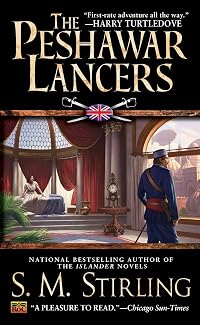
In the mid-1870s, a violent spray of comets hits Earth, decimating cities, erasing shorelines, and changing the world's climate forever. And just as Earth's temperature dropped, so was civilization frozen in time. Instead of advancing technologically, humanity had to piece itself back together . . . In the twenty-first century, boats still run on steam, messages arrive by telegraph, and the British Empire, with its capital now in Delhi, controls much of the world. The other major world show more leader is the Czar of All the Russias. Everyone predicts an eventual, deadly showdown. But no one can predict the role that one man, Captain Athelstane King, reluctant spy and hero, will play . . . show lessTags
Recommendations



Member Recommendations

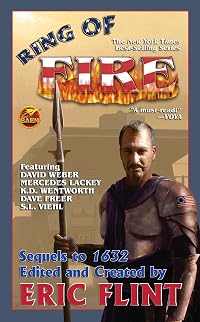
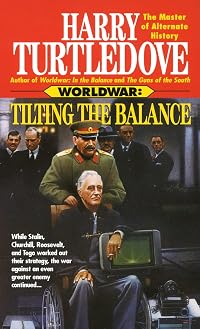
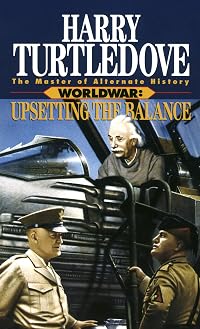
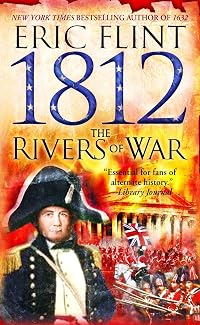
bespen Stirling wrote something of a spiritual successor to Mundy's book set in an alternate timeline. The protagonist of Stirling's book is a descendant of Athelstan King.
Member Reviews
I picked up this book because Stirling co-authored several of the books collected in The Prince with Jerry Pournelle. I hadn't ever read a solo work by Stirling, so I was curious. I have had mixed success with Pournelle's co-authors. I tried reading a book by Niven, and while I liked it, I only liked it, I didn't love it. I picked up a work from Michael Flynn on the same day I bought this one, and I couldn't even finish it. I like Flynn enough to read his blog, but so far I've started but not finished two of his novels.
This book I loved. I'm going to go get more of Stirling's work, because this is everything I look for in a book: adventure, psychological insight, and a love of history and place. I also want to live in the world of the show more book. Not really, since most of the population of the Earth starved to death or was eaten after a comet hit in 1878, but Stirling has created a world where the Victorian age lasted an extra 150 years in the technological and cultural stasis the comet wrought.
You can always tell you have entered an alternate history when the airships show up. We see hydrogen dirigibles, difference engines, and an England with all the power and self-confidence of the Victorians, that never endured the morale-sapping Great War or de-colonization. Except without England, since they de-camped for the colonies once it became clear that winter wasn't going to end anytime soon after the comet hit.
I get a very Kipling vibe from The Peshawar Lancers, the love of a foreign place, adopted wholeheartedly as one's home. I wanted again and again to turn to a map of India, or to look up the history of place, or a caste, or a god. Like bored little boys everywhere, I learn history and geography better if you spice it up with a battle here or there. I think I like alternative history and historical fiction so much because the real world is so much more interesting than fictional ones, unless you are Tolkien. Stirling has all the color and pageantry of India to work with, and he does it well. He only had to make up one religion for this book, and it is really just an old religion with a new name. I never could find the religions in so many science fiction and fantasy books sociologically plausible. For example, in George R. R. Martin's A Song of Fire and Ice series, you have a whole world that is just like ours, except without the religions that gave it shape. You have the chivalry of Westeros, who somehow act just like Christian knights, without the Christianity. There have been polytheistic mounted cavalry, they just act different.
Stirling doesn't have that problem, because he can just describe Sikhs, Hindus, Muslims, and Christians as they are (or were), and let all that history give him as much backstory has he could ever need. Throw in some science, some history, some philology, some intrigue, and you have a hell of an adventure. Highly recommended. show less
This book I loved. I'm going to go get more of Stirling's work, because this is everything I look for in a book: adventure, psychological insight, and a love of history and place. I also want to live in the world of the show more book. Not really, since most of the population of the Earth starved to death or was eaten after a comet hit in 1878, but Stirling has created a world where the Victorian age lasted an extra 150 years in the technological and cultural stasis the comet wrought.
You can always tell you have entered an alternate history when the airships show up. We see hydrogen dirigibles, difference engines, and an England with all the power and self-confidence of the Victorians, that never endured the morale-sapping Great War or de-colonization. Except without England, since they de-camped for the colonies once it became clear that winter wasn't going to end anytime soon after the comet hit.
I get a very Kipling vibe from The Peshawar Lancers, the love of a foreign place, adopted wholeheartedly as one's home. I wanted again and again to turn to a map of India, or to look up the history of place, or a caste, or a god. Like bored little boys everywhere, I learn history and geography better if you spice it up with a battle here or there. I think I like alternative history and historical fiction so much because the real world is so much more interesting than fictional ones, unless you are Tolkien. Stirling has all the color and pageantry of India to work with, and he does it well. He only had to make up one religion for this book, and it is really just an old religion with a new name. I never could find the religions in so many science fiction and fantasy books sociologically plausible. For example, in George R. R. Martin's A Song of Fire and Ice series, you have a whole world that is just like ours, except without the religions that gave it shape. You have the chivalry of Westeros, who somehow act just like Christian knights, without the Christianity. There have been polytheistic mounted cavalry, they just act different.
Stirling doesn't have that problem, because he can just describe Sikhs, Hindus, Muslims, and Christians as they are (or were), and let all that history give him as much backstory has he could ever need. Throw in some science, some history, some philology, some intrigue, and you have a hell of an adventure. Highly recommended. show less
This was a delightful romp of steampunk, alternative history, action adventure and it was funny in places too. I chuckled over the bit where one character enjoys reading speculative novels about how history might have turned out if meteors hadn't hit in 1878 - but its a guilty habit and she doesn't like to admit it. Stirling applies a lighter touch (or some more ruthless editing) than he has in previous books.
This one kept me happily turning the pages of my kobo, enjoying some victorian-flavoured alternate history. Extra points awarded for being 100% zombie and vampires free.
This one kept me happily turning the pages of my kobo, enjoying some victorian-flavoured alternate history. Extra points awarded for being 100% zombie and vampires free.
My reaction to reading this novel in 2005.
Stirling thinks through the consequences of his alternate history. The point of divergence is a series of commentary impacts, mostly in the northern hemisphere, in 1878.
American civilization is wiped out. The British Isles are all but denuded of people. Prime Minister Disraeli marshals an exodus of the most important people, cultural knowledge, and technology and sends it to India. France is also wiped out but French culture lives on in Northern Africa. Islam is resurgent across the Middle East and Balkans. Russia has turned into a country of nominal Satan worshippers. Japan and China have combined. The Angrezi Raj, the cultural fusion of British and Indian culture, inherits the British empires show more (including new outposts in North America.)
The exposition is mostly in the first 60 pages of the book in which Stirling throws around a lot Indian/Hindu terms. He gets around to religious issues (basically the Anglican Church has accepted a lot of the Hindu gods and goddesses as versions of the Trinity) later on. To further show off his world building, he has five appendices with the background of the world. The culture is credible, and Stirling certainly makes this version of the British Empire seem noble and appealing with its personal ties of loyalty and honor and an intelligence run along informal lines.
Initially, I didn't like my first exposure to seeress Yasmini, whose visions of the future, I thought, brought an unwelcome element of magic to this alternate history. Then Stirling got around to rationalizing using an obvious, if oblique, version of Roger Penrose's idea that the brain is a quantum computer and thus (Penrose doesn't say this) can see alternate timelines. The presence of a Kali cult was to be expected even if they were minor villains allied to the Satanic Peacock Throne.
The novel has two faults though neither was enough to disgust me. The reason -- penetration of the Imperial intelligence services so vast that they can not be purged safely without first luring the traitors into the open --why Athelstane King and company have to sneak aboard the dirigible at the end seemed was a bit weak. I think Stirling, understandably, just wanted some scenes on a dirigible.
The end of the book descended into a wealth of cliches (presumably taken from the authors Stirling lists in the acknowledgements).There is not only a prince in disguise (the French envoy sent to arrange a marriage turns out to be the French prince who gets himself involved in a lot of combat during the book) but three marriages. The marriage of the French prince and Princess Sita was expected -- after all, that's why the envoy is there, to arrange it. But the marriage of Athelstane King and Yasmini, though hardly unexpected, was that old cliche of adventure plots. Worse was the convenient death of the Emperor and the marriage of scientist Cassandra King and the Crown Prince.
All three of the main women characters are of the same improbable action heroine mold beloved of modern authors. Stirling may have a thing for this sort of thing given the character of guerilla leader Skida Thibodeau in Jerry Pournelle and S. M. Stirling's Go Tell the Spartans. I think I was supposed to find the constant insults between King's faithful Sikh Narayan Singh and would be Pathan assassin Ibrahim Khan (who also turns out to be a prince) funny. I didn't mind them, but I usually didn't find them funny. show less
Stirling thinks through the consequences of his alternate history. The point of divergence is a series of commentary impacts, mostly in the northern hemisphere, in 1878.
American civilization is wiped out. The British Isles are all but denuded of people. Prime Minister Disraeli marshals an exodus of the most important people, cultural knowledge, and technology and sends it to India. France is also wiped out but French culture lives on in Northern Africa. Islam is resurgent across the Middle East and Balkans. Russia has turned into a country of nominal Satan worshippers. Japan and China have combined. The Angrezi Raj, the cultural fusion of British and Indian culture, inherits the British empires show more (including new outposts in North America.)
The exposition is mostly in the first 60 pages of the book in which Stirling throws around a lot Indian/Hindu terms. He gets around to religious issues (basically the Anglican Church has accepted a lot of the Hindu gods and goddesses as versions of the Trinity) later on. To further show off his world building, he has five appendices with the background of the world. The culture is credible, and Stirling certainly makes this version of the British Empire seem noble and appealing with its personal ties of loyalty and honor and an intelligence run along informal lines.
Initially, I didn't like my first exposure to seeress Yasmini, whose visions of the future, I thought, brought an unwelcome element of magic to this alternate history. Then Stirling got around to rationalizing using an obvious, if oblique, version of Roger Penrose's idea that the brain is a quantum computer and thus (Penrose doesn't say this) can see alternate timelines. The presence of a Kali cult was to be expected even if they were minor villains allied to the Satanic Peacock Throne.
The novel has two faults though neither was enough to disgust me. The reason -- penetration of the Imperial intelligence services so vast that they can not be purged safely without first luring the traitors into the open --why Athelstane King and company have to sneak aboard the dirigible at the end seemed was a bit weak. I think Stirling, understandably, just wanted some scenes on a dirigible.
The end of the book descended into a wealth of cliches (presumably taken from the authors Stirling lists in the acknowledgements).
All three of the main women characters are of the same improbable action heroine mold beloved of modern authors. Stirling may have a thing for this sort of thing given the character of guerilla leader Skida Thibodeau in Jerry Pournelle and S. M. Stirling's Go Tell the Spartans. I think I was supposed to find the constant insults between King's faithful Sikh Narayan Singh and would be Pathan assassin Ibrahim Khan (who also turns out to be a prince) funny. I didn't mind them, but I usually didn't find them funny.
Wonderful world building and alternate history. But the main story was, well, implausible would be the polite term. Certainly readable and certainly entertaining but the main draw for me here was the background and the setting. The appendices were a nice touch, too, with more background on the history of the world after the comet stuck in the 1870's.
A fine alt-hist work and now that the 3rd book in his planetary romances has finally been published, I hope a sequel finally gets written. (Spot the Flashman reference in this...)
Recommended.
Recommended.
An extremely creative alternate history action adventure. The divergence begins in 1878 when a stream of comets strikes the earth, devastating much of the northern hemisphere. The British Empire survives by relocating to the Indian subcontinent, the Russian empire by turning to the leadership of a nihilistic cult-religion -and cannibalism. Fast forward to a quite different late 20th century as "the great game" continues to be play out. Both sides spar in their new home central Asia, as well as in Europe and America where recolonization efforts continue. The center of the story revolves around the English captain Athelstan King and his attempts to unravel a plot targeting not only himself, but his entire family, with dire implications show more for the Indo-English empire and perhaps the entire world...
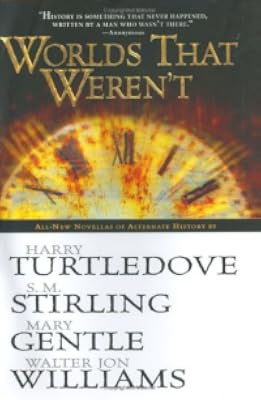
The novel is a conscious nod to enjoyable old-time adventure fiction a la Edgar Rice Burroughs and Rudyard Kipling. The alternate 20th century world of wood and steam, suffused with Indian influences is thoroughly imaginative and captivating - as it ought to be in a good alternative history novel. If some of the characters seem slightly stock or borrowed from melodrama at times, you don't seem to mind as much given the tone of the book and it's steady stream of action as it builds to an inevitable climax. A quick and enjoyable read. If you like it, be sure to read the novella "Shikari in Galveston", part of the alternative history collection "Worlds That Weren't". It takes place in the same alternate history time line, and involves a number of the same characters. show less
The novel is a conscious nod to enjoyable old-time adventure fiction a la Edgar Rice Burroughs and Rudyard Kipling. The alternate 20th century world of wood and steam, suffused with Indian influences is thoroughly imaginative and captivating - as it ought to be in a good alternative history novel. If some of the characters seem slightly stock or borrowed from melodrama at times, you don't seem to mind as much given the tone of the book and it's steady stream of action as it builds to an inevitable climax. A quick and enjoyable read. If you like it, be sure to read the novella "Shikari in Galveston", part of the alternative history collection "Worlds That Weren't". It takes place in the same alternate history time line, and involves a number of the same characters. show less
A meteor that hits Europe during Victoria's reign, realigns the world of the Peshawar Lancers. Northern Europe becomes nearly uninhabitable so most countries evacuate to warmer climes. Thus the British Raj is the center of the world and the European-begun major powers fight for land amd power across southeast Asia and Africa.
I enjoyed the world building and the background and thought it worked well to set up the story. The novel follows a British lord who is serving the Raj in the military and his sister, who is a scientist, and who is working on trying to come up with a steampunky method to predict any future meteor strikes so they can be ready for them.
The tale is complicated with lots of intrigue and spies working toward undermining show more the Raj and also killing the Prince of Wales while they're at it.
Lots of action and complications. I especially enjoyed the spunky female scientist who dares to challenge entrenched gender roles.
Recommended for those who enjoy alternate history and steampunk. show less
I enjoyed the world building and the background and thought it worked well to set up the story. The novel follows a British lord who is serving the Raj in the military and his sister, who is a scientist, and who is working on trying to come up with a steampunky method to predict any future meteor strikes so they can be ready for them.
The tale is complicated with lots of intrigue and spies working toward undermining show more the Raj and also killing the Prince of Wales while they're at it.
Lots of action and complications. I especially enjoyed the spunky female scientist who dares to challenge entrenched gender roles.
Recommended for those who enjoy alternate history and steampunk. show less
Members
- Recently Added By
Published Reviews
ThingScore 75
The Peshawar Lancers is an action-filled adventure through a future reminiscent of the British Raj. The characters are sympathetic and realistic despite the alternate world which they inhabit. Technological expositions are kept to a minimum and do not impede the pace of the novel.
added by RBeffa
Lists

Best Alternate History
111 works; 60 members

What if... a speculative history list
25 works; 2 members

Readers Guide to Steampunk
65 works; 1 member

Favorite Science Fiction
456 works; 218 members
Author Information

149+ Works 32,539 Members
Stephen Michael Stirling is a French-born Canadian-American science fiction and fantasy author. His Birthday is September 30, 1953. He has lived in several countries and currently resides in the United States in New Mexico with his wife. He is probably best known for his Draka series of novels and his more recent time travel/alternate history show more Nantucket series and Emberverse series. In 2014 his title The Golden Princess made The New York Times Best Seller List. (Bowker Author Biography) show less
Some Editions
Awards and Honors
Awards
Series

Common Knowledge
- Canonical title
- The Peshawar Lancers
- Original title
- The Peshawar Lancers
- Original publication date
- 2002-01
- Epigraph
- "What shall we tell you?
Tales, marvelous tales Of ships and stars and isles where good men rest Where nevermore the rose of sunset pales And winds and shadows fall towards the West ..." - Dedication
- In Memorium:
To Poul Anderson 1936-2001 - First words
- Captain Athelstane King rinsed out his mouth with a swig from the goatskin bag slung at his saddlebow.
- Last words
- (Click to show. Warning: May contain spoilers.)"We're both home now," he said. "Home is where our children are born."
- Blurbers
- Green, Roland; Resnick, Mike; Turtledove, Harry
- Original language
- English
Classifications
Statistics
- Members
- 864
- Popularity
- 31,578
- Reviews
- 20
- Rating
- (3.70)
- Languages
- English, French
- Media
- Paper, Audiobook, Ebook
- ISBNs
- 9
- ASINs
- 4