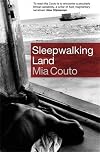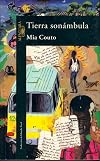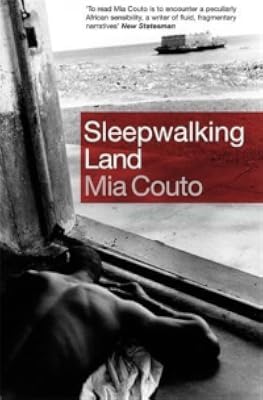
Sleepwalking Land
by Mia Couto
On This Page
Description
"On almost every page of this witty magical realist whodunit, we sense Couto's delight on those places where language slips officialdom's asphyxiating grasp."--The New York Times Book Review onThe Last Flight of the Flamingo "The most prominent of the younger generation of writers in Portuguese-speaking Africa, Couto passionately and sensitively describes everyday life in poverty-stricken Mozambique."--Guardian (London) "Quite unlike anything else I have read from Africa."--Doris Lessing As show more the civil war rages in 1980s Mozambique, an old man and a young boy, refugees from the war, seek shelter in a burnt-out bus. Among the effects of a dead passenger, they come across a set of notebooks that tell of his life. As the boy reads the story to his elderly companion, this story and their own develop in tandem. Written in 1992, Mia Couto's first novel is a powerful indictment of the suffering war brings. Born in 1955 in Mozambique,Mia Couto ran the AIM news agency during the revolutionary struggle. He now lives in Maputo where he works as an environmental biologist and heads the Mozambique side of the Limpopo Transnational Park. In 2007 he was the first African author to win the Latin Union Award for Romance Languages; in 2013 he was awarded the e100,000 Camões Prize for Literature, in recognition of his life's work. In 2014 he received the $50,000 Neustadt Prize for Literature, and in 2015 he was shortlistedfor the Man Booker International Prize. show lessTags
Recommendations






















Member Recommendations
Member Reviews
In a war-devastated landscape, an old man and a boy set up camp provisionally in a burnt-out bus. There they find a suitcase containing a stack of notebooks, the story of a young man called Kindzu, who has set out to find his father, lost at sea in the aftermath of the war. The two stories carry on in parallel, punctuated by encounters with one-eyed giants, sorceresses, beaches and all that kind of thing.
There's a lot of Homer going on here, and a certain amount of Ovid, but it's Homer and Ovid as they might have written if they'd grown up in the Southern Hemisphere and known about Samuel Beckett and Gabriel García Márquez. And it's all going on in a very distinctively African way, which feels coherent and enjoyably puzzling, not at show more all like a literary exercise. Couto draws us into the terror of living in that kind of war-destroyed world, where there are no longer any certainties you can count on, and the best you can do is try to retain some shreds of human dignity. Even when all quests ultimately fail and promises can't be kept, Couto wants us to see that the attempt to live like a human being and not like a beast is already a blow against the negative forces of the war. show less
There's a lot of Homer going on here, and a certain amount of Ovid, but it's Homer and Ovid as they might have written if they'd grown up in the Southern Hemisphere and known about Samuel Beckett and Gabriel García Márquez. And it's all going on in a very distinctively African way, which feels coherent and enjoyably puzzling, not at show more all like a literary exercise. Couto draws us into the terror of living in that kind of war-destroyed world, where there are no longer any certainties you can count on, and the best you can do is try to retain some shreds of human dignity. Even when all quests ultimately fail and promises can't be kept, Couto wants us to see that the attempt to live like a human being and not like a beast is already a blow against the negative forces of the war. show less
Mozambique's FRELIMO led War of Independence against Portugal was bad enough, but at least it held out the hope of a better future for the people. The civil war which followed held no such promise. As usual, it was everyday people who suffered most.
Opening the novel with a young boy and an old man on the road, Coutu writes in images.
The boy, Muidinga, was recovering from a terrible illness that left him all but dead. The man, Tuahir, had found him abandoned in the refugee camp, and taken him under his wing when no one else would. Both were starving.
As they wandered along, they found a burnt out bus, its dead passengers still inside. A lone man lay dead on the road outside, shot to death. What better place to shelter than a burned out wreck? They buried the dead and settled in. The man on the road had had a series of notebooks with him, telling his story.
As the days passed, Muidinga, who could read a little, read them to Tuahir, gaining confidence as he went. Kindzu was the name of the boy in the notebooks, a boy who had grown up on the Mozambique coast, a new and exotic world to Muidinga.
The man and boy spent much of their time looking for food, water, and firewood, but both looked forward to the readings. Couto alternates the day to day life with these readings. However, as time goes on, a wonderful magic realism creeps in, bit by bit, blurring the lines between the two stories. Is the highway with the burnt out bus moving through the land? Roads should be still, "waiting for men's journeys". Which story does each boy actually belong in? Who is Tuahir?
This is indeed a sleepwalking land; one where travellers dream and hallucinate their way through on their way to unknown destinations. show less
Opening the novel with a young boy and an old man on the road, Coutu writes in images.
They walk with swaying gait, as if journeying has been their only occupation since birth. Their destination is the other side of nowhere, their arrival a non-departure, awaiting what lies ahead. They are fleeing the war, the war that has contaminated their whole country. They advance under the illusion that somewhere beyond there lies a safe country....show more
The two travellers matched the road, withered and
devoid of hope.
The boy, Muidinga, was recovering from a terrible illness that left him all but dead. The man, Tuahir, had found him abandoned in the refugee camp, and taken him under his wing when no one else would. Both were starving.
As they wandered along, they found a burnt out bus, its dead passengers still inside. A lone man lay dead on the road outside, shot to death. What better place to shelter than a burned out wreck? They buried the dead and settled in. The man on the road had had a series of notebooks with him, telling his story.
As the days passed, Muidinga, who could read a little, read them to Tuahir, gaining confidence as he went. Kindzu was the name of the boy in the notebooks, a boy who had grown up on the Mozambique coast, a new and exotic world to Muidinga.
The man and boy spent much of their time looking for food, water, and firewood, but both looked forward to the readings. Couto alternates the day to day life with these readings. However, as time goes on, a wonderful magic realism creeps in, bit by bit, blurring the lines between the two stories. Is the highway with the burnt out bus moving through the land? Roads should be still, "waiting for men's journeys". Which story does each boy actually belong in? Who is Tuahir?
This is indeed a sleepwalking land; one where travellers dream and hallucinate their way through on their way to unknown destinations. show less
For me as a reader who was not familiar with Mozambican history or life during a civil war, Sleepwalking Land's nonlinear feeling was ideal because it gave me a surreal introduction to living in a violent and confusing political environment.
An emotional tale about war and its aftermath emerges from the travelogue of an elderly man and a young boy in Mozambique. Does it inspire hope or just a sense of emptiness? A picture of humanity in harsh circumstances is produced by the characters' sincerity and their predicament. It is a book that I would recommend to all readers interested in the story of Africa and its many denizens.
An emotional tale about war and its aftermath emerges from the travelogue of an elderly man and a young boy in Mozambique. Does it inspire hope or just a sense of emptiness? A picture of humanity in harsh circumstances is produced by the characters' sincerity and their predicament. It is a book that I would recommend to all readers interested in the story of Africa and its many denizens.
A young boy and man are refugees from a guerrilla civil war who happen upon a bombed and burned bus. They seek shelter in the bus, but what they discover changes their quality of life. They find 10 notebooks belonging to a man that may or may not be one of the dead people on the bus. What unfolds is an African Odyssey - the man in the notebooks and our two characters are taken on a dream-like adventure.
I thought the folklore and the tall-tales were just enough. It added to the story tremendously in the way of using imagination as a coping method in such horrific circumstances. For instance, in one part of the book, the two happen upon a man who is trying to make a river. He has dug over hills and through mountains. He wants to make a show more river so his village can be prosperous. The two decide to help him dig, but then the sky opens up and torrential downpour descends. The man attempting to make the river falls into his river, which is now a churning rapid-like mud pit. Everything he just dug is leveled out, in the way water levels sand - with him under it.
This was sort of a re-occurring theme. Some characters were trying to become Westernized and "civilized" and "own" the Earth, but it is always fruitless.
All in all, I loved it and think it a very worthy book of anyone's time. show less
I thought the folklore and the tall-tales were just enough. It added to the story tremendously in the way of using imagination as a coping method in such horrific circumstances. For instance, in one part of the book, the two happen upon a man who is trying to make a river. He has dug over hills and through mountains. He wants to make a show more river so his village can be prosperous. The two decide to help him dig, but then the sky opens up and torrential downpour descends. The man attempting to make the river falls into his river, which is now a churning rapid-like mud pit. Everything he just dug is leveled out, in the way water levels sand - with him under it.
This was sort of a re-occurring theme. Some characters were trying to become Westernized and "civilized" and "own" the Earth, but it is always fruitless.
All in all, I loved it and think it a very worthy book of anyone's time. show less
An old man, Tuahir, is traveling through war-torn Mozambique with young boy, Muidinga, who is recently recovered from some kind of sickness or trauma. They take shelter in a bombed out bus, where they find a set of journals on the body of a dead boy, Kindzu. The chapters of the novel alternate between readings of the stories in the journal and recounting the experiences of Tuahir and Muidinga during their time spent in and around the bus.
I had a lot of trouble with this book. The language, though spare, is very evocative and compelling. There was no difficulty in feeling the the sorrows of the war, the frustrations at government corruption, the racial tensions of the land. The book leans heavily toward magical realism but does so in a show more way that conveys the sense of a dream rather than a jarring departure from reality.
However, the story is filled to the brim with symbolism and I found myself wandering through it, feeling like I never quite understood the full significance of most of the magical events. I felt that i was missing many of the points the author was trying to make.
If I were conversant enough with the history and culture of Mozambique, I think I would find this a marvelous book. As it was, I found that I was almost sleepwalking through parts of it (yes, pun intended). show less
I had a lot of trouble with this book. The language, though spare, is very evocative and compelling. There was no difficulty in feeling the the sorrows of the war, the frustrations at government corruption, the racial tensions of the land. The book leans heavily toward magical realism but does so in a show more way that conveys the sense of a dream rather than a jarring departure from reality.
However, the story is filled to the brim with symbolism and I found myself wandering through it, feeling like I never quite understood the full significance of most of the magical events. I felt that i was missing many of the points the author was trying to make.
If I were conversant enough with the history and culture of Mozambique, I think I would find this a marvelous book. As it was, I found that I was almost sleepwalking through parts of it (yes, pun intended). show less
'Sleepwalking Land' is a journey through post-independence mid-civil war Mozambique. It follows a young boy (Muidinga) with no memory of his past who is sheltered in a burnt out bus by an old man. In the bus they find a manuscript describing the life of Kindzu. As they read the manuscript the two stories (those of Kindzu and Muidinga) begin to collide.
The book is magical realism at its best. Rather than being a chain of weird events, the magical realism is applied with a soft touch, so that the events described retain their significance. The characters and the landscape all 'sleepwalk' their way through the story, so that the whole thing takes on a dream-like quality, but Couto manages to maintain this feel while adhering tightly to show more his narrative. Beautifully written and translated, and a pleasure to read. show less
The book is magical realism at its best. Rather than being a chain of weird events, the magical realism is applied with a soft touch, so that the events described retain their significance. The characters and the landscape all 'sleepwalk' their way through the story, so that the whole thing takes on a dream-like quality, but Couto manages to maintain this feel while adhering tightly to show more his narrative. Beautifully written and translated, and a pleasure to read. show less
Honestly not quite sure what to make of this. I think much of it escaped me; I simply did not follow or understand some of his symbolism. Some I got. The writing is good, the story fascinating (aspects of it remind me of Life of Pi) but it leaves me feeling confused and incomplete, like the only other book of his I’ve read, the collection Rain: And other stories. I’m not certain I’ve begun with the “right” books and if someone wants to straighten me out and make a recommendation, I’m definitely willing to read more. But as it stands, I suspect that Mr. Couto and I may not be a match.
Members
- Recently Added By
Lists

Speculative Fiction from around the World
610 works; 17 members

Around the World in 80 Books
79 works; 4 members

Magical Realism
23 works; 2 members
Author Information

75+ Works 3,153 Members
Some Editions
Awards and Honors
Series
Belongs to Publisher Series
Common Knowledge
- Canonical title
- Sleepwalking Land
- Original title
- Terra sonâmbula
- Original publication date
- 1992
- People/Characters
- Muidinga; Tuahir; Kindzu; Farida; Carolinda; Surendra (show all 9); Assane; Antoniho; Gaspar
- Important places
- Mozambique; Africa; Burnt out bus
- Important events*
- Mozambican Civil War (1977-1992)
- Epigraph
- It was said that place was a sleepwalking land. For while men slept, it moved yonder across space and time. When they woke up, the inhabitants would gaze once more at the landscape's complexion and they knew they had been ... (show all)visited by the fantasy of dreams during the night.
A belief of the inhabitants of Matimati
What is it that makes the road move along? It's our dreams. As long as people dream, the road will stay alive. That's what roads are for, to make the future our kin.
Tuahir's words
There are three kinds of men:
The living, the dead and those who journey on the sea.
Plato - First words
- War had killed the road thereabouts.
- Last words
- (Click to show. Warning: May contain spoilers.)Then, one by one, the letters turn into grains of sand, and little by little, all my writings are transformed into pages of earth.
- Original language
- Portuguese
- Disambiguation notice
- Translated from Portuguese
*Some information comes from Common Knowledge in other languages. Click "Edit" for more information.
Classifications
- Genres
- Fiction and Literature, General Fiction, Romance
- DDC/MDS
- 869.342 — Literature & rhetoric Spanish Literature Literatures of Portuguese and Galician languages Portuguese fiction 20th Century 1945-1999
- LCC
- PQ9939 .C68 .T4713 — Language and Literature French, Italian, Spanish and Portuguese literatures Portuguese literature Provincial, local, colonial, etc.
- BISAC
Statistics
- Members
- 520
- Popularity
- 57,555
- Reviews
- 13
- Rating
- (3.72)
- Languages
- 11 — Catalan, Danish, Dutch, English, French, German, Italian, Norwegian (Bokmål), Portuguese (Portugal), Spanish, Swedish
- Media
- Paper, Ebook
- ISBNs
- 33
- ASINs
- 3