On This Page
Description
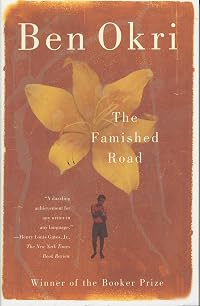
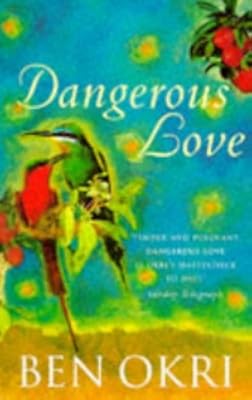
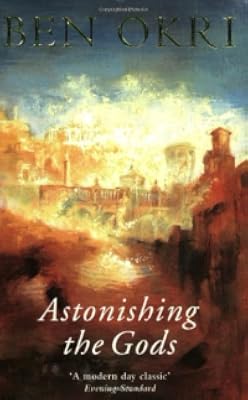
Winner of the Man Booker Prize: "Okri shares with García Márquez a vision of the world as one of infinite possibility. . . . A masterpiece" (TheBoston Sunday Globe). Azaro is a spirit child, an abiku, existing, according to the African tradition, between life and death. Born into the human world, he must experience its joys and tragedies. His spirit companions come to him often, hounding him to leave his mortal world and join them in their idyllic one. Azaro foresees a trying life ahead, show more but he is born smiling. This is his story. When President Bill Clinton first went to Africa he quoted from The Famished Road, which has inspired literature, art, politics, and pop songs-and even been referenced in an episode of The Simpsons. A transformative story for all ages and all times, it means many things to many people. Few contemporary novels have aroused as much passion as this one. Indeed, twenty-five years after its breakout publication, the iconic story of Azaro's travels continues to mesmerize new generations. For readers of Things Fall Apart or One Hundred Years of Solitude, this Man Booker Prize-winning blend of fabulism and gritty realism by the Nigerian author of Astonishing the Gods and Dangerous Love is a "dazzling, hypnotic" journey through Africa that "weaves the humblest detail with the most extravagant flight of fancy to create an astonishing fictional tapestry" (San Francisco Chronicle). Already considered a classic of world literature, it is "a masterpiece if ever one existed" (The Boston Sunday Globe). show lessTags
Recommendations








Member Recommendations
Member Reviews
Erm… well… this was fantastic. Quite literally fantastic.
And I mean that absolutely literally. It was so fantastic at times that I lost my grip on reality, the plot, the characters and my underpants. As Ayeshabanerjee says, it messes with your mind.
No seriously though, Okri can write beautifully and this novel, the first of a trilogy according to Arjuna, is beautiful in many places. But there’s beautiful writing for a purpose and then beautiful writing for the sake of it. This seemed more like for the sake of it sometimes. Check this out…
When I went back into the bar Dad was asleep. He slept with his head held high, as if he were in a trance. I drew close to him and listend to him grinding his teeth. Fireflies lit up the show more darkness. A yellow butterfly circled Dad’s head. I watched the butterfly. When it landed on Dad’s head I could suddenly see him clearly in the dark. A yellow light surrounded him. The light was the exact shape of Dad and it rose in the air and came down and began to wander about the bar. I watched the light. It kept changing colour. It tunred red. Then golden-red. Then it moved up and down, lifting up in the air, and bouncing on the floor. It went round Dad as if looking for a way to get back in. Then the golden-red light came and sat next to me. I started to sweat. I cried out. The light changed colour. It became yellow again, then a sort of diamond-blue. When I touched Dad the butterfly lifted from his head and didsappeared through the ceiling. Dad opened his eyes, saw me, and gave out a strange cry.
Now if that floats your boat, this book is for you… all 500 pages of it. If it doesn’t, I suggest you leave it for others to enjoy.
Did I enjoy it? I don’t think it’s the “great novel” that Anderson Brown describes. I think it’s far too allegorical for that, and the allegorical is only a short step away from mystery as Bookninja found out. My family lived in west Africa for years in two different countries. I’ve been there many times. Unless I had, I would have been completely at a loss for most of this book. But I know something of how west African life works. I related hugely and with glee to the scattered satire of politics, with sorrow to the tales of inept industrial development. But what intrigued me most of all was the spirituality.
There were times in Gambia and Liberia when my family was very much dealing with the spiritual side of west African life, often on a daily basis encountering curses/blessings, witchcraft, medicine wo/men etc. If you haven’t had any experience like this, and you think that it’s all a bunch of hooey anyhow (and I don’t) then this book is either going to be an eye-opener or what you keep to light fires this winter.
So, what do I think of the spirituality represented? How does it compare with the Truth of Christ? Here’s a quote to reflect on…
no true road is ever complete… no way is ever definitive, no truth ever final… there are never really any beginnings or endings.
Well in west Africa, it did indeed seem that no true road was ever complete. This was largely due to corruption than spirituality though ;-) Putting road construction aside, that little bit “no truth ever final” is a seeming contradiction. Certainly, very often what seems true today is proved not so tomorrow. But if life really presents us with absolutely nothing we can be sure of, no truth, then we are all swimming (drowning?) in a mass of the unknown.
I’m not sure if I’ve grasped Okri’s philosophy fully, but it seems to me woefully inadequate when you consider the questions that humanity is asking. If there are no answers, or only answers that help us temporarily, our sorry state will not be improved. All in a Day’s Work complements Okri for his elaborate riddle-making saying that “riddles need not be answered to be enjoyed.” This is true. But when you are searching in the spirit world for meaning to this one and all you have are riddles, you are apt to be confused more than consoled.
Christ was uncompromising here declaring that he himself was the truth. He came to demonstrate spirituality in physical terms we can relate to and provided us not only with riddles (aka parables) but explanations to them as well. Why? He knows how weak we are; how slow to understand. And he has compassion on our situation.
But while Okri’s spirituality may not help you out of your mire, what it will do is enlighten you to the absolute reality of the spiritual world and how interwoven it is with the physical. That is something I wish we all perceived more sharply. I’m right there with Okri on that one. show less
And I mean that absolutely literally. It was so fantastic at times that I lost my grip on reality, the plot, the characters and my underpants. As Ayeshabanerjee says, it messes with your mind.
No seriously though, Okri can write beautifully and this novel, the first of a trilogy according to Arjuna, is beautiful in many places. But there’s beautiful writing for a purpose and then beautiful writing for the sake of it. This seemed more like for the sake of it sometimes. Check this out…
When I went back into the bar Dad was asleep. He slept with his head held high, as if he were in a trance. I drew close to him and listend to him grinding his teeth. Fireflies lit up the show more darkness. A yellow butterfly circled Dad’s head. I watched the butterfly. When it landed on Dad’s head I could suddenly see him clearly in the dark. A yellow light surrounded him. The light was the exact shape of Dad and it rose in the air and came down and began to wander about the bar. I watched the light. It kept changing colour. It tunred red. Then golden-red. Then it moved up and down, lifting up in the air, and bouncing on the floor. It went round Dad as if looking for a way to get back in. Then the golden-red light came and sat next to me. I started to sweat. I cried out. The light changed colour. It became yellow again, then a sort of diamond-blue. When I touched Dad the butterfly lifted from his head and didsappeared through the ceiling. Dad opened his eyes, saw me, and gave out a strange cry.
Now if that floats your boat, this book is for you… all 500 pages of it. If it doesn’t, I suggest you leave it for others to enjoy.
Did I enjoy it? I don’t think it’s the “great novel” that Anderson Brown describes. I think it’s far too allegorical for that, and the allegorical is only a short step away from mystery as Bookninja found out. My family lived in west Africa for years in two different countries. I’ve been there many times. Unless I had, I would have been completely at a loss for most of this book. But I know something of how west African life works. I related hugely and with glee to the scattered satire of politics, with sorrow to the tales of inept industrial development. But what intrigued me most of all was the spirituality.
There were times in Gambia and Liberia when my family was very much dealing with the spiritual side of west African life, often on a daily basis encountering curses/blessings, witchcraft, medicine wo/men etc. If you haven’t had any experience like this, and you think that it’s all a bunch of hooey anyhow (and I don’t) then this book is either going to be an eye-opener or what you keep to light fires this winter.
So, what do I think of the spirituality represented? How does it compare with the Truth of Christ? Here’s a quote to reflect on…
no true road is ever complete… no way is ever definitive, no truth ever final… there are never really any beginnings or endings.
Well in west Africa, it did indeed seem that no true road was ever complete. This was largely due to corruption than spirituality though ;-) Putting road construction aside, that little bit “no truth ever final” is a seeming contradiction. Certainly, very often what seems true today is proved not so tomorrow. But if life really presents us with absolutely nothing we can be sure of, no truth, then we are all swimming (drowning?) in a mass of the unknown.
I’m not sure if I’ve grasped Okri’s philosophy fully, but it seems to me woefully inadequate when you consider the questions that humanity is asking. If there are no answers, or only answers that help us temporarily, our sorry state will not be improved. All in a Day’s Work complements Okri for his elaborate riddle-making saying that “riddles need not be answered to be enjoyed.” This is true. But when you are searching in the spirit world for meaning to this one and all you have are riddles, you are apt to be confused more than consoled.
Christ was uncompromising here declaring that he himself was the truth. He came to demonstrate spirituality in physical terms we can relate to and provided us not only with riddles (aka parables) but explanations to them as well. Why? He knows how weak we are; how slow to understand. And he has compassion on our situation.
But while Okri’s spirituality may not help you out of your mire, what it will do is enlighten you to the absolute reality of the spiritual world and how interwoven it is with the physical. That is something I wish we all perceived more sharply. I’m right there with Okri on that one. show less
I found this book immensely frustrating—I wanted to love it much more than I did, but despite the beauty of Okri's prose, I read The Famished Road itching for a red pen. At least half of the book could have been edited out, and it would have made for a much stronger novel. I can appreciate what Okri was trying to do with making it so cyclical: the novel is about Azaro, a 'spirit child' who is reborn over and over to the same parents, enduring the same events, paralleling the struggles Africa faces having finally won back its independence. It just didn't work. It all felt muddled and vague, as if Okri hadn't thought through exactly what he wanted to say. I will look out for some of Okri's later writing, to see if he's improved on the show more glimmers of promise he shows here, but overall this needed half the length and twice the precision. show less
Okri's book follows Azaro, a spirit child, who chooses life on earth over his spirit existence. Born to a poor family, his fellow spirits try to drag him back towards his other world, as he struggles to find a life in this one. His father is a drunken idealist, his mother a downtrodden pragmatist. The family witness changes to their ramshackle community, changes which incorporate battles between tradition and modernisation, political and social unrest, and the apparent moral decline of their neighbourhood. Azaro's family are witness to the battles between conflicting forces for the soul of their community, and the evolution of their lives.
So, why the negative reaction? Firstly, because the book uses a very heavy handed form of magical show more realism. I like magical realism with a deft touch, such as in books by Gunter Grass, Salman Rushdie and Gabriel Garcia Marquez. In all these examples, the magical realism is a device employed alongside the narrative to create a dreamlike reality. Okri, however, uses magical realism as a replacement for narrative. The book is a long allegory, and there is no real story to it, just a series of mostly unconnected allegorical events. I can think of several books which take this approach, none of which I have enjoyed. Characters flit in and out of focus, doing weird stuff with abandon. Their roles as ciphers for wider events completely overtakes the need to flesh them out as real people, making everyone in the book 2-dimensional and, for me, therefore completely uninteresting as individuals. Secondly, and in complete contrast to all the blurbs, I found Okri's language pedestrian and mundane. His use of staccato sentences frequently made the text read like a novel for children, often barely rising above 'He did this. He then did that. Then this happened.'. It was among some of the most boring prose I have ever read in an adult book. Thirdly, the narrative, such as it is, is repetitive, and involved Azaro running into and out of the jungle, getting slapped on the head, before there is a big fight and his father gets beaten up. This seemed to happen pretty much every 20 pages or so. I don't believe this was a deliberate device by Okri to make a point, simply a result of failing to keep any eye on an overarching narrative amongst all the weird stuff happening. To cap it all, I'm not sure I could find any sympathy for Okri's themes. The blurbs described them as universal, but I though they were rendered as such by a persisting vagueness in what he was actually trying to say. It may be my prejudice as a reader, but I think it is a pitfall of magical realism that it can be used to create a smokescreen behind which it is possible to hide fuzzy thought and vague ideas. Perhaps it was a result of not appreciating Okri's language, but that is exactly what I thought he was trying to do here. show less
So, why the negative reaction? Firstly, because the book uses a very heavy handed form of magical show more realism. I like magical realism with a deft touch, such as in books by Gunter Grass, Salman Rushdie and Gabriel Garcia Marquez. In all these examples, the magical realism is a device employed alongside the narrative to create a dreamlike reality. Okri, however, uses magical realism as a replacement for narrative. The book is a long allegory, and there is no real story to it, just a series of mostly unconnected allegorical events. I can think of several books which take this approach, none of which I have enjoyed. Characters flit in and out of focus, doing weird stuff with abandon. Their roles as ciphers for wider events completely overtakes the need to flesh them out as real people, making everyone in the book 2-dimensional and, for me, therefore completely uninteresting as individuals. Secondly, and in complete contrast to all the blurbs, I found Okri's language pedestrian and mundane. His use of staccato sentences frequently made the text read like a novel for children, often barely rising above 'He did this. He then did that. Then this happened.'. It was among some of the most boring prose I have ever read in an adult book. Thirdly, the narrative, such as it is, is repetitive, and involved Azaro running into and out of the jungle, getting slapped on the head, before there is a big fight and his father gets beaten up. This seemed to happen pretty much every 20 pages or so. I don't believe this was a deliberate device by Okri to make a point, simply a result of failing to keep any eye on an overarching narrative amongst all the weird stuff happening. To cap it all, I'm not sure I could find any sympathy for Okri's themes. The blurbs described them as universal, but I though they were rendered as such by a persisting vagueness in what he was actually trying to say. It may be my prejudice as a reader, but I think it is a pitfall of magical realism that it can be used to create a smokescreen behind which it is possible to hide fuzzy thought and vague ideas. Perhaps it was a result of not appreciating Okri's language, but that is exactly what I thought he was trying to do here. show less
Have you ever thrown a book away in frustration, or been tempted to do so?
Some years ago I found a novel in the litter basket in the bathroom. It turned out this was a deliberate action by my husband to symbolise his anger with the book. I knew from his deep sighs over many nights that he hadn’t been enjoying it but I hadn’t realised it was so bad that he didn’t feel it was enough to put it into our pile for donation. Only the grand gesture would suffice for him. I’ve never felt compelled myself to actually throw a book away but I came oh so close with Ben Okri’s The Famished Road.image
I started reading this as part of my Booker Prize project. It wasn’t one I was particularly looking forward to starting but I’d had it for show more about three years and wanted to clear some space on the shelf. Since winning the prize in 1991, the novel has gained a reputation as a landmark work for creating a specific African version of magical realism. Some commentators have put it on a par with Salman Rushdie’s Midnights Children in terms of its importance. Okri exploits the African belief in the coexistence of spiritual and material worlds through his main character Azaro. He is an abiku or spirit child from the ghetto of an unnamed African city (most likely in Nigeria given Okri’s origins). Though he lives in the mortal world, his sibling spirits from the spiritual other world constantly harass him and send emissaries to try and get him to return to their world.
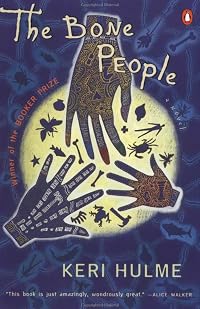
My tolerance for magical realism isn’t high at the best of times but I did manage to get to the end of two other Booker winners that use this technique, Midnights Children and The Bone People. At least they were well written. The same cannot be said about Mr Okri.
The first sentence was a warning of what I could expect through more than 500 pages.
In the beginning there was a river. The river became a road and the road branched out to the whole world. And because the road was once a river it was always hungry.
I suppose this was meant to be lyrical, mysterious even. To me it read like a bad pastiche of the beautiful opening of Genesis. Nonsensical too. How could a river become a road unless it was diverted and then engineers constructed a road following the original path. But then why would a river be hungry and for what? A Big Mac maybe?
What followed wasn’t much better. When Okri wasn’t throwing things at us that I suppose he thought would be magical, mysterious and hence wonderful, he gave us pedestrian narrative of the “I did this. Then I did that” style. After 80 pages and with the knowledge of hundreds left to read, I abandoned the book. The Booker judges clearly were mesmerised by this, but this is one reader who was left decidedly unenchanted. show less
Some years ago I found a novel in the litter basket in the bathroom. It turned out this was a deliberate action by my husband to symbolise his anger with the book. I knew from his deep sighs over many nights that he hadn’t been enjoying it but I hadn’t realised it was so bad that he didn’t feel it was enough to put it into our pile for donation. Only the grand gesture would suffice for him. I’ve never felt compelled myself to actually throw a book away but I came oh so close with Ben Okri’s The Famished Road.image
I started reading this as part of my Booker Prize project. It wasn’t one I was particularly looking forward to starting but I’d had it for show more about three years and wanted to clear some space on the shelf. Since winning the prize in 1991, the novel has gained a reputation as a landmark work for creating a specific African version of magical realism. Some commentators have put it on a par with Salman Rushdie’s Midnights Children in terms of its importance. Okri exploits the African belief in the coexistence of spiritual and material worlds through his main character Azaro. He is an abiku or spirit child from the ghetto of an unnamed African city (most likely in Nigeria given Okri’s origins). Though he lives in the mortal world, his sibling spirits from the spiritual other world constantly harass him and send emissaries to try and get him to return to their world.
My tolerance for magical realism isn’t high at the best of times but I did manage to get to the end of two other Booker winners that use this technique, Midnights Children and The Bone People. At least they were well written. The same cannot be said about Mr Okri.
The first sentence was a warning of what I could expect through more than 500 pages.
In the beginning there was a river. The river became a road and the road branched out to the whole world. And because the road was once a river it was always hungry.
I suppose this was meant to be lyrical, mysterious even. To me it read like a bad pastiche of the beautiful opening of Genesis. Nonsensical too. How could a river become a road unless it was diverted and then engineers constructed a road following the original path. But then why would a river be hungry and for what? A Big Mac maybe?
What followed wasn’t much better. When Okri wasn’t throwing things at us that I suppose he thought would be magical, mysterious and hence wonderful, he gave us pedestrian narrative of the “I did this. Then I did that” style. After 80 pages and with the knowledge of hundreds left to read, I abandoned the book. The Booker judges clearly were mesmerised by this, but this is one reader who was left decidedly unenchanted. show less
[I wrote this review in 2012]
**Beautifully written. Booker Prize Winner in 1991**
What an incredibly polarised array of reviews this book has had. I have been gradually reading previous Man Booker Prize winning novels, not in any particular order, and I felt drawn to this novel and the story of a spirit child born only to live for a short while, but who decides to defy this destiny and chooses to stay in the living world. It sounded like an interesting premise and refreshingly different from other novels I've recently read.
I wasn't disappointed.
'The Famished Road' won the Booker Prize for fiction in 1991 and I found it easy to see why. Ben Okri writes beautifully. His lyrical, poetic style is a delight to read. His use of language is at show more times literally breathtaking. As the reviewer for the Independent on Sunday wrote, 'Okri is incapable of writing a boring sentence.' Although there is an abundance of mystical reflection in this novel, and it is by no means a page-turner in the conventional sense, I yet felt compelled to keep reading. Some greater force - the force of powerful language - was keeping me hungry for more.
The flowery writing and mystical narrative was at times a little frustrating. I found I was intensely interested in the child, Azaro and his small family; their poverty-stricken life of hardships, hunger, sorrows and joy moved me. I wanted to know more about the flattening of the surrounding forest and its effect and the building of new compounds, about the arrival of electricity, about the changing world around them and the infiltration of outside influences. I wanted to know more about the story of the photo-journalist who took photos of everyday life and hardships, of tragedies, of politicians - a documentary life of his neighbours if you like - and who had these controversial pictures published in the local press. I had to do a little digging of my own to discover that the novel is set in Nigeria as this is never overtly mentioned. All-in-all, beautiful as it is I'm sure I would have fallen in love with the book if it had a more even balance of mystical and harsh gritty reality. The intense concentration on mysticism left me feeling one step removed from seeing the whole - the poverty, the politics, the daily grind, the myth, legend and mysticism, all combined - and instead feeling like I had only truly grasped a part of the picture.
The beautiful writing makes this a worthy read for anyone who appreciates world-class use of language, but its ethereal qualities may put off readers looking for something more solid, rather than spiritual. If you do read and enjoy it I recommend going back and re-reading the last chapter every now and then - its message is universal. 'The Famished Road' gets a highly recommended and a 4.5 starts from me. show less
**Beautifully written. Booker Prize Winner in 1991**
What an incredibly polarised array of reviews this book has had. I have been gradually reading previous Man Booker Prize winning novels, not in any particular order, and I felt drawn to this novel and the story of a spirit child born only to live for a short while, but who decides to defy this destiny and chooses to stay in the living world. It sounded like an interesting premise and refreshingly different from other novels I've recently read.
I wasn't disappointed.
'The Famished Road' won the Booker Prize for fiction in 1991 and I found it easy to see why. Ben Okri writes beautifully. His lyrical, poetic style is a delight to read. His use of language is at show more times literally breathtaking. As the reviewer for the Independent on Sunday wrote, 'Okri is incapable of writing a boring sentence.' Although there is an abundance of mystical reflection in this novel, and it is by no means a page-turner in the conventional sense, I yet felt compelled to keep reading. Some greater force - the force of powerful language - was keeping me hungry for more.
The flowery writing and mystical narrative was at times a little frustrating. I found I was intensely interested in the child, Azaro and his small family; their poverty-stricken life of hardships, hunger, sorrows and joy moved me. I wanted to know more about the flattening of the surrounding forest and its effect and the building of new compounds, about the arrival of electricity, about the changing world around them and the infiltration of outside influences. I wanted to know more about the story of the photo-journalist who took photos of everyday life and hardships, of tragedies, of politicians - a documentary life of his neighbours if you like - and who had these controversial pictures published in the local press. I had to do a little digging of my own to discover that the novel is set in Nigeria as this is never overtly mentioned. All-in-all, beautiful as it is I'm sure I would have fallen in love with the book if it had a more even balance of mystical and harsh gritty reality. The intense concentration on mysticism left me feeling one step removed from seeing the whole - the poverty, the politics, the daily grind, the myth, legend and mysticism, all combined - and instead feeling like I had only truly grasped a part of the picture.
The beautiful writing makes this a worthy read for anyone who appreciates world-class use of language, but its ethereal qualities may put off readers looking for something more solid, rather than spiritual. If you do read and enjoy it I recommend going back and re-reading the last chapter every now and then - its message is universal. 'The Famished Road' gets a highly recommended and a 4.5 starts from me. show less
Such a difficult book to read. I put it down once, picked it up a couple months later and after reading to p. 260 just skimmed to the end. Yet I'm glad I went to the end, because the final chapter, Okri's envoi, is a powerful message. Would anyone bother reading or understanding that if they hadn't read any of the rest of the book? I don't know.
I was eager for the book in the first chapters where we learn Azaro is a child who sees spirits (I'm a mother of an autistic son who people frequently comment about as one who must be in the spirit world). Yet the descriptions of what he sees is so bewildering, so pointless, and it keeps going on, chapter after chapter, interspersed with his father getting into fights, and neighbors being angry show more with each other. Finally, Azaro realizes what he sees "were spirits who had borrowed bits of human beings to partake of human reality" (p. 139). The spirits in Africa are not the benign or beneficent ones we encounter in Native American culture. Perhaps a bit similar to Irish faeries they are mischievous, but more than that--they are self-indulgent and greedy.
Still, the randomness continues, tho Azaro finally sees his father at work (as a porter of bags of cement) and his mother being harassed as she tries to sell in the market, and understands their behavior at home as a result of their tremendous efforts to bring home such a pittance for survival. The culture of the African ghetto is one of conflict and mistrust--this is not a community used to working together to create solutions. During election time, different parties try to buy votes by giving out food (likely food donated by NGO's and stored by those in power until needed) or threatening to beat up, fire, or evict those who don't vote as those with power wish. And those in power are also black Africans. There is no indication of any tribal or ethnic basis for the power differential. The first time Azaro sees a white person (p. 282), he and the other children don't understand what they are seeing.
In the end, Azaro tells us more about spirit children. This (p. 486-7) has already been fully quoted by another reviewer. These paragraphs, wonderful for a parent of an autistic child to ponder, are not even the final gift of this book. For the final chapter tells us what Azaro's father comes to realize (being called mad for his new vision) "Dad was redreaming the world as he slept...He argued in three great courts of the spirit world, calling for justice on the planet...mighty multitudes all over the world in their lonely solidarities, pleading cases... [because they don't] see the others...while struggling in the real hard world" (p 492-3). "Restorations are slow because our perception of time is long...Dad found that all nations are children...one that keeps being reborn...and the child of our will refuses to stay till we have made propitious sacrifice and displayed our serious intent to bear the weight of a unique destiny" (p. 494). And there were other people who are "drawing power from our sleeping bodies...conflicting forces were fighting for the future of our country in the air, at night, in our dreams...Our dreams grew smaller as they waged their wars of political supremacy...those of us who were poor...didn't see the power of our own hunger, a power that would frighten even the gods, found that our ...yearnings became blocked out of the realms of manifestation" (p 495-6). These few quotes are a small sample of a powerful manifesto. show less
I was eager for the book in the first chapters where we learn Azaro is a child who sees spirits (I'm a mother of an autistic son who people frequently comment about as one who must be in the spirit world). Yet the descriptions of what he sees is so bewildering, so pointless, and it keeps going on, chapter after chapter, interspersed with his father getting into fights, and neighbors being angry show more with each other. Finally, Azaro realizes what he sees "were spirits who had borrowed bits of human beings to partake of human reality" (p. 139). The spirits in Africa are not the benign or beneficent ones we encounter in Native American culture. Perhaps a bit similar to Irish faeries they are mischievous, but more than that--they are self-indulgent and greedy.
Still, the randomness continues, tho Azaro finally sees his father at work (as a porter of bags of cement) and his mother being harassed as she tries to sell in the market, and understands their behavior at home as a result of their tremendous efforts to bring home such a pittance for survival. The culture of the African ghetto is one of conflict and mistrust--this is not a community used to working together to create solutions. During election time, different parties try to buy votes by giving out food (likely food donated by NGO's and stored by those in power until needed) or threatening to beat up, fire, or evict those who don't vote as those with power wish. And those in power are also black Africans. There is no indication of any tribal or ethnic basis for the power differential. The first time Azaro sees a white person (p. 282), he and the other children don't understand what they are seeing.
In the end, Azaro tells us more about spirit children. This (p. 486-7) has already been fully quoted by another reviewer. These paragraphs, wonderful for a parent of an autistic child to ponder, are not even the final gift of this book. For the final chapter tells us what Azaro's father comes to realize (being called mad for his new vision) "Dad was redreaming the world as he slept...He argued in three great courts of the spirit world, calling for justice on the planet...mighty multitudes all over the world in their lonely solidarities, pleading cases... [because they don't] see the others...while struggling in the real hard world" (p 492-3). "Restorations are slow because our perception of time is long...Dad found that all nations are children...one that keeps being reborn...and the child of our will refuses to stay till we have made propitious sacrifice and displayed our serious intent to bear the weight of a unique destiny" (p. 494). And there were other people who are "drawing power from our sleeping bodies...conflicting forces were fighting for the future of our country in the air, at night, in our dreams...Our dreams grew smaller as they waged their wars of political supremacy...those of us who were poor...didn't see the power of our own hunger, a power that would frighten even the gods, found that our ...yearnings became blocked out of the realms of manifestation" (p 495-6). These few quotes are a small sample of a powerful manifesto. show less
It’s been a while since I’ve read anything from my Booker Prize collection, so when Radio National chose Ben Okri’s The Famished Road (1991) for this month’s African Book Club, I decided to join in and resurrect my long-term The Complete Booker challenge.
I wasn’t sure that I was going to like The Famished Road because the novel was said to feature magic realism, and I’m not very keen on that, but it turned out that I liked the book very much – and I’m not so sure that I agree with labelling the book that way anyway. After all, if a spirit world is part of an author’s world view (or his characters’ worldview) and these spirits intervene in the life of the characters, how is that different to a writer writing about show more people invoking the intervention of some other deity? Would we call it magic realism if an event in a novel were attributed to the intervention of a Christian or Islamic god?
The world Okri creates in The Famished Road is utterly convincing. Azaro, the central character, is a spirit child, one usually destined to die young so that he can return to the more congenial spirit world. Our world, after all, is full of heartbreak and suffering:
There was not one among us who looked forward to being born. We disliked the rigours of existence, the unfulfilled longings, the enshrined injustices of the world, the labyrinths of love, the ignorance of parents, the fact of dying, and the amazing indifference of the Living in the midst of the simple beauties of the universe. We feared the heartlessness of human beings, all of whom are born blind, few of whom ever learn to see. (p.3)
To read the rest of my review please visit https://anzlitlovers.com/2016/09/27/the-famished-road-by-ben-okri/ show less
I wasn’t sure that I was going to like The Famished Road because the novel was said to feature magic realism, and I’m not very keen on that, but it turned out that I liked the book very much – and I’m not so sure that I agree with labelling the book that way anyway. After all, if a spirit world is part of an author’s world view (or his characters’ worldview) and these spirits intervene in the life of the characters, how is that different to a writer writing about show more people invoking the intervention of some other deity? Would we call it magic realism if an event in a novel were attributed to the intervention of a Christian or Islamic god?
The world Okri creates in The Famished Road is utterly convincing. Azaro, the central character, is a spirit child, one usually destined to die young so that he can return to the more congenial spirit world. Our world, after all, is full of heartbreak and suffering:
There was not one among us who looked forward to being born. We disliked the rigours of existence, the unfulfilled longings, the enshrined injustices of the world, the labyrinths of love, the ignorance of parents, the fact of dying, and the amazing indifference of the Living in the midst of the simple beauties of the universe. We feared the heartlessness of human beings, all of whom are born blind, few of whom ever learn to see. (p.3)
To read the rest of my review please visit https://anzlitlovers.com/2016/09/27/the-famished-road-by-ben-okri/ show less
Members
- Recently Added By
Lists

The Guardian's 1000 Novels Everyone Must Read
1,005 works; 547 members

1001 Books You Must Read Before You Die
1,448 works; 1,134 members

Best Contemporary Literary Fiction (Around the Last 30 Years)
388 works; 124 members

Best African Books
126 works; 46 members

Magic Realism
371 works; 52 members

Recommend the 20 best books you've read in the last five years
2,168 works; 602 members

Favourite Books
1,819 works; 310 members
Books That Changed Me
158 works; 47 members

Slipstream or Interstitial Fiction
160 works; 19 members
Booker Prize
491 works; 62 members

Books I've Read More Than Once
602 works; 49 members

Man Booker Prize Longlist 1991
6 works; 2 members
Five star books
1,757 works; 108 members
Best African and African diaspora books
111 works; 4 members

Black Authors
384 works; 32 members

Books Read in 2023
5,547 works; 145 members

Speculative Fiction from around the World
610 works; 18 members

Booker Prize Shortlist: Titles Not Yet Read
161 works; 4 members

A Good Read (Radio 4)
221 works; 1 member

Books Set In Africa
81 works; 4 members

Myth (Reuse and Retelling)
188 works; 24 members

Mustich's 1000 Books to Read Before You Die: A Life Changing List
1,001 works; 19 members

BBC World Book Club
265 works; 5 members

Tagged Parallel Worlds
43 works; 11 members

Magical Realism
23 works; 2 members

World Book Club (BBC World Service)
112 works; 1 member
Author Information

51+ Works 5,201 Members
Ben Okri, 1959 - Nigerian novelist, Ben Okri was born in Minna. After his birth, his family moved to England so his father could study law. At the age of seven, his family returned to Nigeria and his father practiced in Lagos. His childhood was influenced by the Nigerian civil war. He was constantly being withdrawn from schools so most of his show more education was at home. After failing to be placed in a university, Okri began writing articles on social and political issues. Most of them were not published, but he began writing short stories based on these articles and they began finding their way into women's journals and evening papers. In 1978, he moved back to England where he studied comparative literature at Essex University but was forced to leave without a degree because of a lack of funds. He was a poetry editor of West Africa and worked also for the BBC. At nineteen, he finished his first novel "Flowers and Shadows" and it was published in 1980. The story attacked corruption in newly independent Nigeria and tells of a successful businessman whose jealous relatives make his life difficult. Okri's second novel, "The Landscapes Within" (1981), traces the adventures of a young, poor painter in Lagos. This novel was followed by two collections of short stories, "Incidents at the Shrine" (1986), and "Starts of the New Curfew" (1988). Several of the stories tell of the Biafran War from a child's eyes. The novel "The Famished Road" (1991) tells the story of a character who must choose between the pain of mortality and the land of the spirits. Okri's next novel, "Songs of Enchantment" (1993), continued with the mythical and poetical view of the world. "An African Elegy" (1992), is a collection of poems with classical themes. Okri has won several awards, which include the Booker Prize (1991), the Commonwealth Writers' Prize for Africa (1987), the Paris Review Aga Khan prize for fiction, the Chianti Rufino-Antico Fattore International Literary Prize, and the Premio Grinzane Cavour. (Bowker Author Biography) show less
Some Editions
Awards and Honors
Awards
Notable Lists
Series

Work Relationships
Is contained in
Has the adaptation
Has as a student's study guide
Common Knowledge
- Canonical title*
- De hongerende weg
- Original title
- The famished road
- Alternate titles*
- El camino hambriento
- Original publication date
- 1991
- People/Characters
- Azaro
- Important places*
- Nigeria, Afrika
- Dedication
- To Grace Okri, my mother and friend:
And to Rosemary Clunie - First words
- In the beginning there was a river. The river became a road and the road branched out to the whole world. And because the road was once a river it was always hungry. In that land of beginnings spirits mingled with the unbo... (show all)rn. We could assume numerous forms. Many of us were birds. We knew no boundaries. There was much feasting, playing, and sorrowing. We feasted much because of the beautiful terrors of eternity. We played much because we were free. And we sorrowed much because there were always those amongst us who had just returned from the world of the Living. They had returned inconsolable for all the love they had left behind, all the suffering they hadn't redeemed, all that they hadn't understood, and , and for all that they had barely begun to learn before they were drawn back to the land of origins. There was not one amongst us who looked forward to being born. We disliked the rigours of existence, the unfulfilled longings, the enshrined injustices of the world, the labyrinths of love, the ignorance of parents, the fact of dying, and the amazing indifference of the Living in the midst of the simple beauties of the universe. We feared the heartlessness of human beings, all of whom are born blind, few of whom ever learn to see.
- Quotations
- It is more difficult to love than to die. It is not death that human beings are most afraid of, it is love. The heart is bigger than a mountain. One human life is deeper than the ocean. (p. 498)
- Last words
- (Click to show. Warning: May contain spoilers.)A dream can be the highest point of a life.
- Original language
- English
*Some information comes from Common Knowledge in other languages. Click "Edit" for more information.
Classifications
Statistics
- Members
- 2,642
- Popularity
- 7,085
- Reviews
- 43
- Rating
- (3.63)
- Languages
- 16 — Danish, Dutch, English, Estonian, French, German, Italian, Norwegian (Bokmål), Norwegian, Farsi/Persian, Polish, Slovenian, Spanish, Swedish, Turkish, Chinese, simplified
- Media
- Paper, Audiobook, Ebook
- ISBNs
- 44
- ASINs
- 10