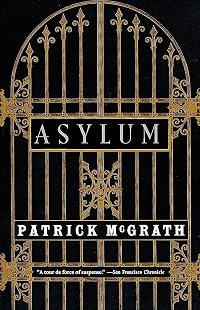
Asylum
by Patrick McGrath
On This Page
Description
From our most celebrated writer of the psychological thriller comes this nerve-wracking yet eerily beautiful work of erotic obsession and madness. In the summer of 1959, Stella Raphael joins her psychiatrist husband, Max, at his new posting-a maximum-security hospital for the criminally insane. Beautiful and headstrong, Stella soon falls under the spell of Edgar Stark, a brilliant and magnetic sculptor who has been confined to the hospital for murdering his wife in a psychotic rage. But show more Stella's knowledge of Edgar's crime is no hindrance to the volcanic attraction that ensues-a passion that will consume Stella's sanity and destroy her and the lives of those around her. show lessTags
Recommendations














Member Recommendations

bsiemens This psychological thriller deals with the raw effects of mental illness.
10

Member Reviews
A tragedy of Shakespearean proportions, a tale of forbidden, obsessive love and the worst psychiatrist ever. The marvelous reading performance by Ian McKellan made for engrossing entertainment on a long drive. I think actually reading it myself would have been rather tedious.
La copertina del libro è in prevalenza di colore nero, e trovo che questa oscurità non sia stata scelta per caso, perché è esattamente quella che si percepisce nelle sue pagine. Capitolo dopo capitolo si entra sempre più a capofitto in questa ombra nera, ritrovandosi spiazzati ed increduli.
Si tratta di una vera e propria analisi psicologica raccontata nei minimi dettagli. Analisi della reale protagonista del libro, Stella, che io personalmente non ho ancora compreso nella totalità. Lascia di stucco ogni suo gesto e pensiero, anche se analizzato e raccontato dal suo medico.
Ci si ritrova alle volte a sentirsi quasi disgustati di fronte al suo egoismo sfrontato, altre volte comprensivi per ciò che la donna deve passare, e altre show more volte ancora a tifare per lei ed Edgar.
Ma alla fine, alla fine di tutto, viene da chiedersi se realmente ci sia qualcuno dei protagonisti che possa dirsi pienamente sano di mente. D'altronde è il titolo stesso il riassunto perfetto. Follia. Forse è questo il messaggio. Tutti abbiamo un po' di follia, compresi i protagonisti di questa storia. show less
Si tratta di una vera e propria analisi psicologica raccontata nei minimi dettagli. Analisi della reale protagonista del libro, Stella, che io personalmente non ho ancora compreso nella totalità. Lascia di stucco ogni suo gesto e pensiero, anche se analizzato e raccontato dal suo medico.
Ci si ritrova alle volte a sentirsi quasi disgustati di fronte al suo egoismo sfrontato, altre volte comprensivi per ciò che la donna deve passare, e altre show more volte ancora a tifare per lei ed Edgar.
Ma alla fine, alla fine di tutto, viene da chiedersi se realmente ci sia qualcuno dei protagonisti che possa dirsi pienamente sano di mente. D'altronde è il titolo stesso il riassunto perfetto. Follia. Forse è questo il messaggio. Tutti abbiamo un po' di follia, compresi i protagonisti di questa storia. show less
There is a certain style of novel that always captivates me. Usually British, it is set either pre- or post-war, and the characters are mainly upper-class. They live in a bubble removed from the outside world, and their actions thus cause devastating rippled effects within their isolated community. E.M. Forster wrote novels like this, and so too, I have discovered, does Patrick McGrath. At least, this one is.
The insular, bubble-like world that McGrath has created in Asylum is reflected in the three main settings of the novel. The story opens at a large, Victorian-era asylum for the criminally insane in the English countryside, where Stella, the unfulfilled wife of one of the hospital’s psychiatrists, begins a dangerous love affair show more with an inmate, Edgar Stark, a psychopathic sculptor who decapitated his wife. From there, the action moves to a slovenly garret room in the industrial section of London, and then to the desolate moors of north Wales. These settings reflect the characters’ situation: isolated from the world, unable to release their emotions in anything but destructive ways, existing in a fragile bubble always in danger of shattering.
This story is about obsession. Soon after starting the affair with Edgar, Stella finds herself growing more obsessed with him and taking more risks. It is unclear whether Edgar is just using her to find a way to escape from the hospital, or whether he is equally obsessed. Even after he does disappear and the affair is discovered, the damage is reparable; everyone around Stella wants to preserve the bubble they live in — until she follows Edgar to London and sets in motion a chain of events with an inevitably tragic outcome.
Stella relates the story of her obsessive love affair to her friend and psychiatrist, Peter, the narrator. Peter and the reader remain unsure whether she is hiding the truth to manipulate him, whether her obsession continues despite everything that happens as a result of the affair. Eventually, the reader discovers that Peter, ostensibly the objective narrator looking in from the outside, harbors an obsession as well, which colors how he sees and describes Stella. We are left with the question of whether Stella was actually responsible for everything that happened, or whether her obsession was a sickness she couldn’t help acting upon.
This is a fast read, suspenseful, erotic and horrifying. Despite the ambiguity of the story, it is also very satisfying gothic horror and psychological suspense. show less
The insular, bubble-like world that McGrath has created in Asylum is reflected in the three main settings of the novel. The story opens at a large, Victorian-era asylum for the criminally insane in the English countryside, where Stella, the unfulfilled wife of one of the hospital’s psychiatrists, begins a dangerous love affair show more with an inmate, Edgar Stark, a psychopathic sculptor who decapitated his wife. From there, the action moves to a slovenly garret room in the industrial section of London, and then to the desolate moors of north Wales. These settings reflect the characters’ situation: isolated from the world, unable to release their emotions in anything but destructive ways, existing in a fragile bubble always in danger of shattering.
This story is about obsession. Soon after starting the affair with Edgar, Stella finds herself growing more obsessed with him and taking more risks. It is unclear whether Edgar is just using her to find a way to escape from the hospital, or whether he is equally obsessed. Even after he does disappear and the affair is discovered, the damage is reparable; everyone around Stella wants to preserve the bubble they live in — until she follows Edgar to London and sets in motion a chain of events with an inevitably tragic outcome.
Stella relates the story of her obsessive love affair to her friend and psychiatrist, Peter, the narrator. Peter and the reader remain unsure whether she is hiding the truth to manipulate him, whether her obsession continues despite everything that happens as a result of the affair. Eventually, the reader discovers that Peter, ostensibly the objective narrator looking in from the outside, harbors an obsession as well, which colors how he sees and describes Stella. We are left with the question of whether Stella was actually responsible for everything that happened, or whether her obsession was a sickness she couldn’t help acting upon.
This is a fast read, suspenseful, erotic and horrifying. Despite the ambiguity of the story, it is also very satisfying gothic horror and psychological suspense. show less
The story is told by a psychiatrist familiar with the case and stupidly it took me half of the book before I realized why this particular person was relating events. It's a compelling story, very well written but sordid! And filled with hideous people. Stella, the wife of doctor working in a high security psychiatric hospital, has a steamy affair with one of the patients, a patient who murdered his wife. When he escaped from the hospital with her help, she left her husband to move in with him. Obviously this is not going to end well for Stella.
This is a difficult one to rate because it's so sordid and unpleasant. However, Ian McKellen, the audiobook narrator, gave a five-star performance.
This is a difficult one to rate because it's so sordid and unpleasant. However, Ian McKellen, the audiobook narrator, gave a five-star performance.
Asylum is a story about the consequences of obsessional love. In this dark novel, the wife of a resident psychiatrist at an asylum for the criminally insane becomes deeply infatuated with a very disturbed inmate who murdered his wife. When he escapes, she follows him to London, and his madness unravels in ways that deeply affect everyone involved in their past. None of the characters in this book is likeable. Stella, the wife, is despicable, her psychiatrist husband is a weak "mama's boy," and the peripheral characters are without redeeming qualities. The novel is narrated by Cleave, another psychiatrist with his own agenda. Patrick McGrath is certainly a master at displaying the dark side of human nature.
This is my first time reading a Patrick McGrath story. It will not be my last. I don't know how I haven't come across his work before, and I feel I have to catch up on all that I've missed out on.
Normally, I finish a book and immediately pronounce to myself whether it was good or bad, and then I'm off to the next selection from my burgeoning bookshelves. It's been awhile, however, since I closed the pages of a story and had to sit and reflect for a few moments afterwards. Without question, this was an excellent book, and I needed more time to think on the very nature behind the story, the characters, and events. Needless to say, I brooded and ruminated on the ending for quite some time.
Asylum, by Patrick McGrath has done all of this. It show more has all the elements of a story that I like -- a haunting setting in the gloomy and sweeping English countryside, a dark love affair, secrets, and ambiguity.
Stella is the mother of a young boy, Charlie and the wife of Max, an esteemed psychiatrist at a maximum-security institution for the criminally insane just outside of London, England, in the late 1950s. Her day to day life of wife and mother is mundane, and her husband really doesn't have the drive or passion to keep her interested. Only a few patients are granted access to the grounds around the house on the institution, to work on the garden or to redo the old conservatory, with a watchful group of staff nearby. Unbeknownst to all, though, Stella becomes the lover of an incredibly dangerous patient, Edgar. He's quite an artist, but he's also destructively jealous -- his unending stay in the institution was determined because he killed his wife in a brutal and mutilating manner, apparently because she was seeing other men. Stella, however, still finds herself uncontrollably drawn to him and caught up in the passion of this bizarre love.
This is an absolutely fascinating story and it is incredibly written, told through the perspective of another doctor at the institution, the older and wiser Dr. Peter Cleave. I initially thought I wouldn't care for this character, but I ultimately found that not only was it necessary in order to describe a general understanding of the mind -- the breakdown of Stella, the depth of manipulation by Edgar, and the ultimate weaknesses of Stella's husband, but it also explained the neurosis and psychosis of the characters. The insight Dr. Cleave provided was so critical to understand how these fictionalized people became completely devoid of reality only to succumb to the obsession everyone represses -- the ability to become thoroughly self-obsessed, whether or not it destroys innocent lives.
With Peter telling the story, in some scenes almost clinically, it created a much more haunting feel and I felt completely entrenched in the story. Several times it seemed to intensify so sadly and in such a disturbing nature, that I couldn't fathom it to turn more grim than it already was, but the author was able to continue down that path even further. Peter provides a trusting credibility that lends quite a bit to the pleasure that I had in the twists that occurred. I was mortified, angry, heartbroken, and completely engrossed in the story.
Patrick McGrath has created a suspenseful psychological thriller of obsession with oneself. It is haunting and dark, deeply erotic in some scenes, and altogether disturbing. Highly recommended, and I will be on the lookout for more Patrick McGrath books. show less
Normally, I finish a book and immediately pronounce to myself whether it was good or bad, and then I'm off to the next selection from my burgeoning bookshelves. It's been awhile, however, since I closed the pages of a story and had to sit and reflect for a few moments afterwards. Without question, this was an excellent book, and I needed more time to think on the very nature behind the story, the characters, and events. Needless to say, I brooded and ruminated on the ending for quite some time.
Asylum, by Patrick McGrath has done all of this. It show more has all the elements of a story that I like -- a haunting setting in the gloomy and sweeping English countryside, a dark love affair, secrets, and ambiguity.
Stella is the mother of a young boy, Charlie and the wife of Max, an esteemed psychiatrist at a maximum-security institution for the criminally insane just outside of London, England, in the late 1950s. Her day to day life of wife and mother is mundane, and her husband really doesn't have the drive or passion to keep her interested. Only a few patients are granted access to the grounds around the house on the institution, to work on the garden or to redo the old conservatory, with a watchful group of staff nearby. Unbeknownst to all, though, Stella becomes the lover of an incredibly dangerous patient, Edgar. He's quite an artist, but he's also destructively jealous -- his unending stay in the institution was determined because he killed his wife in a brutal and mutilating manner, apparently because she was seeing other men. Stella, however, still finds herself uncontrollably drawn to him and caught up in the passion of this bizarre love.
This is an absolutely fascinating story and it is incredibly written, told through the perspective of another doctor at the institution, the older and wiser Dr. Peter Cleave. I initially thought I wouldn't care for this character, but I ultimately found that not only was it necessary in order to describe a general understanding of the mind -- the breakdown of Stella, the depth of manipulation by Edgar, and the ultimate weaknesses of Stella's husband, but it also explained the neurosis and psychosis of the characters. The insight Dr. Cleave provided was so critical to understand how these fictionalized people became completely devoid of reality only to succumb to the obsession everyone represses -- the ability to become thoroughly self-obsessed, whether or not it destroys innocent lives.
With Peter telling the story, in some scenes almost clinically, it created a much more haunting feel and I felt completely entrenched in the story. Several times it seemed to intensify so sadly and in such a disturbing nature, that I couldn't fathom it to turn more grim than it already was, but the author was able to continue down that path even further. Peter provides a trusting credibility that lends quite a bit to the pleasure that I had in the twists that occurred. I was mortified, angry, heartbroken, and completely engrossed in the story.
Patrick McGrath has created a suspenseful psychological thriller of obsession with oneself. It is haunting and dark, deeply erotic in some scenes, and altogether disturbing. Highly recommended, and I will be on the lookout for more Patrick McGrath books. show less
This reminded me of Madame Bovary in a lot of ways. Stella is portrayed as a bored woman, trapped in a marriage that doesn’t come close to fulfilling her. Unlike Mme. B, she doesn’t actively tear down her husband. Instead, she starts this affair with Stark. She doesn’t believe that this man who so captivates her could have possibly done what he did (which we aren’t told in detail until the end). Stark uses her to escape and later sends for her.
It was pretty creepy. The language was terrific though. Not too poetic and not too stark. Nice flow and description of Stella’s encroaching madness. The dreams. Her screwing of the landlord of their house in Wales. She was out there and didn’t care. Although, even then she was just as show more careful to conceal what she was doing as she was when she was screwing Edgar at the hospital. For all her madness, she knew what she was doing had to be concealed. show less
It was pretty creepy. The language was terrific though. Not too poetic and not too stark. Nice flow and description of Stella’s encroaching madness. The dreams. Her screwing of the landlord of their house in Wales. She was out there and didn’t care. Although, even then she was just as show more careful to conceal what she was doing as she was when she was screwing Edgar at the hospital. For all her madness, she knew what she was doing had to be concealed. show less
Members
- Recently Added By
Lists

Best Gothic Fiction
110 works; 31 members

Best Contemporary Literary Fiction (Around the Last 30 Years)
400 works; 124 members

Unreliable Narrators
170 works; 43 members

Female Protagonist
1,056 works; 57 members

Books Set in Great Britain
191 works; 13 members

Houses and Buildings as Characters in Fiction
182 works; 29 members

A Novel Cure
742 works; 23 members

TML 200 Best Books 1950-1999
202 works; 10 members

madness prompts and reason writes, says Gide
26 works; 3 members

1990s
309 works; 17 members

Mental health fiction
55 works; 18 members

Best Psychological Suspense
33 works; 6 members

To Read
617 works; 7 members

Books Read in 2010
631 works; 11 members

Books Read in 2019
4,052 works; 110 members

Thrillers Set in Asylums
5 works; 1 member

The Modern Library (The Two Hundred Best Novels....
202 works; 1 member
Author Information

32+ Works 5,242 Members
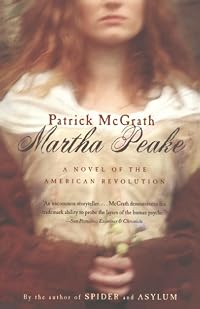
Patrick McGrath was born in London in 1950 and grew up near Broadmoor Hospital where his father was the medical superintendent for many years. He attended Stonyhurst College and received his BA in English from the University of London. Among other jobs, he worked as an orderly in a mental hospital and as a teacher before becoming a writer. He is show more seen as a leader of the neo-Gothic writers; his books include Spider, The Grotesque, Port Mungo, Trauma and Asylum. His novel Martha Peake won the Premio Flaiano Prize in Italy. McGrath resides in New York City and London. (Bowker Author Biography) Patrick McGrath is the author of Asylum and The Grotesque, among other novels. He lives in New York City and London and is married to the actress Maria Aitken. (Publisher Provided) show less
Awards and Honors
Awards
Notable Lists
Series
Belongs to Publisher Series
Work Relationships
Is abridged in
Common Knowledge
- Canonical title*
- Follia
- Original title
- Asylum
- Alternate titles*
- 基督教信經探索指南
- Original publication date
- 1997
- People/Characters
- Stella Raphael; Max Raphael; Edgar Stark
- Important places
- England, UK
- Related movies
- Asylum (2005 | IMDb)
- Dedication
- For Jack Davenport
- First words
- The catastrophic love affair characterized by sexual obsession has been a professional interest of mine for many years now.
- Last words*
- (Click to show. Warning: May contain spoilers.)La tiro fuori spesso, durante il giorno, e resto a contemplarla. E' così, vedete, dopotutto ho ancora la mia Stella qui con me. E naturalmente ho lui.
- Original language*
- englanti
*Some information comes from Common Knowledge in other languages. Click "Edit" for more information.
Classifications
Statistics
- Members
- 1,666
- Popularity
- 13,469
- Reviews
- 40
- Rating
- (3.67)
- Languages
- 14 — Catalan, Danish, Dutch, English, Finnish, French, German, Greek, Italian, Norwegian (Bokmål), Polish, Portuguese, Spanish, Swedish
- Media
- Paper, Audiobook, Ebook
- ISBNs
- 46
- ASINs
- 9