On This Page
Description
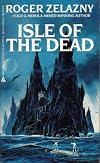
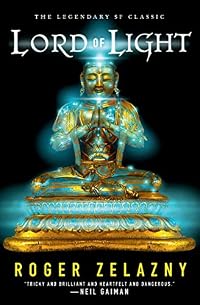
Centuries in the future, Francis Sandow is the only man alive who was born as long ago as the 20th century. His body is kept young and in perfect health by advanced scientific methods; he has amassed such a fortune that he can own entire planets; and he has become a god. No, not a god of Earth, but one of the pantheon of the alien Pei'ans: he is Shimbo of Darktree, Shrugger of Thunders. Yet he doesn't believe that his personality has merged with the ancient consciousness of Shimbo, that he show more really can call down the skies upon his enemies. The time comes, however, when Francis Sandow must use these powers against the most dangerous antagonist in the universe: another Pei'an god -- Shimbo's own enemy, Belion. And Belion has no doubt whatever of his own powers... Roger Zelazny was a three-time Nebula Award and six-time Hugo Award-winning author of science fiction and fantasy classics, including the short stories "24 Views of Mount Fuji, by Hokusai", "Permafrost", and "Home is the Hangman". show lessTags
Recommendations



















Member Reviews
2.5/5
Francis Sandow, a telepathic man that has seen centuries pass, has learned the art of world creation through the channeling of one of a pantheon of gods from the mythology of a different species. This career has amassed him incalculable personal wealth, and also a long list of enemies. Sandow must travel to a world of his own creation to solve a mystery in which his own long since dead friends have becomes resurrected, while he fears foul play. Isle of the Dead should really be considered closer to a straight up fantasy novel. While there are some science fiction motifs, Zelazny hardly tries to make anything that happens appear to be scientific, or even logical.
Zelazny's writing here is mixed at best. The beginning of the book felt show more like jumbled mess of various ideas as he tries to set his feet in his own world. An interlude concerning the ethics of tipping culture was especially confusing. The writing improved dramatically for the middle section of the book, as he describes Sandow venturing into his own long forgotten world. The prose style is short but beautiful, as a god looks upon his creation with a touching tenderness. I also enjoyed the sections in which Sandow joins an old friend on a spiritual send-off before his death. The ending was so-so in my opinion. It was rather anti-climatic. My major point of contention here was the tone itself. There's a certain smarmy quality that Zelazy writes in that makes me think that he wrote the book after one too many bourbons and a half a cigar. He is at times rather flippant in his writing, trying to make quips or sarcastic jokes that maybe landed 50 years ago, but certainly don't land now. He writes as though he identifies with Sandow in most aspects, which makes me maybe not like him as a person, as Sandow is not exactly the most relatable or empathic person. It feels a little greasy, especially for some of the subject matter.
Zelazny apparently really like to explore mystical and religious themes, where men act as gods, or at least conduits for them. He likes to think about immortality and the consequences for humanity on the individual and societal level. How strong human emotions, especially things like righteous vengeance, can effect those around us and ourselves. These are some rather heavy topics, topics that deserve to explored with some amount of reverence and care. I just don't know if Zelanzny is up to the task, at least in this specific novel. The greasy quality of tone and writing style doesn't mix well with such lofty ambitions. show less
Francis Sandow, a telepathic man that has seen centuries pass, has learned the art of world creation through the channeling of one of a pantheon of gods from the mythology of a different species. This career has amassed him incalculable personal wealth, and also a long list of enemies. Sandow must travel to a world of his own creation to solve a mystery in which his own long since dead friends have becomes resurrected, while he fears foul play. Isle of the Dead should really be considered closer to a straight up fantasy novel. While there are some science fiction motifs, Zelazny hardly tries to make anything that happens appear to be scientific, or even logical.
Zelazny's writing here is mixed at best. The beginning of the book felt show more like jumbled mess of various ideas as he tries to set his feet in his own world. An interlude concerning the ethics of tipping culture was especially confusing. The writing improved dramatically for the middle section of the book, as he describes Sandow venturing into his own long forgotten world. The prose style is short but beautiful, as a god looks upon his creation with a touching tenderness. I also enjoyed the sections in which Sandow joins an old friend on a spiritual send-off before his death. The ending was so-so in my opinion. It was rather anti-climatic. My major point of contention here was the tone itself. There's a certain smarmy quality that Zelazy writes in that makes me think that he wrote the book after one too many bourbons and a half a cigar. He is at times rather flippant in his writing, trying to make quips or sarcastic jokes that maybe landed 50 years ago, but certainly don't land now. He writes as though he identifies with Sandow in most aspects, which makes me maybe not like him as a person, as Sandow is not exactly the most relatable or empathic person. It feels a little greasy, especially for some of the subject matter.
Zelazny apparently really like to explore mystical and religious themes, where men act as gods, or at least conduits for them. He likes to think about immortality and the consequences for humanity on the individual and societal level. How strong human emotions, especially things like righteous vengeance, can effect those around us and ourselves. These are some rather heavy topics, topics that deserve to explored with some amount of reverence and care. I just don't know if Zelanzny is up to the task, at least in this specific novel. The greasy quality of tone and writing style doesn't mix well with such lofty ambitions. show less
I love Zelazny's prose. There are a lot of philosophical questions the author ponders through the main characters: immortality, vengeance, love, religion, and mythology. I find it interesting how much the main character smokes. Back in the day, I probably wouldn't have noticed since smoking was everywhere back then. I recently found out that Zelazny smoked, so his self-insertion characters did as well and when he quit, his characters stopped smoking too.
A short science fiction -- or perhaps science fantasy -- novel from 1969. This is one of those SF novels that sort of drops you in with very little idea of exactly where you are and what's going on. Who is this POV character? How did he end up so far in the future, if he's from the 20th century? What's this weird relationship he has with the planet he lives on? Etc., etc. Personally, I always find that sort of thing interesting, even if it does demand a bit of patience. We do eventually find out all the answers, though, more or less, and after that the story itself, which involves various people trying to get revenge on the main character (oh, and also the fact that he might be connected to an alien god), didn't excite me all that much. show more But it is beautifully written, as much of Zelazny's work is, in a philosophically poetic style
Rating: It's hard to know how to rate this. A just-OK story but terrific prose, what does that work out to? I'm going to call it 3.5/5, but I feel a bit bad about that, somehow. show less
Rating: It's hard to know how to rate this. A just-OK story but terrific prose, what does that work out to? I'm going to call it 3.5/5, but I feel a bit bad about that, somehow. show less
I was never sure if this book was science fiction trying to be a little bit fantasy or vice versa. Zelazny systematically avoids giving us enough detail to make it clear. From the first sentence, it is philosophical. At times it seems merely a prose poem reflecting on life, death, love, wealth, and revenge. The sparse story is just a wireframe on which to arrange those deeper thoughts. Yet even these seem belabored, cold, and distant. The only character that comes alive is Frank Sandow. In the end, I wonder if we really care about him (or were even meant to).
Francis Sandow, the last 20th-century man, kept youthful by science, becomes the alien Pei'ans god Shimbo of Darktree and uses his worldshaper powers to create and alter planets. When an ancient rival god, Belion, challenges his existence and power, he confronts his identity and the alien mythology he's become entangled in, uncovering a mystery involving stolen past acquaintances' consciousnesses, while dealing with his mortality and his mentor's fading.
Extraordinary story of a one-of-a-kind protagonist who has it all and risks it for love, going on the adventure of his life. Written with great wit and style. Read his stuff in college, and have been going back and finding the books again. I can also recommend a book of his short stories, The Doors of His Face The Lamps of His Mouth. This is my favorite of his books and I was thrilled to find a signed copy.
A good story, with a vibrant writing style. Dated in some respects, not least the myriad, and pointless, references to smoking.
Members
- Recently Added By
Lists

Bibliography for Among Others
159 works; 15 members

Les 100 principaux titres de la science-fiction (1981)
126 works; 3 members
Author Information

Roger Zelazny was born in Euclid, Ohio on May 13, 1937. After receiving a B.A. from Case Western Reserve University and a M.A. from Columbia University, he began publishing science fiction stories in 1962. He received six Hugo awards, three Nebula awards including one in 1966 for And Call Me Conrad and 2 Locus awards. He died of kidney failure show more secondary to colorectal cancer on June 14, 1995. (Bowker Author Biography) show less
Some Editions
Awards and Honors
Awards
Series

Belongs to Publisher Series
Work Relationships
Common Knowledge
- Canonical title
- Isle of the Dead
- Original title
- Isle of the Dead
- Original publication date
- 1969; 1970
- People/Characters
- Francis Sandow; Marling; Vervair-tharl; Mike Shandon
- Important places*
- Planète Terre libre; Planète Megapei; Planète Driscoll; Planète Illyria
- Dedication
- To Banks Mebane.
- First words
- Life is a thing—if you'll excuse a quick dab of philosophy before you know what kind of picture I'm painting—that reminds me quite a bit of the beaches around Tokyo Bay.
- Last words*
- (Click to show. Warning: May contain spoilers.)Ce que j'ai fait.
- Original language
- English
- Canonical DDC/MDS
- 813.5419
*Some information comes from Common Knowledge in other languages. Click "Edit" for more information.
Classifications
- Genres
- Science Fiction, Fiction and Literature
- DDC/MDS
- 813.5419 — Literature & rhetoric American literature in English American fiction in English 1900-1999 1945-1999 Fantasy / Science Fiction Science Fiction
- LCC
- PS3576 .E43 — Language and Literature American literature American literature Individual authors 1961-
- BISAC
Statistics
- Members
- 903
- Popularity
- 29,626
- Reviews
- 19
- Rating
- (3.60)
- Languages
- 9 — Czech, English, French, German, Hebrew, Lithuanian, Polish, Russian, Spanish
- Media
- Paper, Audiobook, Ebook
- ISBNs
- 23
- ASINs
- 20