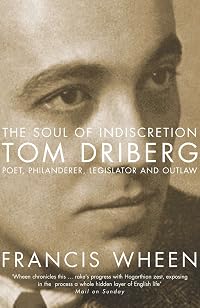
Tom Driberg: His Life and Indiscretions
by Francis Wheen
On This Page
Description
A mysterious, influential and often extremely dubious man of affairs, Tom Driberg embodied many of the contradictions and ambiguities of his time. At Oxford, he was the friend of Auden, Betjeman, Hugh Gaitskell and his old school-chum, Evelyn Waugh; working on Beaverbrook's Express in the Thirties, he invented the modern gossip column; a close friend of Burgess and Maclean, he was widely suspected of being a double-agent, working for both British Intelligence and the KGB. As Chairman of the show more Labour Party, he was closely involved with the Wilson government, and an intimate of Nye Bevan and Richard Crossman; a keen High churchman, he was even better known as a cottaging habitue of London lavatories; a stalwart socialist, on the far left of the Labour Party, he was also an ardent socialite with a Georgian mansion in Essex. show lessTags
Recommendations
















Member Reviews
Tom Driberg is fascinating because he inhabited so many different worlds at once. This book could easily have been called The Lives of Tom Driberg. At Oxford in the 1920s he was part of the dandy aesthete circle which included Brian Howard, Harold Acton and Cyril Connolly: bottle-green suits, raspberry crêpe de chine shirts, poetic gibberish recited through megaphones and young men openly in each other’s embrace. All that kind of thing. At the same time he was a member of the British Communist Party, which he joined when he was fifteen and still at his public school, and being arrested for attempting to distribute pamphlets on their behalf during the General Strike of 1926. In the 1930s, as the original William Hickey, he became a show more famous gossip columnist for the Daily Express. The militant socialist and Lord Beaverbrook’s staunchly conservative newspaper were strange bedfellows indeed, but he did his best to smuggle his heretical views into the columns. Driberg moved freely up and down the social scale of a rigidly stratified class society. He dined in the finest restaurants and grandest houses and cruised the rather less stately ‘cottages’ of England in search of rough trade. He was as openly gay - not to mention recklessly so - as it was possible to be in a society that put gay men in prison (as Driberg very nearly was on more than one occasion). He was a left-wing Labour MP who adored the Royal Family, was a social snob, liked to hang out with aristocrats and lived in a mansion which he couldn’t afford (Driberg was simultaneously sybaritic and impecunious). He was a devout Anglo-Catholic and a friend of Aleister Crowley, the Great Beast himself. Driberg ‘acquired’ Crowley’s diary, eventually flogging it to Jimmy Page for a princely sum. His list of friends and acquaintances was dizzyingly eclectic: Evelyn Waugh, Guy Burgess, Edith Sitwell, W. H. Auden, Lord Mountbatten, Aneurin Bevan, Allen Ginsberg and the infamous gangster twins, the Krays.
It should be clear from all this that, if Tom Driberg hadn’t existed, no novelist would have dared to invent him; he simply wouldn’t have been a credible character. Given that the actual man was so fantastical, it’s hardly surprising that many myths have accumulated around him. It has been alleged that he was an MI5 informant who ratted on his socialist brothers and sisters and also a KGB agent who betrayed his country (accusations rebutted with sober factual authority, I thought, by Francis Wheen. On the other hand, who knows? Driberg’s life blurs the boundaries of fact and fiction so comprehensively that it might be safest to assume that everything said about him is both true and false). In his introduction, Wheen compares him to Woody Allen’s chameleonic character Zelig, and not without reason. Think of a key 20th century event and chances are that Tom Driberg was there or thereabouts: the General Strike, the Spanish Civil War, the liberation of Paris, the relief of Buchenwald, the Korean War, swinging London in the ‘60s. He was in America when Pearl Harbour was attacked and in 1956 he went to Moscow to interview the Soviet double agent and defector Guy Burgess. His life was so inextricably bound up with world events that this biography also serves as a useful primer to twentieth century political and social history.
Despite his opulent habits there was nothing insincere about Driberg’s socialism. As Wheen points out, extreme case though he undeniably was, there is actually no contradiction: socialists believe in greater equality and justice, not asceticism. Driberg was a lifelong opponent of colonialism and racism and one of the first British politicians to advocate unilateral nuclear disarmament. He was a constant thorn in the side of the establishment, not least that of his own party. Wheen argues convincingly that his Christianity and socialism were reflections of each other; a belief in fellowship and justice being at the root of both. And, in contrast to many of his contemporaries, there was no drift to the Right in later life. The rebellious spirit of the 1960s chimed perfectly with Driberg’s eternally rebellious spirit. Despite entering his own sixties mid-decade, he had a fine old time: singing the praises of pirate radio (unlike his own government which eventually outlawed the pirates), signing petitions supporting the legalisation of cannabis, contributing to the satirical magazine Private Eye, defending the countercultural press, speaking out against censorship, and trying to persuade his friend Mick Jagger to become a Labour MP.
Tom Driberg was clearly no saint. This upper-middle-class man of the people could be appallingly rude to ordinary people and woe betide any waiter who had the vulgarity to put a sauce bottle on his table. He was also a less than ideal husband. Driberg married in 1951 and, predictably, it was not a happy liaison. Wheen dismisses the suggestion that it was a cover for his continuing gay adventures (discretion was certainly never his thing) while failing to provide a plausible alternative explanation. Despite his faults, or possibly partly because of them, I found myself liking Driberg enormously. He had an admirably independent spirit, was never in the slightest danger of sliding into respectability (even when unexpectedly elevated to the House of Lords shortly before his death, where true to form he immediately proceeded to cause trouble) and possessed a rare gift for èpater la bourgeois. His profound love of the arts, and often avant-garde art, also stands out in a notoriously philistine Westminster. He was destined to remain a parliamentary backbencher but nowadays such a natural anarch would be unlikely to get past any party’s candidate selection procedure.
This biography is full of funny stories about Driberg’s often outrageous behaviour which sometimes give it a gossipy flavour that, as a former ‘gossip king’ himself, he would surely have approved of. But it’s more substantial than this suggests. Wheen provides a nuanced portrait of a complex and paradoxical man while also casting a sharp eye on the moral hypocrisies and legally sanctioned prejudices of mid-twentieth century Britain. show less
It should be clear from all this that, if Tom Driberg hadn’t existed, no novelist would have dared to invent him; he simply wouldn’t have been a credible character. Given that the actual man was so fantastical, it’s hardly surprising that many myths have accumulated around him. It has been alleged that he was an MI5 informant who ratted on his socialist brothers and sisters and also a KGB agent who betrayed his country (accusations rebutted with sober factual authority, I thought, by Francis Wheen. On the other hand, who knows? Driberg’s life blurs the boundaries of fact and fiction so comprehensively that it might be safest to assume that everything said about him is both true and false). In his introduction, Wheen compares him to Woody Allen’s chameleonic character Zelig, and not without reason. Think of a key 20th century event and chances are that Tom Driberg was there or thereabouts: the General Strike, the Spanish Civil War, the liberation of Paris, the relief of Buchenwald, the Korean War, swinging London in the ‘60s. He was in America when Pearl Harbour was attacked and in 1956 he went to Moscow to interview the Soviet double agent and defector Guy Burgess. His life was so inextricably bound up with world events that this biography also serves as a useful primer to twentieth century political and social history.
Despite his opulent habits there was nothing insincere about Driberg’s socialism. As Wheen points out, extreme case though he undeniably was, there is actually no contradiction: socialists believe in greater equality and justice, not asceticism. Driberg was a lifelong opponent of colonialism and racism and one of the first British politicians to advocate unilateral nuclear disarmament. He was a constant thorn in the side of the establishment, not least that of his own party. Wheen argues convincingly that his Christianity and socialism were reflections of each other; a belief in fellowship and justice being at the root of both. And, in contrast to many of his contemporaries, there was no drift to the Right in later life. The rebellious spirit of the 1960s chimed perfectly with Driberg’s eternally rebellious spirit. Despite entering his own sixties mid-decade, he had a fine old time: singing the praises of pirate radio (unlike his own government which eventually outlawed the pirates), signing petitions supporting the legalisation of cannabis, contributing to the satirical magazine Private Eye, defending the countercultural press, speaking out against censorship, and trying to persuade his friend Mick Jagger to become a Labour MP.
Tom Driberg was clearly no saint. This upper-middle-class man of the people could be appallingly rude to ordinary people and woe betide any waiter who had the vulgarity to put a sauce bottle on his table. He was also a less than ideal husband. Driberg married in 1951 and, predictably, it was not a happy liaison. Wheen dismisses the suggestion that it was a cover for his continuing gay adventures (discretion was certainly never his thing) while failing to provide a plausible alternative explanation. Despite his faults, or possibly partly because of them, I found myself liking Driberg enormously. He had an admirably independent spirit, was never in the slightest danger of sliding into respectability (even when unexpectedly elevated to the House of Lords shortly before his death, where true to form he immediately proceeded to cause trouble) and possessed a rare gift for èpater la bourgeois. His profound love of the arts, and often avant-garde art, also stands out in a notoriously philistine Westminster. He was destined to remain a parliamentary backbencher but nowadays such a natural anarch would be unlikely to get past any party’s candidate selection procedure.
This biography is full of funny stories about Driberg’s often outrageous behaviour which sometimes give it a gossipy flavour that, as a former ‘gossip king’ himself, he would surely have approved of. But it’s more substantial than this suggests. Wheen provides a nuanced portrait of a complex and paradoxical man while also casting a sharp eye on the moral hypocrisies and legally sanctioned prejudices of mid-twentieth century Britain. show less
Ratings
Members
- Recently Added By
Author Information

18+ Works 3,075 Members
Francis Wheen is an award-winning columnist for "The Guardian" in London, & the deputy editor of "Private Eye". (Bowker Author Biography)
Common Knowledge
- People/Characters
- Tom Driberg
Classifications
- Genres
- Biography & Memoir, Nonfiction, General Nonfiction, History, LGBTQ+
- DDC/MDS
- 941.082092 — History & geography History of Europe British Isles Historical periods of British Isles 1837- Period of Victoria and House of Windsor 1901-1999
- LCC
- CT788 .D785 .W47 — Auxiliary Sciences of History Biography Biography National biography
- BISAC
Statistics
- Members
- 93
- Popularity
- 346,435
- Reviews
- 1
- Rating
- (3.92)
- Languages
- English
- Media
- Paper
- ISBNs
- 3