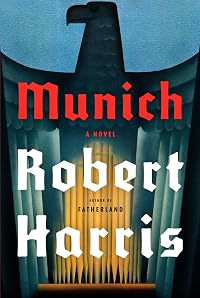
Munich
by Robert Harris
On This Page
Description
NEW YORK TIMES BESTSELLER • From the bestselling author of V2 and Fatherland—a WWII-era spy thriller set against the backdrop of the fateful Munich Conference of September 1938. Now a Netflix film starring Jeremy Irons.With this electrifying novel about treason and conscience, loyalty and betrayal, "Harris has brought history to life with exceptional skill" (The Washington Post).
Hugh Legat is a rising star of the British diplomatic service, serving at 10 Downing Street as a private show more secretary to the Prime Minister, Neville Chamberlain. Paul von Hartmann is on the staff of the German Foreign Office—and secretly a member of the anti-Hitler resistance. The two men were friends at Oxford in the 1920s, but have not been in contact since. Now, when Hugh flies with Chamberlain from London to Munich, and Hartmann travels on Hitler's train overnight from Berlin, their paths are set on a disastrous collision course.
And once again, Robert Harris gives us actual events of historical importance—here are Hitler, Chamberlain, Mussolini, Daladier—at the heart of an electrifying, unputdownable novel. show less
Tags
Recommendations





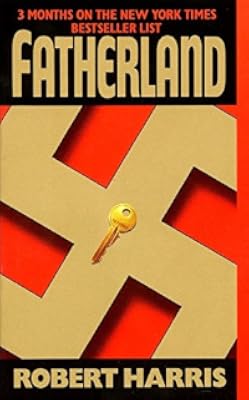











Member Reviews
This is one of the best books I’ve read. The writing and story have to be stronger than usual when the result of a novel’s story is well known. Robert Harris exceeds in succeeding at that difficult task.
Munich is about the peace conference held in the southern German city in 1938. The price of what turned out to be a temporary peace was high. Germany, Britain and France carved up Czechoslovakia but Czechoslovakia wasn’t represented at the conference. Its delegates were locked in a nearby room.
Munich isn’t about the morality or otherwise of the agreement. It is the page-turning story of Hugh Legat, a low-level Foreign Office official who is a secretary of Prime Minister Neville Chamberlain, and Paul Hartmann, a Nazi official show more and former Oxford University friend of Legat’s. Hartmann is a member of an uncoordinated and not well organised group of resistors. Intense idealism drives Hartmann to bring an end of Hitler’s reign. His naivety ultimately endangers his life.
Harris has written a brilliant fly-on-the-wall account of the conference. The writing’s brilliance is such that I felt I was there, a few steps behind Legat and Hartmann. We get to know the men intimately. Along with the other characters, they are strong, believable and compelling.
Even if you’re not a history buff or interested in the period, this novel’s great writing, suspense and strong characters will have you turning the pages, not wanting it to end. I thought Harris’s Fatherland was a great novel; he surpasses it with Munich. show less
Munich is about the peace conference held in the southern German city in 1938. The price of what turned out to be a temporary peace was high. Germany, Britain and France carved up Czechoslovakia but Czechoslovakia wasn’t represented at the conference. Its delegates were locked in a nearby room.
Munich isn’t about the morality or otherwise of the agreement. It is the page-turning story of Hugh Legat, a low-level Foreign Office official who is a secretary of Prime Minister Neville Chamberlain, and Paul Hartmann, a Nazi official show more and former Oxford University friend of Legat’s. Hartmann is a member of an uncoordinated and not well organised group of resistors. Intense idealism drives Hartmann to bring an end of Hitler’s reign. His naivety ultimately endangers his life.
Harris has written a brilliant fly-on-the-wall account of the conference. The writing’s brilliance is such that I felt I was there, a few steps behind Legat and Hartmann. We get to know the men intimately. Along with the other characters, they are strong, believable and compelling.
Even if you’re not a history buff or interested in the period, this novel’s great writing, suspense and strong characters will have you turning the pages, not wanting it to end. I thought Harris’s Fatherland was a great novel; he surpasses it with Munich. show less
This is the first new novel I have read by this author since An Officer and a Spy in 2014, and is a reminder why Robert Harris is one my favourite contemporary authors. Whether they are set in ancient Rome, a parallel world, fin de siecle France or, as in this case, London and Munich in 1938 his novels draw the reader in and are highly intelligent page turners. The centre of the lightly fictionalised action here is the four days in late September when the peace of Europe looked in danger of breaking over the Czechoslovak crisis, where Hitler attempted to use alleged persecution of the German population in the Sudeten areas of western Czechoslovakia as a casus belli. It is as famous of course for Chamberlain's and Daladier's notorious show more policy of appeasement of Hitler, agreeing to allow chunks of Czechoslovakia to be carved off and handed to Germany in order, supposedly, to prevent the dictator invading the whole country. But it must be said this was not how the Munich Agreement was seen at the time - it was initially widely popular in a Britain that was only 20 years away from the horrors of the First World War and determined never to see this repeated (as Chamberlain said, "How horrible, fantastic, incredible it is that we should be digging trenches and trying on gas masks here because of a quarrel in a faraway country between people of whom we know nothing.") In this novel, Englishman Hugh Legat and German Paul Hartmann, who were friends at Oxford in the early 1930s, try to convince their respective senior negotiating delegation colleagues that Hitler cannot be trusted; the fact that we know they are bound to fail does not take away from the drama of the plot and the absurd hope that somehow things will turn out otherwise than they did. Chamberlain here comes across as fusty and inflexible, but also deeply committed to what he sincerely but tragically wrongly viewed as the only way to preserve long term peace. I will now read a non-fiction account of the Munich Agreement to draw comparisons. show less
Munich: A novel
Most readers will be aware of the background and context to this historical novel, covering the events in late September 1938. The German demand for the partition of Czechoslovakia has created a European-wide crisis, and Britain is scrambling to make peace. The events of Munich take place over a frantic four-day period, from 27 to 30 September 1938, and the main (real) historical characters are seen through the fictional eyes of two diplomats, one on either side of the divide (but who happened to be old pals from Oxford).
Read More Book Reviews at http://ebookwormssite.wordpress.com- It's Good To Read
Harris, who is pro-Chamberlain and treats him much more sympathetically than history has done to date, has done his usual show more meticulous research into the period, and the reader gets solid detail (e.g. the swastika insignia on Hitler’s toilet taps, the authenticity of trenches being dug in pre-war London, the massive banners astride every building in Munich, etc). Chamberlain comes across as more energetic, visionary and robust than would be commonly held to be the case. It must, for balance, be remembered that at the time Chamberlain’s actions to avoid war were highly popular in Britain (though maybe not in Czechoslovakia!), but even as soon as 1940 his reputation began to be undermined, through books such as “Guilty Men”.
Back to the book.
The two diplomat-friends are a perfect foil for the “what-if” school of history. Both men have almost unlimited/unfettered access (when needed) to Hitler & Chamberlain. Legat (the British guy) gets to fly to Munich with Chamberlain, Hartmann (the German) climbs aboard the Fuhrer-train. Hartmann even gets to talk with Chamberlain.
Hartmann, appalled at what he sees happening and what will happen to his beloved country, seizes on the chance proffered by Munich to further the plot against Hitler, aiming to get incriminating documents about a planned German surprise attack against Czechoslovakia to his old pal in time to derail the Conference. In fact, there WAS an actual anti-Hitler at the time, and that reality is neatly hi-jacked to form the basis of this story (though the existence of the plot wasn't known then).
Cue all manner of late night rendezvous, sweaty escapes from probing Gestapo men, British concern at lack of war preparation and resources (e.g. fighters), and general suspicion and clandestine activity appropriate to this genre.
Of course, there is the mother of all spoiler alerts (WW2) that points to the ultimate failure of the men and their mission, but as a novel I am left with a sense of something undelivered. What must have been a real and palpable threat at the time does not echo in Munich with the same sense of immediacy, and uncertainty as to outcome. The most striking image comes near the end, when Chamberlain deplanes, carrying the infamous page, a “jagged black figure at the centre of a great bright light, his arm stretched out like a man who had thrown himself on to an electrified fence”.
It is a good read, slow to get going but then, like the train, muscles powerfully forward. Broadly, Harris stays true to the historical record, but there are enough windows to look through to wonder “what-if”?
A good holiday read, if not amongst the best that Harris has written. show less
Most readers will be aware of the background and context to this historical novel, covering the events in late September 1938. The German demand for the partition of Czechoslovakia has created a European-wide crisis, and Britain is scrambling to make peace. The events of Munich take place over a frantic four-day period, from 27 to 30 September 1938, and the main (real) historical characters are seen through the fictional eyes of two diplomats, one on either side of the divide (but who happened to be old pals from Oxford).
Read More Book Reviews at http://ebookwormssite.wordpress.com- It's Good To Read
Harris, who is pro-Chamberlain and treats him much more sympathetically than history has done to date, has done his usual show more meticulous research into the period, and the reader gets solid detail (e.g. the swastika insignia on Hitler’s toilet taps, the authenticity of trenches being dug in pre-war London, the massive banners astride every building in Munich, etc). Chamberlain comes across as more energetic, visionary and robust than would be commonly held to be the case. It must, for balance, be remembered that at the time Chamberlain’s actions to avoid war were highly popular in Britain (though maybe not in Czechoslovakia!), but even as soon as 1940 his reputation began to be undermined, through books such as “Guilty Men”.
Back to the book.
The two diplomat-friends are a perfect foil for the “what-if” school of history. Both men have almost unlimited/unfettered access (when needed) to Hitler & Chamberlain. Legat (the British guy) gets to fly to Munich with Chamberlain, Hartmann (the German) climbs aboard the Fuhrer-train. Hartmann even gets to talk with Chamberlain.
Hartmann, appalled at what he sees happening and what will happen to his beloved country, seizes on the chance proffered by Munich to further the plot against Hitler, aiming to get incriminating documents about a planned German surprise attack against Czechoslovakia to his old pal in time to derail the Conference. In fact, there WAS an actual anti-Hitler at the time, and that reality is neatly hi-jacked to form the basis of this story (though the existence of the plot wasn't known then).
Cue all manner of late night rendezvous, sweaty escapes from probing Gestapo men, British concern at lack of war preparation and resources (e.g. fighters), and general suspicion and clandestine activity appropriate to this genre.
Of course, there is the mother of all spoiler alerts (WW2) that points to the ultimate failure of the men and their mission, but as a novel I am left with a sense of something undelivered. What must have been a real and palpable threat at the time does not echo in Munich with the same sense of immediacy, and uncertainty as to outcome. The most striking image comes near the end, when Chamberlain deplanes, carrying the infamous page, a “jagged black figure at the centre of a great bright light, his arm stretched out like a man who had thrown himself on to an electrified fence”.
It is a good read, slow to get going but then, like the train, muscles powerfully forward. Broadly, Harris stays true to the historical record, but there are enough windows to look through to wonder “what-if”?
A good holiday read, if not amongst the best that Harris has written. show less
In an imaginative recreation of the events leading up to the Munich meeting between Hitler, Chamberlain and Daladier in 1938, Robert Harris has written a thoroughly engaging and gripping thriller. Although, of course, the outcome of the meeting is a well-known matter of historical record, Harris draws on his knowledge of the German conspirators who were opposed to Hitler and charts their attempt to overthrow him at the time. Harris raises the tension as the plotters seek to involve an old acquaintance of one of them, Hugh Legat, who is now working as in the private office for Chamberlain in Downing Street. The strained relationship between Legat and his contact, Paul von Hartmann that results from a disagreement six years earlier, makes show more more difficult the plotters’ attempt to gain access to Chamberlain to convince him that Hitler is determined to wage war even if the Czechoslovakian dispute is resolved. This keeps the fate of both Hugh and Paul in doubt right to the end of an enthralling novel. show less
Chamberlain: Realist vs. Appeaser
Robert Harris’ new novel, Munich, is notable for arguing that rather than appeaser of Hitler, Chamberlain in fact recognized Great Britain’s weak military position, that Britain required time to build up its land and air forces, that the British people lacked the appetite for another, far worse all out world war, especially over what many saw as an entirely continental dispute, and that Britain, should war come, could do little to thwart Hitler’s conquest of Czechoslovakia. It also has the virtue of reminding us that resistance to Hitler existed, in particular during the very time of the Munich diplomatic efforts to forestall war, in the form of the Oster Conspiracy (Generalmajor Hans Oster, deputy show more head of Abwer, German military intelligence).
Munich takes place during the four days surrounding the signing of the Munich Agreement, September 29, 1938, as Chamberlain and the British government prepare to fly to Germany. Number 10 Downing Street buzzes with activity as PM Chamberlain and staff prepare for their upcoming meeting with Hitler, Mussolini, and Daladier (France). Among the diplomatic service staff is a junior member, Hugh Legat, a fictional character. He expects to help assemble materials for the meeting and then remain in London. To his, and others’, surprise, he finds himself selected to accompany the mission. The request for his presence comes through secret communication from Berlin. Another young junior diplomat, Paul von Hartmann, of the German Foreign Ministry, through his highly placed cohorts has originated the request. Paul and Hugh both attended Oxford, Balliol College. They spent a summer together in the Munich area early in the decade in the company of a young German girl, girlfriend to Paul but who also had a brief romance with Hugh. Paul wants Hugh in Munich so that he might deliver to him a report attributable to Hitler stating in no uncertain terms the dictator’s intentions not only in Czechoslovakia but also going forward into the 1940s. Paul and his fellow conspirators believe that if they can prevent Chamberlain and the others from signing a peaceful transfer of the Sudetenland to the Nazi’s, the Wehrmacht will overthrow Hitler and thus save Germany from, as they see it, an unwinnable war. The novel focuses on the machinations and dangers faced by Paul in getting the message into Paul’s hands, and thereafter from Paul to Chamberlain. This message serves to reinforce the idea that while Chamberlain might be viewed as an appeaser, he might also be seen as a cool-eyed realist.
Harris, a master at suspense and detailed research, excels at recreating the atmosphere surrounding one of the most important meetings in 20th century world history, from the landscape and architecture of Munich, to the food consumed, down to the operation of the diplomatic corps. He also paints intriguing portraits of not only the key historical figures, but to many lost in the dust of history. While you may or may not agree with Harris’ revised portrayal of Chamberlain, you’ll surely enjoy the ride provided by his very good historical suspense novel. show less
Robert Harris’ new novel, Munich, is notable for arguing that rather than appeaser of Hitler, Chamberlain in fact recognized Great Britain’s weak military position, that Britain required time to build up its land and air forces, that the British people lacked the appetite for another, far worse all out world war, especially over what many saw as an entirely continental dispute, and that Britain, should war come, could do little to thwart Hitler’s conquest of Czechoslovakia. It also has the virtue of reminding us that resistance to Hitler existed, in particular during the very time of the Munich diplomatic efforts to forestall war, in the form of the Oster Conspiracy (Generalmajor Hans Oster, deputy show more head of Abwer, German military intelligence).
Munich takes place during the four days surrounding the signing of the Munich Agreement, September 29, 1938, as Chamberlain and the British government prepare to fly to Germany. Number 10 Downing Street buzzes with activity as PM Chamberlain and staff prepare for their upcoming meeting with Hitler, Mussolini, and Daladier (France). Among the diplomatic service staff is a junior member, Hugh Legat, a fictional character. He expects to help assemble materials for the meeting and then remain in London. To his, and others’, surprise, he finds himself selected to accompany the mission. The request for his presence comes through secret communication from Berlin. Another young junior diplomat, Paul von Hartmann, of the German Foreign Ministry, through his highly placed cohorts has originated the request. Paul and Hugh both attended Oxford, Balliol College. They spent a summer together in the Munich area early in the decade in the company of a young German girl, girlfriend to Paul but who also had a brief romance with Hugh. Paul wants Hugh in Munich so that he might deliver to him a report attributable to Hitler stating in no uncertain terms the dictator’s intentions not only in Czechoslovakia but also going forward into the 1940s. Paul and his fellow conspirators believe that if they can prevent Chamberlain and the others from signing a peaceful transfer of the Sudetenland to the Nazi’s, the Wehrmacht will overthrow Hitler and thus save Germany from, as they see it, an unwinnable war. The novel focuses on the machinations and dangers faced by Paul in getting the message into Paul’s hands, and thereafter from Paul to Chamberlain. This message serves to reinforce the idea that while Chamberlain might be viewed as an appeaser, he might also be seen as a cool-eyed realist.
Harris, a master at suspense and detailed research, excels at recreating the atmosphere surrounding one of the most important meetings in 20th century world history, from the landscape and architecture of Munich, to the food consumed, down to the operation of the diplomatic corps. He also paints intriguing portraits of not only the key historical figures, but to many lost in the dust of history. While you may or may not agree with Harris’ revised portrayal of Chamberlain, you’ll surely enjoy the ride provided by his very good historical suspense novel. show less
Chamberlain: Realist vs. Appeaser
Robert Harris’ new novel, Munich, is notable for arguing that rather than appeaser of Hitler, Chamberlain in fact recognized Great Britain’s weak military position, that Britain required time to build up its land and air forces, that the British people lacked the appetite for another, far worse all out world war, especially over what many saw as an entirely continental dispute, and that Britain, should war come, could do little to thwart Hitler’s conquest of Czechoslovakia. It also has the virtue of reminding us that resistance to Hitler existed, in particular during the very time of the Munich diplomatic efforts to forestall war, in the form of the Oster Conspiracy (Generalmajor Hans Oster, deputy show more head of Abwer, German military intelligence).
Munich takes place during the four days surrounding the signing of the Munich Agreement, September 29, 1938, as Chamberlain and the British government prepare to fly to Germany. Number 10 Downing Street buzzes with activity as PM Chamberlain and staff prepare for their upcoming meeting with Hitler, Mussolini, and Daladier (France). Among the diplomatic service staff is a junior member, Hugh Legat, a fictional character. He expects to help assemble materials for the meeting and then remain in London. To his, and others’, surprise, he finds himself selected to accompany the mission. The request for his presence comes through secret communication from Berlin. Another young junior diplomat, Paul von Hartmann, of the German Foreign Ministry, through his highly placed cohorts has originated the request. Paul and Hugh both attended Oxford, Balliol College. They spent a summer together in the Munich area early in the decade in the company of a young German girl, girlfriend to Paul but who also had a brief romance with Hugh. Paul wants Hugh in Munich so that he might deliver to him a report attributable to Hitler stating in no uncertain terms the dictator’s intentions not only in Czechoslovakia but also going forward into the 1940s. Paul and his fellow conspirators believe that if they can prevent Chamberlain and the others from signing a peaceful transfer of the Sudetenland to the Nazi’s, the Wehrmacht will overthrow Hitler and thus save Germany from, as they see it, an unwinnable war. The novel focuses on the machinations and dangers faced by Paul in getting the message into Paul’s hands, and thereafter from Paul to Chamberlain. This message serves to reinforce the idea that while Chamberlain might be viewed as an appeaser, he might also be seen as a cool-eyed realist.
Harris, a master at suspense and detailed research, excels at recreating the atmosphere surrounding one of the most important meetings in 20th century world history, from the landscape and architecture of Munich, to the food consumed, down to the operation of the diplomatic corps. He also paints intriguing portraits of not only the key historical figures, but to many lost in the dust of history. While you may or may not agree with Harris’ revised portrayal of Chamberlain, you’ll surely enjoy the ride provided by his very good historical suspense novel. show less
Robert Harris’ new novel, Munich, is notable for arguing that rather than appeaser of Hitler, Chamberlain in fact recognized Great Britain’s weak military position, that Britain required time to build up its land and air forces, that the British people lacked the appetite for another, far worse all out world war, especially over what many saw as an entirely continental dispute, and that Britain, should war come, could do little to thwart Hitler’s conquest of Czechoslovakia. It also has the virtue of reminding us that resistance to Hitler existed, in particular during the very time of the Munich diplomatic efforts to forestall war, in the form of the Oster Conspiracy (Generalmajor Hans Oster, deputy show more head of Abwer, German military intelligence).
Munich takes place during the four days surrounding the signing of the Munich Agreement, September 29, 1938, as Chamberlain and the British government prepare to fly to Germany. Number 10 Downing Street buzzes with activity as PM Chamberlain and staff prepare for their upcoming meeting with Hitler, Mussolini, and Daladier (France). Among the diplomatic service staff is a junior member, Hugh Legat, a fictional character. He expects to help assemble materials for the meeting and then remain in London. To his, and others’, surprise, he finds himself selected to accompany the mission. The request for his presence comes through secret communication from Berlin. Another young junior diplomat, Paul von Hartmann, of the German Foreign Ministry, through his highly placed cohorts has originated the request. Paul and Hugh both attended Oxford, Balliol College. They spent a summer together in the Munich area early in the decade in the company of a young German girl, girlfriend to Paul but who also had a brief romance with Hugh. Paul wants Hugh in Munich so that he might deliver to him a report attributable to Hitler stating in no uncertain terms the dictator’s intentions not only in Czechoslovakia but also going forward into the 1940s. Paul and his fellow conspirators believe that if they can prevent Chamberlain and the others from signing a peaceful transfer of the Sudetenland to the Nazi’s, the Wehrmacht will overthrow Hitler and thus save Germany from, as they see it, an unwinnable war. The novel focuses on the machinations and dangers faced by Paul in getting the message into Paul’s hands, and thereafter from Paul to Chamberlain. This message serves to reinforce the idea that while Chamberlain might be viewed as an appeaser, he might also be seen as a cool-eyed realist.
Harris, a master at suspense and detailed research, excels at recreating the atmosphere surrounding one of the most important meetings in 20th century world history, from the landscape and architecture of Munich, to the food consumed, down to the operation of the diplomatic corps. He also paints intriguing portraits of not only the key historical figures, but to many lost in the dust of history. While you may or may not agree with Harris’ revised portrayal of Chamberlain, you’ll surely enjoy the ride provided by his very good historical suspense novel. show less
Robert Harris is a classy thriller writer at the top of his game. ‘Munich’ is his re-telling of the September 1938 meetings between British Prime Minister Neville Chamberlain and German Chancellor Adolf Hitler. Both had public, and private, objectives. Chamberlain was a pragmatist; though he sought peace, he was prepared to accept a delay of war to enable our woefully-equipped armed forces to prepare. Hitler wanted all of Europe for Aryans, which meant war. All of this is well-documented. But Harris takes two fictional characters and places them into this real history, splicing their personal stories into the political drama.
Hugh Legat and Paul von Hartmann met at Oxford in the early Thirties. In 1938, Legat is a junior private show more secretary to Chamberlain. Hartmann holds a similar position in the German government; he is also part of the anti-Hitler movement. They two men have not spoken or seen each other since a holiday in Munich with a girlfriend. We do not know why. Everyone in this story faces a personal decision of conscience: whether to be loyal to country, self, and family, or betray them. The costs are different for each person. For some; death. For others; isolation, loss of job, loss of family, loss of self-respect.
Chamberlain and Hitler meet in Munich with Mussolini and Daladier to settle the fate of the Sudetenland in Czechoslovakia. We are party to a fascinating game of chess as the diplomats and civil servants behind each of the leaders struggle to find a way through the opposition’s refusals and disagreements. The subtle tensions and pettiness within the teams, the one-upmanship, the jealousies, the cliques - which anyone who has worked in management will recognise - remind us that these politicians are ordinary people with an extra-ordinary job to do. If they fail, millions will die. Chamberlain is portrayed as a dedicated, workaholic who is desperate to avoid another war less than twenty years after the end of the Great War.
I read this over a weekend, the last pages flew by as Legat and Hartmann sneak around Munich, hiding secret documents and running from the Gestapo. This is a meticulously-researched literary thriller where the tension comes partly from our own knowledge of the outcome and our understanding that, whatever words the British present, Hitler’s mind is made up. Chamberlain will give his ‘peace in our time’ speech. But to find out what happens to the fictional Hugh and Paul, we must read to the end.
Read more of my book reviews at http://www.sandradanby.com/book-reviews-a-z/ show less
Hugh Legat and Paul von Hartmann met at Oxford in the early Thirties. In 1938, Legat is a junior private show more secretary to Chamberlain. Hartmann holds a similar position in the German government; he is also part of the anti-Hitler movement. They two men have not spoken or seen each other since a holiday in Munich with a girlfriend. We do not know why. Everyone in this story faces a personal decision of conscience: whether to be loyal to country, self, and family, or betray them. The costs are different for each person. For some; death. For others; isolation, loss of job, loss of family, loss of self-respect.
Chamberlain and Hitler meet in Munich with Mussolini and Daladier to settle the fate of the Sudetenland in Czechoslovakia. We are party to a fascinating game of chess as the diplomats and civil servants behind each of the leaders struggle to find a way through the opposition’s refusals and disagreements. The subtle tensions and pettiness within the teams, the one-upmanship, the jealousies, the cliques - which anyone who has worked in management will recognise - remind us that these politicians are ordinary people with an extra-ordinary job to do. If they fail, millions will die. Chamberlain is portrayed as a dedicated, workaholic who is desperate to avoid another war less than twenty years after the end of the Great War.
I read this over a weekend, the last pages flew by as Legat and Hartmann sneak around Munich, hiding secret documents and running from the Gestapo. This is a meticulously-researched literary thriller where the tension comes partly from our own knowledge of the outcome and our understanding that, whatever words the British present, Hitler’s mind is made up. Chamberlain will give his ‘peace in our time’ speech. But to find out what happens to the fictional Hugh and Paul, we must read to the end.
Read more of my book reviews at http://www.sandradanby.com/book-reviews-a-z/ show less
Members
- Recently Added By
Lists

Best Spy Fiction
153 works; 102 members

Top Five Books of 2019
387 works; 111 members

Amazon best fictional genre picks monthly for 2018
418 works; 9 members

To Read
617 works; 7 members

Books Read in 2018
4,360 works; 110 members

All Things Germany
321 works; 4 members
Author Information

38+ Works 37,766 Members
Author Robert Harris was born in Nottingham, England in 1957. He attended King Edward VII College and Selwyn College. He has worked as a BBC journalist, the Political Editor of the Observer, and a columnist for The Sunday Times and Daily Telegraph. He was named Columnist of the Year by the British Press in 2003. He has written both fiction and show more nonfiction books and currently lives in Berkshire, England. His works of fiction include; An Officer and a Spy, The Fear Index, Pompeii, Enigma, Fatherland, Dictator, and Conclave. (Bowker Author Biography) show less
Some Editions
Awards and Honors
Awards
Distinctions
The Guardian Book of the Day (2017-09-15)
Work Relationships
Is contained in
Has the adaptation
Common Knowledge
- Canonical title
- Munich
- Original title
- Munich
- Original publication date
- 2017
- People/Characters
- Neville Chamberlain; Adolf Hitler; Benito Mussolini; Edouard Daladier; Hugh Legat; Paul von Hartmann
- Important places
- Munich, Bavaria, Germany; Berlin, Germany; London, England, UK
- Important events
- Munich Agreement (1938-09-30)
- Related movies
- Munich: The Edge of War (2021 | IMDb)
- Epigraph
- 'We should always be aware that what now lies in the past once lay in the future.'
F.W. Maitland, historian (1850-1906)
'We ought to have gone to war in 1938... September 1938 would have been the most favourable date.'
Adolf Hitler, February 1945 - Dedication
- To Matilda
- First words
- Shortly before one o'clock on the afternoon of Tuesday 27 September 1938, Mr Hugh Legat of His Majesty's Diplomatic Service was shown to his table beside one of the floor-to-ceiling windows of the Ritz Restaurant in London, o... (show all)rdered a half-bottle of 1921 Dom Perignon he could not afford, folded his copy of The Times to page seventeen, and began to read for the third time the speech that has been delivered the night before in Berlin's Sportpalast by Adolf Hitler.
- Last words
- (Click to show. Warning: May contain spoilers.)She didn't reply. He picked up his suitcase and went out into the night. Someone in Smith Square was letting off rockets. In the gardens he could hear cries of delight. The old buildings gleamed fitfully in the cascades of falling sparks and then returned to darkness.
- Original language
- English
Classifications
Statistics
- Members
- 1,425
- Popularity
- 16,641
- Reviews
- 60
- Rating
- (3.70)
- Languages
- 11 — Dutch, English, French, German, Greek, Hebrew, Italian, Polish, Spanish, Swedish, Portuguese (Portugal)
- Media
- Paper, Audiobook, Ebook
- ISBNs
- 68
- ASINs
- 13