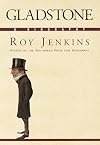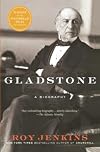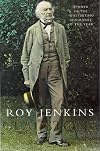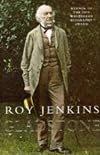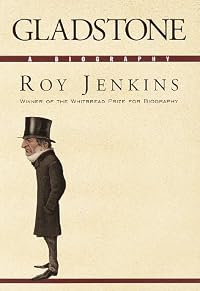
Gladstone
by Roy Jenkins
On This Page
Description
William Gladstone was, with Tennyson, Newman, Dickens, Carlyle, and Darwin, one of the stars of nineteenth-century British life. He spent 63 of his 89 years in the House of Commons and was prime minister four times, a unique accomplishment. From his critical role in the formation of the Liberal Party to his preoccupation with the cause of Irish Home Rule, he was a commanding politician and statesman nonpareil. But Gladstone the man was much more: a classical scholar, a wide-ranging author, a show more vociferous participant in all the great theological debates of the day, a voracious reader, and an avid walker who chopped down trees for recreation. He was also a man obsessed with the idea of his own sinfulness. This full and deep portrait of a complicated man offers a sweeping picture of a tumultuous century in British history.--From publisher description. show lessTags
Recommendations



















Member Reviews
Interesting. but with so many people it's difficult to remember who's who, unlike Jenkins who obviously was familiar with everyone prior to writing it. He also loves to throw in obscure words which sometimes feels like he's showing off.
However, I still felt rewarded at the end and my knowledge of and feel for this era in British politics was much improved at the end.
However, I still felt rewarded at the end and my knowledge of and feel for this era in British politics was much improved at the end.
Other than Queen Victoria herself, William Ewart Gladstone is probably the persons who defines the Victorian period. Four times Prime Minister (a record so far unmatched and very unlikely to be matched in the years to come) in a career spanning 1832-1895.
After the typical Prime Ministerial education of Eton and Oxford, Gladstone first made his mark on the world in a fiercely conservative tome 'The State in its Relationship with the Church' in which he argued that membership in the Church of England should be prerequisite for anyone who wished to serve in public life and that the aim of the nation should be to uphold the principles of the Church (it is something of an irony that Gladstone was the man to bring about the disestablishment show more of the Church of Ireland and argued for the same in Scotland and Wales). Lord Attlee described Gladstone as being a 'frightful old prig' for his religiosity particularly in relationship to his proposal to his wife. 'Fancy' he said 'writing a letter proposing marriage including a sentence of 140 words all about the Almighty. He was a dreadful person'.
Gladstone was first elected as MP for Newark in a semi-rotten borough and supported by a local duke, hardly a democratic start. His first major oration in the House of Commons was rather surprisingly pro-slavery with a defence of the negro apprentice schemes on the West Indian plantations, talking for over two hours (a pretty standard length for a Gladstone oration). Gladstone had a pretty amazing career prior to taking the highest office serving as Chancellor of the Exchequer in successive governments effectively he was the man who made the job what it is today. Jenkins argues that 'Churchill would have been little more than a footnote to history had he died on the threshold of his premiership. This would certainly have been true of Salisbury had he gone in 1886, or of Macmillan had he done so in 1956...but such obscurity would not have been the fate of Gladstone had he died instead of becoming Prime Minister in 1868.
On being told that the Queen had requested Gladstone to form his first government he uttered the immortal phrase 'my mission is to pacify Ireland' and his Irish policy was to dominate all four of his premierships. In his first premiership Gladstone managed to enact legislation disestablishing the Church of Ireland, reforming land rights and access to the Irish universities however it was the decisive issue of Home Rule which thwarted his attempt to bring peace to that land and caused somewhat irreparable divisions within the Liberal party (which were later blown apart in the power struggle between Asquith and Lloyd George) as the Whigs deferred to the Conservatives in large numbers.
Gladstone was such a strange man. In his earlier years his passion was to rescue prostitutes, a pursuit to which he devoted a large amount of his time and energy spending many hours talking to these women about religion, even when he was in high office. Whilst these activities no doubt expressed some sexual repression for which Gladstone punished himself (an act his diary either noted as 'the scourge' or was annotated with mark that looked rather like a little whip) there is no reason to believe that his actions were nothing short of moral and charitable although one cannot imagine a politician today being able to act like this and rather speaks to a certain naivity of Gladstone's as well as a firm belief in his own moral rectitude. In later life the rescuing of prostitutes was replaced by an equally bizarre hobby of chopping down trees, a pursuit he encouraged his children to take part in.
Gladstone was a voracious reader and is said to have read some 40,000 volumes throughout his life although his favourites were always the Latin and Ancient Greek classics, Homer, Dante and Horace (his speeches were littered with untranslated Latin and Greek quotations). The sheer volume of books despite having worked the highest offices in Britain shows one of the key Gladstone characteristics which is that he believed himself at war with time and it was his duty to fit as much into a day as he possibly could.
The book is well written from a man who has had his own time as Chancellor of the Exchequer and also his own turn at dividing political parties (as when he fractured the Labour Party to create the short lived Social Democrat Party which eventually merged with the Gladstone's old Liberal Party to form the Liberal Democrat Party). He rather glosses over a lot of the nitty gritty of the different Gladstone premierships however to go into that detail would probably require a book of some number of volumes that I most certainly would not have bought. The book also lacks a summary chapter which would have been nice to tie things up and not end upon the sad note of the Grand Old Man's death.
If you're interested in the politics of Victorian Britain then this book is a must buy.
4/5
http://paolosinterweblog.blogspot.com/2010/05/gladstone-by-roy-jenkins.html show less
After the typical Prime Ministerial education of Eton and Oxford, Gladstone first made his mark on the world in a fiercely conservative tome 'The State in its Relationship with the Church' in which he argued that membership in the Church of England should be prerequisite for anyone who wished to serve in public life and that the aim of the nation should be to uphold the principles of the Church (it is something of an irony that Gladstone was the man to bring about the disestablishment show more of the Church of Ireland and argued for the same in Scotland and Wales). Lord Attlee described Gladstone as being a 'frightful old prig' for his religiosity particularly in relationship to his proposal to his wife. 'Fancy' he said 'writing a letter proposing marriage including a sentence of 140 words all about the Almighty. He was a dreadful person'.
Gladstone was first elected as MP for Newark in a semi-rotten borough and supported by a local duke, hardly a democratic start. His first major oration in the House of Commons was rather surprisingly pro-slavery with a defence of the negro apprentice schemes on the West Indian plantations, talking for over two hours (a pretty standard length for a Gladstone oration). Gladstone had a pretty amazing career prior to taking the highest office serving as Chancellor of the Exchequer in successive governments effectively he was the man who made the job what it is today. Jenkins argues that 'Churchill would have been little more than a footnote to history had he died on the threshold of his premiership. This would certainly have been true of Salisbury had he gone in 1886, or of Macmillan had he done so in 1956...but such obscurity would not have been the fate of Gladstone had he died instead of becoming Prime Minister in 1868.
On being told that the Queen had requested Gladstone to form his first government he uttered the immortal phrase 'my mission is to pacify Ireland' and his Irish policy was to dominate all four of his premierships. In his first premiership Gladstone managed to enact legislation disestablishing the Church of Ireland, reforming land rights and access to the Irish universities however it was the decisive issue of Home Rule which thwarted his attempt to bring peace to that land and caused somewhat irreparable divisions within the Liberal party (which were later blown apart in the power struggle between Asquith and Lloyd George) as the Whigs deferred to the Conservatives in large numbers.
Gladstone was such a strange man. In his earlier years his passion was to rescue prostitutes, a pursuit to which he devoted a large amount of his time and energy spending many hours talking to these women about religion, even when he was in high office. Whilst these activities no doubt expressed some sexual repression for which Gladstone punished himself (an act his diary either noted as 'the scourge' or was annotated with mark that looked rather like a little whip) there is no reason to believe that his actions were nothing short of moral and charitable although one cannot imagine a politician today being able to act like this and rather speaks to a certain naivity of Gladstone's as well as a firm belief in his own moral rectitude. In later life the rescuing of prostitutes was replaced by an equally bizarre hobby of chopping down trees, a pursuit he encouraged his children to take part in.
Gladstone was a voracious reader and is said to have read some 40,000 volumes throughout his life although his favourites were always the Latin and Ancient Greek classics, Homer, Dante and Horace (his speeches were littered with untranslated Latin and Greek quotations). The sheer volume of books despite having worked the highest offices in Britain shows one of the key Gladstone characteristics which is that he believed himself at war with time and it was his duty to fit as much into a day as he possibly could.
The book is well written from a man who has had his own time as Chancellor of the Exchequer and also his own turn at dividing political parties (as when he fractured the Labour Party to create the short lived Social Democrat Party which eventually merged with the Gladstone's old Liberal Party to form the Liberal Democrat Party). He rather glosses over a lot of the nitty gritty of the different Gladstone premierships however to go into that detail would probably require a book of some number of volumes that I most certainly would not have bought. The book also lacks a summary chapter which would have been nice to tie things up and not end upon the sad note of the Grand Old Man's death.
If you're interested in the politics of Victorian Britain then this book is a must buy.
4/5
http://paolosinterweblog.blogspot.com/2010/05/gladstone-by-roy-jenkins.html show less
2973 Gladstone: A Biography, by Roy Jenkins (read 19 Apr 1997) This is a superlative biography by a superlative biographer. (Jenkins' biography of Asquith [read by me 22 Jan 1969] is probably the most appreciated biography I have ever read.) On balance Jenkins is favorable to Gladstone. The book is full of 19th century parliamentary history and I found it all absorbing.
H. C. G. Matthew's life of Gladstone is the definitive academic biography, but Jenkins version is a better read and brings the insight of a practising politician.
Ratings
Members
- Recently Added By
Author Information

29+ Works 3,532 Members
Roy Jenkins is the author of eighteen books, including Gladstone (1997), which won the Whitbread Prize for Biography. Active in British politics for half a century, he entered the House of Commons as a Labour member in 1948 and subsequently served as Minister of Aviation, Home Secretary, and Chancellor of the Exchequer. In 1977-81 he was President show more of the European Commission. In 1987 he became Chancellor of Oxford University and took his seat in the House of Lords as Lord Jenkins of Hillhead. He is currently President of the Royal Society of Literature. He lives with his wife in London and Oxfordshire show less
Awards and Honors
Awards
Common Knowledge
- Original publication date
- 1995
- People/Characters
- William Ewart Gladstone; Sir Thomas Dyke Acland; Albert, Prince Consort; Alexandra of Denmark, Queen Consort of the United Kingdom; George Armitstead; H. H. Asquith (show all 69); Arthur Balfour; Lord George Bentinck; Otto von Bismarck; John Bright; Henry Bruce, 1st Baron Aberdare; Henry Campbell-Bannerman; John Dalberg-Acton, 1st Baron Acton; George Campbell, 8th Duke of Argyll; George Canning; Edward Cardwell, 1st Viscount Cardwell; Lord Frederick Cavendish; Spencer Cavendish, 8th Duke of Devonshire; Robert Gascoyne-Cecil, 3rd Marquess of Salisbury; Joseph Chamberlain; Hugh Childers; Lord Randolph Churchill; Winston Churchill; Edward Smith-Stanley, 14th Earl of Derby; Edward Henry Stanley, 15th Earl of Derby; Sir Charles Dilke; Benjamin Disraeli, 1st Earl of Beaconsfield; Edward VII, King of the United Kingdom; W. E. Forster; Gathorne Gathorne-Hardy, 1st Earl of Cranbrook; Mary Gladstone Drew; Catherine Gladstone; Henry Neville Gladstone, 1st Baron Gladstone of Hawarden; Herbert Gladstone, 1st Viscount Gladstone; George Gordon, 4th Earl of Aberdeen; Sir Edward Walter Hamilton; Henry Herbert, 4th Earl of Carnarvon; Sidney Herbert; James Hope-Scott; William Lamb, 2nd Viscount Melbourne; Granville Leveson-Gower, 2nd Earl of Granville; Sir George Cornewall Lewis; David Lloyd George; Robert Bulwer-Lytton, 1st Earl of Lytton; John Manners, 7th Duke of Rutland; Henry Edward Manning; John Morley, 1st Viscount Morley; Napoleon III; John Henry Newman; Sir Stafford Northcote; Thomas George Baring, 1st Earl of Northbrook; Roundell Palmer, 1st Earl of Selbourne; Chichester Parkinson-Fortescue, 1st Baron Carlingford; Charles Stewart Parnell; Robert Peel; Henry Petty-Fitzmaurice, 3rd Marquess of Lansdowne; Henry Petty-Fitzmaurice, 5th Marquess of Lansdowne; Pius IX, Pope (Beatified, Giovanni Maria Mastai Ferretti, 1792–1878); Frederick Ponsonby, 6th Earl of Bessborough; John Poyntz Spencer, 5th Earl Spencer; Archibald Primrose, 5th Earl of Rosebery; John Russell, 1st Earl Russell; Henry John Temple, 3rd Viscount Palmerston; Alfred Lord Tennyson; George Otto Trevelyan; Victoria, Queen of the United Kingdom; George Villiers, 4th Earl of Clarendon; Samuel Wilberforce; John Wodehouse, 1st Earl of Kimberley
- Important places
- Aberdeen, Scotland, UK; Afghanistan; Alsace-Lorraine, France; Austria; Bavaria, Germany; Belgium (show all 8); Canada; Cannes, Alpes-Maritimes, Provence-Alpes-Côte d'Azur, France
- First words
- William Ewart Gladstone was born in Liverpool at the end of 1809.
- Blurbers
- Schlesinger, Arthur, Jr.; Galbraith, John Kenneth
Classifications
- Genres
- History, Nonfiction, Biography & Memoir, General Nonfiction
- DDC/MDS
- 941.081092 — History & geography History of Europe British Isles Historical periods of British Isles 1837- Period of Victoria and House of Windsor Victoria 1837-1901
- LCC
- DA563.4 .J45 — History of Europe, Asia, Africa and Oceania Great Britain History of Great Britain England History By period Modern, 1485- Victorian era, 1837-1901
- BISAC
Statistics
- Members
- 514
- Popularity
- 58,121
- Reviews
- 4
- Rating
- (3.75)
- Languages
- Czech, English
- Media
- Paper, Ebook
- ISBNs
- 10
- ASINs
- 6