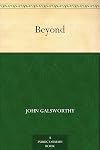
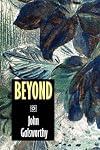
Beyond
by John Galsworthy
On This Page
Description
One of the most prolific and respected authors of the early twentieth century, John Galsworthy was awarded the Nobel Prize in Literature in 1932. Although not as well-known as the five novels that comprise his enduringly popular Forsyte Saga, Beyond displays Galsworthy's fiction-writing prowess at its best..
Tags
Recommendations













Member Reviews
It took a few tries to get into this but it finally completely captured me. Gyp is a difficult character to get to know but I really enjoyed getting to know her. She is a remarkably nuanced character that I'm not sure I ever completely understood. A great read that made me want to read more Galsworthy.
Ratings
Members
- Recently Added By
Lists

First published in 1917
132 works; 3 members
Author Information

344+ Works 11,767 Members
At age 28, after a gentlemanly education at Harrow and Oxford, and a training at law, Galsworthy settled into simultaneous careers as a novelist and a playwright. The Silver Box, Galsworthy's first successful drama, was staged in 1906, the year he published the first volume of what was to become The Forsyte Saga. His one-word titles - Justice show more (1910), Strife (1909), Loyalties (1922)---suggest the nature of Galsworthy's artistic ambition: to generalize a social indictment, keeping faith with the objective methods of naturalism. In each, Galsworthy favors an austere irony and unresolvable situations, and balanced moral positions are displayed in the cabinetwork of "well-made" playwrighting. Reputed to have led to reforms in its time, his realism today seems contrived to produce aesthetic distance and a sense of resignation that is precisely what contemporary political dramatists strain hardest to avoid. Not surprisingly, critics have come away from revivals with the sense that (especially in his spare language) Galsworthy anticipates Harold Pinter rather than more socially engaged playwrights. Galsworthy wrote novels and plays alternately throughout his life. His masterwork, The Forsyte Saga, begun in 1906 and finished in 1928, and consisting of six separate novels and two linking interludes, is the most famous example of the sequence novel in English literature. It is a study of the property sense, the possessive spirit, in different individuals and generations of English middle-class society. He also completed a second trilogy dealing with the Forsyte family, called A Modern Comedy (1928). His last trilogy, a study of the Charwell family, is called End of the Chapter (1933). Galsworthy's later years brought him many honors, including the presidency of P.E.N. and honorary degrees from Oxford, Cambridge, and several other universities. After World War I, he was offered a knighthood, which he refused. He did, however, accept the Order of Merit in 1929, and in 1932 he was awarded the Nobel Prize. He was, however, too ill to attend the Nobel ceremony and died within two months of receiving the award. Although his posthumous reputation had waned, the centenary of his death, in 1967, brought a re-creation of The Forsyte Saga on British and American television in serial form. Interest in him skyrocketed, and the Forsyte novels again became bestsellers. With new popularity came fresh critical analysis. Pamela Hansford Johnson called The Forsyte Saga "a work of profound social insight and patchy psychological insight" (N.Y. Times). His critical writings include The Inn of Tranquility: Studies and Essays (1911) and Author and Critic. (Bowker Author Biography) show less
Series
Belongs to Publisher Series
Knaur Taschenbuch (288)
Classifications
Statistics
- Members
- 74
- Popularity
- 426,242
- Reviews
- 2
- Rating
- (3.71)
- Languages
- 8 — Czech, English, German, Norwegian (Bokmål), Norwegian, Portuguese, Slovenian, Swedish
- Media
- Paper, Audiobook, Ebook
- ISBNs
- 40
- ASINs
- 12