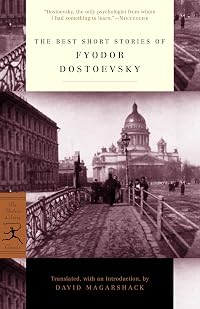
The Best Short Stories of Fyodor Dostoevsky
by Fyodor Dostoyevsky 
On This Page
Description
After a brief military career, the illustrious Russian author Fyodor Dostoyevsky quickly turned to writing as a profession with the publication of his first novel, "Poor Folk" in 1846. This novel sparked a literary career that would eventually cement Dostoyevsky's reputation as one of the greatest novelists of the nineteenth century. Early participation in a literary political group landed the writer in exile in Siberia for nearly a decade, an experience which had a profound influence on show more Dostoyevsky's understanding of fate, the suffering of human beings, and resulted in a powerful religious conversion experience. Dostoyevsky's works are marked by his penetrating exploration of psychology and morality and today he is considered one of the most important "existentialist" writers. This representative collection of Dostoyevsky's short stories spans his impressive career and includes such classics as "White Nights", a heartbreaking tale of loss; the famous "Notes from the Underground", an important work of guilt and cynicism; and "The Honest Thief", which centers on a sad criminal who cannot resist committing crimes. Also included in the this collection are "A Christmas Tree and a Wedding", "The Peasant Marey", "A Faint Heart", and "The Dream of a Ridiculous Man". This edition follows the translations of Constance Garnett and includes a biographical afterword. show lessTags
Recommendations







Member Reviews
In all honesty, I'm not much of a fan of Dostoevsky. His longer works are spotted with patches of brilliance that are subsumed in a morass of overwrought prose and excessively long asides. These short stories are a welcome surprise then. There's a concision and clarity that's lacking in all the novels I've read by the author. The exception to this, in this collection, is Notes From The Underground which, being by far the longest, contains the flaws I have just mentioned. The remainder are little gems, although The Dream of a Ridiculous Man is a slightly weak effort too.
Given that NFTU makes up almost half this book, and it's a novella I'm not very fond of, I can't give this collection as a whole a particularly good rating. Yet I still show more consider it a worthwhile collection as it demonstrates a side to Dostoevsky not evident in his most famous works and it's some of his best writing. show less
Given that NFTU makes up almost half this book, and it's a novella I'm not very fond of, I can't give this collection as a whole a particularly good rating. Yet I still show more consider it a worthwhile collection as it demonstrates a side to Dostoevsky not evident in his most famous works and it's some of his best writing. show less
This collection, published in 2001, features seven of Fyodor Dostoevsky’s short stories, translated by David Magarshack. They are featured in chronological order (except for one of them). While I have read two of Dostoevsky’s novels (Crime and Punishment and The Brothers Karamazov), this was the first time I’ve delved into his shorter works. What drew me to this particular collection is that it featured Notes From The Underground, a novella I’ve heard recommended by other reviewers over the years.
For me, the best story in this collection is The Honest Thief, a tragic story of an honest alcoholic who dies regretting a theft that he’s long denied having carried out. Notes From The Underground is considered an early example of show more existential literature. Its main character and narrator is an angry middle aged man who experiences an awakening to what he perceives is the meaning of life. I found this story, along with several others, a slog to get through, feeling they belabored the points the author was trying to make.
That said, for readers new to Dostoevsky, this collection of shorter works might serve as a gateway in deciding if they want to move on to his longer works of fiction. The primary themes he tends to explore in his novels are on display here. show less
For me, the best story in this collection is The Honest Thief, a tragic story of an honest alcoholic who dies regretting a theft that he’s long denied having carried out. Notes From The Underground is considered an early example of show more existential literature. Its main character and narrator is an angry middle aged man who experiences an awakening to what he perceives is the meaning of life. I found this story, along with several others, a slog to get through, feeling they belabored the points the author was trying to make.
That said, for readers new to Dostoevsky, this collection of shorter works might serve as a gateway in deciding if they want to move on to his longer works of fiction. The primary themes he tends to explore in his novels are on display here. show less
Fyodor Dostoevsky was one of the giants of Russian literature. I feel fairly sure he will never be a favorite of mine; with few exceptions these stories are bleak, pessimistic views of life told in the first person by vain, selfish narrators who rail against their poverty and hardships but seem unable to muster any real compassion for the plights of others. The two exceptions are "The Christmas Tree and a Wedding", about an observer's account of a middle-aged moneygrubber's machinations to wed a young heiress, planned from the time she was 11. The other is "The Dream of a Ridiculous Man", which is a story of a dream about a perfect and loving society, and how the narrator unwittingly corrupted it, and learned from his dream to preach show more about the perfect society. It could have been written by Lawrence Ferlinghetti in the 1960's. show less
This collection of seven stories presented in chronological order, by David Magarshack, is not only unique to the Modern Library classics series but to all published works. This celebrated translation explores many of the recurring themes in Dostoyevsky's longer works and presents apropos the silhouettes of his characters in novels. The short works accent his creative power and profundities of thought and manifest his tour de force as a raconteur.
1. White Nights (1848)
The title refers to the twilight summer nights in Petersberg. A tender and romantic story, this piece to a large extent is autobiographical of the days Dostoyevsky spent alone in Petersberg. The main character is a dreamer who cannot remember what he was dreaming and show more sometimes had no recollection of how everything had all happened. A sentimental theme develops against the background of Dostoyevsky's own personal impressions during his nocturnal wanderings, filled with gentle humor and delicate touches of genuine feelings. This piece affords vague hint of theme in Crime and Punishment. It is a story that odes to a moment of bliss that is sufficient for a whole of a man's life.
2. The Honest Thief (1848)
The central character of this piece is an anti-hero whose tragedy consists of his helplessness to shun and to resist evil. Like "White Nights", this piece again paves the way for the longer work in the sense of punishment.
3. The Christmas Tree and a Wedding (1849)
David Magarshack calls this piece the most artistically perfect short story in Dostoyevsky's early days as a fiction writer. It happens to be my personal favorite besides the uncompromisingly cynical "The Notes From Underground." The piece is savagely satiric and ridicules the preposterous, fawning adults in high society. Dostoyevsky delineates an indelible scene of pure joy only perhaps manifested in our children during the very first years of their life. Through the narrator's admiration for the children, the absurdities of their parents are shamelessly magnified to the fullness. A career opportunist, in spite of his importance and dignity, went out of his way to pursue an underage heiress, an object of his desire that could not become a real object at least another five years.
4. The Peasant Marey (1876)
Dostoyevsky probably adds new touch and imbues his sentiment in depicting this anecdote with a serf during his early childhood. Written during his imprisonment in Siberia, this piece captures the vividness of a brief encounter that must have been hidden in his mind without even his knowing it. Only God perhaps might have seen from above what profound human feeling, delicate tenderness the heart of a serf who neither expected nor dreamed of his emancipation.
5. A Gentle Creature (1876)
This is one of the least comprehensible pieces in this collection despite the style of writing conveys the reality of the situation. Dostoyevsky himself regarded the story "eminently realistic" and surely accents the psychologist in him. A husband tells of the events that invariably led to the suicide of his wife. The rambling, fragmented, bearing-no-cause narrative style epitomizes the thought-process and speech of an inveterate hypochondriac. Succession of memories dawns on him the truth as the prose takes a more concrete form. The story explores the rare theme of insensibility in human relationships.
6. Notes From Underground
Doubtless Dostoyevsky's most significant short work, this piece inaugurated existential literature in the 19th century. The Underground Man goes out of his way to offend his hearers, with frequent contradictory comments, rambles on with no reason and bears no cause. So often does he mean to say something but conceal his last word out of fear. The Underground Man is ubiquitous in society and is shadowed in those who feel disgusted with real life. The personage transcends the personal struggles and assumes a universal significance that embraces mankind. It is reminiscent of "White Nights" only that the latter flows along the pleasant surface of human thought and emotion.
7. The Dream of a Ridiculous Man
The piece along with "The Notes from Underground" voice Dostoyevsky's final judgment of mankind. It explores the purging of conscience and the existence of human being and consciousness.
The collection shows that Dostoyevsky is capable and adept in surveying the human scene with complete detachment. It serves as a fine introduction to Dostoyevsky's works and as a prelude to his longer works. show less
1. White Nights (1848)
The title refers to the twilight summer nights in Petersberg. A tender and romantic story, this piece to a large extent is autobiographical of the days Dostoyevsky spent alone in Petersberg. The main character is a dreamer who cannot remember what he was dreaming and show more sometimes had no recollection of how everything had all happened. A sentimental theme develops against the background of Dostoyevsky's own personal impressions during his nocturnal wanderings, filled with gentle humor and delicate touches of genuine feelings. This piece affords vague hint of theme in Crime and Punishment. It is a story that odes to a moment of bliss that is sufficient for a whole of a man's life.
2. The Honest Thief (1848)
The central character of this piece is an anti-hero whose tragedy consists of his helplessness to shun and to resist evil. Like "White Nights", this piece again paves the way for the longer work in the sense of punishment.
3. The Christmas Tree and a Wedding (1849)
David Magarshack calls this piece the most artistically perfect short story in Dostoyevsky's early days as a fiction writer. It happens to be my personal favorite besides the uncompromisingly cynical "The Notes From Underground." The piece is savagely satiric and ridicules the preposterous, fawning adults in high society. Dostoyevsky delineates an indelible scene of pure joy only perhaps manifested in our children during the very first years of their life. Through the narrator's admiration for the children, the absurdities of their parents are shamelessly magnified to the fullness. A career opportunist, in spite of his importance and dignity, went out of his way to pursue an underage heiress, an object of his desire that could not become a real object at least another five years.
4. The Peasant Marey (1876)
Dostoyevsky probably adds new touch and imbues his sentiment in depicting this anecdote with a serf during his early childhood. Written during his imprisonment in Siberia, this piece captures the vividness of a brief encounter that must have been hidden in his mind without even his knowing it. Only God perhaps might have seen from above what profound human feeling, delicate tenderness the heart of a serf who neither expected nor dreamed of his emancipation.
5. A Gentle Creature (1876)
This is one of the least comprehensible pieces in this collection despite the style of writing conveys the reality of the situation. Dostoyevsky himself regarded the story "eminently realistic" and surely accents the psychologist in him. A husband tells of the events that invariably led to the suicide of his wife. The rambling, fragmented, bearing-no-cause narrative style epitomizes the thought-process and speech of an inveterate hypochondriac. Succession of memories dawns on him the truth as the prose takes a more concrete form. The story explores the rare theme of insensibility in human relationships.
6. Notes From Underground
Doubtless Dostoyevsky's most significant short work, this piece inaugurated existential literature in the 19th century. The Underground Man goes out of his way to offend his hearers, with frequent contradictory comments, rambles on with no reason and bears no cause. So often does he mean to say something but conceal his last word out of fear. The Underground Man is ubiquitous in society and is shadowed in those who feel disgusted with real life. The personage transcends the personal struggles and assumes a universal significance that embraces mankind. It is reminiscent of "White Nights" only that the latter flows along the pleasant surface of human thought and emotion.
7. The Dream of a Ridiculous Man
The piece along with "The Notes from Underground" voice Dostoyevsky's final judgment of mankind. It explores the purging of conscience and the existence of human being and consciousness.
The collection shows that Dostoyevsky is capable and adept in surveying the human scene with complete detachment. It serves as a fine introduction to Dostoyevsky's works and as a prelude to his longer works. show less
These are great short works by a great novelist. I haven't read Notes from the Underground, although I've tried many times over the years, because the protagonist, who tells the story is so repellant. The other stories are quite compelling, especially The Christmas Tree and a Wedding, which is, I think, a perfect short story.
This is a wonderful little volume of short stories from Dostoevsky; I quote frequently from "Notes from the Underground" below but especially enjoyed "White Nights" and "The Peasant Marey". A book like this might be a good way for a reader intimidated by Dostoevsky's novels to get a taste of his works.
Favorite quotes....
On brotherhood, from "Notes from the Underground"
"But I used to call on him only when I was in the right mood for such a visit, when, that is, my dreams had reached such a pinnacle of bliss that I felt an instant and irresistible urge to embrace all my fellow-men and all humanity. But to do that one had at least to have one man who actually existed."
On freedom, from "Notes from the Underground":
"One’s own free and show more unfettered choice, one’s own whims, however wild, one’s own fancy, overwrought though it sometimes may be to the point of madness – that is that same most desirable good which we overlooked…And why on earth do all those sages assume that man must needs strive after some normal, after some rationally desirable good? All man wants is an absolutely free choice…For what is man without desires, without free will, and without the power of choice but a stop in an organ pipe?"
On history, from "Notes from the Underground":
"Monotonous? Well, I suppose it is monotonous: they fight and fight, they are fighting now, they fought before, and they will fight again – you must admit that this is rather monotonous. In short, you can say anything you like about world history, anything that might enter the head of a man with the most disordered imagination. One thing, though, you cannot possibly say about it: you cannot say that it is sensible."
On virtue, from "A Gentle Creature":
"Cheap generosity is always easy, even to give one’s life – yes, even that is easy, because it is merely the result of high spirits, of a superabundance of energy, of a passionate desire for beauty! Oh, no! You try a different kind of generosity, the really heroic kind, the difficult, calm, silent kind, without glitter, with odium, the kind that demands great sacrifices, the kind that doesn’t bring you a scrap of fame or glory, in which you – a man of shining virtue – are exhibited before the whole world as a blackguard, while you are really the most honest man of them all! Well, try that, my dear girl. Just try it."
On virtue, from "The Peasant Marey":
"I suddenly came to and sat up on my bunk and, I remember, I could still feel the gentle smile of memory on my lips. For another minute I went on recalling that incident from my childhood…now twenty years later in Siberia I suddenly remembered this meeting so distinctly that not a single detail of it was lost…I remember the tender, motherly smile of that serf, the way he made the sign of the cross over me and crossed himself, the way he nodded at me. … if I had been his own son, he could not have looked at me with eyes shining with brighter love. And who compelled him to look like that? He was one of our serfs, a peasant who was our property, and after all I was the son of his master. No one would have known that he had been so good to me, and no one would have rewarded him for it. Did he really love little children as much as that? There are such people, no doubt. Our meeting took place in a secluded spot, in a deserted field, and only God perhaps saw from above with what profound and enlightened human feeling, and with what delicate, almost womanly, tenderness the heart of a coarse, savage ignorant Russian serf was filled, a serf who at the time neither expected nor dreamt of his emancipation. … And so when I got off the bunk and looked round, I suddenly felt I remember, that I could look at these unhappy creatures with quite different eyes, and that suddenly by some miracle all hatred and anger had vanished from my heart."
On the younger generation, from "Notes from the Underground":
"Every decent man of our age is, and indeed has to be, a coward and a slave."
On the loss of youth, from "White Nights":
"For, after all, you do grow up, you do outgrow your ideals, which turn to dust and ashes, which are shattered into fragments; and if you have no other life, you just have to build one up out of these fragments. And meanwhile your soul is all the time craving and longing for something else. And in vain does the dreamer rummage about in his old dreams, raking them over as though they were a heap of cinders, looking in these cinders for some spark, however tiny, to fan it into a flame so as to warm his chilled body by it and revive in it all that he held so dear before, all that touched his heart, that made his blood course through his veins, that drew tears from his eyes, and that so splendidly deceived him!" show less
Favorite quotes....
On brotherhood, from "Notes from the Underground"
"But I used to call on him only when I was in the right mood for such a visit, when, that is, my dreams had reached such a pinnacle of bliss that I felt an instant and irresistible urge to embrace all my fellow-men and all humanity. But to do that one had at least to have one man who actually existed."
On freedom, from "Notes from the Underground":
"One’s own free and show more unfettered choice, one’s own whims, however wild, one’s own fancy, overwrought though it sometimes may be to the point of madness – that is that same most desirable good which we overlooked…And why on earth do all those sages assume that man must needs strive after some normal, after some rationally desirable good? All man wants is an absolutely free choice…For what is man without desires, without free will, and without the power of choice but a stop in an organ pipe?"
On history, from "Notes from the Underground":
"Monotonous? Well, I suppose it is monotonous: they fight and fight, they are fighting now, they fought before, and they will fight again – you must admit that this is rather monotonous. In short, you can say anything you like about world history, anything that might enter the head of a man with the most disordered imagination. One thing, though, you cannot possibly say about it: you cannot say that it is sensible."
On virtue, from "A Gentle Creature":
"Cheap generosity is always easy, even to give one’s life – yes, even that is easy, because it is merely the result of high spirits, of a superabundance of energy, of a passionate desire for beauty! Oh, no! You try a different kind of generosity, the really heroic kind, the difficult, calm, silent kind, without glitter, with odium, the kind that demands great sacrifices, the kind that doesn’t bring you a scrap of fame or glory, in which you – a man of shining virtue – are exhibited before the whole world as a blackguard, while you are really the most honest man of them all! Well, try that, my dear girl. Just try it."
On virtue, from "The Peasant Marey":
"I suddenly came to and sat up on my bunk and, I remember, I could still feel the gentle smile of memory on my lips. For another minute I went on recalling that incident from my childhood…now twenty years later in Siberia I suddenly remembered this meeting so distinctly that not a single detail of it was lost…I remember the tender, motherly smile of that serf, the way he made the sign of the cross over me and crossed himself, the way he nodded at me. … if I had been his own son, he could not have looked at me with eyes shining with brighter love. And who compelled him to look like that? He was one of our serfs, a peasant who was our property, and after all I was the son of his master. No one would have known that he had been so good to me, and no one would have rewarded him for it. Did he really love little children as much as that? There are such people, no doubt. Our meeting took place in a secluded spot, in a deserted field, and only God perhaps saw from above with what profound and enlightened human feeling, and with what delicate, almost womanly, tenderness the heart of a coarse, savage ignorant Russian serf was filled, a serf who at the time neither expected nor dreamt of his emancipation. … And so when I got off the bunk and looked round, I suddenly felt I remember, that I could look at these unhappy creatures with quite different eyes, and that suddenly by some miracle all hatred and anger had vanished from my heart."
On the younger generation, from "Notes from the Underground":
"Every decent man of our age is, and indeed has to be, a coward and a slave."
On the loss of youth, from "White Nights":
"For, after all, you do grow up, you do outgrow your ideals, which turn to dust and ashes, which are shattered into fragments; and if you have no other life, you just have to build one up out of these fragments. And meanwhile your soul is all the time craving and longing for something else. And in vain does the dreamer rummage about in his old dreams, raking them over as though they were a heap of cinders, looking in these cinders for some spark, however tiny, to fan it into a flame so as to warm his chilled body by it and revive in it all that he held so dear before, all that touched his heart, that made his blood course through his veins, that drew tears from his eyes, and that so splendidly deceived him!" show less
It is with this broader sampling that we can fully appreciate the reputation of the Russian writers for conveying human essence and spirituality. This collection consists of White Nights, The Honest Thief, The Christmas Tree and a Wedding, The Peasant Marey, Notes from the Underground, A Gentle Creature, and The Dream of a Ridiculous Man.
Members
- Recently Added By
Lists

Russian Literature Sequence
28 works; 1 member
Author Information

1,484+ Works 180,753 Members
One of the most powerful and significant authors in all modern fiction, Fyodor Dostoevsky was the son of a harsh and domineering army surgeon who was murdered by his own serfs (slaves), an event that was extremely important in shaping Dostoevsky's view of social and economic issues. He studied to be an engineer and began work as a draftsman. show more However, his first novel, Poor Folk (1846), was so well received that he abandoned engineering for writing. In 1849, Dostoevsky was arrested for being a part of a revolutionary group that owned an illegal printing press. He was sentenced to be executed, but the sentence was changed at the last minute, and he was sent to a prison camp in Siberia instead. By the time he was released in 1854, he had become a devout believer in both Christianity and Russia - although not in its ruler, the Czar. During the 1860's, Dostoevsky's personal life was in constant turmoil as the result of financial problems, a gambling addiction, and the deaths of his wife and brother. His second marriage in 1887 provided him with a stable home life and personal contentment, and during the years that followed he produced his great novels: Crime and Punishment (1886), the story of Rodya Raskolnikov, who kills two old women in the belief that he is beyond the bounds of good and evil; The Idiots (1868), the story of an epileptic who tragically affects the lives of those around him; The Possessed (1872), the story of the effect of revolutionary thought on the members of one Russian community; A Raw Youth (1875), which focuses on the disintegration and decay of family relationships and life; and The Brothers Karamazov (1880), which centers on the murder of Fyodor Karamazov and the effect the murder has on each of his four sons. These works have placed Dostoevsky in the front rank of the world's great novelists. Dostoevsky was an innovator, bringing new depth and meaning to the psychological novel and combining realism and philosophical speculation in his complex studies of the human condition. (Bowker Author Biography) show less
Fyodor Dostoyevsky has a Legacy Library. Legacy libraries are the personal libraries of famous readers, entered by LibraryThing members from the Legacy Libraries group.
All Editions
Series
Belongs to Publisher Series
Modern Library (293)
Work Relationships
Contains
Common Knowledge
- Canonical title
- The Best Short Stories of Fyodor Dostoevsky
- Original publication date
- 1848-1877
- People/Characters
- Gogol; Petrashevsky; Fourier; Nastenka
- Important places
- Moscow, Russia; Paxton's Palace; Siberia, Russia; St. Petersburg, Russia
- Important events
- The Golden Age; Haymarket
- First words
- It was a lovely night, one of those nights, dear reader, which can only happen when you are young.
- Last words
- (Click to show. Warning: May contain spoilers.)And-I did find that little girl....And I shall go on! I shall go on!
- Original language
- Russian
Classifications
- Genres
- Fiction and Literature, General Fiction
- DDC/MDS
- 891.733 — Literature & rhetoric Literatures of other languages East Indo-European and Celtic literatures Russian and East Slavic languages Russian fiction 1800–1917
- LCC
- PG3326 .A2 — Language and Literature Slavic languages and literatures. Baltic languages. Albanian language Slavic. Baltic. Albanian Russian literature Individual authors and works 1800-1870 Dostoyevsky
- BISAC
Statistics
- Members
- 1,204
- Popularity
- 20,607
- Reviews
- 8
- Rating
- (4.15)
- Languages
- English
- Media
- Paper, Ebook
- ISBNs
- 13
- ASINs
- 12