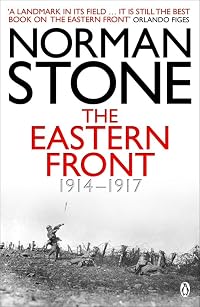
The Eastern Front, 1914-1917
by Norman Stone
On This Page
Description
Norman Stone's groundbreaking book was the very first authoritative account of the Russian Front in the First World War to be published in the West. In this now-classic history he dispels the myths surrounding a still relatively little-known aspect of the war, showing bow inefficiency rather than economic shortage led to Russia's desperate privations and eventual retreat. He also reinterprets the connection between the war and the chaos that followed, arguing that although fighting had show more almost ceased by the end o f 1916, Russia was still in turmoil - undergoing a period of change that would inexorably lead towards revolution. show lessTags
Recommendations









Member Reviews
You could argue that the WWI Russian front set up the remaining history of the 20th century. The early assault on East Prussia, although eventually disastrous for the Russians, may have slowed down the Germans just enough to keep them out of Paris, the eventual failure of the Brusilov Offensive contributed heavily to the Revolution, and the development of the munitions industry during the war dropped a fairly well developed industrial base into Stalin’s lap.
Norman Stone’s The Eastern Front 1914-1917 covers this interesting period very well. All the military campaigns – invasion of East Prussia and the German riposte; campaigns in Galacia, Brusilov offensive and Romanian intervention – are all well described, but the real show more strength of the book is the detailed analysis of politics, infrastructure and economics. Soviet histories tend to exaggerate the deficiencies of Tsarist Russia in order to provide contrast with the glories of Communism; however, Stone makes it clear that there’s not that much exaggeration. Tsarist politics produced a surplus of antiquated generals who hated each other and were seemingly more interested in seeing their counterparts defeated than the enemy; the historical pre-eminence of Russia artillery had distorted into an emphasis on permanent fortresses, which were obsolete by WWI but which still absorbed the lion’s share of Russian artillery and shell production (fortress commanders went to the length of hiding munitions stocks, lest they be transferred to infantry units that would “waste” them); Russian traditional secrecy made it difficult to have weapons manufactured overseas – blueprints were supplied grudgingly, were in Cyrillic, and had Russian measurement units; and communications were primitive even by 1914 standards. The entire Russian army had fewer than 40 radios, insufficient technicians to use them, and no cryptographers; there were some automobiles, motorcycles and airplanes but they were usually broken down and underutilized when they worked; thus, Russian commanders either had to move around on horseback or broadcast in the clear to communicate with their troops. The Russians had shot themselves in the foot in western Poland, where roads, rail and telegraph lines had been deliberately kept undeveloped to act as an obstacle to an invading army; this probably would have worked if the Russians were on the defensive (after all, that’s more or less what happened in 1941) but was of no use at all when they were trying to invade East Prussia or Galacia.
If they had been given the time, the Tsarist Russian might have been able to pull it off. By 1916, factories were producing munitions on the same scale as the Western allies and General Brusilov had put together an offensive strategy that prefigured some of the German 1918 stormtrooper tactics and which almost collapsed the Austro-Hungarian Empire. The Brusilov offensive failed due to internal army politics, German intervention, and the poor decision to transfer troops to Romania. (Stone makes the interesting point that politicians on both sides focused on gaining “allies” which were often worse than useless; Romanian intervention simply handed over the Ploesti oil fields to the Central Powers and absorbed more Russian troops than if Romania had remained neutral).
Fairly dense reading, but well worth it to explicate a usually obscure part of WWI history. show less
Norman Stone’s The Eastern Front 1914-1917 covers this interesting period very well. All the military campaigns – invasion of East Prussia and the German riposte; campaigns in Galacia, Brusilov offensive and Romanian intervention – are all well described, but the real show more strength of the book is the detailed analysis of politics, infrastructure and economics. Soviet histories tend to exaggerate the deficiencies of Tsarist Russia in order to provide contrast with the glories of Communism; however, Stone makes it clear that there’s not that much exaggeration. Tsarist politics produced a surplus of antiquated generals who hated each other and were seemingly more interested in seeing their counterparts defeated than the enemy; the historical pre-eminence of Russia artillery had distorted into an emphasis on permanent fortresses, which were obsolete by WWI but which still absorbed the lion’s share of Russian artillery and shell production (fortress commanders went to the length of hiding munitions stocks, lest they be transferred to infantry units that would “waste” them); Russian traditional secrecy made it difficult to have weapons manufactured overseas – blueprints were supplied grudgingly, were in Cyrillic, and had Russian measurement units; and communications were primitive even by 1914 standards. The entire Russian army had fewer than 40 radios, insufficient technicians to use them, and no cryptographers; there were some automobiles, motorcycles and airplanes but they were usually broken down and underutilized when they worked; thus, Russian commanders either had to move around on horseback or broadcast in the clear to communicate with their troops. The Russians had shot themselves in the foot in western Poland, where roads, rail and telegraph lines had been deliberately kept undeveloped to act as an obstacle to an invading army; this probably would have worked if the Russians were on the defensive (after all, that’s more or less what happened in 1941) but was of no use at all when they were trying to invade East Prussia or Galacia.
If they had been given the time, the Tsarist Russian might have been able to pull it off. By 1916, factories were producing munitions on the same scale as the Western allies and General Brusilov had put together an offensive strategy that prefigured some of the German 1918 stormtrooper tactics and which almost collapsed the Austro-Hungarian Empire. The Brusilov offensive failed due to internal army politics, German intervention, and the poor decision to transfer troops to Romania. (Stone makes the interesting point that politicians on both sides focused on gaining “allies” which were often worse than useless; Romanian intervention simply handed over the Ploesti oil fields to the Central Powers and absorbed more Russian troops than if Romania had remained neutral).
Fairly dense reading, but well worth it to explicate a usually obscure part of WWI history. show less
Sought this out after many sources claimed it as the best general history of the Eastern Front. In many places it reads like a shopping list of divisions, casualties, number of railroad carriages, and the like. When the narrative takes hold Stone is excellent. There were unfortunately not enough of those instances for me to recommend this book for anyone else.
Being a turgid history of WWI's Eastern Front, viewed almost entirely from the Russian perspective. The book clearly reflects extensive scholarship, but is less than pleasant reading. The author fell asleep the first day his historiography class met; rule one of the historian's style manual, identify each player by their full name, exists for very good and sufficient reasons, and the second, identify their position or role in the story, is like unto it. The author, as far as I can remember, doesn't use a full name in the entire book; he's slightly better on role, but not much. And most of these people are well and truly nobodies; you're not talking about familiar figures such as Hindenburg and Ludendorff, or even semi-familiar ones such show more as Conrad and Brussilov, you're talking about corps commanders. His emphasis on logistics is justifiable; certainly that's an understudied aspect of warfare which was crucial here, but how interesting can one make Russian shell production statistics or musings on rail capacity? Less justifiable is his obsession with economics; his concluding chapter says nothing about the big conclusions he has reached about the war, it's simply his take on the economic roots of Russia's revolution. His military narrative is good enough, if muddy, and there are plenty of maps, but they are very small and seem rarely designed to illuminate the places he mentions. I'm glad the blurbers enjoyed the book, but they are more easily entertained than I.. show less
Eastern Front 1914-1917 is een heruitgave die afgezien van een nieuwe inleiding identiek is aan het oorspronkelijke werk uit 1975. De Britse historicus Norman Stone beschrijft de gebeurtenissen aan het oostelijk front in de eerste wereldoorlog, een relatief onbekend stuk geschiedenis. Waar Verdun, de Somme en Ieper als standaardbegrippen in onze taal zijn doorgedrongen, geldt datzelfde niet voor Tannenberg, Przemysl, Brusilov of Riga. Toch vielen hier evenveel slachtoffers als in de loopgraven in het westen. Het karakter van de strijd was echter verschillend. Waar in Frankrijk en Vlaanderen de legers tot stilstand waren gekomen in modder en prikkeldraad, bleven de aanvallers kansen houden op de vlaktes van Polen en Rusland. Reden show more daarvoor was de meer dan twee keer zo lange frontlijn bemand door een zelfde aantal soldaten, uitgerust met maar de helft van de artillerie, en vooral het primitieve spoorwegnet waardoor reserves niet snel konden worden aangevoerd om gaten te dichten in het geval van een doorbraak. Het gevolg was een dramatische bewegingsoorlog met wisselende kansen en een front dat uiteindelijk diep in Rusland zou komen te liggen.
Het boek ontkracht de mythe dat Rusland ten onder zou zijn gegaan door economische factoren (tekort aan munitie, geweren etcetera). Het land maakte tijdens de eerste twee jaar van de oorlog een ongekende industriële groei en modernisering door. Stone legt de oorzaak bij falend leiderschap, een slechte organisatie van het leger waarvan het officierskorps uiteenviel in elkaar op leven en dood bestrijdende facties en een onvermogen om de plotse maatschappelijke veranderingen in goede banen te leiden. Tenslotte was er een groeiend gebrek aan loyaliteit aan het tsarenregiem, waardoor het de Russische generaals nooit lukte om hun vrijwel onbeperkte potentieel aan mankracht in te zetten.
Diezelfde factoren golden in nog veel sterkere mate voor de wankele Oostenrijks-Hongaarse Dubbelmonarchie. Stone’s beschrijving van de mobilisatie van deze veelvolkerenstaat in augustus 1914 is komisch en tragisch tegelijkertijd. Honderdduizenden soldaten werden een maand lang in overvolle treinen stapvoets door het land rondgereden, van de Karpaten naar Kroatië en weer terug, omdat de legerleiding tot drie keer toe de mobilisatieplannen wijzigde. Tenslotte begonnen deze mannen, voor een deel aanvankelijk enthousiaste vrijwilligers, totaal gedesillusioneerd en aangevoerd door officieren die vaak hun taal niet spraken, aan een groot offensief dat jammerlijk faalde nog voor het de eigen grens bereikt had. Maar de generaals van Franz-Joseph konden in noodgevallen steunen op de goed georganiseerde Duitse bondgenoot, die vanaf de zomer van 1916 de leiding over hun leger de facto had overgenomen. Uiteindelijk zou dat, zoals bekend, het rijk niet redden, maar dat was waarschijnlijk teveel gevraagd. Later zou graaf Czernin, de minister van buitenlandse zaken van de Habsburgse keizer, daarover opmerken: ‘We were bound to die. We were at liberty to choose the manner of our death and we chose the most terrible.’
Gelukkig is er Norman Stone om heel dit menselijk drama in klare, goed leesbare taal na te vertellen. show less
Het boek ontkracht de mythe dat Rusland ten onder zou zijn gegaan door economische factoren (tekort aan munitie, geweren etcetera). Het land maakte tijdens de eerste twee jaar van de oorlog een ongekende industriële groei en modernisering door. Stone legt de oorzaak bij falend leiderschap, een slechte organisatie van het leger waarvan het officierskorps uiteenviel in elkaar op leven en dood bestrijdende facties en een onvermogen om de plotse maatschappelijke veranderingen in goede banen te leiden. Tenslotte was er een groeiend gebrek aan loyaliteit aan het tsarenregiem, waardoor het de Russische generaals nooit lukte om hun vrijwel onbeperkte potentieel aan mankracht in te zetten.
Diezelfde factoren golden in nog veel sterkere mate voor de wankele Oostenrijks-Hongaarse Dubbelmonarchie. Stone’s beschrijving van de mobilisatie van deze veelvolkerenstaat in augustus 1914 is komisch en tragisch tegelijkertijd. Honderdduizenden soldaten werden een maand lang in overvolle treinen stapvoets door het land rondgereden, van de Karpaten naar Kroatië en weer terug, omdat de legerleiding tot drie keer toe de mobilisatieplannen wijzigde. Tenslotte begonnen deze mannen, voor een deel aanvankelijk enthousiaste vrijwilligers, totaal gedesillusioneerd en aangevoerd door officieren die vaak hun taal niet spraken, aan een groot offensief dat jammerlijk faalde nog voor het de eigen grens bereikt had. Maar de generaals van Franz-Joseph konden in noodgevallen steunen op de goed georganiseerde Duitse bondgenoot, die vanaf de zomer van 1916 de leiding over hun leger de facto had overgenomen. Uiteindelijk zou dat, zoals bekend, het rijk niet redden, maar dat was waarschijnlijk teveel gevraagd. Later zou graaf Czernin, de minister van buitenlandse zaken van de Habsburgse keizer, daarover opmerken: ‘We were bound to die. We were at liberty to choose the manner of our death and we chose the most terrible.’
Gelukkig is er Norman Stone om heel dit menselijk drama in klare, goed leesbare taal na te vertellen. show less
Nov 18, 2008Dutch
2
Tutto sommato il libro non e' male. Uno spaccato del fronte orientale. Un fronte spesso trascurato dagli storici preferendogli il fronte occidentale dove sicuramente sono state decise le sorti della Prima Guerra Mondiale. Ad ogni modo in alcuni tratti risulta piuttosto noioso, specialmente laddove vengono forniti i dati e le statistiche dell'economia di guerra attinente la Russia zarista. L'ho trovato interessante nella misura in cui vengono riportate le operazioni militari. Ad ogni modo il libro fa chiaramente capire che la leggenda di una Russia zarista entrata in guerra in stato di arretratezza economica e militare e' un falso storico. Difatti il Paese avrebbe avuto grosse potenzialita' ma l'amministrazione dell'Esercito e del show more Governo era in mano a persone incapaci a profittatrici e alla fine inevitabilmente questa situazione ha portato alla rivoluzione e all'uscita della Russia dalla Prima Guerra Mondiale. show less
Jan 7, 2010Italian
Ratings
Members
- Recently Added By
Lists

Books about World War I
80 works; 14 members

r/AskHistorians' Recommended Books
1,068 works; 19 members
Author Information

17+ Works 1,337 Members
Norman Stone is currently Professor of International Relations at Bilkent University, Ankara, Turkey, where he is Director of the Turkish-Russian Institute.
Awards and Honors
Awards
Common Knowledge
- Canonical title
- The Eastern Front, 1914-1917
- Original publication date
- 1975
- Important places
- Eastern Front in World War I
- Important events
- World War I (1914 | 1918)
Classifications
Statistics
- Members
- 274
- Popularity
- 118,090
- Reviews
- 5
- Rating
- (3.70)
- Languages
- English
- Media
- Paper, Ebook
- ISBNs
- 5
- ASINs
- 4