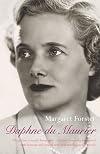
Daphne du Maurier: The Secret Life of the Renowned Storyteller
by Margaret Forster
On This Page
Description
Rebecca, published in 1938, brought its author instant international acclaim, capturing the popular imagination with its haunting atmosphere of suspense and mystery. du Maurier was immediately established as the queen of the psychological thriller. But the more fame this and her other books encouraged, the more reclusive Daphne du Maurier became. Margaret Forster's award-winning biography could hardly be more worthy of its subject. Drawing on private letters and papers, and with the show more unflinching co-operation of Daphne du Maurier's family, Margaret Forster explores the secret drama of her life - the stifling relationship with her father, actor-manager Gerald du Maurier; her troubled marriage to war hero and royal aide, 'Boy' Browning; her wartime love affair; her passion for Cornwall and her deep friendships with the last of her father's actress loves, Gertrude Lawrence, and with an aristocratic American woman. Most significant of all, Margaret Forster ingeniously strips away the relaxed and charming facade to lay bare the true workings of a complex and emotional character whose passionate and often violent stories mirrored her own fantasy life more than anyone could ever have imagined. show lessTags
Recommendations



















Member Reviews
Although this biography took a while to get through, I am very glad that I persevered. Margaret Forster's honest appraisal of the author's life and works not only sheds more light on some of my favourite novels, like Rebecca and The Glass Blowers, but has inspired me to read futher titles from Du Maurier's oeuvre.
Forster's unflinching analysis of Daphne's eccentric character and autobiographical writing might offend some tried and true fans, but I think learning about Du Maurier's 'dual personalities' (not in the clinical sense) and intriguing relationships has helped me to understand and appreciate her stories better. In fact, I can sort of identify with her, which is inspiring, if not also slightly worrying! Daphne Du Maurier was 'a show more listener and an observer rather than a talker', who had always been 'a lonely soul' who 'resented the interruption of her solitary life'. She wrote from 'some sort of emotional inner life', investing characters like the second Mrs De Winter and Philip Ashley with her own interior passions and fears. Sadly, Daphne's fierce independence and solitary routines slipped into an unbalanced middle-age and lonely later years, but her imagination lives on.
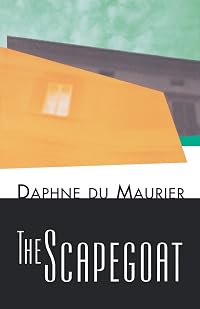
I will definitely go on to read some of her best work, like The Loving Spirit, The Scapegoat and The House on the Strand, though I will do so with a better awareness of the fact behind the fiction. show less
Forster's unflinching analysis of Daphne's eccentric character and autobiographical writing might offend some tried and true fans, but I think learning about Du Maurier's 'dual personalities' (not in the clinical sense) and intriguing relationships has helped me to understand and appreciate her stories better. In fact, I can sort of identify with her, which is inspiring, if not also slightly worrying! Daphne Du Maurier was 'a show more listener and an observer rather than a talker', who had always been 'a lonely soul' who 'resented the interruption of her solitary life'. She wrote from 'some sort of emotional inner life', investing characters like the second Mrs De Winter and Philip Ashley with her own interior passions and fears. Sadly, Daphne's fierce independence and solitary routines slipped into an unbalanced middle-age and lonely later years, but her imagination lives on.
I will definitely go on to read some of her best work, like The Loving Spirit, The Scapegoat and The House on the Strand, though I will do so with a better awareness of the fact behind the fiction. show less
I read this as I’d been intrigued and a little challenged by the early short stories recently published in The Doll: Short Stories, the only things I’d read by du Maurier other than Rebecca, long, long ago. In this collection, I’d been a little shocked to find, underlying stories written by such a young person, such apparent pessimism and cynicism towards human relationships. I was also puzzled that on occasions they had, for me, the feel of a young male writing. Reading this biography, all was explained.
As I previously knew little or nothing about Daphne du Maurier I can’t, in all honesty, vouch for the accuracy, but I found it very convincing. It read to me as a thorough account of her life and career. Equally importantly – show more and this is something I’ve been finding lacking in the last few biographies of writers I’ve read – I felt I was really given an insight into her character. As I was reading, the Daphne du Maurier of this book was a very real and immediate personality for me and I felt I was being given an understanding of her psychology and temperament.
I’ve never read any fiction by Margaret Foster but, on the strength of the quality of writing here, I’ve very tempted to do so. It’s a really excellent read, to the point of being a real page-turner – in fact, I occasionally felt I had raced through some of it too quickly and needed to go back and re-read. I have to admit that I did wonder, on occasions, how much I was being gripped by the life of its subject and how much by Forster’s skill as a writer – but, overall, I found it the most enjoyable biography I’ve read in a long time. show less
As I previously knew little or nothing about Daphne du Maurier I can’t, in all honesty, vouch for the accuracy, but I found it very convincing. It read to me as a thorough account of her life and career. Equally importantly – show more and this is something I’ve been finding lacking in the last few biographies of writers I’ve read – I felt I was really given an insight into her character. As I was reading, the Daphne du Maurier of this book was a very real and immediate personality for me and I felt I was being given an understanding of her psychology and temperament.
I’ve never read any fiction by Margaret Foster but, on the strength of the quality of writing here, I’ve very tempted to do so. It’s a really excellent read, to the point of being a real page-turner – in fact, I occasionally felt I had raced through some of it too quickly and needed to go back and re-read. I have to admit that I did wonder, on occasions, how much I was being gripped by the life of its subject and how much by Forster’s skill as a writer – but, overall, I found it the most enjoyable biography I’ve read in a long time. show less
I enjoyed this very much - Forster is a writer whose other work I've liked, and De Maurier was an interesting, complex person who Forster does a great job of interpreting. du Maurier's family cooperated fully and she lived in the era when letters flourished.
She grew up in an artistic family. Her grandfather was the writer and Punch cartoonist George du Maurier, best known for the novel Trilby. Her father was the actor-manager Gerald du Maurier who happened to be brother of Sylvia Llewelyn Davies whose sons were the models for Peter Pan. Her parents had a happy marriage and her mother tolerated Gerald's dalliances with actresses; when Daphne became aware of this at the same time her father was becoming strict with his adolescent show more daughters, her hatred of this hypocrisy helped to drive a wedge between them.
All her life she felt she was a boy but consciously put that aside and referred to the "boy in a box" in letters. Later in life she became interested in Jungian psychology and the idea that we all have a shadow personality that drives us and must come out some way, which she found meaningful to explain the "boy in a box" and how it helped her writing. She made real people into fantasies, then wrote stories about them. At the end of her life when her creative muse left her, she became deeply depressed until her death.
She deeply loved her husband, who she married after they'd known each other three months, yet craved solitude and their happiest years were during and after the war when he was overseas or working in London and she was nearly alone in Cornwall. When he retired, tensions flared. After writing Rebecca she became obsessed with a house there and was able to get a long term lease on it, though she never owned it, and eventually had to move, which was a blow.
She had passionate feelings for several of women, most notably the actress Gertrude Lawrence, and Ellen Doubleday the wife of her publisher, and although letters make cleaer that the relationship with Lawrence was physical, she was vehement in letters that she was not a lesbian. This makes me think that if she'd lived in a later time she would not have come out as trans or bisexual. In some ways she was very straight laced - shocked at her son feeding and doing diaper changes for his kids, very disapproving that her daughters both divorced and remarried. She had stuck it out through her difficult marriage so why couldn't they?
She and her family have all kinds of special slang, like the Mitfords, so that's fun. Lesbians are Venetians, sex is waxing, and the act of intercourse is Cairo - she writes a friend that Cairo is now over between her and her husband and she never liked it anyway (but later seems to be trying, in her writings, to figure out how important sex is in relationships.) show less
She grew up in an artistic family. Her grandfather was the writer and Punch cartoonist George du Maurier, best known for the novel Trilby. Her father was the actor-manager Gerald du Maurier who happened to be brother of Sylvia Llewelyn Davies whose sons were the models for Peter Pan. Her parents had a happy marriage and her mother tolerated Gerald's dalliances with actresses; when Daphne became aware of this at the same time her father was becoming strict with his adolescent show more daughters, her hatred of this hypocrisy helped to drive a wedge between them.
All her life she felt she was a boy but consciously put that aside and referred to the "boy in a box" in letters. Later in life she became interested in Jungian psychology and the idea that we all have a shadow personality that drives us and must come out some way, which she found meaningful to explain the "boy in a box" and how it helped her writing. She made real people into fantasies, then wrote stories about them. At the end of her life when her creative muse left her, she became deeply depressed until her death.
She deeply loved her husband, who she married after they'd known each other three months, yet craved solitude and their happiest years were during and after the war when he was overseas or working in London and she was nearly alone in Cornwall. When he retired, tensions flared. After writing Rebecca she became obsessed with a house there and was able to get a long term lease on it, though she never owned it, and eventually had to move, which was a blow.
She had passionate feelings for several of women, most notably the actress Gertrude Lawrence, and Ellen Doubleday the wife of her publisher, and although letters make cleaer that the relationship with Lawrence was physical, she was vehement in letters that she was not a lesbian. This makes me think that if she'd lived in a later time she would not have come out as trans or bisexual. In some ways she was very straight laced - shocked at her son feeding and doing diaper changes for his kids, very disapproving that her daughters both divorced and remarried. She had stuck it out through her difficult marriage so why couldn't they?
She and her family have all kinds of special slang, like the Mitfords, so that's fun. Lesbians are Venetians, sex is waxing, and the act of intercourse is Cairo - she writes a friend that Cairo is now over between her and her husband and she never liked it anyway (but later seems to be trying, in her writings, to figure out how important sex is in relationships.) show less
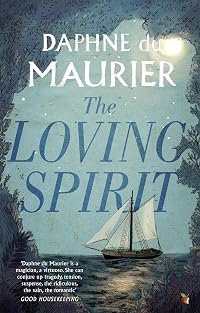
This biography explores the motivations behind Daphne du Maurier's numerous spellbinding works. In a prolific writing career that began in 1931 with The Loving Spirit and subsequently spanned fifty years, the portrait that emerges is that of a woman constantly at odds with herself. Her various literary achievements coupled with a drive to succeed often conflicted with her role as a wife and a mother.
Access to Daphne's personal correspondence has allowed the author to reveal such private details of her life as Daphne's bisexual extramarital attractions, which included a longtime infatuation with Gertrude Lawrence - an English singer and actress, famous for her appearances on the London stage and on Broadway.
Daphne's rich fantasy life show more and fertile imagination enabled her to write captivating novels epitomized by 1938's Rebecca - a story which continues to endure even to this day. This richly layered biography aptly unveils the passionate nature of a woman who spent her life portraying the secrets of the sexual tensions between men and women.
I absolutely loved this book. I learned much more about Daphne du Maurier's life than I was expecting. I will say that Margaret Forster's writing style stopped just short of providing too much detail, although I would still give this book an A+! show less
Access to Daphne's personal correspondence has allowed the author to reveal such private details of her life as Daphne's bisexual extramarital attractions, which included a longtime infatuation with Gertrude Lawrence - an English singer and actress, famous for her appearances on the London stage and on Broadway.
Daphne's rich fantasy life show more and fertile imagination enabled her to write captivating novels epitomized by 1938's Rebecca - a story which continues to endure even to this day. This richly layered biography aptly unveils the passionate nature of a woman who spent her life portraying the secrets of the sexual tensions between men and women.
I absolutely loved this book. I learned much more about Daphne du Maurier's life than I was expecting. I will say that Margaret Forster's writing style stopped just short of providing too much detail, although I would still give this book an A+! show less
Margaret Forster is an excellent biographer, both in her attention to detail and the readability of her prose. However, despite Forster's sympathetic portrayal of Daphne the woman (especially her complicated sexuality and unquestioned snobbery), one can never get rid of the sense that Forster rather *despises* the works of du Maurier the writer.
Of "Jamaica Inn" she writes that "[most of the characters are] dangerously near to caricature"... "much of the dialogue verges on the ludicrous". She prefers not to tackle the question of "Rebecca"'s merit or otherwise, focusing instead on its themes, and when there is a kind word to be had from Forster on the subject of du Maurier's work, it is usually a backhanded compliment along the lines of show more her remark on the story collection "The Apple-Tree": "a huge improvement on Daphne's short stories of her early years".
What a pity Forster didn't respect du Maurier's oeuvre a little more - the occasional sneer here and there mars what otherwise would have been a five-star achievement in literary biography. But now you've been warned about the occasional condescension in the narrative, read this anyway! The woman had an absolutely fascinating life and this is the insider's view, beautifully told. show less
Of "Jamaica Inn" she writes that "[most of the characters are] dangerously near to caricature"... "much of the dialogue verges on the ludicrous". She prefers not to tackle the question of "Rebecca"'s merit or otherwise, focusing instead on its themes, and when there is a kind word to be had from Forster on the subject of du Maurier's work, it is usually a backhanded compliment along the lines of show more her remark on the story collection "The Apple-Tree": "a huge improvement on Daphne's short stories of her early years".
What a pity Forster didn't respect du Maurier's oeuvre a little more - the occasional sneer here and there mars what otherwise would have been a five-star achievement in literary biography. But now you've been warned about the occasional condescension in the narrative, read this anyway! The woman had an absolutely fascinating life and this is the insider's view, beautifully told. show less
My feelings are mixed on this one. I'm glad I read it, yet I'm disappointed that I spent so much time on, what seemed like, a biased and somewhat contrived biography. I don't, at all, claim to be an expert on du Maurier, but I have read several of her works and I think the author is making a pretty big deal out of her supposed sexual "issues". WAY too much time was spent on the author's sex life, lack of sex life, imagined sex life, and the author's obsession with du Maurier's (maybe?) lesbian tendencies. Surely, there was more that influenced her writing than her issues about sex. I feel like this author made du Maurier seem a shallow and spoiled young and middle-aged woman---and a crochety, demented elderly woman.
I had just finished show more reading du Maurier's, The House On The Strand, before I started this one and was excited to see that the names and places in the novel are real! I really enjoyed this fantastical story and am excited to look for another of her's, The Scapegoat.
I'll be releasing this one eventually. It's one of those that could get sort of lost and put away if not released to just the right person, so I'll sit on it a bit (it's so big, I literally could!) and see if I can find a good fit for it. show less
I had just finished show more reading du Maurier's, The House On The Strand, before I started this one and was excited to see that the names and places in the novel are real! I really enjoyed this fantastical story and am excited to look for another of her's, The Scapegoat.
I'll be releasing this one eventually. It's one of those that could get sort of lost and put away if not released to just the right person, so I'll sit on it a bit (it's so big, I literally could!) and see if I can find a good fit for it. show less
Really well written and readable biography that treats Du Maurier with honesty and sympathy. Sheds a lot of light on her reading. Highly recommended!
Members
- Recently Added By
Author Information

42+ Works 4,636 Members
Margaret Forster was born in Carlisle, England on May 25, 1938. She read history at Somerville College, Oxford. Before her writing career took off, she was a teacher at a girls' school. She is the author of over 40 books of fiction and non-fiction. Her novel include Mother, Can You Hear Me?, Have the Men Had Enough?, Lady's Maid, Private Papers, show more Diary of an Ordinary Woman, Over, Isa and May, The Unknown Bridesmaid, and How to Measure a Cow. Georgy Girl, published in 1965, was made into a film starring Lynn Redgrave in 1966. She has written several memoirs including Hidden Lives, Precious Lives, and My Life in Houses. Her biography Elizabeth Barrett Browning won the Heinemann award and her 1993 biography of Daphne du Maurier won the Fawcett book prize and was filmed for the BBC as Daphne in 2007. She also wrote a history of feminism entitled Significant Sisters in 1984. She died of cancer on February 8, 2016 at the age of 77. (Bowker Author Biography) show less
Awards and Honors
Common Knowledge
- Canonical title
- Daphne du Maurier: The Secret Life of the Renowned Storyteller
- Original title
- Daphne du Maurier: The Secret Life of the Renowned Storyteller
- Original publication date
- 1993
- People/Characters
- Daphne du Maurier; Frederick Browning
Classifications
Statistics
- Members
- 402
- Popularity
- 77,068
- Reviews
- 13
- Rating
- (4.13)
- Languages
- English, French, German, Swedish
- Media
- Paper, Audiobook, Ebook
- ISBNs
- 12
- ASINs
- 7