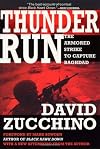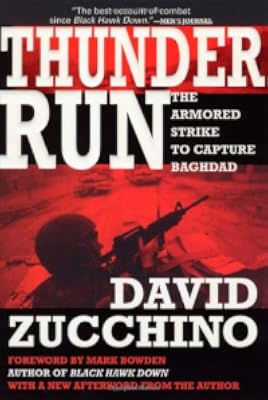
Thunder Run: The Armored Strike to Capture Baghdad
by David Zucchino
On This Page
Description
In one of the boldest gambles in modern military history, just three battalions and fewer than a thousand men launched a violent thrust of tanks and Bradley Fighting Vehicles into the heart of a city of 5 million people and, in three bloddy days of combat ended the Iraqi war. Thunder Run is the story of the surprise assault on Baghdad-one of the most decisive battle in American combat history-by the Spartan Brigade, the Second Brigade of the Third Infantry Division (Mechanized). More than show more just a rendering of a single battle, Thunder Run is a candid account of how soldiers respond under fire and stress and how human frailties are magnified in a war zone. show lessTags
Recommendations




Member Reviews
This book is a pretty uncompromising account of the penetration by a US Army armoured column of the centre of Baghdad at the climax of the 2003 Gulf War. Written by a journalist who was embedded with US forces, it spares the reader nothing of the experience of modern urban warfare. Zucchino tells the stories of the men at the sharp end, their combat experiences, their lives and sometimes deaths. Many of the accounts are prefaced by short pen portraits of the men involved, so we get to understand their backgrounds and motivations.
It is also a warts and all account of combat and the problems encountered, from the shortcomings of the kit the military use (the M1 Abrams tank, whilst a powerful instrument of war, had weak points and show more prodigious fuel consumption which posed its own problems in extended combat situations) to the soldiers' rection to the Iraqi defenders of Baghdad. Many of the soldiers recognised that they were facing, and killing, other human beings, with their own lives, loves and concerns; but those defenders were fanatically throwing themselves into combat in situations that were often intentionally suicidal. This, and the lack of much joined-up tactical thinking amongst the defenders, confused and troubled the American troops.
Zucchino was able to interview a few Iraqi combatants after the battle, and he draws out one of the weaknesses of authoritarian regimes; the fear of revolt from within their own military, which led to different units having independent command and supply structures, done deliberately to keep individual units weak.
There is a massive imbalance of forces: the bulk of the Iraqis were armed only with AK-47 Kalashnikov rifles or rocket-propelled grenades, whilst the American troops had state-of-the-art armoured vehicles and firearms from pistols up to a range of heavy machine guns, and all the possible variations that stand between; yet the Iraqis could and did inflict serious casualties on the Americans. This is not glossed over in any way.
There are some aspects of the American troops' behaviours that some will find objectionable; but that's something that's easy to say when sat in a comfortable room, thousands of miles away and twenty years removed in time, with no-one shooting at you. The Christian faith of many of the soldiers is highlighted, as is the role of military chaplains in providing a religious context for the actions these soldiers would be taking. Coming from a less religiously oriented society, this stood out quite clearly.
This is not a book that is big on analysis, or historical perspective The reader must look elsewhere for that. It is also not a book that I think could be read for enjoyment; indeed, if a reader closed the book thinking "I enjoyed that", then I would respectfully say that they need to sit down and rethink their life. But it is an eye-witness account of modern warfare, and should be required reading for anyone "ardent for some desperate glory". show less
It is also a warts and all account of combat and the problems encountered, from the shortcomings of the kit the military use (the M1 Abrams tank, whilst a powerful instrument of war, had weak points and show more prodigious fuel consumption which posed its own problems in extended combat situations) to the soldiers' rection to the Iraqi defenders of Baghdad. Many of the soldiers recognised that they were facing, and killing, other human beings, with their own lives, loves and concerns; but those defenders were fanatically throwing themselves into combat in situations that were often intentionally suicidal. This, and the lack of much joined-up tactical thinking amongst the defenders, confused and troubled the American troops.
Zucchino was able to interview a few Iraqi combatants after the battle, and he draws out one of the weaknesses of authoritarian regimes; the fear of revolt from within their own military, which led to different units having independent command and supply structures, done deliberately to keep individual units weak.
There is a massive imbalance of forces: the bulk of the Iraqis were armed only with AK-47 Kalashnikov rifles or rocket-propelled grenades, whilst the American troops had state-of-the-art armoured vehicles and firearms from pistols up to a range of heavy machine guns, and all the possible variations that stand between; yet the Iraqis could and did inflict serious casualties on the Americans. This is not glossed over in any way.
There are some aspects of the American troops' behaviours that some will find objectionable; but that's something that's easy to say when sat in a comfortable room, thousands of miles away and twenty years removed in time, with no-one shooting at you. The Christian faith of many of the soldiers is highlighted, as is the role of military chaplains in providing a religious context for the actions these soldiers would be taking. Coming from a less religiously oriented society, this stood out quite clearly.
This is not a book that is big on analysis, or historical perspective The reader must look elsewhere for that. It is also not a book that I think could be read for enjoyment; indeed, if a reader closed the book thinking "I enjoyed that", then I would respectfully say that they need to sit down and rethink their life. But it is an eye-witness account of modern warfare, and should be required reading for anyone "ardent for some desperate glory". show less
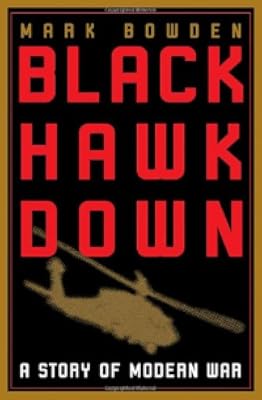
An unflinching look at modern armored combat. The author has a knack for conveying the confusion and chaos of the battles as they unfolded. The writing style is brisk and keeps the reader on their toes and gives one a sense of the chaos while reading, a miniscule taste of the firefights if you will. While the book does concentrate on the US armored forces the author takes the time to share some of the Iraqi side of things as well as some of the journalists side. On par with the book 'Black Hawk Down' (the author of Thunder Run was Mark Bowden's editor for BHD).
Interesting questions were put forth by the vets so many resources and time were devoted to toppling regime that little to no thought had been put into how to rebuild the show more country, that once the fighting ebbed the newly blooded combat vets werent quite sure what to do, neither did their command know. The ending left a question of whether the risky 'Thunder Runs' had been worth it, they toppled the regime from the inside out avoiding a long and drawn out battle for the city. These same units years later were sent back to Iraq to fight the very kind of battles the 'Thunder Runs' had avoided. show less
Interesting questions were put forth by the vets so many resources and time were devoted to toppling regime that little to no thought had been put into how to rebuild the show more country, that once the fighting ebbed the newly blooded combat vets werent quite sure what to do, neither did their command know. The ending left a question of whether the risky 'Thunder Runs' had been worth it, they toppled the regime from the inside out avoiding a long and drawn out battle for the city. These same units years later were sent back to Iraq to fight the very kind of battles the 'Thunder Runs' had avoided. show less
For most of us, our memories of the two gulf wars are represented by little more than smartbomb camera footage. The awesome power that the USA was able to deploy in Iraq was overwhelming - to the defenders, as well as the global audience. There seemed no doubt that military might would win a clear victory. In this frontline account of the armoured column entering Baghdad, the author brings us a much more harrowing tail of personal bravery, fear and loss.
It rapidly becomes clear how far the US war machine was stretched, and how close they came to perhaps encountering their "bridge too far".
And I suspect quite unintentionally, it exposes an unsettling realisation of the degree to which religion - Christianity - plays in the minds of US show more troops. While no means universal, I was struck by the number of times which religion pops up in this book - or soldiers seeking guidance from Army Chaplains that "what they have to do is allowed by their god", of all the prayers that are offered to save the living or commemorate the dead. The message I took away from this is that the US - like virtually every other country that has ever gone to war - clearly exploited religion both explicitly and implicitly in order to exhort their troops to maximum effect on the battlefield. I do not think this is what the author intended, but the main thought in my head at the end of the book was the surprising similarity this realisation brings to our understanding of the people holding the line on both sides of the war. show less
It rapidly becomes clear how far the US war machine was stretched, and how close they came to perhaps encountering their "bridge too far".
And I suspect quite unintentionally, it exposes an unsettling realisation of the degree to which religion - Christianity - plays in the minds of US show more troops. While no means universal, I was struck by the number of times which religion pops up in this book - or soldiers seeking guidance from Army Chaplains that "what they have to do is allowed by their god", of all the prayers that are offered to save the living or commemorate the dead. The message I took away from this is that the US - like virtually every other country that has ever gone to war - clearly exploited religion both explicitly and implicitly in order to exhort their troops to maximum effect on the battlefield. I do not think this is what the author intended, but the main thought in my head at the end of the book was the surprising similarity this realisation brings to our understanding of the people holding the line on both sides of the war. show less
An unflinching look at modern armored combat. The author has a knack for conveying the confusion and chaos of the battles as they unfolded. The writing style is brisk and keeps the reader on their toes and gives one a sense of the chaos while reading, a miniscule taste of the firefights if you will. While the book does concentrate on the US armored forces the author takes the time to share some of the Iraqi side of things as well as some of the journalists side. On par with the book 'Black Hawk Down' (the author of Thunder Run was Mark Bowden's editor for BHD).
Interesting questions were put forth by the vets so many resources and time were devoted to toppling regime that little to no thought had been put into how to rebuild the show more country, that once the fighting ebbed the newly blooded combat vets werent quite sure what to do, neither did their command know. The ending left a question of whether the risky 'Thunder Runs' had been worth it, they toppled the regime from the inside out avoiding a long and drawn out battle for the city. These same units years later were sent back to Iraq to fight the very kind of battles the 'Thunder Runs' had avoided. show less
Interesting questions were put forth by the vets so many resources and time were devoted to toppling regime that little to no thought had been put into how to rebuild the show more country, that once the fighting ebbed the newly blooded combat vets werent quite sure what to do, neither did their command know. The ending left a question of whether the risky 'Thunder Runs' had been worth it, they toppled the regime from the inside out avoiding a long and drawn out battle for the city. These same units years later were sent back to Iraq to fight the very kind of battles the 'Thunder Runs' had avoided. show less
Jake McLaughlin led me to this book.
It started like this. I was watching the TV show Quantico, halfway through the first episode I was getting frustrated. Not because of the show but because of my own memory. I recognised the actor playing Ryan Booth but could not for the life of me figure out what I had seen him in. After the episode had finished I looked him up. After finding out I had recognised him from a show I use to watch called Believe, I read the rest of his biography. It turns out that before Jake was an actor he was in the military. After reading about his military history, his biography referenced a book he was mentioned in. After pondering for a few minutes I thought why not. It’s been a while since I have read anything show more from the military genre, let’s give this one a go. And that is how Jake McLaughlin led me to this book.
I am really glad that I decided to read this book. I honestly can’t believe I hadn’t read it sooner. It could be because I find that books from the modern military genre are a bit hit and miss. Well that couldn’t be further from the case with this book. David Zucchino’s Thunder Run defiantly hit the mark.
After reading Thunder Run I had a much deeper understanding of urban warfare. It’s advantages and it’s challenges. Expertly written by four-time Pulitzer prize finalist David Zucchino. This book really takes you on a journey. A walk through a part of American Military History. The interviews taken during and after the war, with both American and Iraqi soldiers are seamlessly woven together creating a rounded picture of the battle to capture Baghdad. David really captured the chaos of combat. With an in dept look at events and strategy leading up to and during the armored strike.
Thunder Run is not a book for the faint of heart, with graphic descriptions of the violence and horrors of war. This is a must read book for anyone with an interest in military tactics, urban warfare and modern weaponry.
David Zucchino’s Thunder Run is not a book I will be forgetting anytime soon, and given its historical relevance and it’s subject matter I believe it is important that it isn’t forgotten at all.
Written by Geramie Kate Barker
https://gemsbooknook.wordpress.com show less
It started like this. I was watching the TV show Quantico, halfway through the first episode I was getting frustrated. Not because of the show but because of my own memory. I recognised the actor playing Ryan Booth but could not for the life of me figure out what I had seen him in. After the episode had finished I looked him up. After finding out I had recognised him from a show I use to watch called Believe, I read the rest of his biography. It turns out that before Jake was an actor he was in the military. After reading about his military history, his biography referenced a book he was mentioned in. After pondering for a few minutes I thought why not. It’s been a while since I have read anything show more from the military genre, let’s give this one a go. And that is how Jake McLaughlin led me to this book.
I am really glad that I decided to read this book. I honestly can’t believe I hadn’t read it sooner. It could be because I find that books from the modern military genre are a bit hit and miss. Well that couldn’t be further from the case with this book. David Zucchino’s Thunder Run defiantly hit the mark.
After reading Thunder Run I had a much deeper understanding of urban warfare. It’s advantages and it’s challenges. Expertly written by four-time Pulitzer prize finalist David Zucchino. This book really takes you on a journey. A walk through a part of American Military History. The interviews taken during and after the war, with both American and Iraqi soldiers are seamlessly woven together creating a rounded picture of the battle to capture Baghdad. David really captured the chaos of combat. With an in dept look at events and strategy leading up to and during the armored strike.
Thunder Run is not a book for the faint of heart, with graphic descriptions of the violence and horrors of war. This is a must read book for anyone with an interest in military tactics, urban warfare and modern weaponry.
David Zucchino’s Thunder Run is not a book I will be forgetting anytime soon, and given its historical relevance and it’s subject matter I believe it is important that it isn’t forgotten at all.
Written by Geramie Kate Barker
https://gemsbooknook.wordpress.com show less
This is a fine account of the climax of the initial operation to bring down the Baathist regime in Iraq, as the author appears to have covered all the bases in describing the "face of battle" as it applies to the 2nd Brigade of the 3rd Infantry Division in this action. Zucchio goes so far as to have hunted down Iraqi informants that were in the path of the Spartan Brigade when it tore into Baghdad; though one now has to wonder how many of those people have returned to fighting us. If I have to mark this book down for anything it's for the lack of photos. This is not to mention that an order of battle matching radio call signs with units would have been a useful item.
This embed's relation of the initial engagement of armored units south of the city that saw most of the Republican Guard's assets destroyed and routes in the southern outskirts of the city occupied. On 5 April, Task Force 1–64 Armor of the U.S. Army's 3rd Infantry Division executed a raid, later called the "Thunder Run", to test remaining Iraqi defenses, with 29 tanks and 14 Bradley armored fighting vehicles advancing to the Baghdad airport. They met heavy resistance, but were successful in reaching the airport. U.S. troops faced heavy fighting in the airport, but eventually secured the airport. This book also covers the next day, when a brigade of the 3rd Infantry Division attacked into downtown Baghdad and occupied one of the show more palaces of Saddam Hussein in fierce fighting. U.S. Marines also faced heavy shelling from Iraqi artillery as they attempted to cross a river bridge, but the river crossing was successful. The generally overwhelming force and ability delivered by U.S. forces onto an untrained and dispirited Iraqis as well as avid if ineffectual Arab mercenaries actually becomes as redundant (boring) as it is one-sided. How many ways are there to describe coax vs. flesh? One thing that kept this interesting to me is the accounts of about a half dozen Iraqis in the Rashomon effect spin on various melees.
There is also significant detail on the unfortunate and controversial incident that occurred on April 8, 2003 when an American tank fired a shell on the Palestine Hotel, killing and wounding journalists. show less
There is also significant detail on the unfortunate and controversial incident that occurred on April 8, 2003 when an American tank fired a shell on the Palestine Hotel, killing and wounding journalists. show less
Members
- Recently Added By
Author Information

3 Works 817 Members
Award-winning journalist David Zucchino graduated from the University of North Carolina. He works for the Philadelphia Inquirer. He won a Pulitzer Prize in 1989 and was later nominated for a second. His book, Myth of the Welfare Mother, won the Harry Chapin Media Award for Best Book in 1997. (Bowker Author Biography)
Common Knowledge
- Original publication date
- 2004
- Important places
- Baghdad, Iraq
- Important events
- Iraq War
Classifications
Statistics
- Members
- 228
- Popularity
- 143,473
- Reviews
- 8
- Rating
- (3.78)
- Languages
- English
- Media
- Paper, Audiobook, Ebook
- ISBNs
- 9
- ASINs
- 6