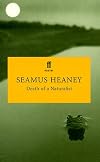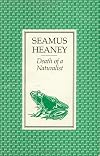
Death of a Naturalist
by Seamus Heaney
On This Page
Description
"Between my finger and my thumb" "The squat pen rests; snug as a gun." "" -- from 'Digging' With its lyrical and descriptive powers, "Death of a Naturalist "marked the auspicious debut of one of the century's finest poets.Tags
Recommendations













Member Reviews
It’s hard to believe that this was Seamus Heaney’s debut book of poetry, but after reading it, it’s easy to understand why he was later awarded the Nobel Prize in literature. I’ve written here several times that I’ve never had an easy time with poetry. If I had started with this poet, that might have been very different. Whether about his father ploughing the fields, the death of a 4-year-old brother, the waves of the sea crashing against the cliffs, or churning butter, each one is a portrait of life. Beautiful.
https://fromtheheartofeurope.eu/death-of-a-naturalist-by-seamus-heaney/
I met Seamus Heaney only once, a chance encounter in a pub (the Foggy Dew in Temple Bar in Dublin, some time around 1989); he offered to buy me a drink on the basis of having known my parents in his Belfast days, but I was too shy to accept. I wish I had. I would have learned something from even ten minutes’ conversation with him. I also once sat opposite his wife Marie at a dinner, but did not pluck up the courage to say much to her.
He came from Bellaghy, 30 km up the River Bann from my own ancestors in Aghadowey, and this first collection is very much about growing up there and growing into his role as a poet. I knew a few of them from school days: the opening show more “Digging”, where he sees his vocation as poetry rather than agriculture:
Between my finger and my thumb
The squat pen rests.
I’ll dig with it.
The heart-wrenching “Mid-Term Break”, about the death of his younger brother in a car accident:
No gaudy scars, the bumper knocked him clear.
A four foot box, a foot for every year.
The rather regrettable “Docker”:
Mosaic imperatives bang home like rivets;
God is a foreman with certain definite views
Reading the full collection is well worth it. There’s a real underlying narrative, of a shift from his family heritage on the farm and boyhood fascinations with the land, to adulthood and poetry, There are some lovely natural images, such as “Waterfall”:
Simultaneous acceleration
And sudden braking; water goes over
Like villains dropped screaming to justice.
And romance in a sequence beginning with “Twice Shy”:
Her scarf à la Bardot,
In suede flats for the walk,
She came with me one evening
For air and friendly talk.
We crossed the quiet river,
Took the embankment walk.
And at the end, another moment of self-dedication in “Personal Helicon”:
I rhyme
To see myself, to set the darkness echoing.
I don’t read a lot of poetry, and I should read more. show less
I met Seamus Heaney only once, a chance encounter in a pub (the Foggy Dew in Temple Bar in Dublin, some time around 1989); he offered to buy me a drink on the basis of having known my parents in his Belfast days, but I was too shy to accept. I wish I had. I would have learned something from even ten minutes’ conversation with him. I also once sat opposite his wife Marie at a dinner, but did not pluck up the courage to say much to her.
He came from Bellaghy, 30 km up the River Bann from my own ancestors in Aghadowey, and this first collection is very much about growing up there and growing into his role as a poet. I knew a few of them from school days: the opening show more “Digging”, where he sees his vocation as poetry rather than agriculture:
Between my finger and my thumb
The squat pen rests.
I’ll dig with it.
The heart-wrenching “Mid-Term Break”, about the death of his younger brother in a car accident:
No gaudy scars, the bumper knocked him clear.
A four foot box, a foot for every year.
The rather regrettable “Docker”:
Mosaic imperatives bang home like rivets;
God is a foreman with certain definite views
Reading the full collection is well worth it. There’s a real underlying narrative, of a shift from his family heritage on the farm and boyhood fascinations with the land, to adulthood and poetry, There are some lovely natural images, such as “Waterfall”:
Simultaneous acceleration
And sudden braking; water goes over
Like villains dropped screaming to justice.
And romance in a sequence beginning with “Twice Shy”:
Her scarf à la Bardot,
In suede flats for the walk,
She came with me one evening
For air and friendly talk.
We crossed the quiet river,
Took the embankment walk.
And at the end, another moment of self-dedication in “Personal Helicon”:
I rhyme
To see myself, to set the darkness echoing.
I don’t read a lot of poetry, and I should read more. show less
Heaney's childhood growing up on an Irish far is apparent in this collection, as farm motifs are the unifying theme. His knowledge of raising animals, harvesting peat, and growing potatoes are tinged with echoes of hardship as he recounts the potato famine, the horror of a frog invasion, and the drowning of kittens (seen as pests on a working farm) which seems to create the title imagery. His wonder at the natural world as a child has been affected to the point where he sees the death in it as much as the life, and so his instinct to become a farmer (ie a naturalist) is lost. This is further supported by his taking up the pen as his chosen implement (rather than a shovel/spade), and his acceptance of the office-based "modern" world show more where nature has no place except when confined to words on a page. show less
First published in 1966, this debut collection by Seamus Heaney signals the talent that was to win him the Nobel Prize in 1995. Largely addressing his rural childhood in County Derry, the volume begins with "Digging", a poem which encapsulates Heaney's early concerns about roots, belonging and the supple joy of language. As he watches his father digging the flowerbed, he recalls him working the potato drills and lines of turf 20 years before. "By God, the old man could handle a spade. / Just like his old man." Heaney is renowned for getting inside language and revelling in its sensual glut. He talks of "the squelch and slap / Of soggy peat, the curt cuts of an edge / Through living roots." He too severs roots, being the first generation show more not to depend on the land. "But I've no spade to follow men like them. / Between my finger and my thumb / The squat pen rests. / I'll dig with it." Heaney has the bewildering genius of being loose and tight at the same time, conversational and colloquial as well as formally rigorous. He's equally at home and as wildly inventive in blank and rhyming verse. In Death of a Naturalist, he takes the reader to the festering flax-dam where "bluebottles / Wove a strong gauze of sound around the smell" and he gathered "the warm thick slobber / Of frogspawn." He delights in excess, in textures--"a glossy purple clot" of ripe blackberry, its flesh like "thickened wine". "For the Commander of the Eliza" is savage in its depiction of the famine: "Six grown men with gaping mouths and eyes / Bursting the sockets like spring onions in drills." The captain of the ship refuses to give out food on Whitehall's orders. In "At a Potato Digging", Heaney compares contemporary potato-gatherers at their "seasonal altar of the sod" and the piles of spuds, "live skulls, blind-eyed" to those who "wolfed the blighted root and died". He renders the famine unavoidably stark and present. Almost every poem demonstrates his resourceful, elastic use of language and Heaney ably achieves what he aims to do: "I rhyme / To see myself, to set the darkness echoing." --Cherry Smyth
Reissues Seamus Heaney's collection, which on its appearance in 1966 won the Cholmondeley Award, the E C Gregory Award, the Somerset Maugham Award, and the Geoffrey Faber Memorial Prize. show less
Reissues Seamus Heaney's collection, which on its appearance in 1966 won the Cholmondeley Award, the E C Gregory Award, the Somerset Maugham Award, and the Geoffrey Faber Memorial Prize. show less
Heaney's first collection is that slender volume of poetry you wish you'd written. For the most part thematically organized, the poems show Heaney's early promise and sophistication. They also demonstrate the young poet's sometimes-laborious use of rhyme and word choice. An interesting comparison to his more seasoned works, such as North, which includes my favorites, the bog poems.
A straightforward and relaxing collection of poetry. Fans of Robert Frost and Billy Collins will enjoy Heaney's work here---as a collection, the poems stand together powerfully and gracefully. Worth exploring and re-exploring for any poetry readers.
Heaney's first collection of poetry includes some of his most well-known pieces. It also contains 'Scaffolding' and 'Personal Helicon', two very touching poems. This is a wonderful, short selection of works that pre-date many of Heaney's works about nature and time, but that nonetheless showcase his young talent.
Members
- Recently Added By
Lists

Tonikat reading completed on Librarything journals
329 works; 2 members

Poetry Corner
187 works; 15 members

Nobel Price Winners
222 works; 20 members

Big Jubilee List
70 works; 3 members

Poetry volumes by single author
121 works; 8 members
Author Information

209+ Works 15,809 Members
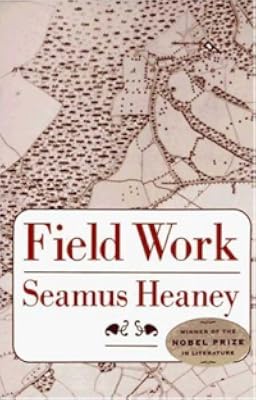
Seamus Heaney was born in Mossbawn, Ireland on April 13, 1939. He received a degree in English from Queen's College in Belfast in 1961. After earning his teacher's certificate in English from St. Joseph's College in Belfast the following year, he took a position at the school as an English teacher. During his time as a teacher at St. Joseph's, he show more wrote and published work in the university magazine under the pen name Incertus. In 1966, he became an English literature lecturer at Queen's College in Belfast. His first volume of poems, Death of a Naturalist, went on to receive the E.C. Gregory Award, the Cholmondeley Award, the Somerset Maugham Award, and the Geoffrey Faber Memorial Prize. After the death of his parents, Heaney published the poetry volumes The Haw Lantern, which includes a sonnet sequence memorializing his mother, and Seeing Things, a collection containing numerous poems for his father. His other works included Field Work, Opened Ground: Poems 1966-1996, and Human Chain. Heaney was a professor at Harvard from 1981 to 1997 and its Poet in Residence from 1988 to 2006. From 1989 to 1994 he was also the Professor of Poetry at Oxford and in 1996 was made a Commandeur de l'Ordre des Arts et Lettres. Other awards that he received include the Geoffrey Faber Memorial Prize (1968), the E. M. Forster Award (1975), the PEN Translation Prize (1985), the Golden Wreath of Poetry (2001), T. S. Eliot Prize (2006) and two Whitbread Prizes (1996 and 1999). In 2012, he was awarded the Lifetime Recognition Award from the Griffin Trust For Excellence In Poetry. His literary papers are held by the National Library of Ireland. He died following a short illness on August 30, 2013 at the age of 74. Heaney's last words were in a text to his wife Marie, "Noli timere", which means "Do not be afraid." (Bowker Author Biography) Seamus Heaney lives in Dublin and teaches at Harvard University. He was awarded the Nobel Prize in literature in 1995. (Publisher Provided) Seamus Heaney was born in 1939 in Northern Ireland. He was awarded the Nobel Prize in Literature in 1995. A resident of Dublin, he has taught poetry at Oxford University and Harvard University. (Publisher Provided) show less
Awards and Honors
Series
Belongs to Publisher Series
Work Relationships
Is contained in
Common Knowledge
- Canonical title
- Death of a Naturalist
- Original publication date
- 1966-05
- First words
- Between my finger and my thumb / The squat pen rests; snug as a gun.
- Last words
- (Click to show. Warning: May contain spoilers.)Now, to pry into roots, to finger slime, / To stare, big-eyed Narcissus, into some spring / Is beneath all adult dignity. I rhyme / To see myself, to set the darkness echoing.
- Disambiguation notice
- This is the poetry collection Death of a Naturalist. One of the individual poems in the collection also has the same title, so take care if combining or making work-to-work connections.
Classifications
Statistics
- Members
- 811
- Popularity
- 34,032
- Reviews
- 9
- Rating
- (4.04)
- Languages
- English, German, Farsi/Persian, Spanish
- Media
- Paper, Ebook
- ISBNs
- 10
- ASINs
- 8