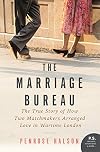
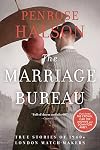
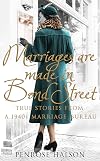
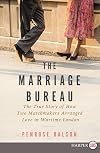
The Marriage Bureau: The True Story of How Two Matchmakers Arranged Love in Wartime London
by Penrose Halson
On This Page
Description
A riveting glimpse of life and love during and after World War II—a heart-warming, touching, and thoroughly absorbing true story of a world gone by.In the spring of 1939, with the Second World War looming, two determined twenty-four-year-olds, Heather Jenner and Mary Oliver, decided to open a marriage bureau. They found a tiny office on London's Bond Street and set about the delicate business of matchmaking. Drawing on the bureau's extensive archives, Penrose Halson—who many years later show more found herself the proprietor of the bureau—tells their story, and those of their clients.
From shop girls to debutantes; widowers to war veterans, clients came in search of security, social acceptance, or simply love. And thanks to the meticulous organization and astute intuition of the Bureau's matchmakers, most found what they were looking for.
Penrose Halson draws from newspaper and magazine articles, advertisements, and interviews with the proprietors themselves to bring the romance and heartbreak of matchmaking during wartime to vivid, often hilarious, life in this unforgettable story of a most unusual business.
"A book full of charm and hilarity."—Country Life
. show less
Tags
Recommendations






Member Reviews
In late 1938, Heather Jenner and her friend, Mary Oliver decided to open a business that had never been done in London before: a marriage bureau. Matchmaking clients of all classes, occupations, and backgrounds, Heather and Mary began with no idea of how popular their service would be, the wide variety of people they'd see and stories they'd hear, or the way it would alter their experience of the war years. Halson's recounting of the first decade of the marriage bureau (1939-1949ish) is fantastic filled with tales of fascinating individuals, frequent humour, occasional heartbreak, and, of course, lots of happy endings. I got particular delight out of the appendix which highlights some of the more delightful requests from both male and show more female clients about traits they wanted in a partner. Highly recommended, particularly to fans of Downton Abbey and/or Call the Midwife. show less
In 1986, Penrose Halson and her husband, Bill, bought the Katharine Allen Marriage and Advice Bureau. Before she became a matchmaker, Penrose, forty-six, had been a writer, editor, and teacher. The bureau was modeled on a special undertaking: the Marriage Bureau founded by Heather Jenner and Mary Oliver in 1939, on the eve of the Second World War. In 1992, Heather Jenner's daughter asked Penrose to take over her clients. She agreed, and the two operations—Katherine Allen's and Jenner's--merged.
"The Marriage Bureau," by Penrose Halson, is an entertaining and lively work of non-fiction, in which the author, using a wealth of primary sources, traces the history of a productive partnership between two resourceful and dedicated women. show more Heather was a six-foot tall beauty with an ebullient personality and shrewd business sense; Mary was imaginative, romantic, and had great instincts. The two consulted a solicitor to help with the legalities, scrambled to find suitable office space and secretarial help, and created a practical filing system to keep track of their clients. Thanks to good publicity and the impending threat of WWII, Jenner and Olver had no shortage of customers. Men stationed in such places as India and Ceylon sailed to England for a short while to find wives; servicemen were eager to marry before going off to fight; women, some of whom needed someone to support them, wanted to be wed while there was still an available supply of decent men. In some cases, a man or woman specified that his or her potential spouse should have: a decent income; social status; a certain level of education; a good job; and be physically attractive.
Halson does a splendid job of recreating the spirit of the times. Heather and Mary's transformation from carefree twenty-four year olds to hard-working entrepreneurs is amazing. Jenner and Oliver tapped into a need and filled it brilliantly. This is one of the funniest books you will read that is set before and during a major world conflict. The ladies encountered all types of people: eccentric, socially inept, demanding, realistic, fanciful, good-looking, homely, wealthy, impoverished, upbeat, depressed, and the list goes on. The pair brought together a host of lonely men and women who later thanked them profusely and paid an "After-Marriage" fee. This colorful account of how Heather and Mary made a success of their agency, and Halson's vivid depictions of the individuals who sought help finding mates, is fascinating. The author's witty and vibrant prose and her knack for seamlessly incorporating both serious and hilarious anecdotes into her narrative, make this a must-read for lovers of history, psychology, and matrimony. show less
"The Marriage Bureau," by Penrose Halson, is an entertaining and lively work of non-fiction, in which the author, using a wealth of primary sources, traces the history of a productive partnership between two resourceful and dedicated women. show more Heather was a six-foot tall beauty with an ebullient personality and shrewd business sense; Mary was imaginative, romantic, and had great instincts. The two consulted a solicitor to help with the legalities, scrambled to find suitable office space and secretarial help, and created a practical filing system to keep track of their clients. Thanks to good publicity and the impending threat of WWII, Jenner and Olver had no shortage of customers. Men stationed in such places as India and Ceylon sailed to England for a short while to find wives; servicemen were eager to marry before going off to fight; women, some of whom needed someone to support them, wanted to be wed while there was still an available supply of decent men. In some cases, a man or woman specified that his or her potential spouse should have: a decent income; social status; a certain level of education; a good job; and be physically attractive.
Halson does a splendid job of recreating the spirit of the times. Heather and Mary's transformation from carefree twenty-four year olds to hard-working entrepreneurs is amazing. Jenner and Oliver tapped into a need and filled it brilliantly. This is one of the funniest books you will read that is set before and during a major world conflict. The ladies encountered all types of people: eccentric, socially inept, demanding, realistic, fanciful, good-looking, homely, wealthy, impoverished, upbeat, depressed, and the list goes on. The pair brought together a host of lonely men and women who later thanked them profusely and paid an "After-Marriage" fee. This colorful account of how Heather and Mary made a success of their agency, and Halson's vivid depictions of the individuals who sought help finding mates, is fascinating. The author's witty and vibrant prose and her knack for seamlessly incorporating both serious and hilarious anecdotes into her narrative, make this a must-read for lovers of history, psychology, and matrimony. show less
Nowadays you can swipe right or scroll through dozens of people suggested by an algorithm on any number of internet dating sites in the search for your soulmate but before the internet, those searching for love had far fewer resources. They could hope to just meet someone serendipitously, they could ask for their family and friends to introduce them to likely partners, or, just before World War II, they could sign up with the Marriage Bureau, a brand new matchmaking service opened in 1939 and located in London. Penrose Halson, who not only ran her own matchmaking service in the Katherine Allen Marriage and Advice Bureau and eventually bought the original Marriage Bureau but also used the service herself, has written a charming, show more entertaining history of the unconventional agency and the tales of some of the clients and the matches they made under the bureau's auspices.
Audrey Parsons went out to India to marry a man near her uncle's remote tea plantation. Once there she knew they wouldn't suit and she ended by returning to England. This wasn't the first time that a trip to India and an engagement didn't end at the altar for her, much to her parents' chagrin. What she did come home with though was the seed of the idea, proposed by her uncle, that would eventually become the Marriage Bureau. Enlisting her friend, Heather Jenner, a socially astute divorcee, the two women determined to start a business that would match up eligible single men and women with suitable people they might not otherwise meet. Jenner and Parsons, the latter using the name Mary Oliver to hide her potentially scandalous actions from her parents, built the first matchmaking business of its kind even as the shadow of WWII loomed ever closer. The two women insisted on interviewing each of their clients, and they maintained a meticulous record of each person in order to find good and viable matches for as many people as possible. They took into consideration not only class and age but also some interesting and unique wants and likes. Their businesslike approach and astute use of feel-good publicity grew their business into a thriving concern and many people did in fact find their partner and happiness through the auspices of the Marriage Bureau.
This delightful true story captures the imagination of the reader much as the business did of a nation starved for positive news in the face of an imminent war. The tales of the real people who turned to Jenner and Oliver run the gamut. Some people were delights while others were positively difficult and demanding. The way that they carefully vetted all clients was fascinating and reflected the mores and attitudes of the time. Starting in 1939 and initially thought of as a good way for expats only back in Blighty for a brief time to find a wife, the bureau expanded to take on all sorts from local to international and it stayed as busy, if not more so, during the war, as it had beforehand. Because of the inclusion of the stories of the matches, the narrative has a very episodic feel to it. Its general tone is sweet and cheerful although there are certainly some very poignant and sad tales included as well. The very end includes lists of actual comments the interviewers made about the clients and some were a bit horrifyingly unkind but they were entertaining all the same (although I shudder to think what notes on me might have looked like). The book only covers the first ten years of the bureau's existence and I would have liked more on how the bureau evolved over the years, even if only in an epilogue. This is a quick read, a fascinating snapshot of a time and a society, a very different angle on the war years indeed. show less
Audrey Parsons went out to India to marry a man near her uncle's remote tea plantation. Once there she knew they wouldn't suit and she ended by returning to England. This wasn't the first time that a trip to India and an engagement didn't end at the altar for her, much to her parents' chagrin. What she did come home with though was the seed of the idea, proposed by her uncle, that would eventually become the Marriage Bureau. Enlisting her friend, Heather Jenner, a socially astute divorcee, the two women determined to start a business that would match up eligible single men and women with suitable people they might not otherwise meet. Jenner and Parsons, the latter using the name Mary Oliver to hide her potentially scandalous actions from her parents, built the first matchmaking business of its kind even as the shadow of WWII loomed ever closer. The two women insisted on interviewing each of their clients, and they maintained a meticulous record of each person in order to find good and viable matches for as many people as possible. They took into consideration not only class and age but also some interesting and unique wants and likes. Their businesslike approach and astute use of feel-good publicity grew their business into a thriving concern and many people did in fact find their partner and happiness through the auspices of the Marriage Bureau.
This delightful true story captures the imagination of the reader much as the business did of a nation starved for positive news in the face of an imminent war. The tales of the real people who turned to Jenner and Oliver run the gamut. Some people were delights while others were positively difficult and demanding. The way that they carefully vetted all clients was fascinating and reflected the mores and attitudes of the time. Starting in 1939 and initially thought of as a good way for expats only back in Blighty for a brief time to find a wife, the bureau expanded to take on all sorts from local to international and it stayed as busy, if not more so, during the war, as it had beforehand. Because of the inclusion of the stories of the matches, the narrative has a very episodic feel to it. Its general tone is sweet and cheerful although there are certainly some very poignant and sad tales included as well. The very end includes lists of actual comments the interviewers made about the clients and some were a bit horrifyingly unkind but they were entertaining all the same (although I shudder to think what notes on me might have looked like). The book only covers the first ten years of the bureau's existence and I would have liked more on how the bureau evolved over the years, even if only in an epilogue. This is a quick read, a fascinating snapshot of a time and a society, a very different angle on the war years indeed. show less
"They all want to get together but they never meet. Let's introduce them!"
My parents met through the Heather Jenner marriage bureau and are still together! So this account of the first ten years of the first British marriage bureau, was quite an interesting and entertaining read.
When independent farmer's daughter Audrey Parsons (aka Mary Oliver) disappointed her parents by failing to settle down to marriage, she took on board the idea of an uncle in India - that there were many wife-less colonials, many lonely spinsters in England, and they could do with bringing together.
In the company of her friend, Heather Jenner, she started up a bureau in London in 1939. Despite the fears of some that it would foster immorality, it became show more unbelievably successful; this light-hearted account gives some of the lifestories- romantic, comical and tragic. As World War 2 took hold, the women had to cope with the blitz going on around them, widows, injured servicemen, GI's...
They came to be seen as agony aunts, writing for newspaper problem pages, judging baby shows, appearing on radio shows. And meanwhile their own lives too moved on..
Easy reading, quitye fun- and the appendix, featuring the clients' often eclectic requirements had me laughing out loud.
The author was a later owner of the bureau. show less
My parents met through the Heather Jenner marriage bureau and are still together! So this account of the first ten years of the first British marriage bureau, was quite an interesting and entertaining read.
When independent farmer's daughter Audrey Parsons (aka Mary Oliver) disappointed her parents by failing to settle down to marriage, she took on board the idea of an uncle in India - that there were many wife-less colonials, many lonely spinsters in England, and they could do with bringing together.
In the company of her friend, Heather Jenner, she started up a bureau in London in 1939. Despite the fears of some that it would foster immorality, it became show more unbelievably successful; this light-hearted account gives some of the lifestories- romantic, comical and tragic. As World War 2 took hold, the women had to cope with the blitz going on around them, widows, injured servicemen, GI's...
They came to be seen as agony aunts, writing for newspaper problem pages, judging baby shows, appearing on radio shows. And meanwhile their own lives too moved on..
Easy reading, quitye fun- and the appendix, featuring the clients' often eclectic requirements had me laughing out loud.
The author was a later owner of the bureau. show less
A delightful book! By turns humorous, serious, and at times heartbreaking with characters that are pompous, humble, and everywhere between Mary Oliver pitched her Uncle George's idea of the a match-making business. Mary was looking for a job that interested her so she could be independent and not marry a tediously respectable individual and wind up presiding over a tea plantation somewhere. Heather Jenner thought she was jesting when Mary told her of her idea. The book follows the Marriage Bureau from its inception through 1949 and the changing demands of its clientele, the changes in staff, and the couples that turned up for the business's tenth anniversary. An interesting and wonderful read!
 This review was written for LibraryThing Early Reviewers.
Before there was E-harmony or Tinder, there was The Marriage Bureau, which is recounted in Penelope Halson's book of the same name.
In 1938, twenty-four-year-old Audrey Parsons had already been through a litany of jobs near her home in England. She worked in a factory (too boring), as a dental receptionist (too bloody- she had to pick up teeth off the floor!), as a photographer's assistant (the darkroom was too dark), as a delivery girl for a cake shop (fired for eating the cakes) and as a riding instructor (she refused to muck out the stables).
Audrey went to visit her Uncle George in Assam, India and he gave her the idea of starting a marriage bureau in London. There were so many young men working overseas looking for a wife to join show more them, he thought Audrey could do something about that.
So Audrey found a partner in Heather, who was practical and logical in contrast to Audrey (now called Mary), who was more romantic and imaginative. They made a perfect team for this job!
The Marriage Bureau was formed, and thanks to a slew of good publicity in local newspapers, it was successful right out of the gate. The idea was that people would come in and be interviewed, giving their requirements for a potential spouse. They paid a small fee, and if a match led to marriage, they paid an After Marriage Fee.
The Marriage Bureau: The True Story of How Two Matchmakers Arranged Love in Wartime London is filled with stories of the many clients who came in looking for love. Their first wedding was a 68 year-old bride to a 70 year-old groom, which garnered so much publicity (including a short documentary film) that the bureau was overrun with inquiries across the world- India, dozens of African nations, and once WWII broke out, even American servicemen stationed in England used their services.
The stories are charming and sad, and some are even maddening. Mary and Heather were so successful, they even found a match for Cedric, a man they both found unappealing and disagreeable. Maybe there is a lid for every pot.
At the end of the book, there are two lists that must be read- Requirements for Female Clients 1939-1949 and Requirements for Male Clients 1939-1949. These lists contain such specific client requests as:
Women required:
Not too sophisticated but not too dumb
Man who will cherish a large woman
I divorced my husband who was teacher. Not another teacher
No bridge, pub crawling, golf, passion for The Club or Americans
Men required:
No hysteria, no gold diggers; likes mountaineering
Able to play a portable instrument (string or woodwind) well. Rather a prairie than a hothouse flower
Someone who doesn't expect too much
A nice, stylish girl, not too brainy, with the appearance of a West End mannequin. No objection to a rich widow. Someone who likes living and is human.
Reading this put me in mind of PBS' series Home Fires, and if you like that, this book is for you. Mary and Heather were women ahead of their time, and I enjoyed reading about their successful business and all of the lovely people they helped to find love. I recommend The Marriage Bureau. show less
In 1938, twenty-four-year-old Audrey Parsons had already been through a litany of jobs near her home in England. She worked in a factory (too boring), as a dental receptionist (too bloody- she had to pick up teeth off the floor!), as a photographer's assistant (the darkroom was too dark), as a delivery girl for a cake shop (fired for eating the cakes) and as a riding instructor (she refused to muck out the stables).
Audrey went to visit her Uncle George in Assam, India and he gave her the idea of starting a marriage bureau in London. There were so many young men working overseas looking for a wife to join show more them, he thought Audrey could do something about that.
So Audrey found a partner in Heather, who was practical and logical in contrast to Audrey (now called Mary), who was more romantic and imaginative. They made a perfect team for this job!
The Marriage Bureau was formed, and thanks to a slew of good publicity in local newspapers, it was successful right out of the gate. The idea was that people would come in and be interviewed, giving their requirements for a potential spouse. They paid a small fee, and if a match led to marriage, they paid an After Marriage Fee.
The Marriage Bureau: The True Story of How Two Matchmakers Arranged Love in Wartime London is filled with stories of the many clients who came in looking for love. Their first wedding was a 68 year-old bride to a 70 year-old groom, which garnered so much publicity (including a short documentary film) that the bureau was overrun with inquiries across the world- India, dozens of African nations, and once WWII broke out, even American servicemen stationed in England used their services.
The stories are charming and sad, and some are even maddening. Mary and Heather were so successful, they even found a match for Cedric, a man they both found unappealing and disagreeable. Maybe there is a lid for every pot.
At the end of the book, there are two lists that must be read- Requirements for Female Clients 1939-1949 and Requirements for Male Clients 1939-1949. These lists contain such specific client requests as:
Women required:
Not too sophisticated but not too dumb
Man who will cherish a large woman
I divorced my husband who was teacher. Not another teacher
No bridge, pub crawling, golf, passion for The Club or Americans
Men required:
No hysteria, no gold diggers; likes mountaineering
Able to play a portable instrument (string or woodwind) well. Rather a prairie than a hothouse flower
Someone who doesn't expect too much
A nice, stylish girl, not too brainy, with the appearance of a West End mannequin. No objection to a rich widow. Someone who likes living and is human.
Reading this put me in mind of PBS' series Home Fires, and if you like that, this book is for you. Mary and Heather were women ahead of their time, and I enjoyed reading about their successful business and all of the lovely people they helped to find love. I recommend The Marriage Bureau. show less
This is a charming book about a matchmaking bureau started in 1939 London by two young women. This book is full of stories of men and women - quirky, individual, with unique needs and desires - looking for spouses. It's fascinating reading about this type of system before computers, when everything was kept on note cards or in one's head. The backdrop of the book, 1939-1949 London, provides a fascinating look at life during the war and directly after. Overall this is fun, interesting, and sad at times. Recommended.
This review was written for LibraryThing Early Reviewers.Members
- Recently Added By
Author Information

2 Works 140 Members
Penrose Halson has been a teacher, an editor, and a writer. She became a client and, in 1986, the proprietor of the Katharine Allen Marriage Advice Bureau, with which Heather Jenner's agency merged in 1992. She is the author of Happily Ever After: How to Meet Your Match. Halson is married and lives in London.
Common Knowledge
- Canonical title
- The Marriage Bureau: The True Story of How Two Matchmakers Arranged Love in Wartime London
- Original title
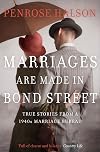
- Marriages Are Made in Bond Street: True Stories from a 1940s Marriage Bureau
- Alternate titles
- The Marriage Bureau: True Stories of 1940s Matchmakers
- Original publication date
- 2016
- People/Characters
- Heather Jenner (Heather Lyon); Mary Oliver (Audrey Parsons); Dorothy Harbottle; Heather Lyon
- Important places
- London, England, UK
- Important events
- World War II
- Dedication
- For Bill, and in memory of Heather Jenner
- First words
- In 1938, farmer's daughter Audrey Parsons was staying with her uncle, a tea planter who managed a remote plantation in the hills of Assam.
- Last words
- (Click to show. Warning: May contain spoilers.)"UNCLE GEORGE."
Classifications
- Genres
- Nonfiction, History, General Nonfiction, Biography & Memoir
- DDC/MDS
- 306.81 — Society, government, & culture Social sciences, sociology & anthropology Social Behavior - Dating, Marriage, Divorce Marriage, partnerships, unions; family Marriage and marital status
- LCC
- HQ802 .H26 — Social sciences The family. Marriage, Women and Sexuality The Family. Marriage. Women The family. Marriage. Home Matrimonial advertisements
- BISAC
Statistics
- Members
- 138
- Popularity
- 237,644
- Reviews
- 23
- Rating
- (3.76)
- Languages
- English
- Media
- Paper, Audiobook, Ebook
- ISBNs
- 16
- ASINs
- 2