On This Page
Description
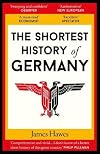
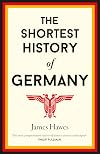
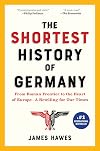
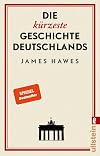
"An narrative history that offers a fresh take on the last 2,000 years of Germany's history--from the invention of the word "German" by Julius Caesar in 58 BC, through the rise of Nazi Germany, and up to the present day."--Provided by publisher.Tags
Recommendations













Member Reviews
A breezy history that confidently speeds through prehistory through roman influence, skips the carolingians, dips into the HRE and Teutonic Order and then grinds to a halt around the 1800s to develop a thesis about the horrible Prussian influence on the German soul, the impact of which not only results in WWI but is to blame for WWII and the lingering effects of which still resonate today. That latter point is what gets the most criticism in an otherwise pretty good speedrun. We get some postwar Germany and reunification as well. The very end is the most political as it relates to current world issues (Merkel, migration and AfD) and your opinion on that breaks by how much you agree with the author's take on said events. It's at least up show more to date, where a safer approach might have been to leave the narrative somewhere after reunification. show less
An unusual history, this sets out to package a history of Germany into an easily-digested work, suited to our age of distrust of obvious experts. The style is highly journalistic, but meatier quotes are called out as we go along. Only when we reach the end does the author make their pedigree clear; not a historian, true, but certainly an academic, with access to academic sources. Some of the quotations made along the way were familiar to me, as well.
The thesis the book puts forward is that many of the values popularly thought of as "German" are actually Prussian; and much of the history of Germany in the 20th Century can be explained by pointing to Prussian hegemony over the rest of Germany, using the industrial and financial might of show more western Germany to drive their ambition. This is not a new idea - I first came across it in a work of current affairs written in 1916 - but I've not seen it expressed much in more recent histories.
The finger of blame is pointed at Bismarck, who set up a lot of mechanisms to steer Germany along the routes he wanted. The trouble is that after Bismarck fell, those mechanisms, from military institutions to clubs and societies, each with their own nationalistic agenda, carried on without him, and went along the routes of least resistance. The rest really is history.
Some have been very critical of this book, suggesting it is superficial, inaccurate, or even racist. But it has to be measured against its target audience. There are Britons nowadays who stick to the idea of Germany as militaristic, expansionist, arrogant and likely to repeat the actions of the past. This book attempts to set them right.
In attempting to squeeze the whole span of German history down into fewer than 230 pages, a lot has to be missed out. Perhaps the two omissions I noticed the most were a discussion of the origins of Hitler's motivations, and German tensions within NATO in the 1980s. Hitler's obsession with Germany, as an Austrian, can only be understood with reference to the nature of Austrian politics in the 19th Century; the divide between those who felt Austria should be looking west and those who felt it should be looking east. As for NATO in the 1980s, the deployment of Pershing missiles to Germany upset a lot of people in the German establishment who saw this as an attempt by America to fight World War 3 away from the Continental USA. Having been bombed almost back to the Stone Age just a generation before, many in Germany were not prepared to undergo the same again - only much worse - on behalf of somebody else. NATO's Exercise Able Archer was the final straw, almost igniting that war because the Soviets were on the verge of mistaking it for a genuine attack. Hawes attributes the progress on disarmament that followed specifically to Helmut Kohl; but there was a major groundswell of opinion in West Germany that he could not ignore.
But these are minor matters. Another five or ten pages probably wouldn't have mattered; then again, this book has the advantage of being right up to date (my copy being the 2nd, revised edition of 2020), looking at Angela Merkel with some degree of perspective as she draws near to the end of her term of office, and casting Vladimir Putin as a modern-day Tsar.
If you have never read any German history or know nothing of the country, this is a quick start. It should not be the only source if you intend any sort of in-depth knowledge or analysis; but it is far from the superficial gloss some would have you believe. show less
The thesis the book puts forward is that many of the values popularly thought of as "German" are actually Prussian; and much of the history of Germany in the 20th Century can be explained by pointing to Prussian hegemony over the rest of Germany, using the industrial and financial might of show more western Germany to drive their ambition. This is not a new idea - I first came across it in a work of current affairs written in 1916 - but I've not seen it expressed much in more recent histories.
The finger of blame is pointed at Bismarck, who set up a lot of mechanisms to steer Germany along the routes he wanted. The trouble is that after Bismarck fell, those mechanisms, from military institutions to clubs and societies, each with their own nationalistic agenda, carried on without him, and went along the routes of least resistance. The rest really is history.
Some have been very critical of this book, suggesting it is superficial, inaccurate, or even racist. But it has to be measured against its target audience. There are Britons nowadays who stick to the idea of Germany as militaristic, expansionist, arrogant and likely to repeat the actions of the past. This book attempts to set them right.
In attempting to squeeze the whole span of German history down into fewer than 230 pages, a lot has to be missed out. Perhaps the two omissions I noticed the most were a discussion of the origins of Hitler's motivations, and German tensions within NATO in the 1980s. Hitler's obsession with Germany, as an Austrian, can only be understood with reference to the nature of Austrian politics in the 19th Century; the divide between those who felt Austria should be looking west and those who felt it should be looking east. As for NATO in the 1980s, the deployment of Pershing missiles to Germany upset a lot of people in the German establishment who saw this as an attempt by America to fight World War 3 away from the Continental USA. Having been bombed almost back to the Stone Age just a generation before, many in Germany were not prepared to undergo the same again - only much worse - on behalf of somebody else. NATO's Exercise Able Archer was the final straw, almost igniting that war because the Soviets were on the verge of mistaking it for a genuine attack. Hawes attributes the progress on disarmament that followed specifically to Helmut Kohl; but there was a major groundswell of opinion in West Germany that he could not ignore.
But these are minor matters. Another five or ten pages probably wouldn't have mattered; then again, this book has the advantage of being right up to date (my copy being the 2nd, revised edition of 2020), looking at Angela Merkel with some degree of perspective as she draws near to the end of her term of office, and casting Vladimir Putin as a modern-day Tsar.
If you have never read any German history or know nothing of the country, this is a quick start. It should not be the only source if you intend any sort of in-depth knowledge or analysis; but it is far from the superficial gloss some would have you believe. show less
Sparse smatterings of interesting facts intertwined with large sections of total hyperbole and bias. This is not a history book, rather an opinion piece on why Catholicism is the greatest thing to happen to Europe, whilst the 'barbaric' east Germans have always held it back. Perhaps if the author consistently took the same magnifying glass to the corruption and misgivings of West Germany, then perhaps the book would be slightly more rounded and balanced. There are some topics which display a total lack of understanding, and to be honest I struggled to read on past the misinformed part about Hegel. The conclusion also seemed off-kilter, is the author suggesting that East Germany be turned into an independent state just to save Europe? show more However, the author has excellent prose and can be funny at points, it's just a shame that this book reads more like a Dailymail-does-history opinion piece. show less
When I saw this book, I saw it as an opportunity to learn more about the history of Germany. Disappointment set in almost from the moment I opened the book. Non-existent documentation, an overly familiar writing style, and blatant political bias plagued the account. In a small book such as this, one expects superficial treatment; however, the author's biases seem to drive what he glosses over and what he treats more in-depth. The author needs to return to writing fiction and refrain from non-fiction unless he plans to document his work and ignore his own biases. I received an advance electronic copy through NetGalley with the expectation of an honest review. The book's index was not included in the version I read.
Great short book which takes a very long term approach to history, essentially Charlemagne to the present. There is the real Germany, the south and west, at the heart of Europe. Then there is the east, dominated by Prussia and battling/cooperating with Slavs, Russia and the east. Latter is like the American old south, and he argues that that needs to be understood and patiently tolerated. It won't change. Hitler's power, like the Junkers, lay in the east.
What shall we make of this book? Not easy!
First, almost no sources are given (towards the end a few names are mentioned, as an afterthought, so it seems) - thus the editorial standard falls short of wikipedia requirements and, in this respect, the book must be dismissed with the lowest possible mark, i.e. half a *! Then there is no index, neither a bibliography encouraging further reading. But further reading is definitely required as only the barest of bare bones are given, quasi a clean-picked skeleton that badly needs some flesh to be put on.
On the other hand, I found only minor factual errors (e.g. Nicolaus von Jersoschin was the translator, not the author of the Chronicle of Prussia) and as I turned the pages, it grew on me. Now, show more every historic narrative is subjective, an objective historiography does not exist: always a selection has to be made what to mention what to leave out, let alone an inevitable bias in the way events are related and this book is no miraculous exception! So, reader, beware! With this book it is simply impossible to disentangle his own opinions from those of others, neither are we told to what extend the given outlines are accepted or controversial.
The idea (his? or whose? - we are not told) that the seeds of WW1 and the Nazi 3rd Reich can be traced back to Britain handing 1814 the Rhineland with what soon became Germany’s industrial heart-land of the Ruhr to Prussia, thus strengthening Prussia to the extend that it can ride roughshod over all the little principalities in the Rheinbund and making Germany a Prussian empire in 1871 is interesting (but again: how widely accepted is this idea?). So Britain meddling where it has no business (and later, in 1938, under Chamberlain not meddling when it should!) may have a lot to answer for! Read it, but critically! And certainly it is not a book that should ever be quoted as a source! (VII-17) show less
First, almost no sources are given (towards the end a few names are mentioned, as an afterthought, so it seems) - thus the editorial standard falls short of wikipedia requirements and, in this respect, the book must be dismissed with the lowest possible mark, i.e. half a *! Then there is no index, neither a bibliography encouraging further reading. But further reading is definitely required as only the barest of bare bones are given, quasi a clean-picked skeleton that badly needs some flesh to be put on.
On the other hand, I found only minor factual errors (e.g. Nicolaus von Jersoschin was the translator, not the author of the Chronicle of Prussia) and as I turned the pages, it grew on me. Now, show more every historic narrative is subjective, an objective historiography does not exist: always a selection has to be made what to mention what to leave out, let alone an inevitable bias in the way events are related and this book is no miraculous exception! So, reader, beware! With this book it is simply impossible to disentangle his own opinions from those of others, neither are we told to what extend the given outlines are accepted or controversial.
The idea (his? or whose? - we are not told) that the seeds of WW1 and the Nazi 3rd Reich can be traced back to Britain handing 1814 the Rhineland with what soon became Germany’s industrial heart-land of the Ruhr to Prussia, thus strengthening Prussia to the extend that it can ride roughshod over all the little principalities in the Rheinbund and making Germany a Prussian empire in 1871 is interesting (but again: how widely accepted is this idea?). So Britain meddling where it has no business (and later, in 1938, under Chamberlain not meddling when it should!) may have a lot to answer for! Read it, but critically! And certainly it is not a book that should ever be quoted as a source! (VII-17) show less
Finally allowed to get to read this, between many distractions, but what a pleasure. Such any easy read with a narrative pushing you through all the convolutions of Germany history. Fascinating, driven by a central theme that doesn't get mired in the many possible side issues and events.
The skill in keeping the narrative moving but carrying along the 'uninformed' reader is remarkable. Even the modern events of german history, where I thought I had some misty insight, were suddenly revealed in stark detail from an new perspective that had that solid ring of authenticity. Right bang uptodate, Merkle shapeshifts into a different persona.
Given all the convolutions and the many iterations before any sense of a Germany emerges, that the show more narrative can hold it all together with a strong positive sense of direction is all credit to the author. The inclusion of maps, too small and too sketchy to give any detail other than a glimpsed overview, were helpful but also annoying, particularly as my knowledge of german cities and locations is fuzzy. The bubble diagrams that are simplistic to a really idiotic degree, do serve to ram home the core of the themes being laid out so nobody but nobody can miss the point being made!
Clearly not a scholarly work, though the frequent clips to relevant quotes imply very well researched material, you have to surrender to his underlying thesis, Germany west of the Elbe and Prussia to east and never the twain shall co-exist, collaboratively. I am not in a position to even begin to unpick his thesis and for me it is immaterial. He has given me a kaleidoscope view into germany and what has made it tick and what is still driving even now after all the vicissitudes of recent decades.So thank you I take away a better understanding of germany and its place in the world order, subject to anyone whose has a better insight! show less
The skill in keeping the narrative moving but carrying along the 'uninformed' reader is remarkable. Even the modern events of german history, where I thought I had some misty insight, were suddenly revealed in stark detail from an new perspective that had that solid ring of authenticity. Right bang uptodate, Merkle shapeshifts into a different persona.
Given all the convolutions and the many iterations before any sense of a Germany emerges, that the show more narrative can hold it all together with a strong positive sense of direction is all credit to the author. The inclusion of maps, too small and too sketchy to give any detail other than a glimpsed overview, were helpful but also annoying, particularly as my knowledge of german cities and locations is fuzzy. The bubble diagrams that are simplistic to a really idiotic degree, do serve to ram home the core of the themes being laid out so nobody but nobody can miss the point being made!
Clearly not a scholarly work, though the frequent clips to relevant quotes imply very well researched material, you have to surrender to his underlying thesis, Germany west of the Elbe and Prussia to east and never the twain shall co-exist, collaboratively. I am not in a position to even begin to unpick his thesis and for me it is immaterial. He has given me a kaleidoscope view into germany and what has made it tick and what is still driving even now after all the vicissitudes of recent decades.So thank you I take away a better understanding of germany and its place in the world order, subject to anyone whose has a better insight! show less
Members
- Recently Added By
Published Reviews
Although this history is fast-paced and refreshingly different, it is also seriously problematic.
added by russianreader
A good piece of writing should be brief and concise, but it must also be worthy.
added by russianreader
Lists

Books Read in 2018
4,360 works; 110 members

All Things Germany
321 works; 4 members

Finished in 2025
23 works; 1 member

Library Non-Fiction
164 works; 1 member
Author Information

16 Works 1,512 Members
Series

Common Knowledge
- Canonical title*
- Tysklands historia : från Caesar till Merkel
- Original publication date
- 2017
- Important places
- Germany; West Germany; German Democratic Republic; Prussia
- Dedication
- To the memory of my father, Maurice Hawes, and the future of my third son, Karl Maurice Hawes v. Oppen, whose lives crossed for a few hours on 25 February 2015
- First words
- The West is in full retreat.
- Last words
- (Click to show. Warning: May contain spoilers.)It is time, now more than ever, for us all to understand the real history of Germany.
- Original language
- English
*Some information comes from Common Knowledge in other languages. Click "Edit" for more information.
Classifications
Statistics
- Members
- 545
- Popularity
- 54,566
- Reviews
- 18
- Rating
- (3.55)
- Languages
- 9 — Danish, Dutch, English, German, Italian, Portuguese, Romanian, Serbian, Swedish
- Media
- Paper, Audiobook, Ebook
- ISBNs
- 23
- ASINs
- 6