On This Page
Description
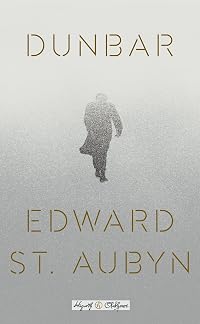
Henry Dunbar, the once all-powerful head of a global media corporation, is not having a good day. In his dotage he hands over care of the corporation to his two eldest daughters, Abby and Megan, but as relations sour he starts to doubt the wisdom of past decisions. Now imprisoned in Meadowmeade, an upscale sanatorium in rural England, with only a demented alcoholic comedian as company, Dunbar starts planning his escape. As he flees into the hills, his family is hot on his heels. But who will show more find him first, his beloved youngest daughter, Florence, or the tigresses Abby and Megan, so keen to divest him of his estate? Edward St Aubyn is renowned for his masterwork, the five Melrose novels, which dissect with savage and beautiful precision the agonies of family life. His take on King Lear, Shakespeare's most devastating family story, is an excoriating novel for and of our times an examination of power, money and the value of forgiveness. show lessTags
Recommendations








Member Reviews
St. Aubyn retells Shakespeare's King Lear using a media magnate as King Lear. His two oldest daughters want to usurp his power, having him declared mentally incapable. He's a bit estranged from the younger daughter who moved out to Wyoming, but when she hears what her sisters are up to, she attempts to reach her dad who escaped from the asylum before the sisters can. Ther author even incorporated some stage instructions into the narrative early in the book making me laugh out loud. This is probably my second favorite in the series to date, with top honors going to Hagseed by Margaret Atwood.
Exuberant depravity, high finance, intrigue, the whole pharmacopeia, self abuse, and moments of crystal clarity — it sounds like an Edward St. Aubyn novel, or King Lear. It’s both. In this contemporary update of Lear, the eponymous hero of Shakespeare’s great tragedy is now Henry Dunbar, global media magnate, ruthless capitalist, and, of late, retired (sort of). His elder daughters, Abigail and Megan, take measures to ensure a more permanent retirement for Daddy. His youngest daughter, Florence, has already been disinherited and dismissed. Dunbar is bound to rue the day, indeed to rue many of his days if only his wits can be found.
St. Aubyn has found a worthy subject for his excoriating wit. Rarely have characters as thoroughly show more evil as Abby and Meg crossed his path. And he positively revels in his depiction of their depravity. Always more challenging is the youngest daughter. Where exactly does her duty of care lie? And how could the great manipulator, Dunbar, have been so thoroughly outfoxed?
As ever with Lear, the test for a director, actor, or author, is to decide whether Lear (i.e. Dunbar) is mad at the outset. If he is mad, then guilt does not accrue from his actions. If he is not mad, then how can such vile acts ever be redeemed or at least how can he tempt our sympathy in his onward decline? St. Aubyn opts for a chemically induced madness inflicted on Dunbar by his daughters’ pet physician, Dr. Bob. But that’s a bit of a cheat. And when the drug that provokes Dunbar’s paranoia wears off, it doesn’t seem as though his paranoia is lessened. So it remains unclear whether the drug was efficacious at all. However barring this niggle, the novel as a whole remains a thoroughgoing romp.
Recommended. show less
St. Aubyn has found a worthy subject for his excoriating wit. Rarely have characters as thoroughly show more evil as Abby and Meg crossed his path. And he positively revels in his depiction of their depravity. Always more challenging is the youngest daughter. Where exactly does her duty of care lie? And how could the great manipulator, Dunbar, have been so thoroughly outfoxed?
As ever with Lear, the test for a director, actor, or author, is to decide whether Lear (i.e. Dunbar) is mad at the outset. If he is mad, then guilt does not accrue from his actions. If he is not mad, then how can such vile acts ever be redeemed or at least how can he tempt our sympathy in his onward decline? St. Aubyn opts for a chemically induced madness inflicted on Dunbar by his daughters’ pet physician, Dr. Bob. But that’s a bit of a cheat. And when the drug that provokes Dunbar’s paranoia wears off, it doesn’t seem as though his paranoia is lessened. So it remains unclear whether the drug was efficacious at all. However barring this niggle, the novel as a whole remains a thoroughgoing romp.
Recommended. show less
Having read Edward St. Aubyn's Patrick Melrose novels I was not surprised that he would be able to present a thoroughly readable and enjoyable Lear for the twenty-first century. Henry Dunbar, the titular character, is a media mogul in decline. Like Lear he has divided his empire among his daughters and in doing so finds himself at the mercy of the two eldest of the trio . Not unlike many corporate men, his identity was his empire and his soul was at sea without it. As chapter three begins we find him questioning, "Who am I?" Imprisoned in Meadowmeade, a sanatorium in rural England, he finds himself almost beyond the possibility of life itself. But his intelligence takes over and he begins to makes plans to return to the world and just show more perhaps find his identity.
The plot provides suspense as the two eldest daughters, Abbey and Megan, plan to complete the divestiture of his estate and ensure that he never returns. Dunbar has only an alcoholic comedian by his side as he drifts through the wilds of the rural British countryside. Will he survive the ordeal? Will he escape the clutches of his elder daughters? And will the youngest daughter, Florence, who has never given up on him, be able to assist in his return and reconnect with her father?
The book's best passages come when St. Aubyn is alone with his central character. When he engages the brutal reality of nature with only his own purposefulness to guide him the story takes on a mesmerizing character. "He was locking into his walking stride, preserving his energy, refusing to disperse himself in speculative chatter, absorbed by a single objective: to get to London and somehow take back control of the Trust." He sounds like the man who had built an empire, not given it away. He engages with nature; "The leafless trees, with their black branches stretching out hysterically in every direction, looked to him like illustrations of a central nervous system racked by disease: studies of human suffering anatomised against the winter sky." I found my reading rapt with the tension of Dunbar's mind and his engagement with the world. The secondary characters were not as well drawn, although even when bordering on caricature they provided enough believable evil to suggest that they might prevail.
"Dunbar" is part of a series of contemporary novels based on Shakespeare's plays and published by Hogarth Press. His five Melrose novels, which dissect with savage and beautiful precision the agonies of family life, made him a perfect candidate to update King Lear, Shakespeare’s most devastating family story. In doing so he has translated much of the power of Shakespeare's great play into an agonizingly tense and metaphorically astute novel for and of our times – an examination of power, money and the value of forgiveness. Edward St. Aubyn has been able to create a work that his worthy of his reputation and also respectful to the source of this Shakespearean tragedy for our times. show less
The plot provides suspense as the two eldest daughters, Abbey and Megan, plan to complete the divestiture of his estate and ensure that he never returns. Dunbar has only an alcoholic comedian by his side as he drifts through the wilds of the rural British countryside. Will he survive the ordeal? Will he escape the clutches of his elder daughters? And will the youngest daughter, Florence, who has never given up on him, be able to assist in his return and reconnect with her father?
The book's best passages come when St. Aubyn is alone with his central character. When he engages the brutal reality of nature with only his own purposefulness to guide him the story takes on a mesmerizing character. "He was locking into his walking stride, preserving his energy, refusing to disperse himself in speculative chatter, absorbed by a single objective: to get to London and somehow take back control of the Trust." He sounds like the man who had built an empire, not given it away. He engages with nature; "The leafless trees, with their black branches stretching out hysterically in every direction, looked to him like illustrations of a central nervous system racked by disease: studies of human suffering anatomised against the winter sky." I found my reading rapt with the tension of Dunbar's mind and his engagement with the world. The secondary characters were not as well drawn, although even when bordering on caricature they provided enough believable evil to suggest that they might prevail.
"Dunbar" is part of a series of contemporary novels based on Shakespeare's plays and published by Hogarth Press. His five Melrose novels, which dissect with savage and beautiful precision the agonies of family life, made him a perfect candidate to update King Lear, Shakespeare’s most devastating family story. In doing so he has translated much of the power of Shakespeare's great play into an agonizingly tense and metaphorically astute novel for and of our times – an examination of power, money and the value of forgiveness. Edward St. Aubyn has been able to create a work that his worthy of his reputation and also respectful to the source of this Shakespearean tragedy for our times. show less
‘’I must tell my story...Oh God, let me not go mad! ‘’
I won’t lie. I am a sworn Shakespeare purist and there is nothing that can alter my mind. My opinion on the Hogarth Shakespeare series is somehow divided. I adored ‘’Vinegar Girl’’ and I look forward to Nesbo’s ‘’Macbeth’’, while ‘’Hag-Seed’’ will find a place in my wintry reads. ‘’King Lear’’ is one of those plays that have haunted me ever since I read it, some 15-odd years ago. I haven’t had the chance to attend a live performance yet, but Shakespeare’s words and the figure of this highly troubling and troubled, tormented man are so powerful that spring alive from the page. Now, with this in mind, I can tell you that show more ‘’Dunbar’’ seemed to me an uneven retelling. Naturally, no writer is Shakespeare and it is more than apparent in most of the retellings. With this novel, I venture to say that the readers who have not yet read ‘’King Lear’’ are likely to enjoy it and appreciate it even more. I couldn’t…
Henry Dunbar is a mass media mogul. A widower with three daughters, Abigail, Megan and Florence (... as in Goneril, Regan and Cordelia…) Having practically disinherited Florence for being unwilling to dedicate herself to the company, Abby and Megan are given her own share of the fortune. And what do they do? They ‘’imprison’’ him in an asylum in Manchester. What happens next would be easy to guess if you read ‘’King Lear’’.
The characters were the mightiest disappointment, in my opinion. Besides Dunbar and Florence, who are strong equivalents of their original versions, and Chris who somehow stands for the King of France, the rest are not good enough to support such an effort. Wilson, is a hybrid between Gloucester and Kent, but lacks the tragic nature of the Duke and the savviness of Kent and if Dr. Bob is Edmund, then I am Ophelia...He is not powerful enough to make for a convincing antagonist. Now, in my opinion, the characters of Abigail and Megan significantly lowered the quality of the entire novel. They had no strength of presence like Goneril and Regan, and they had no motive. They existed just to be evil and the writer tried too hard to make them appear as such. They had no personality, no evil maturity and menace like the villains in Shakespeare. They just swear, talk to each other while hallucinating and have sex with any male that crosses their path. There was too much emphasis on sex with these women, destroying any hint of a sinister atmosphere and all it accomplished was for them to be reduced to sex-crazed psychopaths, characters that escaped from those rubbish-quality paperbacks with the disgusting front covers…. I don’t claim to know the writer’s intentions, but it was cheap and disrespectful. The way I see it, he lacked the deep insight into the human nature.
‘’Who can tell me who I am? Who I really am?’’
With Dunbar, the futility and remorse of Lear, is clearly and brilliantly depicted. The whole essence of his ordeal was faithful and respectful of its source. The agony to right the wrongs and to escape a world that demands you to be mad is tense and vivid. The scenes of Dunbar’s time in hiding and his thoughts of remorse echo Lear’s tribulations. Florence’s fears for her father and her struggle to protect him from her sisters are well-depicted without being melodramatic. However, the dialogue was rather average and the fact that there were scattered quotes from ‘’King Lear’’ throughout didn’t help. It rather alienated me, to be honest. The overall writing isn’t powerful enough to explore the complexity of the themes of identity and despair of ‘’King Lear’’ and at times, the story became too action-driven and too family drama both of which aren’t to my liking.
‘’No mercy. In this world or the next.’’
The problem is that Dunbar’s words fall empty. The end, although it was to be expected, was no less bitter and shocking. However, it wasn’t convincing enough. I found it to be abrupt and lacking in justice and resolution, the catharsis (however limited) that is communicated in the final Act of the masterpiece. Dunbar may call for no mercy, but there’s noone to hear his words. Perhaps, you will claim that I should judge the book as a work on its own. You will be probably right and I’d still give it the rating I did. The thing is that it’s not a work on its own. It’s a retelling of Shakespeare’s great tragedy and bound to be compared. It cannot stand the comparison, I’m afraid. The finest writers in the world could try to rewrite one of his plays and they would still fall short.
So, as it stands for me, the writer dropped the ball in certain important moments with momentary satisfying highlights. But merely ‘’satisfying’’ doesn’t do, in my opinion. There was no shuttering moments, no dagger nailed into the heart when witnessing the characters’ ordeal, because the writer doesn’t allow us to experience it fully and convincingly. Therefore, I believe that even the 3 stars may be too generous…
Many thanks to Penguin Random House and NetGalley for the ARC in exchange of an honest review.
My reviews can also be found on https://theopinionatedreaderblog.wordpress.com show less
I won’t lie. I am a sworn Shakespeare purist and there is nothing that can alter my mind. My opinion on the Hogarth Shakespeare series is somehow divided. I adored ‘’Vinegar Girl’’ and I look forward to Nesbo’s ‘’Macbeth’’, while ‘’Hag-Seed’’ will find a place in my wintry reads. ‘’King Lear’’ is one of those plays that have haunted me ever since I read it, some 15-odd years ago. I haven’t had the chance to attend a live performance yet, but Shakespeare’s words and the figure of this highly troubling and troubled, tormented man are so powerful that spring alive from the page. Now, with this in mind, I can tell you that show more ‘’Dunbar’’ seemed to me an uneven retelling. Naturally, no writer is Shakespeare and it is more than apparent in most of the retellings. With this novel, I venture to say that the readers who have not yet read ‘’King Lear’’ are likely to enjoy it and appreciate it even more. I couldn’t…
Henry Dunbar is a mass media mogul. A widower with three daughters, Abigail, Megan and Florence (... as in Goneril, Regan and Cordelia…) Having practically disinherited Florence for being unwilling to dedicate herself to the company, Abby and Megan are given her own share of the fortune. And what do they do? They ‘’imprison’’ him in an asylum in Manchester. What happens next would be easy to guess if you read ‘’King Lear’’.
The characters were the mightiest disappointment, in my opinion. Besides Dunbar and Florence, who are strong equivalents of their original versions, and Chris who somehow stands for the King of France, the rest are not good enough to support such an effort. Wilson, is a hybrid between Gloucester and Kent, but lacks the tragic nature of the Duke and the savviness of Kent and if Dr. Bob is Edmund, then I am Ophelia...He is not powerful enough to make for a convincing antagonist. Now, in my opinion, the characters of Abigail and Megan significantly lowered the quality of the entire novel. They had no strength of presence like Goneril and Regan, and they had no motive. They existed just to be evil and the writer tried too hard to make them appear as such. They had no personality, no evil maturity and menace like the villains in Shakespeare. They just swear, talk to each other while hallucinating and have sex with any male that crosses their path. There was too much emphasis on sex with these women, destroying any hint of a sinister atmosphere and all it accomplished was for them to be reduced to sex-crazed psychopaths, characters that escaped from those rubbish-quality paperbacks with the disgusting front covers…. I don’t claim to know the writer’s intentions, but it was cheap and disrespectful. The way I see it, he lacked the deep insight into the human nature.
‘’Who can tell me who I am? Who I really am?’’
With Dunbar, the futility and remorse of Lear, is clearly and brilliantly depicted. The whole essence of his ordeal was faithful and respectful of its source. The agony to right the wrongs and to escape a world that demands you to be mad is tense and vivid. The scenes of Dunbar’s time in hiding and his thoughts of remorse echo Lear’s tribulations. Florence’s fears for her father and her struggle to protect him from her sisters are well-depicted without being melodramatic. However, the dialogue was rather average and the fact that there were scattered quotes from ‘’King Lear’’ throughout didn’t help. It rather alienated me, to be honest. The overall writing isn’t powerful enough to explore the complexity of the themes of identity and despair of ‘’King Lear’’ and at times, the story became too action-driven and too family drama both of which aren’t to my liking.
‘’No mercy. In this world or the next.’’
The problem is that Dunbar’s words fall empty. The end, although it was to be expected, was no less bitter and shocking. However, it wasn’t convincing enough. I found it to be abrupt and lacking in justice and resolution, the catharsis (however limited) that is communicated in the final Act of the masterpiece. Dunbar may call for no mercy, but there’s noone to hear his words. Perhaps, you will claim that I should judge the book as a work on its own. You will be probably right and I’d still give it the rating I did. The thing is that it’s not a work on its own. It’s a retelling of Shakespeare’s great tragedy and bound to be compared. It cannot stand the comparison, I’m afraid. The finest writers in the world could try to rewrite one of his plays and they would still fall short.
So, as it stands for me, the writer dropped the ball in certain important moments with momentary satisfying highlights. But merely ‘’satisfying’’ doesn’t do, in my opinion. There was no shuttering moments, no dagger nailed into the heart when witnessing the characters’ ordeal, because the writer doesn’t allow us to experience it fully and convincingly. Therefore, I believe that even the 3 stars may be too generous…
Many thanks to Penguin Random House and NetGalley for the ARC in exchange of an honest review.
My reviews can also be found on https://theopinionatedreaderblog.wordpress.com show less
Dunbar is a contemporary reworking of Shakespeare’s King Lear, with the eponymous sovereign inventively reimagined as Canadian media mogul Henry Dunbar. Dunbar’s elder daughters Abby and Megan ship him off to a retirement home in Cumbria whilst they engineer a take-over of his media empire. Their plans however go awry when Dunbar, with the help of retired alcoholic comedian Peter Walker, escapes from the care home and sets off on foot into the hills of the Lake District. As Abby and Megan hunt for their father, his youngest daughter Florence joins the family’s old and trusted lawyer Wilson (unfairly dismissed by Dunbar after years of service) and sets up a search party of her own in a bid to find and save her father before he show more comes to harm.
Much of the pleasure afforded by this novel is similar to that which comes from watching a “modern-dress” Shakespeare production. St Aubyn follows the plot of King Lear quite closely, and it’s fun to seek the often-ingenious parallels between this novel and the play which inspired it. Even considered without reference to Lear, the novel has its merits – it is fast-paced, borrowing as it does from the “corporate” or “legal thriller” genre and, particularly until Walker remains on the scene, it also has a considerable dose of (dark) humour.
Overall, however, “Dunbar” did not work for me. For a start, the novel’s characters and certain plot details were too over the top. Just to give an example, St Aubyn is not happy with casting Abby and Megan ‘merely’ as scheming and shady entrepreneurs. He also portrays them as sadistic nymphomaniacs, guarded by well-honed bodyguards ready to appease them at their beck and call. These elements turn the characters into grotesque caricatures, draining them of their humanity. As a result, instead of underlining Shakespeare’s continued relevance, the novel presents us with figures with whom it is hard to identify. What bothered me most of all, however, is that the narrative and dialogue lack that distinctiveness and originality which I would expect from a supposedly “literary” novel. There is the occasional arresting metaphor but, otherwise, the style struck me as workaday – surely, an author once nominated for the Booker can do better than this? show less
Much of the pleasure afforded by this novel is similar to that which comes from watching a “modern-dress” Shakespeare production. St Aubyn follows the plot of King Lear quite closely, and it’s fun to seek the often-ingenious parallels between this novel and the play which inspired it. Even considered without reference to Lear, the novel has its merits – it is fast-paced, borrowing as it does from the “corporate” or “legal thriller” genre and, particularly until Walker remains on the scene, it also has a considerable dose of (dark) humour.
Overall, however, “Dunbar” did not work for me. For a start, the novel’s characters and certain plot details were too over the top. Just to give an example, St Aubyn is not happy with casting Abby and Megan ‘merely’ as scheming and shady entrepreneurs. He also portrays them as sadistic nymphomaniacs, guarded by well-honed bodyguards ready to appease them at their beck and call. These elements turn the characters into grotesque caricatures, draining them of their humanity. As a result, instead of underlining Shakespeare’s continued relevance, the novel presents us with figures with whom it is hard to identify. What bothered me most of all, however, is that the narrative and dialogue lack that distinctiveness and originality which I would expect from a supposedly “literary” novel. There is the occasional arresting metaphor but, otherwise, the style struck me as workaday – surely, an author once nominated for the Booker can do better than this? show less
The tragedy of Shakespeare’s King Lear is well known to almost every reader: An aging head of state decides to step down from his throne and considers how to divide his kingdom among his three daughters. Two daughters shamelessly promote their own causes and receive equal shares of the estate. One daughter, who actually loves her father, refuses to stoop to sycophantic flattery and is disowned. The king soon learns the mistake he has made and the ensuing internecine strife in the family eventually dooms them all.
So, how do you update this time-honored story for a modern audience? In Dunbar, Edward St. Aubyn gives us his answer. Henry Dunbar has decided to step away from the multi-national communications company he has ruthlessly show more built. He turns over his stake in the operation to the daughters who have remained loyal to the firm while freezing out the one who wanted to live her own life. After escaping from the mental facility where his duplicitous offspring have placed him with the help of an unethical doctor, Dunbar seeks to reunite with the one child he has wronged while trying to thwart the plot of the other two schemers. Of course, none of this ends well, but then we already knew that would happen.
This is the sixth offering in Hogarth Shakespeare’s ambitious project to reinvent some of the Immortal Bard’s more famous plays as novels. For me, this particular rendition was entertaining, if only moderately successful. The new plot follows the original story very closely in the broad details, rather than trying to reinvent the tale in a creative way, as Margaret Atwood’s Hag-Seed did for The Tempest. Still, St. Aubyn has produced more compelling fiction than other authors in the series who simply tried to transport the original story to the present day (e.g., Tracy Chevalier’s New Boy, Anne Tyler’s Vinegar Girl). In particular, I thought the author’s use of a hostile corporate takeover to motivate the novel’s climax was quite clever and also managed to correctly convey the financial details of how those transactions actually work. Overall, while Dunbar does not leave a significant impression, it was a well-crafted book that was a pleasure to read. show less
So, how do you update this time-honored story for a modern audience? In Dunbar, Edward St. Aubyn gives us his answer. Henry Dunbar has decided to step away from the multi-national communications company he has ruthlessly show more built. He turns over his stake in the operation to the daughters who have remained loyal to the firm while freezing out the one who wanted to live her own life. After escaping from the mental facility where his duplicitous offspring have placed him with the help of an unethical doctor, Dunbar seeks to reunite with the one child he has wronged while trying to thwart the plot of the other two schemers. Of course, none of this ends well, but then we already knew that would happen.
This is the sixth offering in Hogarth Shakespeare’s ambitious project to reinvent some of the Immortal Bard’s more famous plays as novels. For me, this particular rendition was entertaining, if only moderately successful. The new plot follows the original story very closely in the broad details, rather than trying to reinvent the tale in a creative way, as Margaret Atwood’s Hag-Seed did for The Tempest. Still, St. Aubyn has produced more compelling fiction than other authors in the series who simply tried to transport the original story to the present day (e.g., Tracy Chevalier’s New Boy, Anne Tyler’s Vinegar Girl). In particular, I thought the author’s use of a hostile corporate takeover to motivate the novel’s climax was quite clever and also managed to correctly convey the financial details of how those transactions actually work. Overall, while Dunbar does not leave a significant impression, it was a well-crafted book that was a pleasure to read. show less
The Hogarth Shakespeare is a great project in theory - pair a well known current author with a Shakespeare play and see what they can do with a retelling set in modern times. That's a second novel I read from the 7 that are published so far (after The Gap of Time by Jeanette Winterson which I read in 2016) and for a second time I find it lacking...
Edward St Aubyn decides to tell just part of the story so Dunbar is more "based on fragments from King Lear" than it is a straight retelling. And somewhere in those cut fragments is where the story loses its power a bit.
The novel opens much later than the play does - Dunbar had already made his decision to split his kingdom between only his two oldest daughters and cut the youngest a year show more earlier and when we meet him, he had been committed to an asylum in Manchester from his daughters for at least a few months - away from North America where everyone who cares about his is.
Dunbar's kingdom is not literal of course - he is an entertainment media mogul who had built one of the biggest media empire in the world. That empire is what got split. Just like King Lear, Dunbar tried to give the power away but keep the title... and things backfired as badly as it did in the original. This family drama is all here. What is missing is the second family as a counterpoint and for comparison - while the characters are there, the connection between them is not and there is no betrayal there... and the novel suffers from that.
When the novel opens Dunbar had started to realize that something is indeed rotten and before long he escapes the loony bin and goes wandering around the mountains. There is noone to assist him, he is all on his own (complete with the rage against the storm and the barn he finds) but... the power of that part of the story is in his companions and the fact that he has no idea who they are...
And then there are the sisters... the two older ones are evil personified, just as in the play, except that in a novel they come out almost cartoon evil - and so does Dr. Bob. Add that the sexual tension that carries through the play had been upgraded to almost pornographic here and things are just bizarre in places.
As it is billed as a retelling, everyone knows where this is going - Dunbar will be saved by his youngest daughter, the evil plans will be stopped. St Aubyn makes the same choice as with the start - he does not finish the play - almost noone dies in this version - literally or not. A case can be made that the troubles the sisters find themselves in is the same as dying but... it does not have the same power.
Even removing the King Lear connection does not save this novel - it is so tightly connected into everything that pulling it apart does not leave a secondary story under it.
On the other hand some of the writing was impressive - even if it failed as King Lear, even if half of the characters were comically good or evil, something in the language of St Aubyn works on a level that I did not expect. I am glad I read it -- at least I discovered a new author I want to explore. But this could have been done a lot better... :( show less
Edward St Aubyn decides to tell just part of the story so Dunbar is more "based on fragments from King Lear" than it is a straight retelling. And somewhere in those cut fragments is where the story loses its power a bit.
The novel opens much later than the play does - Dunbar had already made his decision to split his kingdom between only his two oldest daughters and cut the youngest a year show more earlier and when we meet him, he had been committed to an asylum in Manchester from his daughters for at least a few months - away from North America where everyone who cares about his is.
Dunbar's kingdom is not literal of course - he is an entertainment media mogul who had built one of the biggest media empire in the world. That empire is what got split. Just like King Lear, Dunbar tried to give the power away but keep the title... and things backfired as badly as it did in the original. This family drama is all here. What is missing is the second family as a counterpoint and for comparison - while the characters are there, the connection between them is not and there is no betrayal there... and the novel suffers from that.
When the novel opens Dunbar had started to realize that something is indeed rotten and before long he escapes the loony bin and goes wandering around the mountains. There is noone to assist him, he is all on his own (complete with the rage against the storm and the barn he finds) but... the power of that part of the story is in his companions and the fact that he has no idea who they are...
And then there are the sisters... the two older ones are evil personified, just as in the play, except that in a novel they come out almost cartoon evil - and so does Dr. Bob. Add that the sexual tension that carries through the play had been upgraded to almost pornographic here and things are just bizarre in places.
As it is billed as a retelling, everyone knows where this is going - Dunbar will be saved by his youngest daughter, the evil plans will be stopped. St Aubyn makes the same choice as with the start - he does not finish the play - almost noone dies in this version - literally or not. A case can be made that the troubles the sisters find themselves in is the same as dying but... it does not have the same power.
Even removing the King Lear connection does not save this novel - it is so tightly connected into everything that pulling it apart does not leave a secondary story under it.
On the other hand some of the writing was impressive - even if it failed as King Lear, even if half of the characters were comically good or evil, something in the language of St Aubyn works on a level that I did not expect. I am glad I read it -- at least I discovered a new author I want to explore. But this could have been done a lot better... :( show less
Members
- Recently Added By
Lists

Contemporary Fiction
109 works; 7 members

Kirkus Starred Fiction Reviews of Books Published in 2017
412 works; 7 members

Books Read in 2017
4,249 works; 130 members

Books Read in 2020
4,379 works; 124 members

Retellings of Shakespeare Plays
42 works; 12 members

Books Read in 2026
1,950 works; 66 members
Author Information

26+ Works 5,889 Members
Awards and Honors
Distinctions
The Guardian Book of the Day (2017-10-16)
The Guardian Book of the Day (2017-09-30)
Series

Work Relationships
Is a retelling of
Common Knowledge
- Canonical title
- Dunbar
- Original publication date
- 2017-10-03
- People/Characters
- Henry Dunbar; Abigail Dunbar Rush; Megan Dunbar; Florence Dunbar; Peter Walker; Dr. Bob (show all 17); Nurse Roberts; Dr. Harris; Ursula Harrod; Catherine Dunbar; Jim Sage; Wilson; Jesus; Kevin; Steve Cogniccenti; Mark Rush; Chris Wilson
- Important places
- London, England, UK; New York, New York, USA; Nutting, England, UK (fictional)
- Dedication
- For Kate
- First words
- "We're off our meds," whispered Dunbar.
- Canonical DDC/MDS
- 823.914
- Canonical LCC
- PR6069.T134
Classifications
Statistics
- Members
- 492
- Popularity
- 61,449
- Reviews
- 31
- Rating
- (3.58)
- Languages
- 6 — Danish, English, French, German, Italian, Swedish
- Media
- Paper, Audiobook, Ebook
- ISBNs
- 24
- ASINs
- 5