On This Page
Description
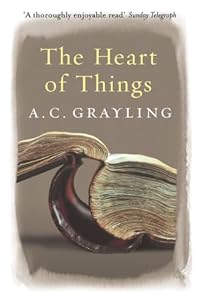
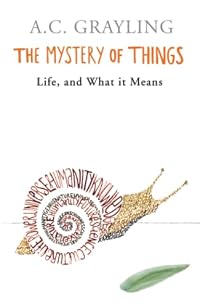
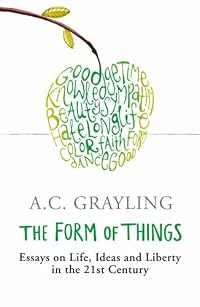
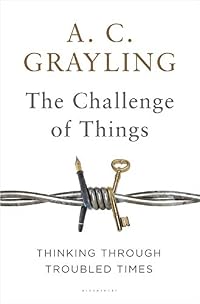
In this new collection A.C. Grayling adds to the variety of discussion and insight in his previous three essay collections. He returns to questions of personal ethics and the problems of the contemporary world, but also looks at the lives and ideas of great thinkers, the role of the arts in civilisation, and the need for reason everywhere Anthony Grayling illustrates in his celebrated accessible prose what each area offers to thought. In a wide-ranging array of illuminating topics, THE HEART show more OF THINGS shows how far-reaching Grayling's masterly, and timely, commentary on the humanities is to general readers. show lessTags
Recommendations


Member Reviews
Better than the Meaning of Things, but still not that good.
Again this is a collection of a series of newspaper columns, from various publications squashed together as if this makes them more worthy of consideration. Grayling cover much the same set of topics, but includes the added bonus of a few vinegrettes about the various famous philosophers of history and what makes them special. Mostly however this is once again Grayling offering his unsolicited and unsubstantiated opinion on ethics, which he defines as how to live a good life.
He covers a few topics like liek war, love and cheating and has managed to make the Reading, that he covered previously slightly less random. This is true of all his articles, they are just better written show more than in the Meaning of things. Grayling often manages to leave the question open with a provocative twist at the end which does suceed (where Meaning failed) in encouraging at least some further thought on the matter.
However this work does also suffer from many of the same failings, namely assumption of 'facts' that are debatable at best. There is one single solitary source quoted in the entire book. The rang eof themes has broadened slightly to look at some of the wider societal considerations, but by nowhere near enough when considering topics such as family planning. There is also massive and unsupported extrapolation from small events to wider conclusions. They may be just, but then again they may be nothing more than cloud castles in cuckoo land, there is no information to say.
The profiles of the various philosophers do more to indicate why there views should be ignored -based in societies hundred of thousands of years removed from our own-, rather than as Grayling seems to be attempting to do, marking them as noteworthy.
Less dull and less annoying than the Meaning of Things, this still is not recommended. show less
Again this is a collection of a series of newspaper columns, from various publications squashed together as if this makes them more worthy of consideration. Grayling cover much the same set of topics, but includes the added bonus of a few vinegrettes about the various famous philosophers of history and what makes them special. Mostly however this is once again Grayling offering his unsolicited and unsubstantiated opinion on ethics, which he defines as how to live a good life.
He covers a few topics like liek war, love and cheating and has managed to make the Reading, that he covered previously slightly less random. This is true of all his articles, they are just better written show more than in the Meaning of things. Grayling often manages to leave the question open with a provocative twist at the end which does suceed (where Meaning failed) in encouraging at least some further thought on the matter.
However this work does also suffer from many of the same failings, namely assumption of 'facts' that are debatable at best. There is one single solitary source quoted in the entire book. The rang eof themes has broadened slightly to look at some of the wider societal considerations, but by nowhere near enough when considering topics such as family planning. There is also massive and unsupported extrapolation from small events to wider conclusions. They may be just, but then again they may be nothing more than cloud castles in cuckoo land, there is no information to say.
The profiles of the various philosophers do more to indicate why there views should be ignored -based in societies hundred of thousands of years removed from our own-, rather than as Grayling seems to be attempting to do, marking them as noteworthy.
Less dull and less annoying than the Meaning of Things, this still is not recommended. show less
Ratings
Members
- Recently Added By
Author Information

73+ Works 7,971 Members
Anthony Clifford "A. C." Grayling is a British philosopher. In 2011 he founded and became the first Master of New College of the Humanities, an independent undergraduate college in London. Until June 2011, he was Professor of Philosophy at Birkbeck, University of London, where he taught from 1991. Grayling was born and raised in Luanshya, Northern show more Rhodesia (now Zambia). After moving to England in his teens, he spent three years at the University of Sussex, but said that although he applauded their intention to educate generalists, he wished to be a scholar, so in addition to his BA from Sussex, he also completed one in philosophy as a University of London external student. He went on to obtain an MA from Sussex, then attended Magdalen College, Oxford, where he was taught by P. F. Strawson and A. J. Ayer, obtaining his doctorate in 1981. He lectured in philosophy at St Anne's College, Oxford, before taking up a post in 1991 at Birkbeck, University of London, where in 1998 he became reader in philosophy. (Bowker Author Biography) show less
Series

Common Knowledge
- First words
- How is happiness attained?
- Quotations
- Solitude is the antidote to the world being too much with us in these harmful ways. It consists in the welcome physical absence of others (loneliness, quite differently, is the unwelcome psychological absence of others).
Yet the essence of solitude is its vast opportunity for innocence, away from temptations to selfishness and unfairness, while yet offering us rich profit from the chance to catch up with life, and to discover the things we ke... (show all)ep secret even from ourselves. That way treasure lies; and solitude is te chest that stores it. - Last words
- (Click to show. Warning: May contain spoilers.)Highly readable, very amusing, full of instruction even when it needs the correctives of closer scholarship, it is one of the monuments of twentieth-century philosophy and literature, and deserves its place on the bookshelves of anyone interested in Russell and philosophy.
Classifications
Statistics
- Members
- 225
- Popularity
- 142,925
- Reviews
- 1
- Rating
- (3.75)
- Languages
- English, Italian
- Media
- Paper, Ebook
- ISBNs
- 4
- ASINs
- 2