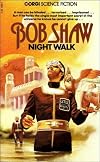
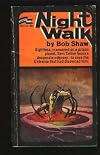
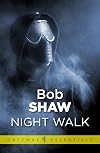
Nightwalk
by Bob Shaw
On This Page
Description
For 'refusing to co-operate' the Emm Luther Special Police took out Earth agent Sam Tallon's eyes and imprisoned him on a dark and eerie swamp from which nobody ever escaped.But then Tallon invented a way of seeing - ludicrous, agonizing, yet still a way to make escape possible. He 'saw' through the eyes of a bird. A dog, a woman guard and, later, even saw himself through the eyes of his enraged Lutheran pursuers. Madness and death were his constant companions as he schemed and fought and show more struggled for his life. Any other man would have gladly given up, but then, Sam Tallon had no choice, for he was the unfortunate possessor of the single most important secret in the universe - a secret which had to be returned to Earth, somehow. show lessTags
Recommendations
















Member Reviews
I have taken it upon myself to start a re-read of the works of Bob Shaw, an Irish SF writer who was a mainstay of the science fiction community from the 1950s, when he was one of the leading lights of Irish Fandom, up to his death in 1996. Awarded the Hugo for his fan writing twice (in 1979 and 1980), he made his first professional sale in 1954; this novel was his first, published in the USA in 1967 but not in the UK until nearly ten years later.
By the time he wrote Night Walk, in addition to his fifteen years contributing to fanzines, Shaw was writing in his Day Job as science correspondent for the Belfast Telegraph; this shows in his easy command of prose.
An agent for the Earth government, Sam Tallon, has come into possession of a show more great secret whilst on the colonised world of Emm Luther. But he is captured, and in the course of his arrest is blinded. Imprisoned in a supposedly escape-proof facility, he devises a method of seeing, using the eyes of other sentient beings around him - not only other people, but also dogs, cats and birds. His escape takes him across the single colonised continent of Emm Luther and back to Earth - but his capture is always likely, and his own side would consider him expendable if that was what it would take to retrieve the information literally locked away inside his head.
So what we have here is a science fictional spy thriller. There is a lot of technological ingenuity in this book, even if some of the neuroscience looks a bit shaky to us now. Shaw puts a lot of world-building into the book, and whilst this comes in the form of science fiction's traditional "expository lumps", these are dovetailed quite effectively into the story and come over as essential background rather than the author having to tediously explain stuff away. The novel doesn't betray its age too much, though there are some aspects of life in the twenty-second century which we would now look at as quaint. More concerning, there is one incident of violence against a woman, and also mentions of alcoholism that hint that Bob Shaw's background may not have been quite as warm and welcoming as was popularly thought. SF fandom was good at keeping its own secrets; Arthur C. Clarke's homosexuality was the best-kept secret that everyone in fandom knew about during the 1950s, and in later life Bob admitted to problems with alcohol. Other rumours regarding his personal life were not widely circulated, but they nonetheless were there. But detecting this in Night Walk will require a degree of reading between the lines that many readers will not, at this remove in time, be able to manage.
This should not put readers off. It is true that Night Walk relies on the same level of coincidental serendipity and convenient glossing over of practicalities that most thrillers need to allow their plots to work. Sam Tallon isn't the most sympathetic character, and the main romantic relationship in the book is a textbook example of Stockholm Syndrome, although this is introduced with an unexpected temporary switch of p.o.v. character that attempts to explain some of this. (Late in my reading, I suddenly realised that had this been filmed when it was a new novel, the best choice to play Sam Tallon would have been Patrick McGoohan - of The Prisoner fame - whose sometimes abrasive character and single-mindedness would be a very good fit to Tallon.)
Night Walk is a short read by modern standards - around 165 pages - and as long as its detractions aren't triggering, well worth looking for by those with an interest in either SF or thrillers. show less
By the time he wrote Night Walk, in addition to his fifteen years contributing to fanzines, Shaw was writing in his Day Job as science correspondent for the Belfast Telegraph; this shows in his easy command of prose.
An agent for the Earth government, Sam Tallon, has come into possession of a show more great secret whilst on the colonised world of Emm Luther. But he is captured, and in the course of his arrest is blinded. Imprisoned in a supposedly escape-proof facility, he devises a method of seeing, using the eyes of other sentient beings around him - not only other people, but also dogs, cats and birds. His escape takes him across the single colonised continent of Emm Luther and back to Earth - but his capture is always likely, and his own side would consider him expendable if that was what it would take to retrieve the information literally locked away inside his head.
So what we have here is a science fictional spy thriller. There is a lot of technological ingenuity in this book, even if some of the neuroscience looks a bit shaky to us now. Shaw puts a lot of world-building into the book, and whilst this comes in the form of science fiction's traditional "expository lumps", these are dovetailed quite effectively into the story and come over as essential background rather than the author having to tediously explain stuff away. The novel doesn't betray its age too much, though there are some aspects of life in the twenty-second century which we would now look at as quaint. More concerning, there is one incident of violence against a woman, and also mentions of alcoholism that hint that Bob Shaw's background may not have been quite as warm and welcoming as was popularly thought. SF fandom was good at keeping its own secrets; Arthur C. Clarke's homosexuality was the best-kept secret that everyone in fandom knew about during the 1950s, and in later life Bob admitted to problems with alcohol. Other rumours regarding his personal life were not widely circulated, but they nonetheless were there. But detecting this in Night Walk will require a degree of reading between the lines that many readers will not, at this remove in time, be able to manage.
This should not put readers off. It is true that Night Walk relies on the same level of coincidental serendipity and convenient glossing over of practicalities that most thrillers need to allow their plots to work. Sam Tallon isn't the most sympathetic character, and the main romantic relationship in the book is a textbook example of Stockholm Syndrome, although this is introduced with an unexpected temporary switch of p.o.v. character that attempts to explain some of this. (Late in my reading, I suddenly realised that had this been filmed when it was a new novel, the best choice to play Sam Tallon would have been Patrick McGoohan - of The Prisoner fame - whose sometimes abrasive character and single-mindedness would be a very good fit to Tallon.)
Night Walk is a short read by modern standards - around 165 pages - and as long as its detractions aren't triggering, well worth looking for by those with an interest in either SF or thrillers. show less
3/5
Bob Shaw must have been an optics aficionado or something - a consistent nucleation point for his works. Night Walk, Shaw's first novel, is kind of a spy thriller, hard SF mashup. Sam Tallon is a spy in the employ of the empire that controls Earth, who find himself in sole possession of the galactic coordinates to a new habitable world, a rarity with how random long distant space travel is. The problem is that Tallon has stolen the coordinates from a rival start-up empire, and buddy it's a long way back to Earth. Tallon believes that he has failed his mission once he's capture by the enemy, permanently blinded, and stuffed into a prison a thousand miles from the nearest space port. It's only then that we are introduced to the science show more that will serve as his crutch to get him home; a pair of spectacles that allow him to see through the eyes of nearby sentient creatures, human or otherwise.
I wish that Shaw had done a more thorough job of exploring the possibilities of this technology though. Far too often, Tallon remarks that he just "forgot" that he could switch his vision from his trusty dog companion to his assailants, or a a creature with a unique vantage point on the action. There are numerous occasions like this where I found myself internally screaming at Tallon to do something inventive with the central technology, and most of the time Shaw refuses to provide him with the IQ to do so. Right at the end Tallon also suggests that with the vision might come some amount of emotion or internal perspective. Okay, dang, that's cool, wish we could've explored that more too. None of this is helped by the fact that Tallon is typically insufferable, and not in way that's positive for the narrative or his character. He's catty and sarcastic from beginning to end.
Shaw has a very specific and pleasing way of blending semi-hard science with the narrative of his novels. He never lingers too long on exposition (à la Neal Stephenson) but always wants the reader to have a least a little bit of an idea as to how his ideas could work. It's a fine line and Shaw shows a habit of toeing it masterfully. He's creative with not just his science, but with his world building too - the little bit of it here was enjoyable. I love the struggle through the jungle surrounding the prison, I though the narrative was clear and concise, and I think that when he's really cooking Shaw can write characters that are a cut above his contemporaries.
Though I think in many ways Night Walk has a similar amount of problems as A Wreath of Stars, I think I prefer this work instinctively. My gut tells me there's more here to like, even if it doesn't live up to the potential that I see in it. show less
Bob Shaw must have been an optics aficionado or something - a consistent nucleation point for his works. Night Walk, Shaw's first novel, is kind of a spy thriller, hard SF mashup. Sam Tallon is a spy in the employ of the empire that controls Earth, who find himself in sole possession of the galactic coordinates to a new habitable world, a rarity with how random long distant space travel is. The problem is that Tallon has stolen the coordinates from a rival start-up empire, and buddy it's a long way back to Earth. Tallon believes that he has failed his mission once he's capture by the enemy, permanently blinded, and stuffed into a prison a thousand miles from the nearest space port. It's only then that we are introduced to the science show more that will serve as his crutch to get him home; a pair of spectacles that allow him to see through the eyes of nearby sentient creatures, human or otherwise.
I wish that Shaw had done a more thorough job of exploring the possibilities of this technology though. Far too often, Tallon remarks that he just "forgot" that he could switch his vision from his trusty dog companion to his assailants, or a a creature with a unique vantage point on the action. There are numerous occasions like this where I found myself internally screaming at Tallon to do something inventive with the central technology, and most of the time Shaw refuses to provide him with the IQ to do so. Right at the end Tallon also suggests that with the vision might come some amount of emotion or internal perspective. Okay, dang, that's cool, wish we could've explored that more too. None of this is helped by the fact that Tallon is typically insufferable, and not in way that's positive for the narrative or his character. He's catty and sarcastic from beginning to end.
Shaw has a very specific and pleasing way of blending semi-hard science with the narrative of his novels. He never lingers too long on exposition (à la Neal Stephenson) but always wants the reader to have a least a little bit of an idea as to how his ideas could work. It's a fine line and Shaw shows a habit of toeing it masterfully. He's creative with not just his science, but with his world building too - the little bit of it here was enjoyable. I love the struggle through the jungle surrounding the prison, I though the narrative was clear and concise, and I think that when he's really cooking Shaw can write characters that are a cut above his contemporaries.
Though I think in many ways Night Walk has a similar amount of problems as A Wreath of Stars, I think I prefer this work instinctively. My gut tells me there's more here to like, even if it doesn't live up to the potential that I see in it. show less
'Light of Other Days', Bob Shaw's 1966 near-debut short story (although he had been writing stories since 1954) is an acclaimed science fiction classic, a remarkable achievement in using one simple idea ('slow glass') to express human grief. It was justifiably shortlisted for a Nebula and a Hugo.
Shaw's first novel 'Night Walk' (1967) was then published. It shows the difficulty of moving from one idea and the short story to a full-blown pulp novel when you are still trapped in the tropes of a genre. It is a mixed bag but far from bad, just a mix of the imaginative and the unsatisfying.
On the uninspiring side, it is a somewhat cliched noir spy thriller transposed into space opera with the standard redhead love interest of the era and a show more villain in Cherkassky worthy of one of Mr. Bond's attention. Characterisation is locked into popular expectations of pulp sci fi purchases of the 1960s.
On the other hand, with Shaw still keeping down demanding day jobs while trying to make it as an author, quality does seem to keep trying to burst out of the formulae albeit in a somewhat unco-ordinated way. He may not be able to do a credible woman but he can do situation.
Just as his great story was interested in light so is his first novel, with the action centred on an intelligence agent using scarcely tested self-made technology to break out of prison and travel 1,000 miles across a wayward colony in order to escape ultimately to his home planet.
Our hero (Tallon) has been blinded while resisting arrest thanks to the sadistic Cherkassky. Sent to a high security prison, he manufactures techno-eyes, helped for her own reasons by a prison official (the love interest). The subsequent story depends entirely on this somewhat unstable gadgetry.
The blindness/resourcefulness equation is implausible but Shaw nevertheless creates a vigorous thriller out of the conceit. He is effective at deploying the interesting idea of the blind being able to plug into the vision of surrounding animals and people.
It is unusual to have a ruthless hero whose action depends on the sight of others nearby, including birds, dogs and rats. In this area, Shaw imaginatively excels at creating the spatial problems involved even if his story would not stand up over much to our current knowledge of animal perception.
It seems that Shaw suffered from eye issues at various times in his life. This might explain his concern with sight and light but this particular novel has few insights into blindness because our hero's ability to survive is, frankly, superhuman. The blindness is merely a trigger for thrills.
Every now and then, the novel has moments where it rises above the pulp framework - the time in the planetary penitientiary, an escape across treacherous marshlands, falling victim to a exploitative woman, various fights, the response to the possibility of long slow starvation lost in space.
This is a hard science space opera with a secondary technology sub-plot about interstellar travel that is barely under the control of its users. Towards the end, we are suitably bamboozled with advanced and no doubt impossible but highly imaginative astrophysics, essential for resolution.
The resolution is, of course, weak. I will not reveal it but the journey is far more interesting than the destination. I will not tell you if and how he gets the girl but I am sure you have guessed the answer to the 'if'. There is none of the emotional sophistication of the earlier short story.
Nevertheless, the book is still worth reading as an entertainment and because Shaw writes well regardless of implausibilities and pulp cliches. The implausibilities actually hang together quite well so that suspension of disbelief (necessary in any case in science fantasy) can be maintained. show less
Shaw's first novel 'Night Walk' (1967) was then published. It shows the difficulty of moving from one idea and the short story to a full-blown pulp novel when you are still trapped in the tropes of a genre. It is a mixed bag but far from bad, just a mix of the imaginative and the unsatisfying.
On the uninspiring side, it is a somewhat cliched noir spy thriller transposed into space opera with the standard redhead love interest of the era and a show more villain in Cherkassky worthy of one of Mr. Bond's attention. Characterisation is locked into popular expectations of pulp sci fi purchases of the 1960s.
On the other hand, with Shaw still keeping down demanding day jobs while trying to make it as an author, quality does seem to keep trying to burst out of the formulae albeit in a somewhat unco-ordinated way. He may not be able to do a credible woman but he can do situation.
Just as his great story was interested in light so is his first novel, with the action centred on an intelligence agent using scarcely tested self-made technology to break out of prison and travel 1,000 miles across a wayward colony in order to escape ultimately to his home planet.
Our hero (Tallon) has been blinded while resisting arrest thanks to the sadistic Cherkassky. Sent to a high security prison, he manufactures techno-eyes, helped for her own reasons by a prison official (the love interest). The subsequent story depends entirely on this somewhat unstable gadgetry.
The blindness/resourcefulness equation is implausible but Shaw nevertheless creates a vigorous thriller out of the conceit. He is effective at deploying the interesting idea of the blind being able to plug into the vision of surrounding animals and people.
It is unusual to have a ruthless hero whose action depends on the sight of others nearby, including birds, dogs and rats. In this area, Shaw imaginatively excels at creating the spatial problems involved even if his story would not stand up over much to our current knowledge of animal perception.
It seems that Shaw suffered from eye issues at various times in his life. This might explain his concern with sight and light but this particular novel has few insights into blindness because our hero's ability to survive is, frankly, superhuman. The blindness is merely a trigger for thrills.
Every now and then, the novel has moments where it rises above the pulp framework - the time in the planetary penitientiary, an escape across treacherous marshlands, falling victim to a exploitative woman, various fights, the response to the possibility of long slow starvation lost in space.
This is a hard science space opera with a secondary technology sub-plot about interstellar travel that is barely under the control of its users. Towards the end, we are suitably bamboozled with advanced and no doubt impossible but highly imaginative astrophysics, essential for resolution.
The resolution is, of course, weak. I will not reveal it but the journey is far more interesting than the destination. I will not tell you if and how he gets the girl but I am sure you have guessed the answer to the 'if'. There is none of the emotional sophistication of the earlier short story.
Nevertheless, the book is still worth reading as an entertainment and because Shaw writes well regardless of implausibilities and pulp cliches. The implausibilities actually hang together quite well so that suspension of disbelief (necessary in any case in science fantasy) can be maintained. show less
A heroic Journey where a Terran agent is captured, tortured maimed and mutilated but after technical innovation, wins his way home with good intelligence, killing his satanic torturer on the way. Pretty engrossing for a book written in 1967.
Some neat ideas, and a short, faced paced read make Bob Shaws first novel worth checking out. This is a science fiction spy thriller, prison escape novel with a twist: the protagonist is a blind man can see only with the eyes of someone (or some animal) nearby.
First solo novel by 1970-1980s SF writer. This particular book was pub. in 1967 and showed great promise of more to come. No surprise that he followed it with many years of SF novels. This Northern Irish writer also won a few SF awards.
I really like this one. It's a spy novel on a colony planet that has poor relations with Earth. Great ideas. Good pacing.
I really like this one. It's a spy novel on a colony planet that has poor relations with Earth. Great ideas. Good pacing.
Blind guy regains sight
gets his friends and lovers killed
remains a jackass.
gets his friends and lovers killed
remains a jackass.
Members
- Recently Added By
Talk Discussions
Past Discussions
Night Walk by Bob Shaw in Science Fiction Fans (May 2011)
Author Information

118+ Works 6,002 Members
Some Editions
Series
Belongs to Publisher Series
Common Knowledge
- Canonical title
- Nightwalk
- Original title
- Night Walk
- Original publication date
- 1967
- People/Characters
- Sam Tallon
- First words*
- Una notte d'inverno, gelida e tagliente, era scesa su Nuova Wittenburg, chiudendo nella sua morsa le vie desolate, accumulando strati irregolari di ghiaccio sul deserto di cemento del terminal spaziale.
- Last words*
- (Click to show. Warning: May contain spoilers.)E sarebbero stati molti.
- Original language*
- Inglés
*Some information comes from Common Knowledge in other languages. Click "Edit" for more information.
Classifications
Statistics
- Members
- 359
- Popularity
- 87,679
- Reviews
- 8
- Rating
- (3.36)
- Languages
- 7 — Dutch, English, French, German, Italian, Portuguese, Spanish
- Media
- Paper, Ebook
- ISBNs
- 12
- ASINs
- 16