The Gulf: The Making of An American Sea
by Jack E. Davis
On This Page
Description
Significant beyond tragic oil spills and hurricanes, the Gulf has historically been one of the world's most bounteous marine environments, supporting human life for millennia. Based on the premise that nature lies at the center of human existence, Davis takes readers on a compelling and, at times, wrenching journey from the Florida Keys to the Texas Rio Grande, along marshy shorelines and majestic estuarine bays, both beautiful and life-giving, though fated to exploitation by esurient oil show more men and real-estate developers. Davis shares previously untold stories, parading a vast array of historical characters past our view: sports-fishermen, presidents, Hollywood executives, New England fishers, the Tabasco king, a Texas shrimper, and a New York architect who caught the "big one". Sensitive to the imminent effects of climate change, and to the difficult task of rectifying the assaults of recent centuries, this book suggests how a penetrating examination of a single region's history can inform the country's path ahead. -- show lessTags
Recommendations



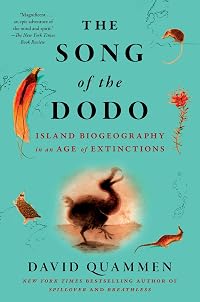

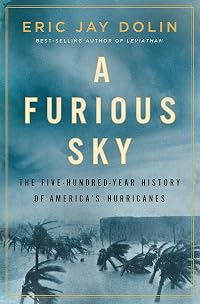
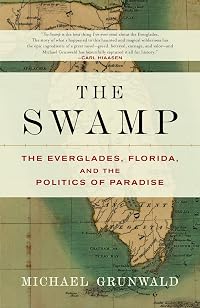
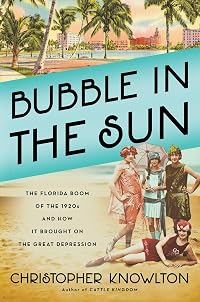












Member Reviews
Gulf: The Making of An American Sea
Author: Jack Emerson Davis
Publisher: Live Right Publishing Corporation
Publishing Date: 2017
Pgs: 592
Dewey: 909.096364 DAV
Disposition: Irving Public Library - South Campus - Irving, TX
=======================================
REVIEW MAY CONTAIN SPOILERS
Summary:
First peoples, Spaniards, French, British, and Americans...Fish, crustaceans, tourism, manufacturing, and oil, welcome to the Gulf of Mexico.
From its formation to the 21st century, an all-encompassing attempt to give a complete look at what the Gulf was, what it is, and what it will be in the future. Artists and fishermen, Sailors, soldiers, colonizers, and conquistadors. Slaves and slave traders. Pirates and oilmen. Oil spills and hurricanes...and show more fertilizer fueled anoxic dead zones...and real estate.
It is a beautiful place full of life, provided we don’t ultimately kill it with pollution and disregard for what it truly is.
_________________________________________
Genre:
Science
Ecology
Coastal Ecology
Coastal Ecosystems
Natural History
US History
Oceanography
Why this book:
I’ve been to the Gulf more than to any other saltwater anywhere in the world.
_________________________________________
Cover Art:
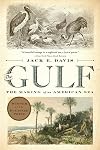
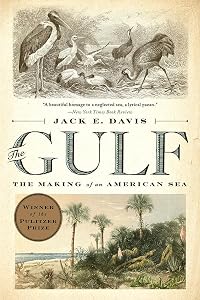
Well done. It captures its subject.
Favorite Character:
The Gulf, itself, is the main character here.
The more I read about him the more I like Walter Anderson. Artist. Philosopher. He was a couple of hours in a rowboat away from civilization while Thoreau was close enough to Emerson’s cottage that someone was doing his laundry for him.
Plot Holes/Out of Character:
Only the plot hole is in our history books. The Karrankawa being cannibals was all myth and allegory. But this was still taught in Texas history books as recently as the 1980s.
The First Peoples were farming and ranching before Spaniards and Anglos arrived. I’m staring at you hard, Texas History textbook.
So...dinosaurs didn’t make oil and the brontosaurus was in fact a different -osaurus with somebody else’s head attached? Geez. History books lying to us.
Favorite Quote:
Walter Anderson: On the wave comes in, magic. What glowing sequences of color, what strange convolutions of form.
Favorite Concept:
Official British policy stating that North America was empty had a gigantic influence on the way Americans looked at the history of the continent, the first peoples, and Anglo, French, and Spanish complicity in genocide.
The storms and the birth of the National Weather Service.
Hmm Moments:
Imagine if the Spanish and French crowns had been united around the time of the founding of New Orleans and what that would have meant, not only for America, North and South, but also for Europe's future?
Padre Island history has its own cast of interesting characters: The Singer Sewing Machine Company, cattle ranches, shipwrecks, Audie Murphy, Union sympathizers ran off by the Confederates, The Devil's Elbow, and $80,000 in Old Spanish Gold buried somewhere in the dunes.
The stories of the wrecks and the salvage yards on Key West preying on ships was pretty interesting. Could’ve been a history all to itself.
WTF Moments:
Thomas Jefferson and American assistance to the Haitian Slave Revolt against Napoleonic rule are vastly understated in history. But instead of being a cause celeb movement for freedom, it was cynicism in the form of thwarting Napoleon's ambitions.
Andrew Jackson's actions as regards the escaped slave fort on the Apalachicola River in Spanish Territory are classic Ugly American. The baiting and using the fort’s response as justification for its destruction are horrible.
Can't believe that Jefferson supported Jackson's military adventurism, outside of orders, in Florida, and Jackson's desire to move against and conquer Cuba. Monroe and those in Washington, ill at Jackson's antics, held the line. Although, they did snatch up Florida when they got the chance. And they did that in the face of, Southerners with designs not only on Cuba, but Venezuela, and Brazil beyond that.
Meh / PFFT Moments:
After commenting on how First People’s history is treated in both history books and by the peoples of today’s Gulf, the author gives them comparative short shrift. The book was already long and wordy. Giving First People’s history more than a cursory glance would’ve been appreciated. Instead, they are largely a strawman construct that the coming invaders wash over.
The Sigh:
European colonization and exploration meant ignoring, discounting, destroying, and forgetting the First People's cultures of the Gulf region in both the U.S. and Mexico.
Panfilo de Narváez was both arrogant and stupid, failing to learn the lessons of those who came before him. The idea of letting his ships get out of sight so that he could march northward from Tampa Bay to Apalachicola is just damn foolish.
Ecological professional arrogance impacting the study of deep-sea life, I'm shocked looks side-eyed at every scientist who appears on Fox News.
St. Petersburg’s history of sewage dumping is a repeating story, ad nauseam, from the Keys all the way around to Brownsville.
Juxtaposition:
Winslow Homer's truth about the Gulf may have been accurate in the early 1900s. Today it's bedraggled, overrun with electric lines and tourist traps, and its industrial and oil industry scars. Shabby, but I love the Gulf. ...but the brown water is the brown water.
And overfishing comes along with Americans seemingly intent on killing the Golden Goose. Fishing and birding to extinction. Though, is it. Or is the population die off as a function of America and her industries using the Gulf like a toilet that will flush away all the ills that we pour into it.
Mosquitoes and disease both as big a shaper of golf culture as fishing in oil.
Oilmen and wildcatters as fine upstanding American heroes is laughable. That's a feet-of-clay bunch of guys being elevated by history just because if ever there was one. From Texas history, you'd think that every one of them found oil, instead of the success rate being one in 100,000 or higher.
Land Barons destroying the real Florida; filling in the bays, cutting down the mangrove. Come on down, move to paradise, as we destroy paradise.
Turn the fishers against each other, and go right on polluting. It’s classic and we're too stupid to stop it as it happens over and over, all across the American experience.
The Unexpected:
I never considered that the Gulf is on a par with the Old West as helping define America beyond the colonial era.
_________________________________________
Last Page Sound:
From an American Sea, teeming with fish to a shithole drowning in oil, waste, and pollution. Welcome to the Gulf. Come swim in the effluvium.
Questions I’m Left With:
If the Spanish were truly planning colonies, where were the fishermen? Where were the tradesmen? This was all about silver and gold.
Conclusions I’ve Drawn:
I submit that the unreconstructed Southerner is the forebearer of many of the problems we have today in America.
Author Assessment:
I would read other Eco-Histories by this author.
======================================= show less
Author: Jack Emerson Davis
Publisher: Live Right Publishing Corporation
Publishing Date: 2017
Pgs: 592
Dewey: 909.096364 DAV
Disposition: Irving Public Library - South Campus - Irving, TX
=======================================
REVIEW MAY CONTAIN SPOILERS
Summary:
First peoples, Spaniards, French, British, and Americans...Fish, crustaceans, tourism, manufacturing, and oil, welcome to the Gulf of Mexico.
From its formation to the 21st century, an all-encompassing attempt to give a complete look at what the Gulf was, what it is, and what it will be in the future. Artists and fishermen, Sailors, soldiers, colonizers, and conquistadors. Slaves and slave traders. Pirates and oilmen. Oil spills and hurricanes...and show more fertilizer fueled anoxic dead zones...and real estate.
It is a beautiful place full of life, provided we don’t ultimately kill it with pollution and disregard for what it truly is.
_________________________________________
Genre:
Science
Ecology
Coastal Ecology
Coastal Ecosystems
Natural History
US History
Oceanography
Why this book:
I’ve been to the Gulf more than to any other saltwater anywhere in the world.
_________________________________________
Cover Art:
Well done. It captures its subject.
Favorite Character:
The Gulf, itself, is the main character here.
The more I read about him the more I like Walter Anderson. Artist. Philosopher. He was a couple of hours in a rowboat away from civilization while Thoreau was close enough to Emerson’s cottage that someone was doing his laundry for him.
Plot Holes/Out of Character:
Only the plot hole is in our history books. The Karrankawa being cannibals was all myth and allegory. But this was still taught in Texas history books as recently as the 1980s.
The First Peoples were farming and ranching before Spaniards and Anglos arrived. I’m staring at you hard, Texas History textbook.
So...dinosaurs didn’t make oil and the brontosaurus was in fact a different -osaurus with somebody else’s head attached? Geez. History books lying to us.
Favorite Quote:
Walter Anderson: On the wave comes in, magic. What glowing sequences of color, what strange convolutions of form.
Favorite Concept:
Official British policy stating that North America was empty had a gigantic influence on the way Americans looked at the history of the continent, the first peoples, and Anglo, French, and Spanish complicity in genocide.
The storms and the birth of the National Weather Service.
Hmm Moments:
Imagine if the Spanish and French crowns had been united around the time of the founding of New Orleans and what that would have meant, not only for America, North and South, but also for Europe's future?
Padre Island history has its own cast of interesting characters: The Singer Sewing Machine Company, cattle ranches, shipwrecks, Audie Murphy, Union sympathizers ran off by the Confederates, The Devil's Elbow, and $80,000 in Old Spanish Gold buried somewhere in the dunes.
The stories of the wrecks and the salvage yards on Key West preying on ships was pretty interesting. Could’ve been a history all to itself.
WTF Moments:
Thomas Jefferson and American assistance to the Haitian Slave Revolt against Napoleonic rule are vastly understated in history. But instead of being a cause celeb movement for freedom, it was cynicism in the form of thwarting Napoleon's ambitions.
Andrew Jackson's actions as regards the escaped slave fort on the Apalachicola River in Spanish Territory are classic Ugly American. The baiting and using the fort’s response as justification for its destruction are horrible.
Can't believe that Jefferson supported Jackson's military adventurism, outside of orders, in Florida, and Jackson's desire to move against and conquer Cuba. Monroe and those in Washington, ill at Jackson's antics, held the line. Although, they did snatch up Florida when they got the chance. And they did that in the face of, Southerners with designs not only on Cuba, but Venezuela, and Brazil beyond that.
Meh / PFFT Moments:
After commenting on how First People’s history is treated in both history books and by the peoples of today’s Gulf, the author gives them comparative short shrift. The book was already long and wordy. Giving First People’s history more than a cursory glance would’ve been appreciated. Instead, they are largely a strawman construct that the coming invaders wash over.
The Sigh:
European colonization and exploration meant ignoring, discounting, destroying, and forgetting the First People's cultures of the Gulf region in both the U.S. and Mexico.
Panfilo de Narváez was both arrogant and stupid, failing to learn the lessons of those who came before him. The idea of letting his ships get out of sight so that he could march northward from Tampa Bay to Apalachicola is just damn foolish.
Ecological professional arrogance impacting the study of deep-sea life, I'm shocked looks side-eyed at every scientist who appears on Fox News.
St. Petersburg’s history of sewage dumping is a repeating story, ad nauseam, from the Keys all the way around to Brownsville.
Juxtaposition:
Winslow Homer's truth about the Gulf may have been accurate in the early 1900s. Today it's bedraggled, overrun with electric lines and tourist traps, and its industrial and oil industry scars. Shabby, but I love the Gulf. ...but the brown water is the brown water.
And overfishing comes along with Americans seemingly intent on killing the Golden Goose. Fishing and birding to extinction. Though, is it. Or is the population die off as a function of America and her industries using the Gulf like a toilet that will flush away all the ills that we pour into it.
Mosquitoes and disease both as big a shaper of golf culture as fishing in oil.
Oilmen and wildcatters as fine upstanding American heroes is laughable. That's a feet-of-clay bunch of guys being elevated by history just because if ever there was one. From Texas history, you'd think that every one of them found oil, instead of the success rate being one in 100,000 or higher.
Land Barons destroying the real Florida; filling in the bays, cutting down the mangrove. Come on down, move to paradise, as we destroy paradise.
Turn the fishers against each other, and go right on polluting. It’s classic and we're too stupid to stop it as it happens over and over, all across the American experience.
The Unexpected:
I never considered that the Gulf is on a par with the Old West as helping define America beyond the colonial era.
_________________________________________
Last Page Sound:
From an American Sea, teeming with fish to a shithole drowning in oil, waste, and pollution. Welcome to the Gulf. Come swim in the effluvium.
Questions I’m Left With:
If the Spanish were truly planning colonies, where were the fishermen? Where were the tradesmen? This was all about silver and gold.
Conclusions I’ve Drawn:
I submit that the unreconstructed Southerner is the forebearer of many of the problems we have today in America.
Author Assessment:
I would read other Eco-Histories by this author.
======================================= show less
A highly readable history of the Gulf of Mexico looking at it's beginnings as a virtual Eden on Earth with a population entirely in harmony with their environment to today when that population speeds quietly and wealthily to it's own doom due to ignoring the environment it fights rather that nurturing. A sober look at the dangers facing our children if Big Business is successful in getting Government Regulation out of their lives and more and more pollution into ours.
The Gulf is that awkward kind of history, about a large body of water that in the worse form can amount to a collection of trivia and an authors travelogue. But Jack E. Davis (professor of History, U of FL) takes the task seriously and provides something more substantial and unforgettable. There are micro-histories about individual towns and islands, environmental histories of mango forests and fisheries, and biographies of artists and explorers. The Gulf itself is the main character stretching from South Texas to Key West it emerges in distinct form in beautiful prose. The story moves chronologically through time describing the abundance followed by the fall post World War II and the ongoing environmental calamity brought on by show more unimpeded growth. One only has to view Google Maps in places like Coral Gables to see what hath been wrought, once a lush mango forest teeming with life and now veneered with concrete, chemicals and canals. With that said, this is being called an "environmental book" but that is hard to avoid when writing about a geographic place, the environment is central to any place. It is more than an "environmental book", though that aspect does leave an impression this is a complete and whole work about the Gulf that anyone who has been there will be glad to have read to gain a better understanding of this amazing place. show less
This was a fascinating account of the Gulf of Mexico. It blended early history of how it was formed, how it affected, Spanish, British, and French explorers, how so much of the coast came under United States control, and why this so important to America’s economic future.
It of course also covers everything man has done to destroy it.
The oil spills
Chemical spills
Massive amounts of chemicals, fertilizers, and other industrial waste that is routinely dumped- either directly in it, or by rivers flowing into it.
The author isn’t to preachy about how evil humans are and how it would great if we all went back to living the way we did 400 years ago, although he would probably advocate for it.
The problem with environmentalists and other show more nature alarmists is that to get their point across, or get heard they tend to blow up or exaggerate or always go with the worst possible scenario of what will happen, or what has happened.
This strategy is fine if what you are predicting is going to take place a hundred years or more from now, if the claim is in 5 years this is what will happen, but if the evidence doesn’t support what is said people don’t take the environmentalists seriously.
After the Deepwater Horizon explosion every science expert in the world painted an apocalyptic future of the Gulf and then turned out to be somewhat, mostly or completely wrong, or had wildly overblown the outcome. Again this is why there is so much doubt when hearing from “the experts” about the environment, climate change, the oceans health etc.
This is also not a Democrat or Republican is issue, and to make it such doesn’t help the situation. The Deepwater Horizon explosion took place when Obama was president and had filled the EPA with liberal doomsday sayers, and yet, the EPA was nearly as complicit in the disaster and the aftermath as BP.
Back to the book, the author does an great job showing the oftentimes gradual destroying of the coast in every state on the Gulf, and explaining what and why it is important to the future and health of the Gulf.
I highly recommend this book. show less
It of course also covers everything man has done to destroy it.
The oil spills
Chemical spills
Massive amounts of chemicals, fertilizers, and other industrial waste that is routinely dumped- either directly in it, or by rivers flowing into it.
The author isn’t to preachy about how evil humans are and how it would great if we all went back to living the way we did 400 years ago, although he would probably advocate for it.
The problem with environmentalists and other show more nature alarmists is that to get their point across, or get heard they tend to blow up or exaggerate or always go with the worst possible scenario of what will happen, or what has happened.
This strategy is fine if what you are predicting is going to take place a hundred years or more from now, if the claim is in 5 years this is what will happen, but if the evidence doesn’t support what is said people don’t take the environmentalists seriously.
After the Deepwater Horizon explosion every science expert in the world painted an apocalyptic future of the Gulf and then turned out to be somewhat, mostly or completely wrong, or had wildly overblown the outcome. Again this is why there is so much doubt when hearing from “the experts” about the environment, climate change, the oceans health etc.
This is also not a Democrat or Republican is issue, and to make it such doesn’t help the situation. The Deepwater Horizon explosion took place when Obama was president and had filled the EPA with liberal doomsday sayers, and yet, the EPA was nearly as complicit in the disaster and the aftermath as BP.
Back to the book, the author does an great job showing the oftentimes gradual destroying of the coast in every state on the Gulf, and explaining what and why it is important to the future and health of the Gulf.
I highly recommend this book. show less
Written by an environmental historian, The Gulf tells the stories of the impact the Gulf of Mexico has had on America, but more so on the impacts Americans have had on the Gulf. As the book progresses through it's 530 pages and reaches the twentieth century, the story takes on a grimmer tone as those impacts become more and more detrimental.
The book is divided into four parts, and progresses from the days of the conquistadors up to the present day. I really enjoyed the history and was saddened (and maddened) by the chronicling of our agriculture and industry's impacts on the Gulf in the second half of the book.
This reminded me a lot of The Death and Life of the Great Lakes, which I read a couple of years back, but in that book the show more focus is more directly on man's impact on nature, and is more reportorial, whereas this book takes a broader, historian's view. show less
The book is divided into four parts, and progresses from the days of the conquistadors up to the present day. I really enjoyed the history and was saddened (and maddened) by the chronicling of our agriculture and industry's impacts on the Gulf in the second half of the book.
This reminded me a lot of The Death and Life of the Great Lakes, which I read a couple of years back, but in that book the show more focus is more directly on man's impact on nature, and is more reportorial, whereas this book takes a broader, historian's view. show less
This is a well-written and researched book, and I recommend it, but I didn't get as much out of the second half as I should have because (a) I am terrible at geography and (b) it's not really my subject. For me it felt long and a bit repetitive, but were I as interested in ecology and conservation as the author is I think I would have loved it. (The writing really is top-notch.) This is a Gayla problem, not a book problem!
A magnificent study on the history and abuse of the Gulf of Mexico. A tremendous amount of research went into this (both primary and secondary sources). We start with the Spanish conquistadors right down to the present time. There is over fishing, over hunting (birds mostly), massive pollution and many other issues. Though he is not specifically trying to make this point this is a powerful testimony to the damage mankind does to nature and if left alone these problems seem to correct themselves if people are not involved. It is all about human greed. A great book.
Members
- Recently Added By
Lists

Top Five Books of 2021
604 works; 181 members

Nature Writing
33 works; 3 members

Bitter Southerner Summer Reading Roundup
198 works; 8 members
Author Information

6 Works 692 Members
Jack E. Davis was born on July 13, 1956. He received bachelor's and master's degree from the University of South Florida and a Ph.D. from Brandeis University. He taught at the University of Alabama at Birmingham, the University of Jordan, and Eckerd College. He is currently a professor at the University of Florida. He has written several books show more including Race Against Time: Culture and Separation in Natchez Since 1930, which won the Charles S. Sydnor Prize for the best book in southern history, and The Gulf: The Making of an American Sea, which won the Kirkus Prize and the 2018 Pulitzer Prize for history. He also edited three anthologies and a collection of writings by Marjory Stoneman Douglas. (Bowker Author Biography) show less
Awards and Honors
Awards
Distinctions
Notable Lists
Common Knowledge
- Canonical title
- The Gulf: The Making of An American Sea
- Original publication date
- 2017-03-14
- People/Characters
- Frank Hamilton Cushing; Edward Avery McIhenney; Walter Anderson
- Important places
- Gulf of Mexico
Classifications
- Genres
- Science & Nature, History, Nonfiction, General Nonfiction
- DDC/MDS
- 909.096364 — History & geography History World history Other Geographic Classifications Air And Water
- LCC
- F296 .D38 — Local History of the United States, Canada and Latin America United States local history Gulf States. West Florida
- BISAC
Statistics
- Members
- 482
- Popularity
- 62,737
- Reviews
- 16
- Rating
- (4.04)
- Languages
- English
- Media
- Paper, Audiobook, Ebook
- ISBNs
- 5
- ASINs
- 5