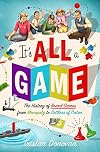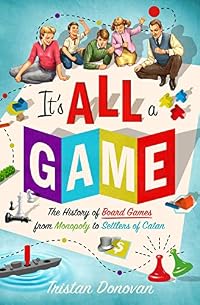
It's All a Game: The History of Board Games from Monopoly to Settlers of Catan
by Tristan Donovan
On This Page
Description
"Board games have been with us longer than even the written word. But what is it about this pastime that continues to captivate us well into the age of smartphones and instant gratification? In It's All a Game, British journalist and renowned games expert Tristan Donovan opens the box on the incredible and often surprising history and psychology of board games. He traces the evolution of the game across cultures, time periods, and continents, from the paranoid Chicago toy genius behind show more classics like Operation and Mouse Trap, to the role of Monopoly in helping prisoners of war escape the Nazis, and even the scientific use of board games today to teach artificial intelligence how to reason and how to win. With these compelling stories and characters, Donovan ultimately reveals why board games have captured hearts and minds all over the world for generations"-- show lessTags
Recommendations












Member Reviews
Roll the dice. Do not pass go, do not collect $200. I love playing board games and It's All A Game - A Short History of Board Games by Tristan Donovan was a good read.
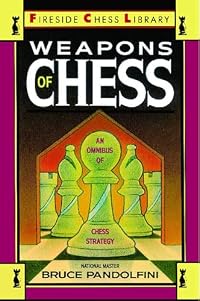
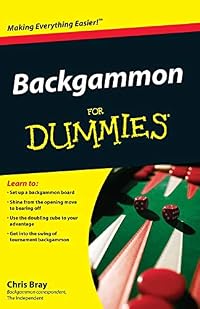
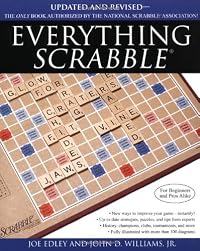
All the expected games are there: Chess, Backgammon, Trivial Pursuit, Scrabble, Cluedo, Pictionary and Monopoly and much more. I appreciated reading the history behind the formation of these games and learning about new - to me - ones.
The section on war games was interesting, however I was surprised and secretly excited to hear mention of The Ungame and Scruples.
I enjoyed reading about the evolution of my favourite game Monopoly, however was embarrassed to learn it was created in the USA first. I played the British version and ignorantly believed the American game board show more was the 'inferior' version. Whoops!
"By 2016 [Monopoly] had sold more than 250 million copies worldwide. It is, by far, the bestselling branded board game ever created and no other game, except maybe chess, has so imprinted itself on the world's collective consciousness." Page 95
I also enjoyed learning about the formation of Simon & Schuster on page 155:
Richard Simon was at his aunt's house for dinner in 1924 and she asked if there was a collection of cross words she could buy for her daughter.
"Together with his friend Lincoln Schuster, Simon founded a publishing company called Simon & Schuster" to publish a collection of cross word puzzles. The book became a sensation and "Simon & Schuster was on its way to becoming one of the biggest book publishers in the United States."
I read It's All A Game during Non Fiction November (hosted by A Book Olive) and it left me wanting to play boardgames again. Unfortunately I don't have any willing participants close by so now I'm playing Backgammon on Board Game Arena. My profile name is Carpe_Librum (naturally) if anyone wants to play.
Roll the dice.
* Copy courtesy of Allen & Unwin * show less
All the expected games are there: Chess, Backgammon, Trivial Pursuit, Scrabble, Cluedo, Pictionary and Monopoly and much more. I appreciated reading the history behind the formation of these games and learning about new - to me - ones.
The section on war games was interesting, however I was surprised and secretly excited to hear mention of The Ungame and Scruples.
I enjoyed reading about the evolution of my favourite game Monopoly, however was embarrassed to learn it was created in the USA first. I played the British version and ignorantly believed the American game board show more was the 'inferior' version. Whoops!
"By 2016 [Monopoly] had sold more than 250 million copies worldwide. It is, by far, the bestselling branded board game ever created and no other game, except maybe chess, has so imprinted itself on the world's collective consciousness." Page 95
I also enjoyed learning about the formation of Simon & Schuster on page 155:
Richard Simon was at his aunt's house for dinner in 1924 and she asked if there was a collection of cross words she could buy for her daughter.
"Together with his friend Lincoln Schuster, Simon founded a publishing company called Simon & Schuster" to publish a collection of cross word puzzles. The book became a sensation and "Simon & Schuster was on its way to becoming one of the biggest book publishers in the United States."
I read It's All A Game during Non Fiction November (hosted by A Book Olive) and it left me wanting to play boardgames again. Unfortunately I don't have any willing participants close by so now I'm playing Backgammon on Board Game Arena. My profile name is Carpe_Librum (naturally) if anyone wants to play.
Roll the dice.
* Copy courtesy of Allen & Unwin * show less
Donovan's collection of essays about the development of board games is made up of two rather awkwardly intermingled halves. Roughly half the essays are about specific games: what led up to their development, how they achieved success, and then either how people have continued to build upon their cultural familiarity or how our culture's appreciation of them has shifted over time. The other half are about changing cultural values and how they are applied to board games over time, perhaps best typified by, but not limited to, a specific popular title. Though they may not sound very different at first, one set of essays satisfies, and one does not.
The essays driven by a single game are very satisfying because they tell coherent stories. show more By and large, these are found in the first half of the book - covering chess, backgammon, Monopoly, the Game of Life, Scrabble, and Clue - and while they occasionally divert into tangents, those seem connected to the original topic. The backgammon chapter examines its fall from grace with the celebrity set, who moved their attention to Texas Hold 'Em poker; the Scrabble chapter increasingly becomes about the development and purpose of Scrabble dictionaries. These little offshoots make sense. They are compelling. They clarify rather than confuse.
The second set of essays isn't nearly as attention-grabbing, mostly because they lack that cohesive, unified story. Sometimes they feel like they've each been bolted together from three or four smaller articles that couldn't stand on their own. The Risk chapter is only minimally about Risk, and far more about the use of war board games to strategize real conflict, from Kriegsspiel on up. The Trivial Pursuit chapter contextualizes Trivial Pursuit as just one game in a big social shift in the '80s to create "grown-up" board games. The Twister chapter somewhat clunkily veers from the sexual implications of Twister to the very real sexuality of Monogamy. Only two of these broader-style essays really come through clearly: the one about ancient games at the very beginning, and the one about the rise of German games at the end. For whatever reason, those have a cultural point to make that carries them above the specific games involved; they feel meaningful in a way that, say, an examination of the development of machine learning does not.
To Donovan's credit, there's a recognizable pattern in the essay titles. Almost all of the essays that focus directly on a specific game centralize that title, while others provide a specific game or games only in a subtitle. Still, a casual browser could be excused for making assumptions.
Overall, I recommend the book, especially as a library read. Just don't be surprised if the coherency feels like it starts to dwindle away the longer you go on. show less
The essays driven by a single game are very satisfying because they tell coherent stories. show more By and large, these are found in the first half of the book - covering chess, backgammon, Monopoly, the Game of Life, Scrabble, and Clue - and while they occasionally divert into tangents, those seem connected to the original topic. The backgammon chapter examines its fall from grace with the celebrity set, who moved their attention to Texas Hold 'Em poker; the Scrabble chapter increasingly becomes about the development and purpose of Scrabble dictionaries. These little offshoots make sense. They are compelling. They clarify rather than confuse.
The second set of essays isn't nearly as attention-grabbing, mostly because they lack that cohesive, unified story. Sometimes they feel like they've each been bolted together from three or four smaller articles that couldn't stand on their own. The Risk chapter is only minimally about Risk, and far more about the use of war board games to strategize real conflict, from Kriegsspiel on up. The Trivial Pursuit chapter contextualizes Trivial Pursuit as just one game in a big social shift in the '80s to create "grown-up" board games. The Twister chapter somewhat clunkily veers from the sexual implications of Twister to the very real sexuality of Monogamy. Only two of these broader-style essays really come through clearly: the one about ancient games at the very beginning, and the one about the rise of German games at the end. For whatever reason, those have a cultural point to make that carries them above the specific games involved; they feel meaningful in a way that, say, an examination of the development of machine learning does not.
To Donovan's credit, there's a recognizable pattern in the essay titles. Almost all of the essays that focus directly on a specific game centralize that title, while others provide a specific game or games only in a subtitle. Still, a casual browser could be excused for making assumptions.
Overall, I recommend the book, especially as a library read. Just don't be surprised if the coherency feels like it starts to dwindle away the longer you go on. show less
This book is subtitled “The History of Board Games from Monopoly to Settlers of Catan,” however, it starts its story well before that, with games found in ancient tombs and with chess. I think “history” is a bit of a misnomer. While there is lots of history here, each chapter of the book has a strong theme and can stand alone. The chapters often go well beyond the straightforward subject of board games to encompass subjects such as the grown in computer intelligence—first to take on and beat the world’s best chess players—then to win at the more complex game of Go. The chapter on Trivial Pursuit highlights the rise in games that appeal to adults. The chapter that starts out talking about the 1960s sensation, Twister, show more expands to cover several games that have sexual aspects. The chapter on Scrabble addresses the international differences in how Scrabble is played and how it is now a game of memorization rather than vocabulary.
The author traces the development of chess from its beginnings, through regional and cultural variations in how pieces looked and moved, to its modern form played all over the world. Later we see how more modern games, such as The Game of Life and Clue, have also evolved, with updates and variants intended to help them appeal to new generations of players. As the book shows, this strategy doesn’t always work, and some of the failures are amusing.
The book also focuses on the creators and other personalities in the board games industry, such as the memorable Marvin Glass, who led the trend toward more action-oriented 3-dimensional games such as Mouse Trap. Sadly, some of the best game creators never received the credit or financial success they were due, as their ideas were popularized by others, who took the credit, or who signed away their ideas for a pittance rather than the millions that could have been theirs.
At well under 300 pages, this book can hardly be comprehensive. No doubt some of your favorites will be left out. But what is here is engrossing, entertaining, and highly educational. The author writes extremely well, and his serious treatment of the subject is a complete winner. Happily, a new generation seems to have re-discovered board games and embraced new ones, such as Settlers of Catan or Pandemic, and the face-to-face interaction they provide with family and friends. It seems that despite computers and the internet, board games more popular than ever. show less
The author traces the development of chess from its beginnings, through regional and cultural variations in how pieces looked and moved, to its modern form played all over the world. Later we see how more modern games, such as The Game of Life and Clue, have also evolved, with updates and variants intended to help them appeal to new generations of players. As the book shows, this strategy doesn’t always work, and some of the failures are amusing.
The book also focuses on the creators and other personalities in the board games industry, such as the memorable Marvin Glass, who led the trend toward more action-oriented 3-dimensional games such as Mouse Trap. Sadly, some of the best game creators never received the credit or financial success they were due, as their ideas were popularized by others, who took the credit, or who signed away their ideas for a pittance rather than the millions that could have been theirs.
At well under 300 pages, this book can hardly be comprehensive. No doubt some of your favorites will be left out. But what is here is engrossing, entertaining, and highly educational. The author writes extremely well, and his serious treatment of the subject is a complete winner. Happily, a new generation seems to have re-discovered board games and embraced new ones, such as Settlers of Catan or Pandemic, and the face-to-face interaction they provide with family and friends. It seems that despite computers and the internet, board games more popular than ever. show less
I thought this book would be a natural fit for me. I love board games and I love history. So, history of board games? YES PLEASE. It turns out I was right. This was a great overview of the hobby and talked about games ive never heard of before but hope to get a chance to play soon.
This was well written and thought provoking, yet entertaining and enjoyable. I would recommend it to anyone. 4.5 out of 5 stars.
This was well written and thought provoking, yet entertaining and enjoyable. I would recommend it to anyone. 4.5 out of 5 stars.
A fun niche history of various popular board games as well as how trends in culture influenced their development (and vice versa). Donovan's writing is smooth and easy reading and there's plenty to enjoy here whether you're super into table top games or if you just have fond memories from childhood. My only problem was some weird copy editing things; the chapter on Clue misuses "gentile" twice in a context where it should have been either "gentle" or "genteel". Other than that small issue, I highly recommend the book if it tickles your fancy at all.
Tristan Donovan seems to have two ambitions for this book. First, he wants to show that the history of board games is as long, as interesting and as quirky as human history itself. Board games, he shows, have been an important part of just about every human society. Second, he wants to develop a more general explanation for why board games have played such an important role in people's lives. He is much more successful at the first ambition, though he certainly raises many thought-provoking points about how games have enlarged and enriched human experience. Bottom line: this is a great place to start for someone who enjoys tabletop gaming and is interested to learn more about it.
Fun book about the history of board games. If you are a gamer, you probably should brush up on the history of your favorite past time. This book covers the origins of Monopoly, Risk, and all those plastic board games you played as a kid (Mouse Trap, Operation). The parts I found interesting were the ancient history of board games going back to the Egyptians. There was a lot about Chess since that is an old and extremely influential game.
Overall, good read and well written. Excellent book for anyone who enjoys games and/or history.
Overall, good read and well written. Excellent book for anyone who enjoys games and/or history.
Members
- Recently Added By
Lists

Gaming
7 works; 1 member
Author Information
5 Works 442 Members
Tristan Donovan is the author of two widely praised books, Replay: The History of Video Games and Fizz: How Soda Shook Up the World. His journalism has appeared in many major newspapers, magazines, and websites. He has a degree in ecology.
Classifications
- Genres
- Nonfiction, General Nonfiction, History
- DDC/MDS
- 794 — Arts & recreation Recreation, sports, and performing arts Chess, Computer Games / Card Games
- LCC
- GV1312 .D66 — Geography, Anthropology and Recreation Recreation. Leisure Recreation. Leisure Games and amusements Indoor games and amusements Board games. Move games
- BISAC
Statistics
- Members
- 166
- Popularity
- 196,587
- Reviews
- 11
- Rating
- (3.75)
- Languages
- English
- Media
- Paper, Ebook
- ISBNs
- 6
- ASINs
- 2