
Tim Clare
Author of The Honours
Series
Works by Tim Clare
Tagged
Common Knowledge
Members
Reviews
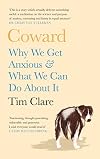
I keep picking up books on mental health from the library's new acquisitions shelf. Most of them leave me unmoved (e.g [b:You Are Not Alone|61067592|You Are Not Alone|Ken Duckworth|https://i.gr-assets.com/images/S/compressed.photo.goodreads.com/books/1676741529l/61067592._SY75_.jpg|96522961], [b:Overcoming Health Anxiety: A Self-Help Guide Using Cognitive Behavioural Techniques|58957155|Overcoming Health Anxiety A Self-Help Guide Using Cognitive Behavioural Techniques|David show more Veale|https://i.gr-assets.com/images/S/compressed.photo.goodreads.com/books/1631196437l/58957155._SX50_.jpg|14572368], [b:The Anxiety Sisters' Survival Guide: How You Can Become More Hopeful, Connected, and Happy|57341776|The Anxiety Sisters' Survival Guide How You Can Become More Hopeful, Connected, and Happy|Abbe Greenberg|https://i.gr-assets.com/images/S/compressed.photo.goodreads.com/books/1616479598l/57341776._SX50_.jpg|89747092]), but sooner or later one was bound to have more impact. After borrowing [b:Coward: Why We Get Anxious & What We Can Do About It|59134904|Coward Why We Get Anxious & What We Can Do About It|Tim Clare|https://i.gr-assets.com/images/S/compressed.photo.goodreads.com/books/1633252547l/59134904._SY75_.jpg|93254465], I realised that I'd read two fantasy novels by the same author: [b:The Honours|21947239|The Honours|Tim Clare|https://i.gr-assets.com/images/S/compressed.photo.goodreads.com/books/1434369719l/21947239._SY75_.jpg|41252195] and [b:The Ice House|41870053|The Ice House (The Honours #2)|Tim Clare|https://i.gr-assets.com/images/S/compressed.photo.goodreads.com/books/1540922891l/41870053._SY75_.jpg|65360837]. Both are great, but the latter includes such intense and gruesome scenes of body horror that it gave me nightmares. I should have guessed that experience of severe anxiety was required to write something that fucked up - which I mean as a sort of compliment.
[b:Coward: Why We Get Anxious & What We Can Do About It|59134904|Coward Why We Get Anxious & What We Can Do About It|Tim Clare|https://i.gr-assets.com/images/S/compressed.photo.goodreads.com/books/1633252547l/59134904._SY75_.jpg|93254465] is Tim Clare's memoir of attempts to alleviate his intense anxiety disorder; he states up front that it isn't a self-help book, polemic, or manifesto. Yet I found it more compelling and (hopefully) useful than any of the mental health self-help books I've read in recent years. Notably, Clare only mentions offhand reading such books himself and they do not form one of his treatments. The book is structured around the different things he tried to reduce his anxiety, including but not limited to antidepressants, cold showers, magic mushrooms, hypnosis, exercise, and a device that delivered small electric shocks to his brain. I had to admire his willingness to attempt all these things and to write in what feels like a painfully honest manner about his mental illness. I also appreciated the measured tone and grasp of nuance when discussing the complexities of academic research around anxiety, especially the point that genetics is probabilistic.
Contrary to my usual practise of liberally quoting when reviewing nonfiction, I feel much less comfortable doing so from this book. Although I found it very intellectually satisfactory, it's an unusual instance of a book on mental illness also eliciting emotional reactions. Quoting parts that I found familiar from my own extensive experience of anxiety seems too revealing and personal. Titling the book 'Coward' is in itself a brave move on Clare's part, as the word encapsulates the intense shame of anxiety that he articulates so vividly. His discussion of this shame is far easier for me to understand and relate to than self-help book encouragements to share your mental health story in public, become an advocate, etc, etc. I struggle to understand and admit even to myself, let alone anyone else, the impact that anxiety has on my life. (Would I read so many books if I wasn't always anxious? I simply don't want to think about it!) Thus it was tempting to try and distance myself from Clare's experiences, on the pretext that I don't have panic attacks as bad as his. Yet his descriptions of the chronically anxious mindset were too close to home for this, so I found myself thinking: he really committed to finding a way to recover. Could I let go of the idea that I need anxiety to keep me safe and do the same?
Despite the heavy topic, Clare is also an amusing writer and this made me laugh:
For the most part, though, it was an intense experience reading [b:Coward: Why We Get Anxious & What We Can Do About It|59134904|Coward Why We Get Anxious & What We Can Do About It|Tim Clare|https://i.gr-assets.com/images/S/compressed.photo.goodreads.com/books/1633252547l/59134904._SY75_.jpg|93254465]. Clare writes powerfully about living with anxiety and the lengths he was willing to go to in an effort to alleviate it. The conclusion is encouraging, as some combination of the things he tried made him feel a lot better; at the time of writing he hadn't had a panic attack for two years. He doesn't claim that what he did would work for anyone, but nonetheless offers hope that if you keep trying something could help. I'm going to give the following insights further thought:
[b:Coward: Why We Get Anxious & What We Can Do About It|59134904|Coward Why We Get Anxious & What We Can Do About It|Tim Clare|https://i.gr-assets.com/images/S/compressed.photo.goodreads.com/books/1633252547l/59134904._SY75_.jpg|93254465] is Tim Clare's memoir of attempts to alleviate his intense anxiety disorder; he states up front that it isn't a self-help book, polemic, or manifesto. Yet I found it more compelling and (hopefully) useful than any of the mental health self-help books I've read in recent years. Notably, Clare only mentions offhand reading such books himself and they do not form one of his treatments. The book is structured around the different things he tried to reduce his anxiety, including but not limited to antidepressants, cold showers, magic mushrooms, hypnosis, exercise, and a device that delivered small electric shocks to his brain. I had to admire his willingness to attempt all these things and to write in what feels like a painfully honest manner about his mental illness. I also appreciated the measured tone and grasp of nuance when discussing the complexities of academic research around anxiety, especially the point that genetics is probabilistic.
Contrary to my usual practise of liberally quoting when reviewing nonfiction, I feel much less comfortable doing so from this book. Although I found it very intellectually satisfactory, it's an unusual instance of a book on mental illness also eliciting emotional reactions. Quoting parts that I found familiar from my own extensive experience of anxiety seems too revealing and personal. Titling the book 'Coward' is in itself a brave move on Clare's part, as the word encapsulates the intense shame of anxiety that he articulates so vividly. His discussion of this shame is far easier for me to understand and relate to than self-help book encouragements to share your mental health story in public, become an advocate, etc, etc. I struggle to understand and admit even to myself, let alone anyone else, the impact that anxiety has on my life. (Would I read so many books if I wasn't always anxious? I simply don't want to think about it!) Thus it was tempting to try and distance myself from Clare's experiences, on the pretext that I don't have panic attacks as bad as his. Yet his descriptions of the chronically anxious mindset were too close to home for this, so I found myself thinking: he really committed to finding a way to recover. Could I let go of the idea that I need anxiety to keep me safe and do the same?
Despite the heavy topic, Clare is also an amusing writer and this made me laugh:
The Wim Hof Method's dirty little secret - the reason, I suspect, it has gained such popularity - is that it's basically autoerotic asphyxiation without the wanking.
For the most part, though, it was an intense experience reading [b:Coward: Why We Get Anxious & What We Can Do About It|59134904|Coward Why We Get Anxious & What We Can Do About It|Tim Clare|https://i.gr-assets.com/images/S/compressed.photo.goodreads.com/books/1633252547l/59134904._SY75_.jpg|93254465]. Clare writes powerfully about living with anxiety and the lengths he was willing to go to in an effort to alleviate it. The conclusion is encouraging, as some combination of the things he tried made him feel a lot better; at the time of writing he hadn't had a panic attack for two years. He doesn't claim that what he did would work for anyone, but nonetheless offers hope that if you keep trying something could help. I'm going to give the following insights further thought:
The more we cling to certainty, the less amenable we are to the benign doubt that leads to change.show less
[...]
When you ask an anxiety sufferer to give up their fear, what new reality are you offering in exchange?
[...]
Psychologist and founder of person-centred therapy Carl Rogers put it like this: 'The curious paradox is that when I accept myself as I am, then I change. I believe that I have learned this from my clients as well as within my own experience - that we cannot change, we cannot move away from what we are, until we thoroughly accept what we are. Then change seems to come about almost unnoticed.'
[...]
What I've discovered is that the opposite of anxiety isn't comfort. It's curiosity. It's appetite. It's moving towards things that make you feel alive and embracing them, while doing your best to accept that things will go wrong.
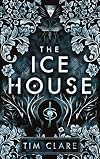
[b:The Ice House|41870053|The Ice House (The Honours #2)|Tim Clare|https://i.gr-assets.com/images/S/compressed.photo.goodreads.com/books/1540922891l/41870053._SY75_.jpg|65360837] is a rather different and more ambitious novel than [b:The Honours|21947239|The Honours|Tim Clare|https://i.gr-assets.com/images/S/compressed.photo.goodreads.com/books/1434369719l/21947239._SY75_.jpg|41252195], which I really enjoyed. While [b:The Honours|21947239|The Honours|Tim show more Clare|https://i.gr-assets.com/images/S/compressed.photo.goodreads.com/books/1434369719l/21947239._SY75_.jpg|41252195] is almost entirely set in an isolated Norfolk mansion over a few months, [b:The Ice House|41870053|The Ice House (The Honours #2)|Tim Clare|https://i.gr-assets.com/images/S/compressed.photo.goodreads.com/books/1540922891l/41870053._SY75_.jpg|65360837] ranges over hundreds of years and vast expanses of a magical fantasy realm. There was a lot in [b:The Ice House|41870053|The Ice House (The Honours #2)|Tim Clare|https://i.gr-assets.com/images/S/compressed.photo.goodreads.com/books/1540922891l/41870053._SY75_.jpg|65360837] that I also enjoyed, however on balance I preferred [b:The Honours|21947239|The Honours|Tim Clare|https://i.gr-assets.com/images/S/compressed.photo.goodreads.com/books/1434369719l/21947239._SY75_.jpg|41252195]. To begin with the strengths of [b:The Ice House|41870053|The Ice House (The Honours #2)|Tim Clare|https://i.gr-assets.com/images/S/compressed.photo.goodreads.com/books/1540922891l/41870053._SY75_.jpg|65360837]: there is a lot of excellent world-building. I appreciated the vivid and atmospheric weirdness of the fantasy realm, which includes some brilliantly memorable details like the Mucorians. Delphine, who I loved in the first book, shares protagonist duties with another feral young girl, Hagar, who also constantly chooses violence. Both of them are elderly women in girl's bodies: Delphine sheds 70 years to become 16 again when crossing into the fantastical world and Hagar has looked 10 for four hundred years. The plot was thrilling and action-packed. I also strongly approved of Delphine turning out to be a lesbian and responding to being de-aged by banging her best friend. Excellent characterisation there.
I read [b:The Ice House|41870053|The Ice House (The Honours #2)|Tim Clare|https://i.gr-assets.com/images/S/compressed.photo.goodreads.com/books/1540922891l/41870053._SY75_.jpg|65360837] within a day and had a lot of fun doing so. I have two notable reservations about it. The first is the structure. Hagar's chapters kept moving backwards in time, a conceit that I have mixed feelings about in fiction. While it can be used very effectively (e.g. by John Courtney Grimwood in [b:Effendi|368858|Effendi (Arabesk)|Jon Courtenay Grimwood|https://i.gr-assets.com/images/S/compressed.photo.goodreads.com/books/1391897147l/368858._SY75_.jpg|2704923] if I recall correctly), tension is often undermined by the knowledge that this character must survive events unscathed. I'm not sure the flashbacks always worked here. Hagar's perspective certainly provides more lore for the fantastical world and background for the conflict Delphine gets caught up in. I don't think all her chapters were strictly necessary, though. Showing the scene in which Hagar and Delphine meet from both sides at different points felt superfluous, for example. Perhaps part of the issue was that few of Hagar's flashback scenes developed her character; most focused on others and filled in background context. Hagar herself remained something of an enigma all the way to the end.
My other reservation is the level of body horror. I like to think I'm fairly desensitised to this, having rewatched all three series of Hannibal so many times, but to be honest I had a horrible nightmare after reading [b:The Ice House|41870053|The Ice House (The Honours #2)|Tim Clare|https://i.gr-assets.com/images/S/compressed.photo.goodreads.com/books/1540922891l/41870053._SY75_.jpg|65360837]. The 'honours' the previous book is titled after are a form of immortality, which makes the honoured person impervious to ageing and able to heal from practically any physical harm. It also allows them to form a bond with a servant who then feels all of their pain. As [b:The Ice House|41870053|The Ice House (The Honours #2)|Tim Clare|https://i.gr-assets.com/images/S/compressed.photo.goodreads.com/books/1540922891l/41870053._SY75_.jpg|65360837] features quite a few characters with these powers in conflict with each other, it is full of violence, torture, and appalling injuries. These involve but are not limited to vivisection, attacks by rats, burning, stabbing, decapitation, and a brutal caesarean section. While reading, I thought this was perhaps a little much without dwelling on it. Then the night after finishing the book, my subconscious supplied a nightmare of being trapped in a train carriage with two people who could telekinetically control blood, their attack dog, and some of my friends. The blood-telekinetics choked each of my friends to death on their own blood and set their dog on me. I hid under a train seat, bleeding heavily as most of my right hand had been bitten off. I had the choice to die like my friends or become one of the blood-telekinetic murderers myself, which woke me up. Not a pleasant dream!
So even if you don't usually bat an eyelid at gore, be aware that the sheer density of body horror in [b:The Ice House|41870053|The Ice House (The Honours #2)|Tim Clare|https://i.gr-assets.com/images/S/compressed.photo.goodreads.com/books/1540922891l/41870053._SY75_.jpg|65360837] could still give you nightmares. Although the relentless bloody violence is certainly evocative, at times it distracts from events. Certain scenes could have benefited from a little less vicious fighting and a little more dialogue. Nonetheless, [b:The Ice House|41870053|The Ice House (The Honours #2)|Tim Clare|https://i.gr-assets.com/images/S/compressed.photo.goodreads.com/books/1540922891l/41870053._SY75_.jpg|65360837] is a successful sequel to [b:The Honours|21947239|The Honours|Tim Clare|https://i.gr-assets.com/images/S/compressed.photo.goodreads.com/books/1434369719l/21947239._SY75_.jpg|41252195] and sustains an impressively high level of melodrama throughout. show less
I read [b:The Ice House|41870053|The Ice House (The Honours #2)|Tim Clare|https://i.gr-assets.com/images/S/compressed.photo.goodreads.com/books/1540922891l/41870053._SY75_.jpg|65360837] within a day and had a lot of fun doing so. I have two notable reservations about it. The first is the structure. Hagar's chapters kept moving backwards in time, a conceit that I have mixed feelings about in fiction. While it can be used very effectively (e.g. by John Courtney Grimwood in [b:Effendi|368858|Effendi (Arabesk)|Jon Courtenay Grimwood|https://i.gr-assets.com/images/S/compressed.photo.goodreads.com/books/1391897147l/368858._SY75_.jpg|2704923] if I recall correctly), tension is often undermined by the knowledge that this character must survive events unscathed. I'm not sure the flashbacks always worked here. Hagar's perspective certainly provides more lore for the fantastical world and background for the conflict Delphine gets caught up in. I don't think all her chapters were strictly necessary, though. Showing the scene in which Hagar and Delphine meet from both sides at different points felt superfluous, for example. Perhaps part of the issue was that few of Hagar's flashback scenes developed her character; most focused on others and filled in background context. Hagar herself remained something of an enigma all the way to the end.
My other reservation is the level of body horror. I like to think I'm fairly desensitised to this, having rewatched all three series of Hannibal so many times, but to be honest I had a horrible nightmare after reading [b:The Ice House|41870053|The Ice House (The Honours #2)|Tim Clare|https://i.gr-assets.com/images/S/compressed.photo.goodreads.com/books/1540922891l/41870053._SY75_.jpg|65360837]. The 'honours' the previous book is titled after are a form of immortality, which makes the honoured person impervious to ageing and able to heal from practically any physical harm. It also allows them to form a bond with a servant who then feels all of their pain. As [b:The Ice House|41870053|The Ice House (The Honours #2)|Tim Clare|https://i.gr-assets.com/images/S/compressed.photo.goodreads.com/books/1540922891l/41870053._SY75_.jpg|65360837] features quite a few characters with these powers in conflict with each other, it is full of violence, torture, and appalling injuries. These involve but are not limited to vivisection, attacks by rats, burning, stabbing, decapitation, and a brutal caesarean section. While reading, I thought this was perhaps a little much without dwelling on it. Then the night after finishing the book, my subconscious supplied a nightmare of being trapped in a train carriage with two people who could telekinetically control blood, their attack dog, and some of my friends. The blood-telekinetics choked each of my friends to death on their own blood and set their dog on me. I hid under a train seat, bleeding heavily as most of my right hand had been bitten off. I had the choice to die like my friends or become one of the blood-telekinetic murderers myself, which woke me up. Not a pleasant dream!
So even if you don't usually bat an eyelid at gore, be aware that the sheer density of body horror in [b:The Ice House|41870053|The Ice House (The Honours #2)|Tim Clare|https://i.gr-assets.com/images/S/compressed.photo.goodreads.com/books/1540922891l/41870053._SY75_.jpg|65360837] could still give you nightmares. Although the relentless bloody violence is certainly evocative, at times it distracts from events. Certain scenes could have benefited from a little less vicious fighting and a little more dialogue. Nonetheless, [b:The Ice House|41870053|The Ice House (The Honours #2)|Tim Clare|https://i.gr-assets.com/images/S/compressed.photo.goodreads.com/books/1540922891l/41870053._SY75_.jpg|65360837] is a successful sequel to [b:The Honours|21947239|The Honours|Tim Clare|https://i.gr-assets.com/images/S/compressed.photo.goodreads.com/books/1434369719l/21947239._SY75_.jpg|41252195] and sustains an impressively high level of melodrama throughout. show less
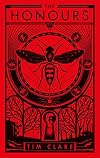
I picked up [b:The Honours|21947239|The Honours|Tim Clare|https://i.gr-assets.com/images/S/compressed.photo.goodreads.com/books/1434369719l/21947239._SY75_.jpg|41252195] from the library shelf because I liked the cover design. The blurb seemed sufficiently intriguing to give it a try and I’m very glad that I did. It’s essentially a combination of two bits of media I’ve very much enjoyed: [b:The Glass Books of the Dream Eaters|44930|The Glass Books of the Dream Eaters (Miss Temple, show more Doctor Svenson, and Cardinal Chang, #1)|Gordon Dahlquist|https://i.gr-assets.com/images/S/compressed.photo.goodreads.com/books/1432992499l/44930._SY75_.jpg|292054] and the netflix series Stranger Things. The setting, mid-1930s Norfolk, may differ but many delightful elements overlap: supernatural happenings, nefarious plots, secret tunnels, teenagers investigating, improvised weapons, and alarming monsters including demobats wearing clothes . There is an impressive sense of menace throughout, as the setting has a suitably creepy atmosphere, the adult characters are enigmatic, and the action scenes are thrilling. I don’t think it has much depth, but is huge fun.
What really makes the novel shine is the protagonist Delphine. She is a magnificently feral 13-year-old who was expelled from boarding school and left to run around a creepy isolated estate unsupervised. The chaos she creates while investigating the weirdness of the place is truly delightful.I was particularly amused by the scene in which the Doctor complains of constantly finding dead rats. In some fantastical novels with a solitary teenage protagonist, I find it frustrating that they don’t know what’s going on. Somehow in [b:The Honours|21947239|The Honours|Tim Clare|https://i.gr-assets.com/images/S/compressed.photo.goodreads.com/books/1434369719l/21947239._SY75_.jpg|41252195] this was not an issue at all. Possibly because of the third person narration, claustrophobic setting, and/or sense that adults don’t know what the hell is happening either? Whatever it is, I really enjoyed following Delphine’s adventures. The background conspiracy is of less immediate interest than all the immediate risks she runs by skulking around and answering back to everyone.
Only two petty details distracted me slightly from Delphine’s shenanigans. The first is the inclusion of Mars bars in a 1935 setting. This seemed implausible, but according to Wikipedia they were first sold in Slough in 1932. With a little more research, I even found a picture of a 1930s Mars wrapper. Live and learn!The other is the use of ‘vesperi’ as both the singular and plural of the demobats/sentient bat monsters’ name. Surely the singular should be something like vespero? Neither of these niggles prevented me from greatly enjoying [b:The Honours|21947239|The Honours|Tim Clare|https://i.gr-assets.com/images/S/compressed.photo.goodreads.com/books/1434369719l/21947239._SY75_.jpg|41252195] and I definitely want to read the sequel. show less
What really makes the novel shine is the protagonist Delphine. She is a magnificently feral 13-year-old who was expelled from boarding school and left to run around a creepy isolated estate unsupervised. The chaos she creates while investigating the weirdness of the place is truly delightful.
Only two petty details distracted me slightly from Delphine’s shenanigans. The first is the inclusion of Mars bars in a 1935 setting. This seemed implausible, but according to Wikipedia they were first sold in Slough in 1932. With a little more research, I even found a picture of a 1930s Mars wrapper. Live and learn!
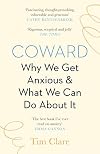
This is an important book, not just because of the amount of work and research that went into making it but for the first-hand account of someone on an incredible journey to "fix" his own mental health for the love of his daughter. I just can't fathom how much bravery and strength it took to go through all this and then to share it with us, to lay bare his own fragility for us all to see. Absolute hero.
The access to scientists and researchers is great. It is insightful, inspiring and show more disheartening in equal measure to hear how much and how little we know. To me this makes it all the better, there are no easy answers and the author is honest about it. There are countless self-help authors/charlatans out there that will tell you differently so if that's what you are looking for go somewhere else. If you want an honest look at where the current scientific research is then this is the book for you.
If you want to know more about one person’s struggle with debilitating panic attacks, it’s impact on his life, and his family all told with funny self-awareness then this is well worth getting. show less
The access to scientists and researchers is great. It is insightful, inspiring and show more disheartening in equal measure to hear how much and how little we know. To me this makes it all the better, there are no easy answers and the author is honest about it. There are countless self-help authors/charlatans out there that will tell you differently so if that's what you are looking for go somewhere else. If you want an honest look at where the current scientific research is then this is the book for you.
If you want to know more about one person’s struggle with debilitating panic attacks, it’s impact on his life, and his family all told with funny self-awareness then this is well worth getting. show less
Awards

Statistics
- Works
- 9
- Members
- 277
- Popularity
- #83,812
- Rating
- 3.6
- Reviews
- 8
- ISBNs
- 28
- Languages
- 1