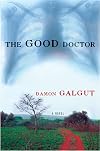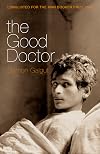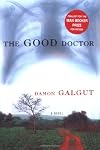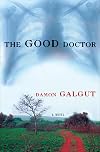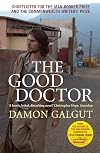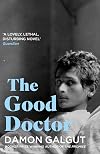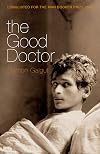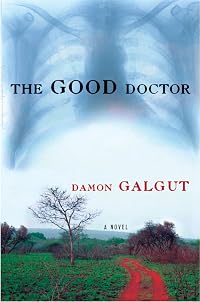
The Good Doctor
by Damon Galgut
On This Page
Description
When Laurence Waters arrives at his rural hospital posting, Frank is instantly suspicious. Laurence is everything Frank is not - young and optimistic. The two become uneasy friends, while the rest of the staff in the deserted hospital view Laurence with a mixture of awe and mistrust.Tags
Recommendations








Member Reviews
I don't quite know what I was expecting from this book, but I'm sure it wasn't 21st century Graham Greene, which is what it turns out to be: a crumbling, semi-abandoned town with only one bar; a jaded narrator with a failed marriage and more sense of guilt than moral courage, who drinks too much whisky and has sexual relationships with the wrong women; a doomed young idealist; a sinister secret police colonel; and even a dodgy ex-dictator. All that's missing is the drunken priest.
What's different, of course, is that Galgut picks up a peculiarly South African context. The nameless, unfinished new-town in the middle of nowhere was the capital of one of the "homelands" created in the last years of the old South Africa as a failed alibi for show more apartheid, a pretend-state that only just lasted long enough for its first president, the "Brigadier", to be deposed for corruption. The narrator, Frank, is a doctor, the inadequate son of a celebrated TV medic, and is working in the pretend-town's pretend-hospital, a place with hardly any patients and no proper facilities to treat the few who do show up. But then the idealistic, newly-qualified Laurence turns up, and decides that they ought to go out and look for people to help. Which would be fine, but in the meantime it looks as though the Brigadier might be back, and Frank's former c/o from his military service days has arrived in town to run a counter-insurgency operation. Tragedy assured.
Some nice bits of observation, and an unusual setting, but Galgut doesn't really seem to do anything to take the formula beyond its well-established Greene template. show less
What's different, of course, is that Galgut picks up a peculiarly South African context. The nameless, unfinished new-town in the middle of nowhere was the capital of one of the "homelands" created in the last years of the old South Africa as a failed alibi for show more apartheid, a pretend-state that only just lasted long enough for its first president, the "Brigadier", to be deposed for corruption. The narrator, Frank, is a doctor, the inadequate son of a celebrated TV medic, and is working in the pretend-town's pretend-hospital, a place with hardly any patients and no proper facilities to treat the few who do show up. But then the idealistic, newly-qualified Laurence turns up, and decides that they ought to go out and look for people to help. Which would be fine, but in the meantime it looks as though the Brigadier might be back, and Frank's former c/o from his military service days has arrived in town to run a counter-insurgency operation. Tragedy assured.
Some nice bits of observation, and an unusual setting, but Galgut doesn't really seem to do anything to take the formula beyond its well-established Greene template. show less
Frank is doctor, but the good doctor is Laurence who comes to the remote unnamed African hospital and wants to make changes. Frank is a little inert. He is happy, in his own way, just existing, keeping under the radar and treading water. The hospital barely functions other than to make referrals to the bigger hospital in the next town. Laurence wants to tidy it up, get things moving. He is an idealist. He is only on a one year placement, so intends to get things accomplished.
In this book we learn about Frank. And he is an interesting character. He isnt exactly a nice man, but through some fantastic and restrained writing we learn about him and by applying his own logic we could excuse him for his poor judgement.
"So there was nothing show more to face up to in the end, except the ridiculous figure that was myself. Heavy, long past his prime, gasping for breath. Standing doubled over in the centre of this deserted theatre, watched only by rotten canvas and rusted barbed wire."
This sums up Frank, really. Yet we are in his head and we want good things for him. We want him to live up to his fathers expectations of him, we want him to find love and be happy and excel in his work. But we know that he has to want this too for him to do anything about his life. 4.5 stars. show less
In this book we learn about Frank. And he is an interesting character. He isnt exactly a nice man, but through some fantastic and restrained writing we learn about him and by applying his own logic we could excuse him for his poor judgement.
"So there was nothing show more to face up to in the end, except the ridiculous figure that was myself. Heavy, long past his prime, gasping for breath. Standing doubled over in the centre of this deserted theatre, watched only by rotten canvas and rusted barbed wire."
This sums up Frank, really. Yet we are in his head and we want good things for him. We want him to live up to his fathers expectations of him, we want him to find love and be happy and excel in his work. But we know that he has to want this too for him to do anything about his life. 4.5 stars. show less
The Good Doctor was an entertaining book with fascinating lessons from the experiences of the titular character. It was a story of hope and misery, love and rejection, political success and defeat in the shifting reality of the post-apartheid South African steppes. The well wrought narrative is fleshed out in sparse prose.
The newly hired, spotless, idealistic doctor, Laurence Waters, is greeted by Frank Eloff, a burned-out spouse, doctor, and person, on his first day on staff. They reside in two different psychic realms despite sharing a subpar bedroom and doing medical duties in an understaffed clinic that the new political administration ignored. Frank's pessimistic evaluation of Laurence is that "he won't endure." Their story and show more the denouement held my interest throughout the novel. show less
The newly hired, spotless, idealistic doctor, Laurence Waters, is greeted by Frank Eloff, a burned-out spouse, doctor, and person, on his first day on staff. They reside in two different psychic realms despite sharing a subpar bedroom and doing medical duties in an understaffed clinic that the new political administration ignored. Frank's pessimistic evaluation of Laurence is that "he won't endure." Their story and show more the denouement held my interest throughout the novel. show less
Set in rural South Africa after the collapse of apartheid, The Good Doctor is a taut narrative that leaves the reader guessing. Frank Eloff is a physician whose vocation is to help people, but he seems incapable of generosity and is suspicious and disdainful of young, outgoing Laurence Waters, who arrives at Frank's delapidated hospital in an isolated outpost town brimming with enthusiasm and new ideas. Laurence wants to improve services and reach out to the local populace. But fear is real, people are slow to change and ghosts from the past haunt the countryside. Frank, self-involved and weighed down with guilt, resists and discourages Laurence's passions. Unwittingly, Laurence places himself in the middle of a military campaign to show more track down a former dictator. Tragically, his idealism cannot save him. An atmosphere of threat and menace hovers over the entire narrative. Riveting and suspenseful. show less
The book's narrator, Dr. Frank Eloff junior, is on the staff in an under-equipped, understaffed hospital in the former capital of one of the former homelands shortly after the end of apartheid. Little happens at the crumbling hospital, and indeed in the town and Frank, escaping from his former life in Pretoria, likes it that way.
Another white doctor, Laurence Waters, arrives at the hospital to do a year's community service. Laurence is everything Frank is not: young, enthusiastic and idealistic, his presence causes ripples Frank resents. However, since Frank and Laurence must share a room, they form an uneasy bond.
This brief synopsis makes it sound as if "The Good Doctor" simply contrasts youthful optimism with middle-aged cynicism, show more but this is a subtler novel than that. South Africa's dark past haunts the novel through the unknown whereabouts of the homeland's former dictator and the arrival of the army in the town, which brings back unpleasant memories for Frank. There is also Frank's toe curling visit to his father to drive the point home about how the country has changed.
Galgut's ability to sustain an air of unease, tension and claustrophobia throughout the book is most impressive - the atmosphere is in an odd way reminiscent of "The Lord of the Flies". The prose is as stark as the bush landscape it describes, vaguely reminding me from a stylistic point of view of J G Ballard novels like "Cocaine Nights".
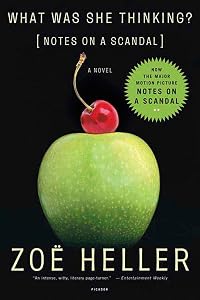
This is a very fine novel indeed and worthy of its Booker nomination back in 2003. Why the dreadful "Vernon God Little" got the nod that year on a shortlist that contained this, "Brick Lane" and "Notes on a Scandal" I will never understand. show less
Another white doctor, Laurence Waters, arrives at the hospital to do a year's community service. Laurence is everything Frank is not: young, enthusiastic and idealistic, his presence causes ripples Frank resents. However, since Frank and Laurence must share a room, they form an uneasy bond.
This brief synopsis makes it sound as if "The Good Doctor" simply contrasts youthful optimism with middle-aged cynicism, show more but this is a subtler novel than that. South Africa's dark past haunts the novel through the unknown whereabouts of the homeland's former dictator and the arrival of the army in the town, which brings back unpleasant memories for Frank. There is also Frank's toe curling visit to his father to drive the point home about how the country has changed.
Galgut's ability to sustain an air of unease, tension and claustrophobia throughout the book is most impressive - the atmosphere is in an odd way reminiscent of "The Lord of the Flies". The prose is as stark as the bush landscape it describes, vaguely reminding me from a stylistic point of view of J G Ballard novels like "Cocaine Nights".
This is a very fine novel indeed and worthy of its Booker nomination back in 2003. Why the dreadful "Vernon God Little" got the nod that year on a shortlist that contained this, "Brick Lane" and "Notes on a Scandal" I will never understand. show less
(7.5) There is a lethargy in the writing of this book that sets the tone for this apathetic group of Drs and the very rundown hospital. Laurence's idealism is admirable but he meets resistance from the existing staff.
Well-written and I suspect realistic portrayal of a forgotten, neglected village hospital and the impact this has on the staff, who are also realistic about the unliklihood of change.
Well-written and I suspect realistic portrayal of a forgotten, neglected village hospital and the impact this has on the staff, who are also realistic about the unliklihood of change.
This is my second reading of this book, and it didn't move me nearly as much this time. It is the story of a young, idealistic doctor (Laurence) who arrives at a run-down, largely ignored hospital in the months following the end of apartheid. There, he meets an older, more cynical doctor (Frank). The story evolves around the differing viewpoints and perspectives between the two men. As violence erupts, the choices they make reflect their understanding of life under a new regime. It is extremely well written but lacks a sense of real tension.
Members
- Recently Added By
Lists

Favourite Booker Prize contenders
73 works; 21 members

Best African Books
126 works; 46 members
Booker Prize
491 works; 62 members

International IMPAC Dublin Literary Award
179 works; 6 members
Booker Prize Shortlist: Titles Read
103 works; 10 members

Man Booker Prize Longlist 2003
23 works; 3 members

BBC World Book Club
265 works; 5 members
Author Information

14+ Works 3,846 Members
Awards and Honors
Common Knowledge
- Canonical title
- The Good Doctor
- Original title
- The Good Doctor
- Alternate titles*
- De goede arts
- Original publication date
- 2003
- Important places
- South Africa
- Epigraph
- 'Hundreds of miles of desolate, monotonous, burnt-up steppe cannot induce such deep depression as one man when he sits and talks, and one does not know when he will go on.' Chekhov.
- First words
- The first time I saw him I thought, he won't last.
- Blurbers
- Healy, Dermot; Dyer, Geoff; Brink, André
- Original language*
- Engels
- Disambiguation notice
- Please do not combine with the tv show of the same name.
*Some information comes from Common Knowledge in other languages. Click "Edit" for more information.
Classifications
Statistics
- Members
- 733
- Popularity
- 38,507
- Reviews
- 27
- Rating
- (3.53)
- Languages
- 10 — Dutch, English, French, German, Italian, Polish, Portuguese, Spanish, Swedish, Turkish
- Media
- Paper, Ebook
- ISBNs
- 38
- ASINs
- 6