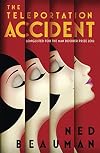
The Teleportation Accident is one of the most entertaining novels I've read for a long while, and one gets the sense of a writer having a whale of a time with his creations and thinking up wonderful similies.
As his name implies, Egon Loeser is something of a loser, a set designer on hopelessly pretentious productions in early 1930s Berlin. He has two obsessions, the 17th century set designer Adriano Lavacini, and the divine Adele Hitler (no relation), who seems to sleep with everyone except him.
Lavacini built a teleportation device in one of his designs with tragic consequences for his audience, resulting in several deaths. Loeser has a similar experience resulting in serious injury to an actor, the joke being the actor doesn't mind as his injuries give him, um, additional flexibility his sexual partners find very rewarding.
Loeser is blissfully unaware of the rise of Nazism - in one scene, he comes upon a book burning and joins in, thinking it a performance art event - but leaves the country anyway in 1934 in pursuit of Adele, first to Paris and then Los Angeles. Along the way he encounters several brilliantly bizarre creations such as Scramsfield, a fabulist conman in Paris who claims to be pals with "Jimmy" Joyce, and Colonel Gorge, a wealthy industrialist with a mental illness leaving him unable to distinguish between reality and its representation.
Egon eventually stumbles upon Adele as the assistant to Bailey, an insane scientist at CalTech in LA building - guess show more what - a teleportation device! This is not a novel for those requiring realism in their reading.
Will Loeser get the woman of his dreams, or will he have to settle for his Midnight at the Nursing Academy, his favourite "adult" reading, once he can lay his hands on Colonel Gorge's copy? Will the teleportation device work? Who is murdering Bailey's colleagues? Does sewing monkey testicles to women's necks slow the aging process? Will Loeser ever finish epic German novel Berlin Alexanderplatz? Some of these questions might be answered in the four alternative endings Beauman offers but The Teleportation Accident is such a delirious, surreal and superbly funny ride that a lot of the time this reader didn't care. Wonderful. show less
As his name implies, Egon Loeser is something of a loser, a set designer on hopelessly pretentious productions in early 1930s Berlin. He has two obsessions, the 17th century set designer Adriano Lavacini, and the divine Adele Hitler (no relation), who seems to sleep with everyone except him.
Lavacini built a teleportation device in one of his designs with tragic consequences for his audience, resulting in several deaths. Loeser has a similar experience resulting in serious injury to an actor, the joke being the actor doesn't mind as his injuries give him, um, additional flexibility his sexual partners find very rewarding.
Loeser is blissfully unaware of the rise of Nazism - in one scene, he comes upon a book burning and joins in, thinking it a performance art event - but leaves the country anyway in 1934 in pursuit of Adele, first to Paris and then Los Angeles. Along the way he encounters several brilliantly bizarre creations such as Scramsfield, a fabulist conman in Paris who claims to be pals with "Jimmy" Joyce, and Colonel Gorge, a wealthy industrialist with a mental illness leaving him unable to distinguish between reality and its representation.
Egon eventually stumbles upon Adele as the assistant to Bailey, an insane scientist at CalTech in LA building - guess show more what - a teleportation device! This is not a novel for those requiring realism in their reading.
Will Loeser get the woman of his dreams, or will he have to settle for his Midnight at the Nursing Academy, his favourite "adult" reading, once he can lay his hands on Colonel Gorge's copy? Will the teleportation device work? Who is murdering Bailey's colleagues? Does sewing monkey testicles to women's necks slow the aging process? Will Loeser ever finish epic German novel Berlin Alexanderplatz? Some of these questions might be answered in the four alternative endings Beauman offers but The Teleportation Accident is such a delirious, surreal and superbly funny ride that a lot of the time this reader didn't care. Wonderful. show less
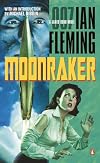
I'm reading the James Bond novels in order of publication. I'm not sure why I'm doing it this way, as each novel appears to be self-contained. Moonraker is the third following Casino Royale and Live and Let Die; they weren't filmed in order either.
Those used to the movies need to adjust slightly to the much smaller canvas of the original Fleming novels, and be conscious that they were of their time; Moonraker hit the shelves in 1955. Here, unlike the Roger Moore film version, the Moonraker is an atomic missile rather than a space shuttle, and all the action takes place in London and southeast England.
Bond is invited by M to be a guest at his club, Blades. The wealthy industrialist Sir Hugo Drax is also a member, but M's suspicions are aroused following evidence that Drax cheats at cards. Drax is something of a national hero for investing a chunk of his personal fortune in building the Moonraker missile, which is at the final testing stage and is regarded as a huge step change in the defence of the realm. Why should such a man cheat at cards?
M and 007 play Drax and another man at bridge using cards carefully doctored by Bond, and Drax does indeed try to cheat. Then comes news that the Head of Security at the Moonraker base has been murdered in a pub by another member of staff, supposedly over a woman. M engineers it so that Bond is his replacement, and he must team up with Gala Brand, a Special Branch officer posing as Drax's PA to investigate.
The set up proves odd. show more Drax's employees are all German, shaven-headed and moustachioed, including the scientific genius Walther and the sadistic Krebbs. What are Drax's motives for funding the project in the first place?
Of the three I've read so far, Moonraker is the tensest and paciest of the Bond novels, although, like Casino Royale's baccarat scene, the opening bridge game goes on a little too long and suggests its author is rather more interested in gambling and cards than his readers might be. Of course, it is all wildly implausible. However, for those interested in sampling literary rather than cinematic James Bond, Moonraker might be a good place to start. show less
Those used to the movies need to adjust slightly to the much smaller canvas of the original Fleming novels, and be conscious that they were of their time; Moonraker hit the shelves in 1955. Here, unlike the Roger Moore film version, the Moonraker is an atomic missile rather than a space shuttle, and all the action takes place in London and southeast England.
Bond is invited by M to be a guest at his club, Blades. The wealthy industrialist Sir Hugo Drax is also a member, but M's suspicions are aroused following evidence that Drax cheats at cards. Drax is something of a national hero for investing a chunk of his personal fortune in building the Moonraker missile, which is at the final testing stage and is regarded as a huge step change in the defence of the realm. Why should such a man cheat at cards?
M and 007 play Drax and another man at bridge using cards carefully doctored by Bond, and Drax does indeed try to cheat. Then comes news that the Head of Security at the Moonraker base has been murdered in a pub by another member of staff, supposedly over a woman. M engineers it so that Bond is his replacement, and he must team up with Gala Brand, a Special Branch officer posing as Drax's PA to investigate.
The set up proves odd. show more Drax's employees are all German, shaven-headed and moustachioed, including the scientific genius Walther and the sadistic Krebbs. What are Drax's motives for funding the project in the first place?
Of the three I've read so far, Moonraker is the tensest and paciest of the Bond novels, although, like Casino Royale's baccarat scene, the opening bridge game goes on a little too long and suggests its author is rather more interested in gambling and cards than his readers might be. Of course, it is all wildly implausible. However, for those interested in sampling literary rather than cinematic James Bond, Moonraker might be a good place to start. show less

To say The Embassy of Cambodia appears, at first glance, to be slight, is an understatement. Here is a 70 page book masquerading as a novel and for which Penguin, its UK publisher, has the audacity to charge a cover price of £7.99.
However, it is a great, if expensive, advertisement for short fiction, from its arresting first sentence ('Who would expect the Embassy of Cambodia?') onwards.
It has experimental tinges, with several of its very short chapters being narrated by "we, the people of Willesden", the multicultural northwest London neighbourhood where Smith grew up and still lives. This would be irritating in a full length novel but does not outstay its welcome here.
The book revolves around the experiences of immigrant woman Fatou. She seems to be kept in almost indentured servitude in the household of the Derawal family; her passport withheld, her wages low. Her only time off is on Mondays, when she goes swimming, walking past the titular embassy on her way to the pool. Swimming reminds her of what she has escaped in her native Ghana, where she swum in the polluted sea rather than in the gleaming pools of the tourist complex where she worked. Perhaps her experiences of London are not so different.
Her other downtime is on Sundays, when she meets with Nigerian student Andrew, who has persuaded her to start attending church with him and who lectures her on politics, which he is studying. Nevertheless, Andrew is the only compassionate figure in her life, and Fatou show more ponders developing their relationship further. The eternal badminton game that seems to always be in progress every time Fatou passes the embassy reflects the way she herself has been batted through life, a small blip on a global canvas.
This is a beautiful miniature of a book, and Smith provokes great sympathy for her protagonist. If you can find a cheap copy, read it.
Curious fact: Cambodia's UK embassy really is in Willesden. show less
However, it is a great, if expensive, advertisement for short fiction, from its arresting first sentence ('Who would expect the Embassy of Cambodia?') onwards.
It has experimental tinges, with several of its very short chapters being narrated by "we, the people of Willesden", the multicultural northwest London neighbourhood where Smith grew up and still lives. This would be irritating in a full length novel but does not outstay its welcome here.
The book revolves around the experiences of immigrant woman Fatou. She seems to be kept in almost indentured servitude in the household of the Derawal family; her passport withheld, her wages low. Her only time off is on Mondays, when she goes swimming, walking past the titular embassy on her way to the pool. Swimming reminds her of what she has escaped in her native Ghana, where she swum in the polluted sea rather than in the gleaming pools of the tourist complex where she worked. Perhaps her experiences of London are not so different.
Her other downtime is on Sundays, when she meets with Nigerian student Andrew, who has persuaded her to start attending church with him and who lectures her on politics, which he is studying. Nevertheless, Andrew is the only compassionate figure in her life, and Fatou show more ponders developing their relationship further. The eternal badminton game that seems to always be in progress every time Fatou passes the embassy reflects the way she herself has been batted through life, a small blip on a global canvas.
This is a beautiful miniature of a book, and Smith provokes great sympathy for her protagonist. If you can find a cheap copy, read it.
Curious fact: Cambodia's UK embassy really is in Willesden. show less
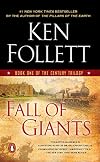
Fans of Follett's much loved The Pillars of the Earth and its successor World Without End will be on familiar historical saga territory here, although this series is set some 600 years later. Where the earlier novels had the canvas of an entire medieval town, here Follett's landscape is nothing less than the whole of Europe and North America.
Beginning in the coalfields of south Wales, Follett expands to cover the suffragette movement, and the Russian revolutions as well as, centrally, the First World War. The plot is engineered to have characters at major events, whether they are aristocrats like Lord Fitzherbert, his rebellious sister Maud and the German/Austrian von Ulrichs, or those making their way from humble beginnings like the Peshkov brothers or Ethel and Billy Williams.
This is a huge (852 pages) and hugely readable novel; I've got through it in a couple of months with a newborn baby in the house, and I found myself drawn into the intertwining stories. Ultimately, though, unlike the earlier medieval novels I found this rather soulless. Perhaps the best word to describe this novel is "efficient". Its one of those novels that acts as a showcase for some impressively extensive research, although this book wears that knowledge more lightly than some. I learned some stuff; I wasn't aware just how extensive British support for counter-revolutionary activities in the fledgling Soviet Union were, for example.
The story of history keeps things moving swiftly along; the show more upheavals of the 15 year time span of the book more or less guarantee that. The history is recent enough that I could see what was coming and the destinies of some of the characters, the result being that many of the characters felt to me to be archetypes meant to represent certain aspects of the early 20th century world rather than fully fleshed out. show less
Beginning in the coalfields of south Wales, Follett expands to cover the suffragette movement, and the Russian revolutions as well as, centrally, the First World War. The plot is engineered to have characters at major events, whether they are aristocrats like Lord Fitzherbert, his rebellious sister Maud and the German/Austrian von Ulrichs, or those making their way from humble beginnings like the Peshkov brothers or Ethel and Billy Williams.
This is a huge (852 pages) and hugely readable novel; I've got through it in a couple of months with a newborn baby in the house, and I found myself drawn into the intertwining stories. Ultimately, though, unlike the earlier medieval novels I found this rather soulless. Perhaps the best word to describe this novel is "efficient". Its one of those novels that acts as a showcase for some impressively extensive research, although this book wears that knowledge more lightly than some. I learned some stuff; I wasn't aware just how extensive British support for counter-revolutionary activities in the fledgling Soviet Union were, for example.
The story of history keeps things moving swiftly along; the show more upheavals of the 15 year time span of the book more or less guarantee that. The history is recent enough that I could see what was coming and the destinies of some of the characters, the result being that many of the characters felt to me to be archetypes meant to represent certain aspects of the early 20th century world rather than fully fleshed out. show less
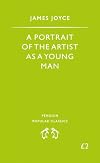
I can't deny it, I approached this novel with some trepidation. Joyce's reputation is that he is "difficult" and "experimental" and therefore "inaccessible", that he is revered but unreadable, except for some of the rude bits.
A Portrait of the Artist as a Young Man was first published in 1916 and comes at an interesting point in Joyce's career, after the Dubliners collection of short stories that made his name but before his most highly regarded novel Ulysses and his most challenging, Finnegans Wake. The novel does contain some of the modernist features that give Joyce his challenging reputation: stream of consciousness, shifting perspectives, non-linear structure, very little speech, explicit on taboo subjects. However, it is coherent and became less daunting as I got into the book. And, beyond some very admiring descriptions of attractive women, there is nothing rude here.
Possibly, its readability is because it is thinly disguised memoir. We follow Stephen Dedalus from his school days at Clongowes, through his flirtation with possibly joining the priesthood whilst attending a Jesuit run college, and his time at University College during which he has a crisis of faith and decides he has to leave Ireland: all things that Joyce himself did.
This sounds odd, but I guess what I wasn't expecting was just how Irish this novel would be in its themes. There is an early scene at a family Christmas dinner at which Stephen's father, Simon, and his neighbours discuss Irish show more politics (perhaps at their most sensitive, given Ireland's imminent independence). We are treated to a lengthy sermon from one of the Jesuits on the last judgement. Catholicism shapes Stephen's life in a way I hadn't anticipated.
The other very Irish aspect was the language. I listened to Naxos's audiobook edition read by Jim Norton, and his gentle brogue bought to the forefront the rhythms of the writing in a way that reading the book myself off the page might not have done. The reader also gets a strong sense of early 20th century Dublin that I guess Joyce must have fully developed in Ulysses.
As you might guess, this isn't a plot driven book. The long sermon on the Last Judgement in the middle was, frankly, tedious; possibly that was the point, and Stephen's discussion of aesthetics with fellow student Cranly was just confusing. Thus, I admired many aspects of this novel, and can see its place in literary history, but I can't say I really liked it all that much. Nevertheless, I'm not scared of James Joyce any more. I'm definitely curious about Dubliners, and might read Ulysses one day, not something I might have said before reading this. show less
A Portrait of the Artist as a Young Man was first published in 1916 and comes at an interesting point in Joyce's career, after the Dubliners collection of short stories that made his name but before his most highly regarded novel Ulysses and his most challenging, Finnegans Wake. The novel does contain some of the modernist features that give Joyce his challenging reputation: stream of consciousness, shifting perspectives, non-linear structure, very little speech, explicit on taboo subjects. However, it is coherent and became less daunting as I got into the book. And, beyond some very admiring descriptions of attractive women, there is nothing rude here.
Possibly, its readability is because it is thinly disguised memoir. We follow Stephen Dedalus from his school days at Clongowes, through his flirtation with possibly joining the priesthood whilst attending a Jesuit run college, and his time at University College during which he has a crisis of faith and decides he has to leave Ireland: all things that Joyce himself did.
This sounds odd, but I guess what I wasn't expecting was just how Irish this novel would be in its themes. There is an early scene at a family Christmas dinner at which Stephen's father, Simon, and his neighbours discuss Irish show more politics (perhaps at their most sensitive, given Ireland's imminent independence). We are treated to a lengthy sermon from one of the Jesuits on the last judgement. Catholicism shapes Stephen's life in a way I hadn't anticipated.
The other very Irish aspect was the language. I listened to Naxos's audiobook edition read by Jim Norton, and his gentle brogue bought to the forefront the rhythms of the writing in a way that reading the book myself off the page might not have done. The reader also gets a strong sense of early 20th century Dublin that I guess Joyce must have fully developed in Ulysses.
As you might guess, this isn't a plot driven book. The long sermon on the Last Judgement in the middle was, frankly, tedious; possibly that was the point, and Stephen's discussion of aesthetics with fellow student Cranly was just confusing. Thus, I admired many aspects of this novel, and can see its place in literary history, but I can't say I really liked it all that much. Nevertheless, I'm not scared of James Joyce any more. I'm definitely curious about Dubliners, and might read Ulysses one day, not something I might have said before reading this. show less
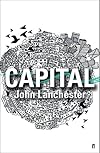
Capital is so titled as it is an exploration of both life in early 21st century London and some of the effects of the financial crisis on the city, as well as the role money plays in the lives of its lengthy cast list.
The novel freewheels chapter by chapter between the residents of several houses on Pepys Road, a street in an unspecified south London suburb, but probably somewhere in the vicinity of Clapham Common. The houses sell for 7 figure sums. Residents include wealthy banker Roger Yount and his recklessly extravagant wife Arabella. Further down the road is elderly widow Petunia Howe, grandmother to Graham aka Smitty a Banksy style anonymous artist. At one end of the street are the Kamals, who run a newsagents. One of the houses is owned by a football club and is occupied by a teenage Senegalese prodigy, Freddy Kano and his father, Patrick. As well as these residents, there is Polish builder Zbigniew and Hungarian nanny Matya, both employed by the street's residents, and Zimbabwean traffic warden Quentina, enforcing its parking restrictions through a shady employer.
Lanchester follows his characters' lives from December 2007 to December 2008.The residents begin to receive anonymous postcards which state "We want what you have", then photographs of their front doors are posted on a blog. From here, the campaign takes a darker turn and the police become involved.
Within this framework, the author employs his cast to show the diversity of London life. It is clear show more where his sympathies lie: he can barely disguise his contempt for Arabella and her ilk. Roger's career comes to a sticky and sudden halt moments before the banking crisis hits the City. Freddy's stutters. The Kamals are visited by their Pakistani matriarch and come under scrutiny from the police as the "We Want What You Have" campaign develops. Zbigniew and Matya, in London to earn money, find love and develop roots in the city.
However, Capital isn't so simplistic that the poor prosper and the greedy get their comeuppance. The immigration service catch up with Quentina, for example, and Petunia falls seriously ill.
Not all the strands work perfectly, but Lanchester finds the right tone for most of the stories: satirical for the Younts and Smitty, sentimental for Petunia and Matya, comic for Mrs Kamal's visit. If you can imagine White Teeth written by Kate Atkinson you'd be in the right area.
As a resident of the city myself (albeit the north rather than the south) Lanchester captures the chaos of London well; how immigrants keep it functioning and how much time can be spent in transit and searching for a parking space.
Unlike its most obvious recent antecedent, Sebastian Faulks' A Week in December, Capital doesn't get bogged down in explaining the machinations of the City and its institutions; thankfully Lanchester used his research in this area to write a pretty decent history of the financial collapse called Whoops!
Capital is a satisfying, readable novel, and hopefully of as much appeal to non-residents as this dyed in the wool Londoner. show less
The novel freewheels chapter by chapter between the residents of several houses on Pepys Road, a street in an unspecified south London suburb, but probably somewhere in the vicinity of Clapham Common. The houses sell for 7 figure sums. Residents include wealthy banker Roger Yount and his recklessly extravagant wife Arabella. Further down the road is elderly widow Petunia Howe, grandmother to Graham aka Smitty a Banksy style anonymous artist. At one end of the street are the Kamals, who run a newsagents. One of the houses is owned by a football club and is occupied by a teenage Senegalese prodigy, Freddy Kano and his father, Patrick. As well as these residents, there is Polish builder Zbigniew and Hungarian nanny Matya, both employed by the street's residents, and Zimbabwean traffic warden Quentina, enforcing its parking restrictions through a shady employer.
Lanchester follows his characters' lives from December 2007 to December 2008.The residents begin to receive anonymous postcards which state "We want what you have", then photographs of their front doors are posted on a blog. From here, the campaign takes a darker turn and the police become involved.
Within this framework, the author employs his cast to show the diversity of London life. It is clear show more where his sympathies lie: he can barely disguise his contempt for Arabella and her ilk. Roger's career comes to a sticky and sudden halt moments before the banking crisis hits the City. Freddy's stutters. The Kamals are visited by their Pakistani matriarch and come under scrutiny from the police as the "We Want What You Have" campaign develops. Zbigniew and Matya, in London to earn money, find love and develop roots in the city.
However, Capital isn't so simplistic that the poor prosper and the greedy get their comeuppance. The immigration service catch up with Quentina, for example, and Petunia falls seriously ill.
Not all the strands work perfectly, but Lanchester finds the right tone for most of the stories: satirical for the Younts and Smitty, sentimental for Petunia and Matya, comic for Mrs Kamal's visit. If you can imagine White Teeth written by Kate Atkinson you'd be in the right area.
As a resident of the city myself (albeit the north rather than the south) Lanchester captures the chaos of London well; how immigrants keep it functioning and how much time can be spent in transit and searching for a parking space.
Unlike its most obvious recent antecedent, Sebastian Faulks' A Week in December, Capital doesn't get bogged down in explaining the machinations of the City and its institutions; thankfully Lanchester used his research in this area to write a pretty decent history of the financial collapse called Whoops!
Capital is a satisfying, readable novel, and hopefully of as much appeal to non-residents as this dyed in the wool Londoner. show less
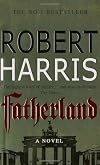
Berlin, 1964. In the days leading up to Adolf Hitler's 75th birthday celebrations, a body with its foot cut off is fished out of a lake. The case is assigned to Xavier March, a senior investigator in the Kripo police force, and his bumbling partner Max Jaeger.
This is not, as you might have guessed already, the Berlin of 50 years ago as you might remember it, for in Fatherland, which Harris debuted with in 1992, the Nazis emerged victorious from the Second World War. The Greater German Reich now extends from Spain to Russia, with the Soviet Union a fraction of its true size. The Germans are locked in a Cold War with the United States but, in a major diplomatic coup, the incumbent US President Joesph Kennedy (JFK's father) is about to visit Berlin.
The case proves to be politically sensitive. The body is that of Josef Buhler, who proves to have links to several other recent deaths of senior Nazis. Consequently, the Gestapo become interested and a turf war between they and the Kripo ensues. March, not a good Party man, is distrusted even by his 10-year old son and Hitler Youth member Pili.
Initially, Buhler seems to have been involved in fraud with the other dead men, siphoning money into a Swiss bank account - the Swiss have retained their neutrality in this world - and March is, with some reluctance by his bosses, granted permission to travel to Zurich to investigate, alongside American investigative journalist Charlotte "Charlie" Maguire. As both investigate, the fraud show more appears to be a cover for something much darker which I won't tell you about here or I will spoil the novel's climax.
Harris has meticulously realized his alternate world, but manages to keep the story moving swiftly along without becoming bogged down in describing it. This is a Germany obsessed with paranoia and rank where you are nobody without a uniform and justice is meted out brutally and arbitrarily, not least to March himself. It has, of course, been racially purified as the Nazis would have wished. March discovers the photo of a Jewish family who had previously owned his apartment but all he knows of them and their fellow Jews is that they have been "shipped East".
All in all, this is a highly efficient and readable thriller, although the concept behind it is hardly a novel one - sci-fi writer Philip K. Dick's excellent The Man in the High Castle covered similar ground almost 50 years ago, as, more recently, has CJ Sansom's Dominion. show less
This is not, as you might have guessed already, the Berlin of 50 years ago as you might remember it, for in Fatherland, which Harris debuted with in 1992, the Nazis emerged victorious from the Second World War. The Greater German Reich now extends from Spain to Russia, with the Soviet Union a fraction of its true size. The Germans are locked in a Cold War with the United States but, in a major diplomatic coup, the incumbent US President Joesph Kennedy (JFK's father) is about to visit Berlin.
The case proves to be politically sensitive. The body is that of Josef Buhler, who proves to have links to several other recent deaths of senior Nazis. Consequently, the Gestapo become interested and a turf war between they and the Kripo ensues. March, not a good Party man, is distrusted even by his 10-year old son and Hitler Youth member Pili.
Initially, Buhler seems to have been involved in fraud with the other dead men, siphoning money into a Swiss bank account - the Swiss have retained their neutrality in this world - and March is, with some reluctance by his bosses, granted permission to travel to Zurich to investigate, alongside American investigative journalist Charlotte "Charlie" Maguire. As both investigate, the fraud show more appears to be a cover for something much darker which I won't tell you about here or I will spoil the novel's climax.
Harris has meticulously realized his alternate world, but manages to keep the story moving swiftly along without becoming bogged down in describing it. This is a Germany obsessed with paranoia and rank where you are nobody without a uniform and justice is meted out brutally and arbitrarily, not least to March himself. It has, of course, been racially purified as the Nazis would have wished. March discovers the photo of a Jewish family who had previously owned his apartment but all he knows of them and their fellow Jews is that they have been "shipped East".
All in all, this is a highly efficient and readable thriller, although the concept behind it is hardly a novel one - sci-fi writer Philip K. Dick's excellent The Man in the High Castle covered similar ground almost 50 years ago, as, more recently, has CJ Sansom's Dominion. show less
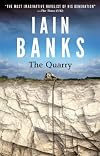
The final novel in the late Iain Banks's illustrious 30 year career.
The irony of The Quarry is that it is a novel about cancer written by a man who only found out he had the disease part way through its creation. One hopes, however, there isn't much of the author in the character with the cancer, Guy. He isn't a plucky fighter, he's indignant, misanthropic, angry and bitter and swears a lot to prove it, although one suspects he might be like this even without his disease. He's the father of Kit, the novel's narrator, a hulking teenager with some form of autistic spectrum disorder, from whom he has kept the identity of his mother for no immediately obvious reason. They live together in a dilapidated, rambling house on the edge of a quarry in some unspecified part of north Yorkshire.
Kit's mental condition allows him to view dispassionately a weekend reunion of Guy with some fellow film students from the fictional Bewford University. They're a diverse bunch, with little in common beyond their shared past. There's Hol, now a struggling film critic, who has taken Kit under her wing to try to teach him some social skills. There are Ali and Rob, an increasingly fractious couple prone to spouting corporate gobbledygook, Paul, rising star of New Labour, serial monogamist Pris and inveterate stoner Haze. All are concerned about the whereabouts of a compromising videotape they made together as students and thought to be somewhere in the crumbling house.
The videotape, and for show more that matter, the cancer, are something of a diversion from a novel that is really an examination of this diverse group, some of whom have clung to youthful ideals, and suffer for it, some of whom have abandoned them and aren't much better off. All are flawed and very humnan. The titular quarry, too, plays a less than central role for most of the novel except, one supposes, as a metaphor for death.
This falls into the same area of Banks's oeuvre as The Crow Road. It's hugely entertaining and by turns funny, angry, geeky and bemused much, as one imagines, Banks himself was. Where he exploded onto the literary scene in the early 1980s with The Wasp Factory, The Quarry provides a less controversial exit that showcases much of what was great about his writing. Newcomers could just as well start with Iain Banks's last novel as his first; its one of his best. show less
The irony of The Quarry is that it is a novel about cancer written by a man who only found out he had the disease part way through its creation. One hopes, however, there isn't much of the author in the character with the cancer, Guy. He isn't a plucky fighter, he's indignant, misanthropic, angry and bitter and swears a lot to prove it, although one suspects he might be like this even without his disease. He's the father of Kit, the novel's narrator, a hulking teenager with some form of autistic spectrum disorder, from whom he has kept the identity of his mother for no immediately obvious reason. They live together in a dilapidated, rambling house on the edge of a quarry in some unspecified part of north Yorkshire.
Kit's mental condition allows him to view dispassionately a weekend reunion of Guy with some fellow film students from the fictional Bewford University. They're a diverse bunch, with little in common beyond their shared past. There's Hol, now a struggling film critic, who has taken Kit under her wing to try to teach him some social skills. There are Ali and Rob, an increasingly fractious couple prone to spouting corporate gobbledygook, Paul, rising star of New Labour, serial monogamist Pris and inveterate stoner Haze. All are concerned about the whereabouts of a compromising videotape they made together as students and thought to be somewhere in the crumbling house.
The videotape, and for show more that matter, the cancer, are something of a diversion from a novel that is really an examination of this diverse group, some of whom have clung to youthful ideals, and suffer for it, some of whom have abandoned them and aren't much better off. All are flawed and very humnan. The titular quarry, too, plays a less than central role for most of the novel except, one supposes, as a metaphor for death.
This falls into the same area of Banks's oeuvre as The Crow Road. It's hugely entertaining and by turns funny, angry, geeky and bemused much, as one imagines, Banks himself was. Where he exploded onto the literary scene in the early 1980s with The Wasp Factory, The Quarry provides a less controversial exit that showcases much of what was great about his writing. Newcomers could just as well start with Iain Banks's last novel as his first; its one of his best. show less
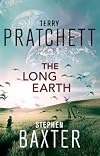
Discworld fans are advised to tread with caution with this book. Those expecting the kind of light hearted fantasy romps of that series will be disappointed. This novel is set in the near future, where a device has been invented that allows people to travel, or "step", as it is known in the book, between parallel versions of planet Earth. However, none of the other Earths has given rise to humankind as we know it, although there are other species that have humanoid characteristics.
Most people need a stepper to move between Earths and suffer side effects such as nausea from doing so but there are some, such as Joshua Valiente, who are able to naturally step without problems. Joshua is conscripted by a powerful businessman to travel with Lobsang, a computer whose personality is based on a Tibetan mechanic, on an airship to see how far they can travel across the so-called Long Earth. They travel across over two million versions of the Earth and meet some extraordinary creatures on the way, but return to a very changed "Datum Earth", as our reality is known.
I've not read Stephen Baxter's work before and on this evidence his solo work sounds like it might be eminently avoidable. I know he collaborated with the late Arthur C. Clarke and that seems like a more obvious pairing. Here, Pratchett's comedic instincts, which lead to biker nuns and the steppers being made from potatoes, sit uneasily alongside more serious examinations of the consequences of the multiple realities show more which seem more like Clarke's work. The whole is, as a result, rather unsatisfactory.
The second novel in the series, The Long War, has just been published. I've not yet decided if I will ever read it. show less
Most people need a stepper to move between Earths and suffer side effects such as nausea from doing so but there are some, such as Joshua Valiente, who are able to naturally step without problems. Joshua is conscripted by a powerful businessman to travel with Lobsang, a computer whose personality is based on a Tibetan mechanic, on an airship to see how far they can travel across the so-called Long Earth. They travel across over two million versions of the Earth and meet some extraordinary creatures on the way, but return to a very changed "Datum Earth", as our reality is known.
I've not read Stephen Baxter's work before and on this evidence his solo work sounds like it might be eminently avoidable. I know he collaborated with the late Arthur C. Clarke and that seems like a more obvious pairing. Here, Pratchett's comedic instincts, which lead to biker nuns and the steppers being made from potatoes, sit uneasily alongside more serious examinations of the consequences of the multiple realities show more which seem more like Clarke's work. The whole is, as a result, rather unsatisfactory.
The second novel in the series, The Long War, has just been published. I've not yet decided if I will ever read it. show less
Tim Lott emerged in the UK in Nick Hornby's slipstream, and his early work is often similarly tagged as lad lit, featuring, as it does, men facing up to their responsibilities and "growing up".
Under the Same Stars is the third of his books I've read, following his Whitbread nominated White City Blue and the more recent The Love Secrets of Don Juan. Once again, it features a 40-something man, this time illustrator and aspiring fine artist Salinger Nash. Sal lives with his partner Tiane in a fictional London suburb and keeps his Prozac prescription hidden from her, which tells you something about their relationship.
Sal receives a call from his older brother Carson, whom, apart from a brief encounter at their mother's funeral, he hasn't seen for 20 years. Carson is now resident in post-Katrina New Orleans and tells Sal he has had a missive from their long lost father Henry, who exited their lives when the boys were 14 and 10, deserting their mother for the USA. Henry is apparently living is Las Cruces, New Mexico, and is dying. Carson suggests to Sal they set out to see their father one last time. Tiane initially encourages the reluctant Salinger, but at the airport, mysteriously becomes distant and he leaves wondering what their future together holds.
It is a promising premise for a road trip novel, and Under the Same Stars is very readable, although let down by some credibility issues. For example, we are asked to believe Carson has totally reinvented himself as an show more American, even down to his born again Christian faith. I guess there are British people like Carson out there, but I suspect they are very few and far between. Lott has to do this, however, in order to create several set pieces to highlight cultural differences, such as their visits to various southern eating establishments.
And this is the novel's other flaw: it does largely feel like a series of familiar set pieces, albeit well executed ones. The brothers couldn't be more contrasting personalities. Sal manages to lose Carson's car keys, and his beloved Lexus is stolen and then found by a grouchy Texas cop who, of course, has a heart of gold, and drives it all the way to New Mexico so they can be reunited with it. Sal also has an encounter with a Native American medicine woman which is, of course, a revelation to him.
Where Lott does to an extent break with convention is at the novel's climax, although some elements of its coda then rather spoil things again. I won't trouble you here with what these events are.
This, sadly, is a flawed novel from a writer who I know can do a lot better. show less
Under the Same Stars is the third of his books I've read, following his Whitbread nominated White City Blue and the more recent The Love Secrets of Don Juan. Once again, it features a 40-something man, this time illustrator and aspiring fine artist Salinger Nash. Sal lives with his partner Tiane in a fictional London suburb and keeps his Prozac prescription hidden from her, which tells you something about their relationship.
Sal receives a call from his older brother Carson, whom, apart from a brief encounter at their mother's funeral, he hasn't seen for 20 years. Carson is now resident in post-Katrina New Orleans and tells Sal he has had a missive from their long lost father Henry, who exited their lives when the boys were 14 and 10, deserting their mother for the USA. Henry is apparently living is Las Cruces, New Mexico, and is dying. Carson suggests to Sal they set out to see their father one last time. Tiane initially encourages the reluctant Salinger, but at the airport, mysteriously becomes distant and he leaves wondering what their future together holds.
It is a promising premise for a road trip novel, and Under the Same Stars is very readable, although let down by some credibility issues. For example, we are asked to believe Carson has totally reinvented himself as an show more American, even down to his born again Christian faith. I guess there are British people like Carson out there, but I suspect they are very few and far between. Lott has to do this, however, in order to create several set pieces to highlight cultural differences, such as their visits to various southern eating establishments.
And this is the novel's other flaw: it does largely feel like a series of familiar set pieces, albeit well executed ones. The brothers couldn't be more contrasting personalities. Sal manages to lose Carson's car keys, and his beloved Lexus is stolen and then found by a grouchy Texas cop who, of course, has a heart of gold, and drives it all the way to New Mexico so they can be reunited with it. Sal also has an encounter with a Native American medicine woman which is, of course, a revelation to him.
Where Lott does to an extent break with convention is at the novel's climax, although some elements of its coda then rather spoil things again. I won't trouble you here with what these events are.
This, sadly, is a flawed novel from a writer who I know can do a lot better. show less
Un Lun Dun was my fourth Mieville novel, and he really is shaping up to be one of my favourite writers and certainly one of the most interesting working today.
His other work is definitely aimed at an adult readership but he seems to have tailored his writing in this instance to a younger audience with ease. I did feel, though, that this felt less original than some of his other work - Mieville himself acknowledges his debt to Lewis Carroll, but I also saw shades of Neil Gaiman's Neverwhere in there too. It's also not the first time Mieville has explored alternative London (his debut, King Rat) or parallel cities (The City and the City), clearly a theme that interests him. The environmental message here is quite obvious too, but then politics does feature in his work.
I liked the fact Mieville wasn't afraid to wrong foot his readers and
I like reading books where I feel like the author is enjoying themselves too. I got the sense here Mieville was having a lot of fun thinking up a world of flying buses, marauding giraffes and malicious umbrellas. Fantasy writing is often so po-faced that it is nice to see an injection of humour beyond the obvious parodies of Terry Pratchett et al.
A likeable, and recommended, piece of work, and older readers who don't mind their novels liberally sprinkled with weirdness and surrealism are strongly advised to seek out Mieville's other work.
His other work is definitely aimed at an adult readership but he seems to have tailored his writing in this instance to a younger audience with ease. I did feel, though, that this felt less original than some of his other work - Mieville himself acknowledges his debt to Lewis Carroll, but I also saw shades of Neil Gaiman's Neverwhere in there too. It's also not the first time Mieville has explored alternative London (his debut, King Rat) or parallel cities (The City and the City), clearly a theme that interests him. The environmental message here is quite obvious too, but then politics does feature in his work.
I liked the fact Mieville wasn't afraid to wrong foot his readers and
I like reading books where I feel like the author is enjoying themselves too. I got the sense here Mieville was having a lot of fun thinking up a world of flying buses, marauding giraffes and malicious umbrellas. Fantasy writing is often so po-faced that it is nice to see an injection of humour beyond the obvious parodies of Terry Pratchett et al.
A likeable, and recommended, piece of work, and older readers who don't mind their novels liberally sprinkled with weirdness and surrealism are strongly advised to seek out Mieville's other work.
As a portrayal of modern Russia, I found this a considerably more compelling novel than another recently Booker nominated debut thriller, Tom Rob Smith's Child 44. Where that book stretched credibility beyond breaking point for this reader, Snowdrops felt like a thoroughly convincing portrait of post-Soviet era Russia, its ex-pat community and the desperation, decadence and corruption of certain parts of Muscovite society.
However, other aspects of the novel were weaker, I thought. I really couldn't work Nicholas out, and not just over the nature of his relationship to the person to whom the book is addressed. Was he just an innocent abroad, did his lust for Masha blind him to what he was getting himself into, or was his attitude more laissez-faire? Certainly, he seems to take the activities of the Cossack in his stride, which points to the latter, and he doesn't seem overly perturbed by the turns events take.
Consequently, the plot - boy taken in by scheming Russians exploiting an old lady - felt slightly predictable and unoriginal too. Equally, in the service of making Miller's points, many of the Russian characters seemed a little two-dimensional.
As if mirroring Nicholas's lack of surprise, there are no twists and turns as one might expect of a modern thriller. Instead, this is a rather more old-fashioned, psychological kind of book of the kind one doesn't see so often on the crime shelves these days.
Graham Greene and Georges Simenon will be looking on from beyond the show more grave with approval, at least of some aspects of this book, and I look forward to more from this writer. show less
However, other aspects of the novel were weaker, I thought. I really couldn't work Nicholas out, and not just over the nature of his relationship to the person to whom the book is addressed. Was he just an innocent abroad, did his lust for Masha blind him to what he was getting himself into, or was his attitude more laissez-faire? Certainly, he seems to take the activities of the Cossack in his stride, which points to the latter, and he doesn't seem overly perturbed by the turns events take.
Consequently, the plot - boy taken in by scheming Russians exploiting an old lady - felt slightly predictable and unoriginal too. Equally, in the service of making Miller's points, many of the Russian characters seemed a little two-dimensional.
As if mirroring Nicholas's lack of surprise, there are no twists and turns as one might expect of a modern thriller. Instead, this is a rather more old-fashioned, psychological kind of book of the kind one doesn't see so often on the crime shelves these days.
Graham Greene and Georges Simenon will be looking on from beyond the show more grave with approval, at least of some aspects of this book, and I look forward to more from this writer. show less
Paul Theroux undertook the journey he chronicles in his 1975 book The Great Railway Bazaar at the age of 33. Upon reaching 66, he decides to retrace his steps and undertake the journey by train from London to Tokyo and back again.
Inevitably, in the intervening years the political landscape has changed, meaning he is denied a visa to travel through Iran. Instead, he visits Azerbaijan, Uzbekistan and the quite bonkers Turkmenistan, dominated by the despotic Turkmen Bashi, who insists on putting gold statues of himself up everywhere while his people starve.
Some of the places he does travel to again have changed quite radically. India and China are booming, although Theroux barely disguises his disgust at the exploitation of low Indian wages by western companies. Others are exactly the same: Singapore is still oppressively censored and Japan is portrayed as bland and arid except in its most rural areas, as it was in his earlier book.
Technology makes it easier to stay in touch with home (Theroux returned home after The Great Railway Bazaar to discover his wife at the time had been having an affair in his absence) although in more remote places his Blackberry functions as little more than a torch lighting his way to the bathroom at night on darkened trains.
Also like his other travel books, Theroux hooks up with other writers to help give him insight into some of the places he visits: he dines with Orhan Pamuk in Istanbul and the reclusive Haruki Murakami shows him Tokyo. It show more feels like namedropping to a degree, as in other places more modest folks in other places prove just as able as guides.
Theroux’s nose for teasing out points of interest in supposedly dull places and his sometimes undisguised grumpiness give the book a realistic feel: there’s no suggestion that, unlike some other travel writers, Theroux might be embellishing some of his traveller’s tales for literary effect.
I listened to this on audiobook and John McDonough’s excellent narration which really enhanced my enjoyment of it. Ghost Train to the Eastern Star is an excellent example of a master travel writer at work. show less
Inevitably, in the intervening years the political landscape has changed, meaning he is denied a visa to travel through Iran. Instead, he visits Azerbaijan, Uzbekistan and the quite bonkers Turkmenistan, dominated by the despotic Turkmen Bashi, who insists on putting gold statues of himself up everywhere while his people starve.
Some of the places he does travel to again have changed quite radically. India and China are booming, although Theroux barely disguises his disgust at the exploitation of low Indian wages by western companies. Others are exactly the same: Singapore is still oppressively censored and Japan is portrayed as bland and arid except in its most rural areas, as it was in his earlier book.
Technology makes it easier to stay in touch with home (Theroux returned home after The Great Railway Bazaar to discover his wife at the time had been having an affair in his absence) although in more remote places his Blackberry functions as little more than a torch lighting his way to the bathroom at night on darkened trains.
Also like his other travel books, Theroux hooks up with other writers to help give him insight into some of the places he visits: he dines with Orhan Pamuk in Istanbul and the reclusive Haruki Murakami shows him Tokyo. It show more feels like namedropping to a degree, as in other places more modest folks in other places prove just as able as guides.
Theroux’s nose for teasing out points of interest in supposedly dull places and his sometimes undisguised grumpiness give the book a realistic feel: there’s no suggestion that, unlike some other travel writers, Theroux might be embellishing some of his traveller’s tales for literary effect.
I listened to this on audiobook and John McDonough’s excellent narration which really enhanced my enjoyment of it. Ghost Train to the Eastern Star is an excellent example of a master travel writer at work. show less
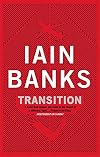
Iain Banks has spent his writing career in two guises, writing both science fiction with an added middle initial M and more mainstream fiction without. Some of his mainstream works like The Crow Road, Espedair Street, Complicity and his notorious debut The Wasp Factory are among my favourite books but, despite being a sci-fi fan, I've found the Iain M. Banks novels I've tried much harder to get on with. Perhaps that's why Transition won't be joining my list of Banks favourites.
Transition is published without the M., but some might well question why and perhaps that's why I struggled to get on with it. Whilst in some ways a conventional thriller, its premise is truly fantastical. I wonder if Banks hasn't been nervously watching the rise of sci-fi wunderkind China Mieville as in some respects this feels like an attempt to emulate one of his novels.
Transition's central conceit is the existence of an organisation called The Concern or L'Experience, which exists on a planet called Calbefraques. Calbefraques turns out to be a version of our world. The Concern is staffed by Transitioners, individuals trained, via the use of the drug Septus, to "flit" from the consciousnesses of one person to another across multiple realities in which exist endless versions of Earth. However, there is a power struggle at the top of The Concern between Madame d'Ortelan, the rather camp head of its ruling council and the renegade Mrs Mulverhill.
Transition is told through the voices of multiple show more narrators: The Transitioner aka Temudjin Oh, a former lover of Mrs Mulverhill's sent to kill her by the council; Kleist, a henchman known as The Philosopher; City wideboy Adrian Cubbish and Patient 8262, a Transitioner now being kept in a mental hospital are the main voices, with contributions from a number of others. I listened to this and was considerably hindered by the fact that the whole book was read by one person who manfully attempted all the narratives and I inevitably found myself getting confused about whose story I was listening to.
As this summary might suggest, Transition has a complicated structure and a rather ingenious central concept wrapped around what is really quite a simple plot of Ambiguously Good versus Ambiguously Evil. The Concern's purpose is never made wholly clear: it seems to be there to ensure that "good" succeeds but it decides what is "good" and what isn't. In that sense, one imagines that Banks sees The Concern as a metaphor for some aspects of US foreign policy.
Overall, these are rather heavy concepts for what is really an otherwise rather routine thriller. In that sense, Banks has here made the cardinal error of many sci-fi writers: they are so in love with the concepts and/or the worlds they have created that they forget to put them into the service of a decent story. show less
Transition is published without the M., but some might well question why and perhaps that's why I struggled to get on with it. Whilst in some ways a conventional thriller, its premise is truly fantastical. I wonder if Banks hasn't been nervously watching the rise of sci-fi wunderkind China Mieville as in some respects this feels like an attempt to emulate one of his novels.
Transition's central conceit is the existence of an organisation called The Concern or L'Experience, which exists on a planet called Calbefraques. Calbefraques turns out to be a version of our world. The Concern is staffed by Transitioners, individuals trained, via the use of the drug Septus, to "flit" from the consciousnesses of one person to another across multiple realities in which exist endless versions of Earth. However, there is a power struggle at the top of The Concern between Madame d'Ortelan, the rather camp head of its ruling council and the renegade Mrs Mulverhill.
Transition is told through the voices of multiple show more narrators: The Transitioner aka Temudjin Oh, a former lover of Mrs Mulverhill's sent to kill her by the council; Kleist, a henchman known as The Philosopher; City wideboy Adrian Cubbish and Patient 8262, a Transitioner now being kept in a mental hospital are the main voices, with contributions from a number of others. I listened to this and was considerably hindered by the fact that the whole book was read by one person who manfully attempted all the narratives and I inevitably found myself getting confused about whose story I was listening to.
As this summary might suggest, Transition has a complicated structure and a rather ingenious central concept wrapped around what is really quite a simple plot of Ambiguously Good versus Ambiguously Evil. The Concern's purpose is never made wholly clear: it seems to be there to ensure that "good" succeeds but it decides what is "good" and what isn't. In that sense, one imagines that Banks sees The Concern as a metaphor for some aspects of US foreign policy.
Overall, these are rather heavy concepts for what is really an otherwise rather routine thriller. In that sense, Banks has here made the cardinal error of many sci-fi writers: they are so in love with the concepts and/or the worlds they have created that they forget to put them into the service of a decent story. show less
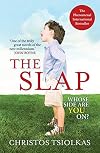
The Slap reminded me in some ways of Armistead Maupin's superlative Tales of the City series. Like Maupin's novels, The Slap has its soapy aspects, a frank attitude to sex and a strong sense of place; as Maupin's title suggests, he is as much writing about San Francisco life as he is the specific activities of the residents of one of the city's houses.
My lack of knowledge about Melbourne itself wasn't offputting. I'm sure you could substitute its various suburbs and ethnic sub-cultures for others and move the story to another large, multicultural city and the novel would still hold up. I could certainly think of parallels in London life or if Hector's family had been Jewish rather than Greek.
Unlike Maupin's characters, attracted to San Francisco by its liberal and tolerant reputation, the older characters in particular seem trapped by the roles they have carved out for themselves and while there are revelations about them and their backgrounds in their respective chapters, in most cases their circumstances are only minimally altered by the end of the book. We see Connie and Richie at the point in life where they make some of the decisions which could also tie them down in the same way. What is not made so much of is that another slap is administered at the end of the novel. Is that one any more justified?
The Slap is as much if not more about character than plot. Manolis's chapter did not, I thought, add much to the story but was crucial in providing some perspective and show more also, I found, the most moving.
I also wish I could have gone inside the head of Bilal/Terry. I found the idea of an Aboriginal Muslim convert an intriguing one. show less
My lack of knowledge about Melbourne itself wasn't offputting. I'm sure you could substitute its various suburbs and ethnic sub-cultures for others and move the story to another large, multicultural city and the novel would still hold up. I could certainly think of parallels in London life or if Hector's family had been Jewish rather than Greek.
Unlike Maupin's characters, attracted to San Francisco by its liberal and tolerant reputation, the older characters in particular seem trapped by the roles they have carved out for themselves and while there are revelations about them and their backgrounds in their respective chapters, in most cases their circumstances are only minimally altered by the end of the book. We see Connie and Richie at the point in life where they make some of the decisions which could also tie them down in the same way. What is not made so much of is that another slap is administered at the end of the novel. Is that one any more justified?
The Slap is as much if not more about character than plot. Manolis's chapter did not, I thought, add much to the story but was crucial in providing some perspective and show more also, I found, the most moving.
I also wish I could have gone inside the head of Bilal/Terry. I found the idea of an Aboriginal Muslim convert an intriguing one. show less
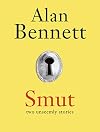
Although subtitled Two Unseemly Stories, perhaps only the most prudish of Bennett's fans would find either The Greening of Mrs. Donaldson or The Shielding of Mrs. Forbes offensive. Perhaps more accurately, what the two stories share is that in neither case are surface appearances, in fact, what they seem.
I found the former story the better of the two. Mrs. Donaldson, newly widowed after a dull marriage, takes in medical students and also becomes a demonstrator during the course of their studies, pretending to various illnesses in order that they can study how to treat them. However, when one couple are unable to pay their rent and offer to pay off their debt in a somewhat, um, unconventional way. Thus does Mrs. Donaldson enter a newly liberated phase of her life although, this being Bennett, tea and custard creams are still involved.
Mrs. Forbes's son, Graham, self-abosrbed and arrogant, is hiding a secret from his Mum: his homosexuality. He is married to keep up appearances, but falls victim to a blackmailing policeman. His Dad seems more interested in first the dusky Samoan beauty (by way of Clitheroe) and then later Graham's wife. Will Graham's cover be blown and what will his Mum say?
Whilst enjoyable, I couldn't help the feeling that Smut was Alan Bennett by numbers: middle aged repressed ladies and their frightfully British take on propriety and marital relations being challenged.
I found the former story the better of the two. Mrs. Donaldson, newly widowed after a dull marriage, takes in medical students and also becomes a demonstrator during the course of their studies, pretending to various illnesses in order that they can study how to treat them. However, when one couple are unable to pay their rent and offer to pay off their debt in a somewhat, um, unconventional way. Thus does Mrs. Donaldson enter a newly liberated phase of her life although, this being Bennett, tea and custard creams are still involved.
Mrs. Forbes's son, Graham, self-abosrbed and arrogant, is hiding a secret from his Mum: his homosexuality. He is married to keep up appearances, but falls victim to a blackmailing policeman. His Dad seems more interested in first the dusky Samoan beauty (by way of Clitheroe) and then later Graham's wife. Will Graham's cover be blown and what will his Mum say?
Whilst enjoyable, I couldn't help the feeling that Smut was Alan Bennett by numbers: middle aged repressed ladies and their frightfully British take on propriety and marital relations being challenged.
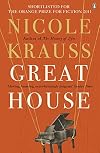
Nicole Krauss's third novel reminded me in many ways of David Mitchell's work. Here we have a multi-stranded novel of what are essentially linked short stories, most broken into two sections, and set in various parts of the world - New York, Israel, the UK. The main difference is the narrative's homogeneity: despite the fact Krauss has both male and female narrators of a wide variety of ages they seem pretty similar to each other on the page. In addition, again unlike Mitchell and also unlike her earlier The History of Love, this novel is largely downbeat and restrained in tone.
The linking device is a large writing desk which lurks in the background of three of the four main stories. It is first found in the story 'All Rise' belonging to Nadia, a writer in New York City in the early 1970s, where she is asked to look after it by a Chilean poet, Daniel Varsky, with whom she has had a one night stand. Varsky subsequently disappears under Pincohet's brutal regime, at least as far as Nadia can tell. Some 27 years later, Leah Weisz, a woman claiming to be Daniel's daughter, comes to claim the desk, which Nadia hands over, but her life falls to pieces thereafter.
'All Rise' is largely addressed to "your Honor", casting it as Nadia defending her actions in a court - you see why this is appropriate at the end of her story. In the next story 'True Kindness', one of the characters is Dov, a judge now practising in London who has returned home following his mother's death. The story show more is related by his lawyer father Aaron as the old man tries to re-establish relations with his estranged son. The implication, never made explicit, is Dov is the judge to whom the earlier story is addressed.
It turns out the desk has also belonged to Lotte Berg, also a writer and a refugee who arrived in the UK with the Kindertransport, who settles in north London and who is also visited by Daniel Varsky who takes the desk from her. Its influence in her life is told by her husband Arthur in 'Swimming Holes' (a reference to the Hampstead Heath ponds where Lotte swims daily), but here the desk is more in the background as he makes shattering discoveries about the enigmatic Lotte following her descent into Alzheimer's.
The final story is 'Lies Told by Children', narrated by Oxford student Isabelle, who is having an affair with Yoav Weisz, Leah's brother. The siblings share a rambling house stuffed with a constantly changing assortment of antiques in Belsize Park and live in dread of their dominant father George, a dealer specialising in recovering items confiscated from Jews by the Nazis. This fractured novel is bought to a conclusion by a short coda from George himself.
Great House is an artfully constructed novel full of accomplished, polished prose. Whilst this short story lover believes each story has been broken up rather pointlessly, working out the subtler links between them is part of the fun. But with bereavement, dysfunctional family relationships, loneliness and the Holocaust all forming part of the novel's fabric, as you might imagine jokes are few and far between. Almost as a self-conscious reaction to the lighter tone to The History of Love, Great House is terrifically serious and therefore, unlike its predecessor, a novel to admire rather than truly love. show less
The linking device is a large writing desk which lurks in the background of three of the four main stories. It is first found in the story 'All Rise' belonging to Nadia, a writer in New York City in the early 1970s, where she is asked to look after it by a Chilean poet, Daniel Varsky, with whom she has had a one night stand. Varsky subsequently disappears under Pincohet's brutal regime, at least as far as Nadia can tell. Some 27 years later, Leah Weisz, a woman claiming to be Daniel's daughter, comes to claim the desk, which Nadia hands over, but her life falls to pieces thereafter.
'All Rise' is largely addressed to "your Honor", casting it as Nadia defending her actions in a court - you see why this is appropriate at the end of her story. In the next story 'True Kindness', one of the characters is Dov, a judge now practising in London who has returned home following his mother's death. The story show more is related by his lawyer father Aaron as the old man tries to re-establish relations with his estranged son. The implication, never made explicit, is Dov is the judge to whom the earlier story is addressed.
It turns out the desk has also belonged to Lotte Berg, also a writer and a refugee who arrived in the UK with the Kindertransport, who settles in north London and who is also visited by Daniel Varsky who takes the desk from her. Its influence in her life is told by her husband Arthur in 'Swimming Holes' (a reference to the Hampstead Heath ponds where Lotte swims daily), but here the desk is more in the background as he makes shattering discoveries about the enigmatic Lotte following her descent into Alzheimer's.
The final story is 'Lies Told by Children', narrated by Oxford student Isabelle, who is having an affair with Yoav Weisz, Leah's brother. The siblings share a rambling house stuffed with a constantly changing assortment of antiques in Belsize Park and live in dread of their dominant father George, a dealer specialising in recovering items confiscated from Jews by the Nazis. This fractured novel is bought to a conclusion by a short coda from George himself.
Great House is an artfully constructed novel full of accomplished, polished prose. Whilst this short story lover believes each story has been broken up rather pointlessly, working out the subtler links between them is part of the fun. But with bereavement, dysfunctional family relationships, loneliness and the Holocaust all forming part of the novel's fabric, as you might imagine jokes are few and far between. Almost as a self-conscious reaction to the lighter tone to The History of Love, Great House is terrifically serious and therefore, unlike its predecessor, a novel to admire rather than truly love. show less
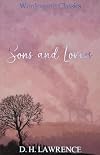
This novel, first published in 1913, bought Lawrence widespread fame. It tells the story of Paul Morel and is apparently thinly disguised autobiography. Paul is the son of poorly educated miner Walter, but Walter is really a minor character next to Paul's much more dominant mother Gertrude, more middle class than her husband and with great aspirations for her children. Her relationship with her son shapes his with other women, first with local girl Miriam and then, when he starts work in Nottingham with the more sophisticated and older Clara Dawes, who is estranged from her husband.
Sons and Lovers is a long book for this fairly slender plot, focussing as it does on the psychological rather than action. In that sense, I guess it would have been thought to be very progressive for its time, as would the occasional lapse into Nottinghamshire vernacular, but it seems old fashioned now, and often achingly slow. Personally, I found many of the expressions of feeling far too melodramatic for my tastes. I also read the book in short, widely spaced bursts; perhaps I might have liked it more if I'd been able to fully immerse myself in the world Lawrence creates.
I also didn't care too much for Paul. His inability to make the break from his mother is in stark contrast to brothers William and Arthur. The latter joins the Army, the former moves to London to work, and seems harshly punished by Lawrence in the story for doing so. Paul's supposedly sensitive, artistic nature I'm afraid show more just screamed "Mummy's boy" to me and I got increasingly frustrated with his inability to act and I rather felt at the novel's downbeat ending he was where he deserved to be. He certainly spent a lot of time looking gift horses in the mouth, at times seeming deeply in love with first Miriam and then Clara but then managing to talk himself out of it. Each woman appeals to certain parts of his nature, but the suggestion is marrying neither would have been completely fulfilling for him.
I guess I can grudgingly see why Lawrence is regarded as an important author but I can't help wondering if his work is remembered for reasons other than its literary merits i.e. the rude bits, of which there are none to speak of here. It'll be some time before I read anything else by this writer. show less
Sons and Lovers is a long book for this fairly slender plot, focussing as it does on the psychological rather than action. In that sense, I guess it would have been thought to be very progressive for its time, as would the occasional lapse into Nottinghamshire vernacular, but it seems old fashioned now, and often achingly slow. Personally, I found many of the expressions of feeling far too melodramatic for my tastes. I also read the book in short, widely spaced bursts; perhaps I might have liked it more if I'd been able to fully immerse myself in the world Lawrence creates.
I also didn't care too much for Paul. His inability to make the break from his mother is in stark contrast to brothers William and Arthur. The latter joins the Army, the former moves to London to work, and seems harshly punished by Lawrence in the story for doing so. Paul's supposedly sensitive, artistic nature I'm afraid show more just screamed "Mummy's boy" to me and I got increasingly frustrated with his inability to act and I rather felt at the novel's downbeat ending he was where he deserved to be. He certainly spent a lot of time looking gift horses in the mouth, at times seeming deeply in love with first Miriam and then Clara but then managing to talk himself out of it. Each woman appeals to certain parts of his nature, but the suggestion is marrying neither would have been completely fulfilling for him.
I guess I can grudgingly see why Lawrence is regarded as an important author but I can't help wondering if his work is remembered for reasons other than its literary merits i.e. the rude bits, of which there are none to speak of here. It'll be some time before I read anything else by this writer. show less
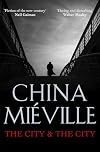
Tyador Borlu is an Inspector with the Extreme Crimes Squad in the rundown city of Beszel, possibly somewhere in post-Soviet eastern Europe. He is called upon to investigate the murder of a female student.
Beszel is, however, no ordinary city. It co-exists in the same physical space as the wealthier Ul Qoma. However, the citizens of each city are trained from an early age to "unsee" manifestations of the other, to erase it from their minds. In some areas, the barriers between the two cities is "cross-hatched" and weak and it is here that citizens are at risk of unauthorised crossings or breaches, as they are known.
As Borlu and sidekick Corwi investigate, it seems the student has been working on both sides of the border on an archaelogical dig and her theories, along with those of her mentor Professor David Bowden, have also attracted the interest of nationalist and unificationist politicians on the Oversight Committee which governs relations between the cities. As the case becomes increasingly sensitive and complex, Borlu is teamed up with an Ul Qoman detective, Qusim Dhatt, to continue the investigation.
The divide is policed by a force simply known as Breach, which citizens of both cities live in fear of since those who make unauthorized crossings have a tendency to disappear.
The student, Mahalia Geary, and Bowden have posited a theory that Breach is part of a third city, Orciny, often dismissed as a myth. But is there something to their ideas, and is Mahalia's death and show more the disappearance of fellow student Yolanda Rodriguez connected to it? To solve the murder, might Borlu have to put himself at the mercy of Breach?
Mieville skillfully combines the tropes of a police procedural novel with his extraordinary, surreal creation. Unlike the cliched sword and sorcery fantasy writers who invoke the rural and the medieval in their worlds, Mielville's work is fiercely urban both here and in his other novels making him, to my mind, a much more interesting writer than George R.R. Martin and his ilk.
There is more to Mieville's creation, however, than simply fantastical story telling. The author is a committed socialist and often uses his fiction to make political points. Here, the message is about how easy we find it to ignore the ills of our societies in the same way as the two cities are trained to ignore one another.
This is certainly a fantastic novel in one sense of the word, and its sheer inventiveness and the force of its central conceit are undeniable and I was drawn into this richly imagined world. I guess how much you like this novel (and I liked it very much) will depend on how much you can buy into it.
The City and the City did have some flaws to my mind. Borlu is not a reflective man and we get little insight into how the denizens of the two cities feel about the strange arrangement in which they live; more might have been interesting although perhaps would not have moved the story along. The thriller elements could perhaps be tighter too. These are quibbles really, though. This is a good novel but I liked the two others of his I've read Perdido Street Station and his criminally underrated debut King Rat more.
Mieville belongs to a distinguished tradition; Wells, Peake, Dick, Kafka, Orwell, Atwood, Borges and Ballard are obvious influences and I believe he is worthy of mention in the same breath. If there was more sci-fi/fantasy writing like this around then perhaps the genre would not be so maligned. show less
Beszel is, however, no ordinary city. It co-exists in the same physical space as the wealthier Ul Qoma. However, the citizens of each city are trained from an early age to "unsee" manifestations of the other, to erase it from their minds. In some areas, the barriers between the two cities is "cross-hatched" and weak and it is here that citizens are at risk of unauthorised crossings or breaches, as they are known.
As Borlu and sidekick Corwi investigate, it seems the student has been working on both sides of the border on an archaelogical dig and her theories, along with those of her mentor Professor David Bowden, have also attracted the interest of nationalist and unificationist politicians on the Oversight Committee which governs relations between the cities. As the case becomes increasingly sensitive and complex, Borlu is teamed up with an Ul Qoman detective, Qusim Dhatt, to continue the investigation.
The divide is policed by a force simply known as Breach, which citizens of both cities live in fear of since those who make unauthorized crossings have a tendency to disappear.
The student, Mahalia Geary, and Bowden have posited a theory that Breach is part of a third city, Orciny, often dismissed as a myth. But is there something to their ideas, and is Mahalia's death and show more the disappearance of fellow student Yolanda Rodriguez connected to it? To solve the murder, might Borlu have to put himself at the mercy of Breach?
Mieville skillfully combines the tropes of a police procedural novel with his extraordinary, surreal creation. Unlike the cliched sword and sorcery fantasy writers who invoke the rural and the medieval in their worlds, Mielville's work is fiercely urban both here and in his other novels making him, to my mind, a much more interesting writer than George R.R. Martin and his ilk.
There is more to Mieville's creation, however, than simply fantastical story telling. The author is a committed socialist and often uses his fiction to make political points. Here, the message is about how easy we find it to ignore the ills of our societies in the same way as the two cities are trained to ignore one another.
This is certainly a fantastic novel in one sense of the word, and its sheer inventiveness and the force of its central conceit are undeniable and I was drawn into this richly imagined world. I guess how much you like this novel (and I liked it very much) will depend on how much you can buy into it.
The City and the City did have some flaws to my mind. Borlu is not a reflective man and we get little insight into how the denizens of the two cities feel about the strange arrangement in which they live; more might have been interesting although perhaps would not have moved the story along. The thriller elements could perhaps be tighter too. These are quibbles really, though. This is a good novel but I liked the two others of his I've read Perdido Street Station and his criminally underrated debut King Rat more.
Mieville belongs to a distinguished tradition; Wells, Peake, Dick, Kafka, Orwell, Atwood, Borges and Ballard are obvious influences and I believe he is worthy of mention in the same breath. If there was more sci-fi/fantasy writing like this around then perhaps the genre would not be so maligned. show less

I saw session bassist extraordinaire turned stand up comedian Guy Pratt perform extracts from this book at the Cheltenham Literature Festival in 2007. As a raconteur, he did a decent job, so I had high hopes for the audiobook version I listened to, which he narrated.
Unfortunately, what proved to be amusing over the course of an hour or so proved to be pretty wearing for nearly nine. Pratt has played for a variety of artists from Madonna and Michael Jackson through David Coverdale & Jimmy Page to Australian Roxy Music impersonators Icehouse, but most famously for Pink Floyd, for whom he played Roger Waters' bass parts once he'd departed from the band.
My Bass and Other Animals mainly consists of tales of tour hi-jinks, largely involving what he got up to following the consumption of large quantities of alcohol and often stronger substances, mixed with pen portraits of the various stars he's played with, most of which conform to the perceptions one already has of them: Madonna is domineering, Michael Jackson shy and eccentric due to a botched nose job etc. With a band like Pink Floyd, where the music was always larger than the people who made it, David Gilmour and cohorts simply come across as your average multi-millionaires.
This is a laddish, larky reminiscence about an over-indulgent 1980s and '90s. Fun, but probably best consumed in small doses.
Unfortunately, what proved to be amusing over the course of an hour or so proved to be pretty wearing for nearly nine. Pratt has played for a variety of artists from Madonna and Michael Jackson through David Coverdale & Jimmy Page to Australian Roxy Music impersonators Icehouse, but most famously for Pink Floyd, for whom he played Roger Waters' bass parts once he'd departed from the band.
My Bass and Other Animals mainly consists of tales of tour hi-jinks, largely involving what he got up to following the consumption of large quantities of alcohol and often stronger substances, mixed with pen portraits of the various stars he's played with, most of which conform to the perceptions one already has of them: Madonna is domineering, Michael Jackson shy and eccentric due to a botched nose job etc. With a band like Pink Floyd, where the music was always larger than the people who made it, David Gilmour and cohorts simply come across as your average multi-millionaires.
This is a laddish, larky reminiscence about an over-indulgent 1980s and '90s. Fun, but probably best consumed in small doses.
It took me several months to read Bad Science, as I was reluctant to pick it up after working on my dissertation. Goldacre's topic was just too close to what I had been studying and writing about all day.
The essential thrust of his argument is that we are peddled a lot of nonsense by quacks and should be listening more closely to medics like, for example, Dr. Ben Goldacre. Doctors themselves should be using evidence based medicine, in other words, providing treatment which it has been shown works. Common sense stuff, it would seem, but he shows that we as, for want of a better term, health consumers find his advice remarkably hard to follow.
We accept this stuff because journalists, since they are not medical experts, write misleading stories out of ignorance or, worse, laziness. We also accept it because we want miracle pills to cure our ailments without having to consult our doctors.
Goldacre gleefully digs the knife into figures such as Gillian McKeith (his repeated attacks in his Guardian column on her resulted in her dropping the title "Dr.") and shows us the wonders of the placebo effect. Part of the reason we believe in homeopathy, he claims, is that we do get better whilst taking such remedies, but we would do so anyway, regardless of whether we took the pills or not.
Bad Science is extremely readable and funny in places, although I personally found more than a hint of smugness in his style. I also think it a little disingenuous for a man with a weekly newspaper show more column to try and distance himself from journalists quite so much. He's simply a journalist who has chosen to swim against a tide of mediocrity because he has the expert knowledge enabling him to do so and the chops to be able to explain his argument to the rest of us entertainingly. show less
The essential thrust of his argument is that we are peddled a lot of nonsense by quacks and should be listening more closely to medics like, for example, Dr. Ben Goldacre. Doctors themselves should be using evidence based medicine, in other words, providing treatment which it has been shown works. Common sense stuff, it would seem, but he shows that we as, for want of a better term, health consumers find his advice remarkably hard to follow.
We accept this stuff because journalists, since they are not medical experts, write misleading stories out of ignorance or, worse, laziness. We also accept it because we want miracle pills to cure our ailments without having to consult our doctors.
Goldacre gleefully digs the knife into figures such as Gillian McKeith (his repeated attacks in his Guardian column on her resulted in her dropping the title "Dr.") and shows us the wonders of the placebo effect. Part of the reason we believe in homeopathy, he claims, is that we do get better whilst taking such remedies, but we would do so anyway, regardless of whether we took the pills or not.
Bad Science is extremely readable and funny in places, although I personally found more than a hint of smugness in his style. I also think it a little disingenuous for a man with a weekly newspaper show more column to try and distance himself from journalists quite so much. He's simply a journalist who has chosen to swim against a tide of mediocrity because he has the expert knowledge enabling him to do so and the chops to be able to explain his argument to the rest of us entertainingly. show less
Tom is married to a superhero called The Perfectionist, who is able to will perfect order with her mind. Unfortunately, thanks to jealous ex-boyfriend Hypno hypnotising her on her wedding day, The Perfectionist is unable to see Tom. Thinking Tom has disappeared, The Perfectionist decides to start her life over by re-locating to Vancouver. Tom manages to get the seat next to her on the plane. How will he, the only person he knows without a superpower, convince The Perfectionist that he's still with her before the plane lands?
The superheroes in this slim novella are not stereotypical, from their lack of secret identities onward. The Stress Bunny, who absorbs the stress of anyone within a 50-foot radius thanks to her strict Catholic upbringing and is consequently very popular at parties, is a typical example.
Superheroes are everywhere, says the author, a rather sickly sentiment if you ask this old cynic. Nevertheless, this is a brilliantly quirky idea and some of the superheroes are really rather clever ideas who are rather more interesting than the central story.
The superheroes in this slim novella are not stereotypical, from their lack of secret identities onward. The Stress Bunny, who absorbs the stress of anyone within a 50-foot radius thanks to her strict Catholic upbringing and is consequently very popular at parties, is a typical example.
Superheroes are everywhere, says the author, a rather sickly sentiment if you ask this old cynic. Nevertheless, this is a brilliantly quirky idea and some of the superheroes are really rather clever ideas who are rather more interesting than the central story.
My first encounter with John Banville's writing under either name and I can safely say it won't be my last, at least under his Banjamin Black alias.
Christine Falls is faithful to many of the genre conventions: Quirke drinks too much, pines for his dead wife and has no respect for authority, not surprising given what he finds out as this masterful novel progresses. 1950s Dublin is atmospherically dark and gloomy and brilliantly evoked.
It's the latter that really separates this, and the best crime writing, out. One reads Chandler not for his watertight plotting but for his delicious prose and his fascinating investigator. Banville/Black, whilst stylistically hugely different from Chandler, understands this and achieves the same.
The novel is less surefooted once the action moves from Dublin to Boston but by then I, for one, was already hooked and being reeled in.
After Franzen's "Freedom", for me this was 2011's second 5 star read.
Christine Falls is faithful to many of the genre conventions: Quirke drinks too much, pines for his dead wife and has no respect for authority, not surprising given what he finds out as this masterful novel progresses. 1950s Dublin is atmospherically dark and gloomy and brilliantly evoked.
It's the latter that really separates this, and the best crime writing, out. One reads Chandler not for his watertight plotting but for his delicious prose and his fascinating investigator. Banville/Black, whilst stylistically hugely different from Chandler, understands this and achieves the same.
The novel is less surefooted once the action moves from Dublin to Boston but by then I, for one, was already hooked and being reeled in.
After Franzen's "Freedom", for me this was 2011's second 5 star read.
"The Humbling" follows a trajectory those who are familiar with the great man's later work will have become accustomed to.
Simon Axler is a successful stage actor in his mid-60s. However, after struggling with spinal problems and several poor reviews he suffers a crisis of confidence so debilitating that his wife flees and he winds up admitting himself to a psychiatric institution. In art therapy at the institution he meets Sybil van Buren, also depressed after discovering her husband sexually abusing their daughter.
Amazingly for a Roth protagonist, Simon doesn't sleep with Sybil and in fact turns down her request that he murders her husband.
On release and moping about at home, the normal course of events for a Roth novel are restored. Simon is visited by Pegeen, the daughter of a mutual friend who has lived as a lesbian for 17 years, but not now she's met Simon, even though he's 25 years her senior! Pegeen's lover Louise, also her boss at the college where she teaches, is understandably upset and tells all to Pegeen's parents, who have been unaware of her previous sexual orientation and have to deal not only with this but the fact she's now having an affair with the much older Simon and wants to have his child.
Simon and Pegeen fantasise about a threesome and then act upon this. It affects the dynamic of their affair that Pegeen breaks it off. This, in essence, is Simon's humbling.
I've read half a dozen Roth novels and have to say this one is his first out and out duffer; show more even Roth's usual fluid prose, still present, can't save it. His late work usually teeters on the brink of descending into dirty old man's fantasy but sadly this one oversteps the line without the saving grace of having his protagonist raging eloquently against his failing body and the dying of the light as in Everyman and The Human Stain. both superior examples of noughties Roth.
It's short, too, at less than 4 hours on unabridged audio. I'm afraid it smacks of "will this do?" and rather suggests that Roth, now 78 and still churning out a book a year might be well advised to slow down and focus on quality, not quantity. show less
Simon Axler is a successful stage actor in his mid-60s. However, after struggling with spinal problems and several poor reviews he suffers a crisis of confidence so debilitating that his wife flees and he winds up admitting himself to a psychiatric institution. In art therapy at the institution he meets Sybil van Buren, also depressed after discovering her husband sexually abusing their daughter.
Amazingly for a Roth protagonist, Simon doesn't sleep with Sybil and in fact turns down her request that he murders her husband.
On release and moping about at home, the normal course of events for a Roth novel are restored. Simon is visited by Pegeen, the daughter of a mutual friend who has lived as a lesbian for 17 years, but not now she's met Simon, even though he's 25 years her senior! Pegeen's lover Louise, also her boss at the college where she teaches, is understandably upset and tells all to Pegeen's parents, who have been unaware of her previous sexual orientation and have to deal not only with this but the fact she's now having an affair with the much older Simon and wants to have his child.
Simon and Pegeen fantasise about a threesome and then act upon this. It affects the dynamic of their affair that Pegeen breaks it off. This, in essence, is Simon's humbling.
I've read half a dozen Roth novels and have to say this one is his first out and out duffer; show more even Roth's usual fluid prose, still present, can't save it. His late work usually teeters on the brink of descending into dirty old man's fantasy but sadly this one oversteps the line without the saving grace of having his protagonist raging eloquently against his failing body and the dying of the light as in Everyman and The Human Stain. both superior examples of noughties Roth.
It's short, too, at less than 4 hours on unabridged audio. I'm afraid it smacks of "will this do?" and rather suggests that Roth, now 78 and still churning out a book a year might be well advised to slow down and focus on quality, not quantity. show less
Christopher Priest's 1995 novel differs quite markedly from the film adaptation made some 10 years later, but is a very fine, if not better, piece of work in its own right.
This is one of those novels I can't reveal too much about without spoiling it but I'll try and provide a plot synopsis. The action is set at the end of the 19th century and centres on two battling magicians, Alfred Borden, the son of a humble cabinet maker, and Rupert Angier, who renounces the title of Earl of Colderdale he is to inherit in order to practice magic. Their feud centres around one trick known as The New Transported Man, in which the magician appears to the audience to be teleported across the stage. Each finds a way to perfect it, although their methods are radically different. Each becomes obsessed with finding out how the other manages the trick and then to sabotage it through various methods.
The story is told through the diaries of the two men, so immediately the reader is faced with two unreliable narrators and has no idea whom to trust. There's a rather pointless framing device with the great-grandchildren of the two magicians meeting and investigating the case.
My main criticisms are that Priest's narrative voices aren't quite coinvincingly Victorian and perhaps more could have been made of their contrasting backgrounds. However, this is still a gripping story and I, for one, love an unreliable narrator, so having two was a bonus.
I listened to this and the early stages of the dual show more narratives don't lend themselves terribly well to this format but once the novel was fully up and running I was quickly drawn into this murky world and the twisting plot. Fans of Neil Gaiman and Louise Welsh will find much to enjoy here. show less
This is one of those novels I can't reveal too much about without spoiling it but I'll try and provide a plot synopsis. The action is set at the end of the 19th century and centres on two battling magicians, Alfred Borden, the son of a humble cabinet maker, and Rupert Angier, who renounces the title of Earl of Colderdale he is to inherit in order to practice magic. Their feud centres around one trick known as The New Transported Man, in which the magician appears to the audience to be teleported across the stage. Each finds a way to perfect it, although their methods are radically different. Each becomes obsessed with finding out how the other manages the trick and then to sabotage it through various methods.
The story is told through the diaries of the two men, so immediately the reader is faced with two unreliable narrators and has no idea whom to trust. There's a rather pointless framing device with the great-grandchildren of the two magicians meeting and investigating the case.
My main criticisms are that Priest's narrative voices aren't quite coinvincingly Victorian and perhaps more could have been made of their contrasting backgrounds. However, this is still a gripping story and I, for one, love an unreliable narrator, so having two was a bonus.
I listened to this and the early stages of the dual show more narratives don't lend themselves terribly well to this format but once the novel was fully up and running I was quickly drawn into this murky world and the twisting plot. Fans of Neil Gaiman and Louise Welsh will find much to enjoy here. show less
As well as being Japan's best known author, Haruki Murakami runs. A lot. At the time of this book's completion at the end of 2007, he had run 24 marathons, one a year, plus participated in triathalons and, described in this book, a 62 mile ultra marathon.
Murakami seems to have decided sometime in the early 1980s for no reason adequately described here, to start running, and has done so every day he can since. It's something one of his fictional protagonists might do. By this stage, he'd already written two novels (the ones he considers his juvenilia and which are virtually impossible to find in English) but his career as a writer only takes off once he closes the jazz club he runs and concentrates on writing and running. To him, the two activities seem intimately connected; his fitness gives him the stamina to write.
Inevitably, the long periods the author spends running invite comparison with the long slog of novel writing. Oddly, though, for a writer whose work detractors have described as rambling, Murakami seems a rigorous runner as we follow him preparing for the 2005 New York City marathon and worry with him about his wonky knee. It's notable that much of the description is of discomfort; running the original marathon course in Greece in unbearable heat, for example. There's sweat, pain, thirst but little reward beyond a cold beer at the end of the race, before starting to prepare for the next one.
It is interesting that Murakami chooses the word "talk" for the title, show more which is adapted from a short story collection by Raymond Carver. When we do get to see inside his mind whilst he's running, there is little going on. Those who do run, which I do less often than I should, know that runs can be a time to ponder events in our lives but that our minds often actually focus on the business of running, as Murakami's does here.
Inevitably, then, although this book purports to be a memoir, we learn little about Murakami himself, as those familiar with his fiction might expect there is much we do not learn. Why is he in Hawaii and then Cambridge, MA during the course of events in this book? We get to know nothing of other people in his life or what their attitude is to his obsession. Murakami paints a solitary picture of himself and, as he admits, he seems a character well suited to long distance running.
What we do get, most affectingly, is a sense of frustration which the gradual deterioration of his body bought about by the aging process; his times for the two marathons described during the book are not among his best.
This is Murakami's first venture into memoir and it is of a kind those familiar with his work would expect him to produce. It is an easy, quick read, unlike the activity it describes. Whether it would inspire anyone to take up his passion is another matter. show less
Murakami seems to have decided sometime in the early 1980s for no reason adequately described here, to start running, and has done so every day he can since. It's something one of his fictional protagonists might do. By this stage, he'd already written two novels (the ones he considers his juvenilia and which are virtually impossible to find in English) but his career as a writer only takes off once he closes the jazz club he runs and concentrates on writing and running. To him, the two activities seem intimately connected; his fitness gives him the stamina to write.
Inevitably, the long periods the author spends running invite comparison with the long slog of novel writing. Oddly, though, for a writer whose work detractors have described as rambling, Murakami seems a rigorous runner as we follow him preparing for the 2005 New York City marathon and worry with him about his wonky knee. It's notable that much of the description is of discomfort; running the original marathon course in Greece in unbearable heat, for example. There's sweat, pain, thirst but little reward beyond a cold beer at the end of the race, before starting to prepare for the next one.
It is interesting that Murakami chooses the word "talk" for the title, show more which is adapted from a short story collection by Raymond Carver. When we do get to see inside his mind whilst he's running, there is little going on. Those who do run, which I do less often than I should, know that runs can be a time to ponder events in our lives but that our minds often actually focus on the business of running, as Murakami's does here.
Inevitably, then, although this book purports to be a memoir, we learn little about Murakami himself, as those familiar with his fiction might expect there is much we do not learn. Why is he in Hawaii and then Cambridge, MA during the course of events in this book? We get to know nothing of other people in his life or what their attitude is to his obsession. Murakami paints a solitary picture of himself and, as he admits, he seems a character well suited to long distance running.
What we do get, most affectingly, is a sense of frustration which the gradual deterioration of his body bought about by the aging process; his times for the two marathons described during the book are not among his best.
This is Murakami's first venture into memoir and it is of a kind those familiar with his work would expect him to produce. It is an easy, quick read, unlike the activity it describes. Whether it would inspire anyone to take up his passion is another matter. show less
I guess not all the jokes in Diary of a Nobody have aged that well, but the theme certainly has: there are still Charles Pooters everywhere who don't understand their offspring, think they're more amusing than they are, have trouble with workmen and modest aspirations in their dull jobs. This is the timeless element of Diary of a Nobody; that there's rather more of Mr Pooter in all of us than we'd like to admit.
It's a short book and I'd recommend it.
It's a short book and I'd recommend it.
Stanley Featherstonehaugh Ukridge is not one of Wodehouse's better known creations, but he's one of the most disreputable. Ukridge is forever on the lookout to make a quick buck, either from staging accidents to claim on the insurance, starting dog training schools or managing the boxer "Battling" Billson.
Ukridge has his very own Boswell, journalist "Corky" Corcoran who finds himself frequently roped into Ukridge's outlandish schemes as well as lending him money he never sees again.
Although a bit of a change from the world of Jeeves and Blandings, this couldn't be the work of anyone else, particularly given the looming presence of Ukridge's novelist aunt who, like all Wodehouse aunts, is not a woman to be trifled with! Like many Wodehouse protagonists, Ukridge is also liable to be swept off his feet at any moment, albeit in a very innocent way.
If you're looking for comfort reads, you really can't go far wrong with Wodehouse's delicious prose, of which this is a fine example.
Ukridge has his very own Boswell, journalist "Corky" Corcoran who finds himself frequently roped into Ukridge's outlandish schemes as well as lending him money he never sees again.
Although a bit of a change from the world of Jeeves and Blandings, this couldn't be the work of anyone else, particularly given the looming presence of Ukridge's novelist aunt who, like all Wodehouse aunts, is not a woman to be trifled with! Like many Wodehouse protagonists, Ukridge is also liable to be swept off his feet at any moment, albeit in a very innocent way.
If you're looking for comfort reads, you really can't go far wrong with Wodehouse's delicious prose, of which this is a fine example.
Another year, another Roth novel. I seem to be reading them almost as fast as old Phil can churn them out which, as he gets older, he seems to do faster and faster, another sign, as if his books didn't signpost it enough already, of his consciousness of his own mortality.
Like the other noughties Roth I've read, "Everyman" and "The Dying Animal", is a short novel, but unlike them this isn't a meditation on aging, although death is in the air.
Roth's protagonist is Marcus Messner, a 19 year old grade A student. After the death of family members in World War II, Pa Messner becomes over-protective on top of his ailing health. Marcus feels he has to escape from the stifling surrounds of his father's Kosher butcher's shop, the New Jersey suburb where they live and his mundane local college to the ultra-WASP surroundings of Winesburg College, Ohio.
Here, he rejects the advances of the college's Jewish fraternity and a Jewish homosexual roommate for Olivia Hutton, a girl who on the surface appears to be a typical Winesburg student but is not all she seems. Despite his focus on his studies, Marcus runs into trouble with the college authorities and the novel's central passage is Marcus's showdown with the Dean of Men.
Despite being a short novel, "Indignation" has a number of lengthy sections like that, giving an impression of slightness which is hard to dispel. Like many Roth protagonists, Marcus is a hard character to care about, seeming petulant more than anything, although his show more increasing obsession with the Korean War and the rise of Red China, contemporaneous with the novel's events, are put forward by Roth as a way to explain this, which didn't really wash with me.
This is my sixth Roth novel and like the others, it has much to recommend it, but I still feel with this author that I haven't found his masterwork yet, the novel against which all his others must be benchmarked. Maybe he hasn't written it yet, but his increasingly frantic workrate makes this seem unlikely. show less
Like the other noughties Roth I've read, "Everyman" and "The Dying Animal", is a short novel, but unlike them this isn't a meditation on aging, although death is in the air.
Roth's protagonist is Marcus Messner, a 19 year old grade A student. After the death of family members in World War II, Pa Messner becomes over-protective on top of his ailing health. Marcus feels he has to escape from the stifling surrounds of his father's Kosher butcher's shop, the New Jersey suburb where they live and his mundane local college to the ultra-WASP surroundings of Winesburg College, Ohio.
Here, he rejects the advances of the college's Jewish fraternity and a Jewish homosexual roommate for Olivia Hutton, a girl who on the surface appears to be a typical Winesburg student but is not all she seems. Despite his focus on his studies, Marcus runs into trouble with the college authorities and the novel's central passage is Marcus's showdown with the Dean of Men.
Despite being a short novel, "Indignation" has a number of lengthy sections like that, giving an impression of slightness which is hard to dispel. Like many Roth protagonists, Marcus is a hard character to care about, seeming petulant more than anything, although his show more increasing obsession with the Korean War and the rise of Red China, contemporaneous with the novel's events, are put forward by Roth as a way to explain this, which didn't really wash with me.
This is my sixth Roth novel and like the others, it has much to recommend it, but I still feel with this author that I haven't found his masterwork yet, the novel against which all his others must be benchmarked. Maybe he hasn't written it yet, but his increasingly frantic workrate makes this seem unlikely. show less
I rather liked "Netherland", although I guess I was pre-disposed to be favourable to it given my fondness for both cricket and New York City, and O'Neill has, through his marriage of the two, found a way to give a fresh perspective on the city and some of its recent immigrants.
Hans sometimes seemed rambling and verbose but I think that's a fair reflection of most people's internal monologues; it certainly is of mine!
As with most first person narratives, I tended to assume that Hans wasn't a reliable narrator, and in that sense I thought the portrayal of his relationship with Chuck was cleverly done and I wanted to know how his body came to have been dumped in the river. Whilst Chuck may have been involved in some shady activities, his efforts to build a cricket stadium in the city reminded me of some of the heroes of another outsider in New York, Peter Carey, although the picaresque elements of many of Carey's narratives is absent here.
The events of 9/11 didn't seem central to the book except to give a reason for Hans to have been staying in the Chelsea Hotel, a bohemian hangout that seems an odd choice of residence for a Wall Street analyst as straight as Hans.
Hans sometimes seemed rambling and verbose but I think that's a fair reflection of most people's internal monologues; it certainly is of mine!
As with most first person narratives, I tended to assume that Hans wasn't a reliable narrator, and in that sense I thought the portrayal of his relationship with Chuck was cleverly done and I wanted to know how his body came to have been dumped in the river. Whilst Chuck may have been involved in some shady activities, his efforts to build a cricket stadium in the city reminded me of some of the heroes of another outsider in New York, Peter Carey, although the picaresque elements of many of Carey's narratives is absent here.
The events of 9/11 didn't seem central to the book except to give a reason for Hans to have been staying in the Chelsea Hotel, a bohemian hangout that seems an odd choice of residence for a Wall Street analyst as straight as Hans.