On This Page
Description
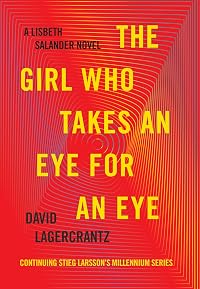
INSTANT NEW YORK TIMES BEST SELLERLisbeth Salander is back with a vengeance.
The series that began with The Girl with the Dragon Tattoo continues as brilliant hacker Lisbeth Salander teams up with journalist Mikael Blomkvist to uncover the secrets of her childhood and to take revenge.
Lisbeth Salander—obstinate outsider, volatile seeker of justice for herself and others—seizes on a chance to unearth her mysterious past once and for all. And she will let nothing stop her—not the show more Islamists she enrages by rescuing a young woman from their brutality; not the prison gang leader who passes a death sentence on her; not the deadly reach of her long-lost twin sister, Camilla; and not the people who will do anything to keep buried knowledge of a sinister pseudoscientific experiment known only as The Registry. Once again, Lisbeth Salander and Mikael Blomkvist are the fierce heart of a thrilling full-tilt novel that takes on some of the world's most insidious problems. show less
Tags
Recommendations












































Member Reviews
I didn’t really like this one. I wanted to read about Lisbeth Salander, not pages and pages about the stock market and unethical scientific research. She was almost a NPC here. Also I thought there were way too many pages about the stock broker and the musician, until I realized their part in Salander’s story.
Finally, the confrontation between Salander and the bad guy seemed extremely unrealistic.
I saw a review about this book saying that the author took compelling characters and an exciting setting and made it tedious. I agree.
Finally, the confrontation between Salander and the bad guy seemed extremely unrealistic.
I saw a review about this book saying that the author took compelling characters and an exciting setting and made it tedious. I agree.
Not my Salander
Review of the Audible Audio edition narrated by Simon Vance
After my disappointment with "The Girl in the Spider's Web" (2015), the first of the post-Stieg Larsson continuation series of Millenium novels, I didn't have any great compulsion to pick up "The Girl Who Takes an Eye for an Eye" when it was released in 2017. I did pick it up though when I saw it on sale at Audible and also noticed that veteran narrator Simon Vance was the reader.
Continuation series have become a guaranteed income generator in the detective and thriller genres since the time of Sherlock Holmes. The best of them are able to recreate the beloved traits of the lead characters in recognizable ways for fans while increasing the scope of their show more experience. The worst of them read as barely acceptable fan-fiction. Lagercrantz's Millenium series continuation falls somewhere in the middle of the pack.
Lisbeth Salander captured people's imagination as an underdog character who possessed unique computer skills which she often utilized to assist co-lead character Mikael Blomkvist in investigative journalism. She would act as a nerd vigilante hero to right wrongs that society was unable to correct. On the surface this might seem easy to duplicate, but Lagercrantz just doesn't seem to be able to do this in any sort of compelling manner. The setups are all in place but there is a lack of authentic feel to the follow throughs.
This somehow results in Salander and Blomkvist feeling like secondary characters in their own series. A subplot related to separated identical twins (no further spoilers here) is actually more intriguing than the main plot here. You can't just capture Salander by putting in a few defenses of the weak, some random computer hacking and a vigilante revenger fantasy. Some actual in depth character development is required. Otherwise it just feels like going through the motions and ticking off boxes in a paint-by-numbers recreation of a character that first captured readers' imagination.
The narration by Simon Vance was outstanding of course, no fault to be found in that. show less
Review of the Audible Audio edition narrated by Simon Vance
After my disappointment with "The Girl in the Spider's Web" (2015), the first of the post-Stieg Larsson continuation series of Millenium novels, I didn't have any great compulsion to pick up "The Girl Who Takes an Eye for an Eye" when it was released in 2017. I did pick it up though when I saw it on sale at Audible and also noticed that veteran narrator Simon Vance was the reader.
Continuation series have become a guaranteed income generator in the detective and thriller genres since the time of Sherlock Holmes. The best of them are able to recreate the beloved traits of the lead characters in recognizable ways for fans while increasing the scope of their show more experience. The worst of them read as barely acceptable fan-fiction. Lagercrantz's Millenium series continuation falls somewhere in the middle of the pack.
Lisbeth Salander captured people's imagination as an underdog character who possessed unique computer skills which she often utilized to assist co-lead character Mikael Blomkvist in investigative journalism. She would act as a nerd vigilante hero to right wrongs that society was unable to correct. On the surface this might seem easy to duplicate, but Lagercrantz just doesn't seem to be able to do this in any sort of compelling manner. The setups are all in place but there is a lack of authentic feel to the follow throughs.
This somehow results in Salander and Blomkvist feeling like secondary characters in their own series. A subplot related to separated identical twins (no further spoilers here) is actually more intriguing than the main plot here. You can't just capture Salander by putting in a few defenses of the weak, some random computer hacking and a vigilante revenger fantasy. Some actual in depth character development is required. Otherwise it just feels like going through the motions and ticking off boxes in a paint-by-numbers recreation of a character that first captured readers' imagination.
The narration by Simon Vance was outstanding of course, no fault to be found in that. show less
This would be pretty good if it were just a book. But it's not. It's part of the Millennium series. And as such, it feels like mediocre fanfiction. Thankfully, Lagercrantz didn't really expand on Salandar's background again since the last time he did that it almost completely missed her personality. However, the reason we don't get much Salandar background is because we don't get much Salandar. She and Blomquist were secondary characters in their own series. This book focused on the holy uninteresting twins - Leo and Dan - and the nature v nurture debate while buying into the Islam = bad, Muslim = terrorist bs that permeates thrillers.
The Girl Who Takes an Eye For an Eye, Paul Lagercrantz, author; Simon Vance, narrator
If you liked the Lisbeth Salander Millenium series, you will love this one. Although there are periods when the reader will definitely have to suspend disbelief, it is still an exciting page turner.
Lisbeth Salander is in trouble again. She is in prison for a crime most people think she should have been rewarded for, not punished, but she refused to help her own case in court and was found guilty. While in prison, her life was threatened so she was transferred to a maximum security prison known for its discipline, supposedly for her own safety. When she arrived there, she discovered that it was not as well controlled as its reputation and being safe show more there was an implausible option. Because of corrupt prison officials and threats made by a nefarious prisoner, the place had become the victim and plaything of this woman who called herself Benito. Well connected inside and outside the prison, she was running her own little organization within its walls. Lisbeth ignored her threats and took it upon herself to protect another prisoner from her brutality, making herself an enemy of Benito. This other prisoner’s name was Faria. She was the victim of Islamic extremism on the outside, and Benito was tormenting her on the inside. Her family believed she had dishonored them, and as a result, she was paying a high price for their behavior and her own. In Salander’s own inimitable fashion, she blackmailed the warden into helping her to stop Benito’s reign of terror, and in turn, it would also protect Faria. This, she convinced him, would help them both, as she forced him to also allow her access to his computer.
Then uncharacteristically, Salander engaged the help of Mikael Blomkvist. He was eager to come to her aid and when he discovered her guardian, literally on his deathbed, he became deeply involved in the circumstances surrounding his murder. His investigation led to the discovery of a long-term, unethical, clandestine experiment that had been conducted on twins, both identical and fraternal. They were separated and placed in foster homes or adopted out to homes that were opposite in all ways to see the effect the environment would have on the siblings. The cruelty of the scientific study was exposed and those behind it were ferreted out. Salander discovered that she had been part of it and sought to expose the group.
Although at times it was confusing as the time line jumped around and the themes went off on tangents, some which stretched the imagination a bit too far, it was an exciting read that will hold the attention of anyone who enjoys this series. show less
If you liked the Lisbeth Salander Millenium series, you will love this one. Although there are periods when the reader will definitely have to suspend disbelief, it is still an exciting page turner.
Lisbeth Salander is in trouble again. She is in prison for a crime most people think she should have been rewarded for, not punished, but she refused to help her own case in court and was found guilty. While in prison, her life was threatened so she was transferred to a maximum security prison known for its discipline, supposedly for her own safety. When she arrived there, she discovered that it was not as well controlled as its reputation and being safe show more there was an implausible option. Because of corrupt prison officials and threats made by a nefarious prisoner, the place had become the victim and plaything of this woman who called herself Benito. Well connected inside and outside the prison, she was running her own little organization within its walls. Lisbeth ignored her threats and took it upon herself to protect another prisoner from her brutality, making herself an enemy of Benito. This other prisoner’s name was Faria. She was the victim of Islamic extremism on the outside, and Benito was tormenting her on the inside. Her family believed she had dishonored them, and as a result, she was paying a high price for their behavior and her own. In Salander’s own inimitable fashion, she blackmailed the warden into helping her to stop Benito’s reign of terror, and in turn, it would also protect Faria. This, she convinced him, would help them both, as she forced him to also allow her access to his computer.
Then uncharacteristically, Salander engaged the help of Mikael Blomkvist. He was eager to come to her aid and when he discovered her guardian, literally on his deathbed, he became deeply involved in the circumstances surrounding his murder. His investigation led to the discovery of a long-term, unethical, clandestine experiment that had been conducted on twins, both identical and fraternal. They were separated and placed in foster homes or adopted out to homes that were opposite in all ways to see the effect the environment would have on the siblings. The cruelty of the scientific study was exposed and those behind it were ferreted out. Salander discovered that she had been part of it and sought to expose the group.
Although at times it was confusing as the time line jumped around and the themes went off on tangents, some which stretched the imagination a bit too far, it was an exciting read that will hold the attention of anyone who enjoys this series. show less
Okay, I admit it: I’m impressed. Not by the plot of this fifth Millennium novel, nor by the writing - although I suspect Lagercrantz’s Swedish prose is much better than the translator’s English prose. But I’m seriously surprised at how well Lagercrantz has stitched the story of The Girl who Takes an Eye for an Eye into the Lisbeth Salander mythology, and reveals further details of her past that neatly dovetail with everything Larsson wrote in the initial trilogy. There must be a literary term for this sort of sharecropping, where an author interweaves new work into the previously-published corpus of a dead writer. I can only think of a bad example - Brian Herbert and Kevin J Anderson’s Dune novels…
Salander is in prison, the show more most secure women’s prison in Sweden in fact, which is now in thrall to a female psychopath gang leader inmate. One of the victims of this psycho is a young woman of Bangladeshi heritage, imprisoned for killing her brother, who murdered her secret boyfriend. It’s all to do with honour killing, a particularly vile cultural trait that has nothing to do with Islam and everything to do with primitive tribalism. Salander defends the young woman, which makes her a target of the psycho. That is, when she’s not writing new mathematical proofs of quantum theory in the margins of the books on the subject she’s borrowed from the prison library…
Meanwhile, Blomkvist has been drawn into a mystery surrounding a wealthy financier, the son of upper-class Swedes, and a gifted pianist, whose behaviour has recently changed. Then it transpires there’s a connection to Salander’s own history, and a link to the State Institute for Racial Biology, located in Uppsala, which closed in 1958 (and which was, deeply, horrendously, fucking racist), but secretly continued, this time experimenting on twins (such as Salander and her beautiful sister Camilla).
The two plots - Stockholm honour killing and experiments on twins from decades previously - unsurprisingly converge, with Salander somewhere near the epicentre. Blomkvist seems dialled back in this novel, a little more human and little less superhuman, but Salander remains over-powered for who and what she is. The villains are also unremittingly evil, and implausibly politically powerful. Lagercrantz takes a few potshots at the Swedish police’s reluctance to investigate honour killings, and does not hold back when it comes to the morality of the SIRB.
It’s easy to disparage these books, the English-language versions that is, because the prose is so poor, despite their enormous popularity. Larsson’s translator knew very little of Swedish culture, and rushed his translations - to the extent he refused to put his name to them. Lagercrantz’s translator is at least Swedish, but not a writer or professional translator, and the books suffer as a consequence. I suppose it’s a characteristic of the series that everything is dialled so high, that everything is painted in such eye-searingly bright colours - or perhaps it would be fairer to say in the blackest of blacks and the feeblest of greys. But a little moderation would improve this series a great deal. The Millennium series makes Patricia Cornwell’s Kay Scarpetta novels look like models of restraint… show less
Salander is in prison, the show more most secure women’s prison in Sweden in fact, which is now in thrall to a female psychopath gang leader inmate. One of the victims of this psycho is a young woman of Bangladeshi heritage, imprisoned for killing her brother, who murdered her secret boyfriend. It’s all to do with honour killing, a particularly vile cultural trait that has nothing to do with Islam and everything to do with primitive tribalism. Salander defends the young woman, which makes her a target of the psycho. That is, when she’s not writing new mathematical proofs of quantum theory in the margins of the books on the subject she’s borrowed from the prison library…
Meanwhile, Blomkvist has been drawn into a mystery surrounding a wealthy financier, the son of upper-class Swedes, and a gifted pianist, whose behaviour has recently changed. Then it transpires there’s a connection to Salander’s own history, and a link to the State Institute for Racial Biology, located in Uppsala, which closed in 1958 (and which was, deeply, horrendously, fucking racist), but secretly continued, this time experimenting on twins (such as Salander and her beautiful sister Camilla).
The two plots - Stockholm honour killing and experiments on twins from decades previously - unsurprisingly converge, with Salander somewhere near the epicentre. Blomkvist seems dialled back in this novel, a little more human and little less superhuman, but Salander remains over-powered for who and what she is. The villains are also unremittingly evil, and implausibly politically powerful. Lagercrantz takes a few potshots at the Swedish police’s reluctance to investigate honour killings, and does not hold back when it comes to the morality of the SIRB.
It’s easy to disparage these books, the English-language versions that is, because the prose is so poor, despite their enormous popularity. Larsson’s translator knew very little of Swedish culture, and rushed his translations - to the extent he refused to put his name to them. Lagercrantz’s translator is at least Swedish, but not a writer or professional translator, and the books suffer as a consequence. I suppose it’s a characteristic of the series that everything is dialled so high, that everything is painted in such eye-searingly bright colours - or perhaps it would be fairer to say in the blackest of blacks and the feeblest of greys. But a little moderation would improve this series a great deal. The Millennium series makes Patricia Cornwell’s Kay Scarpetta novels look like models of restraint… show less
It's officially over between me and Lisbeth Salander. No hard feelings on my part; I'll always remember the good times of the Stieg Larsson books, the intelligence, the tension, the memorable, sadistic villains, and wonderful supporting characters. I tried, I really did, to like David Lagercrantz's take on the universe, but the previous book left me feeling let down. And this one? I pushed myself halfway through it and finally bailed. Yeah, it's over.
Why? Well for one thing the series has moved into the standard thriller territory where the make and model of a person's gun or car is way more important than what's being done with it. I grew to hate that kind of writing when I was ghosting a thriller, and now it just backs up on me show more whenever I stumble across it.
For another, it takes much of the spotlight off Lisbeth. Yeah, she's "the girl" of the title, but you wouldn't know it to read this book in which Blomkvist, and a host of other characters, all get much more screen time than Lisbeth does. Maybe it all pays off in the end, but after listening for half a dozen hours or more, I found that I didn't care because Lagerkrantz has made Lisbeth dull. He's done the same to Blomkvist, but it's not as immediately apparent because at least we get to see a lot of him, get into his head. Unfortunately he still comes across as a lump.
I was not a huge fan of the revelation in the previous book about Lisbeth's family (not going to spoil it for anyone.) But that it is not only playing a big part in this book, but it is expanded upon, involving another character, left me cold. I simply don't care about Lisbeth's horrible family and its twists and turns. It should have been left alone, in my opinion. The trilogy was a complete arc.
I won't be bothering with any more of these books, much as I loved the trilogy. This makes me sad because I felt comfortable there. They were like old friends. show less
Why? Well for one thing the series has moved into the standard thriller territory where the make and model of a person's gun or car is way more important than what's being done with it. I grew to hate that kind of writing when I was ghosting a thriller, and now it just backs up on me show more whenever I stumble across it.
For another, it takes much of the spotlight off Lisbeth. Yeah, she's "the girl" of the title, but you wouldn't know it to read this book in which Blomkvist, and a host of other characters, all get much more screen time than Lisbeth does. Maybe it all pays off in the end, but after listening for half a dozen hours or more, I found that I didn't care because Lagerkrantz has made Lisbeth dull. He's done the same to Blomkvist, but it's not as immediately apparent because at least we get to see a lot of him, get into his head. Unfortunately he still comes across as a lump.
I was not a huge fan of the revelation in the previous book about Lisbeth's family (not going to spoil it for anyone.) But that it is not only playing a big part in this book, but it is expanded upon, involving another character, left me cold. I simply don't care about Lisbeth's horrible family and its twists and turns. It should have been left alone, in my opinion. The trilogy was a complete arc.
I won't be bothering with any more of these books, much as I loved the trilogy. This makes me sad because I felt comfortable there. They were like old friends. show less
As usual in the series, this novel is fast-paced, and dramatic. And all about the ongoing battle between good and evil; humanity and kindness against control and corruption; and truth against lies and misinformation.
I found it odd that Salander would allow herself to be sent to prison. Not surprised at all that she would take on helping the underdog Faria Kazi from the manic, terrorizing fellow prisoner Benito as well as Kazi's misogynistic brothers.
Additionally odd, Salander appears to temper her reactions more thoughtfully, i.e.she allows Faria's oldest brother Bashir to hit her again and again. A sign she is maturing? Possibly but it doesn't mean she has forgotten how poorly social services failed her mother and herself when they show more needed help desperately. And how the 'professionals' tried manipulating the family as well as many others for their own devious purposes in the name of science.
Another strong and exciting read. show less
I found it odd that Salander would allow herself to be sent to prison. Not surprised at all that she would take on helping the underdog Faria Kazi from the manic, terrorizing fellow prisoner Benito as well as Kazi's misogynistic brothers.
Additionally odd, Salander appears to temper her reactions more thoughtfully, i.e.she allows Faria's oldest brother Bashir to hit her again and again. A sign she is maturing? Possibly but it doesn't mean she has forgotten how poorly social services failed her mother and herself when they show more needed help desperately. And how the 'professionals' tried manipulating the family as well as many others for their own devious purposes in the name of science.
Another strong and exciting read. show less
Members
- Recently Added By
Published Reviews
ThingScore 25
The reader is repeatedly told that Salander and Blomkvist are driven by a desire for justice, but because we spend so little time in close-up with the book’s heroine, it is not convincing. There is a sluggishness to the plotting and much of the tension relies on orchestrated interruptions and delays, which irritate. Lagercrantz has all the elements of the Millennium series at his disposal, show more but the adrenaline is missing: it feels as if one has gone to a restaurant, ordered a rare steak and been served soggy fish fingers instead. show less
added by hf22
Lists

Scandinavian Crime Fiction
224 works; 37 members

Female Protagonist
1,056 works; 57 members

Top 100 to Read before you Die
109 works; 7 members

Books Read in 2017
4,249 works; 130 members

Books Read in 2019
4,052 works; 108 members
Books - Larsson, Stieg and others: Millennium
8 works; 1 member
Author Information

31 Works 11,995 Members
David Lagercrantz was born on September 4, 1962 in Solna Municipality, Sweden. He was a crime reporter for Expressen, a national daily paper, where he covered some major crime stories including an infamous triple murder in the cemetery in the northern Swedish town of Amsele in 1988. His first book, Ultimate High, was published in 1997. His other show more works include A Swedish Genius, The Sky over Everest, Fall of Man in Wilmslow, and I am Zlatan Ibrahimovic. A Swedish Genius provided inspiration for the critically acclaimed documentary film Patent 986. In 2013, Lagercrantz was selected to write a new instalment in Stieg Larsson's Millennium series. The Girl in the Spider's Web was published in 2015. It was followed by The Girl Who Takes an Eye for an Eye, published in 2017. (Bowker Author Biography) show less
Some Editions
Awards and Honors
Awards
Series

Belongs to Publisher Series
Columna (1154)
Work Relationships
Common Knowledge
- Canonical title
- The Girl Who Takes an Eye for an Eye
- Original title
- Mannen som sökte sin skugga
- Original publication date
- 2017-09-12 (original Swedish) (original Swedish); 2017 (English: Goulding) (English: Goulding)
- People/Characters
- Lisbeth Salander; Mikael Blomkvist; Alexander Zalachenko; Malin Frode; Leo Mannheimer; Benito Andersson (show all 9); Alvar Olsen; Faria Kazi; Holger Palmgren
- Important places
- Sweden; Stockholm, Sweden
- First words
- Holger Palmgren was sitting in his wheelchair in the vistors' room.
- Last words
- (Click to show. Warning: May contain spoilers.)Hardly anybody noticed Salander as she stole along the rows of benches and disappeared through the church door, into the square outside and the narrow lanes of Gamla Stan.
- Publisher's editor*
- Flegler, Leena
- Original language
- Swedish
*Some information comes from Common Knowledge in other languages. Click "Edit" for more information.
Classifications
- Genres
- Fiction and Literature, Mystery
- DDC/MDS
- 839.73 — Literature & rhetoric German & related literatures Other Germanic literatures Swedish literature Swedish fiction
- LCC
- PT9877.22 .A44 .M3613 — Language and Literature German, Dutch and Scandinavian literatures Swedish literature Individual authors or works 2001-
- BISAC
Statistics
- Members
- 2,856
- Popularity
- 6,343
- Reviews
- 89
- Rating
- (3.61)
- Languages
- 19 — Catalan, Czech, Danish, Dutch, English, Estonian, Finnish, French, German, Greek, Hungarian, Italian, Polish, Portuguese, Slovenian, Spanish, Swedish, Turkish, Chinese, traditional
- Media
- Paper, Audiobook, Ebook
- ISBNs
- 95
- ASINs
- 19