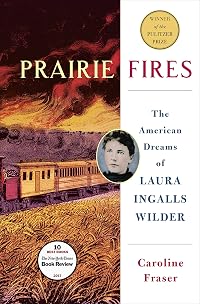
Prairie Fires: The American Dreams of Laura Ingalls Wilder
by Caroline Fraser
On This Page
Description
The first comprehensive historical biography of Laura Ingalls Wilder, the beloved author of the Little House on the Prairie book series Millions of readers of Little House on the Prairie believe they know Laura Ingalls-the pioneer girl who survived blizzards and near-starvation on the Great Plains, and the woman who wrote the famous autobiographical books. But the true story of her life has never been fully told. Now, drawing on unpublished manuscripts, letters, diaries, and land and show more financial records, Caroline Fraser-the editor of the Library of America edition of the Little House series-masterfully fills in the gaps in Wilder's biography, setting the record straight regarding charges of ghostwriting that have swirled around the books and uncovering the grown-up story behind the most influential childhood epic of pioneer life. Set against nearly a century of epochal change, from the Homestead Act and the Indian Wars to the Dust Bowl and the Great Depression, Wilder's dramatic life provides a unique perspective on American history and our national mythology of self-reliance. Offering fresh insight and new discoveries about Wilder's life and times, Prairie Fires is the definitive book about Wilder and her world. show lessTags
Recommendations








Member Recommendations
Member Reviews
Grim.
The lives of small-time farmers that were venerated in the books of Laura Ingalls Wilder contain a bitter truth: there is no way to make a living on the prairie without government aid (rarely forthcoming) or tens of thousands of dollars already in your bank account. And the dark secret of the "Little House" series is that the Ingalls family did not make it. Charles and Caroline repeatedly took chances with their money, their labor, and the safety of their children, and none of those chances paid off; they never did make it as farmers on the prairie. Once Laura marries and has started a life of her own there is hope that circumstances will ease, but she has quite the daddy complex and marries a man just like Charles: one determined show more to be a farmer in a part of the country that is too arid to sustain crops, and one who is a spendthrift to boot. Life is grim and stays that way, and eventually a daughter named Rose grows up to cause a whole host of problems.
For readers who grew up on the "Little House" books (as I did) this book is scandalous and fascinating and touching and grim. The author is thorough and precise in the details, and gives much-needed context to a life that we all thought we knew. A must-read.
Merged review:
Grim.
The lives of small-time farmers that were venerated in the books of Laura Ingalls Wilder contain a bitter truth: there is no way to make a living on the prairie without government aid (rarely forthcoming) or tens of thousands of dollars already in your bank account. And the dark secret of the "Little House" series is that the Ingalls family did not make it. Charles and Caroline repeatedly took chances with their money, their labor, and the safety of their children, and none of those chances paid off; they never did make it as farmers on the prairie. Once Laura marries and has started a life of her own there is hope that circumstances will ease, but she has quite the daddy complex and marries a man just like Charles: one determined to be a farmer in a part of the country that is too arid to sustain crops, and one who is a spendthrift to boot. Life is grim and stays that way, and eventually a daughter named Rose grows up to cause a whole host of problems.
For readers who grew up on the "Little House" books (as I did) this book is scandalous and fascinating and touching and grim. The author is thorough and precise in the details, and gives much-needed context to a life that we all thought we knew. A must-read. show less
The lives of small-time farmers that were venerated in the books of Laura Ingalls Wilder contain a bitter truth: there is no way to make a living on the prairie without government aid (rarely forthcoming) or tens of thousands of dollars already in your bank account. And the dark secret of the "Little House" series is that the Ingalls family did not make it. Charles and Caroline repeatedly took chances with their money, their labor, and the safety of their children, and none of those chances paid off; they never did make it as farmers on the prairie. Once Laura marries and has started a life of her own there is hope that circumstances will ease, but she has quite the daddy complex and marries a man just like Charles: one determined show more to be a farmer in a part of the country that is too arid to sustain crops, and one who is a spendthrift to boot. Life is grim and stays that way, and eventually a daughter named Rose grows up to cause a whole host of problems.
For readers who grew up on the "Little House" books (as I did) this book is scandalous and fascinating and touching and grim. The author is thorough and precise in the details, and gives much-needed context to a life that we all thought we knew. A must-read.
Merged review:
Grim.
The lives of small-time farmers that were venerated in the books of Laura Ingalls Wilder contain a bitter truth: there is no way to make a living on the prairie without government aid (rarely forthcoming) or tens of thousands of dollars already in your bank account. And the dark secret of the "Little House" series is that the Ingalls family did not make it. Charles and Caroline repeatedly took chances with their money, their labor, and the safety of their children, and none of those chances paid off; they never did make it as farmers on the prairie. Once Laura marries and has started a life of her own there is hope that circumstances will ease, but she has quite the daddy complex and marries a man just like Charles: one determined to be a farmer in a part of the country that is too arid to sustain crops, and one who is a spendthrift to boot. Life is grim and stays that way, and eventually a daughter named Rose grows up to cause a whole host of problems.
For readers who grew up on the "Little House" books (as I did) this book is scandalous and fascinating and touching and grim. The author is thorough and precise in the details, and gives much-needed context to a life that we all thought we knew. A must-read. show less
The Little House books, for all the hardships they describe, are paeans to the pioneer spirit, portraying it as triumphant against all odds. But Wilder’s real life was harder and grittier than that, a story of relentless struggle, rootlessness, and poverty. It was only in her sixties, after losing nearly everything in the Great Depression, that she turned to children’s books, recasting her hardscrabble childhood as a celebratory vision of homesteading—and achieving fame and fortune in the process, in one of the most astonishing rags-to-riches episodes in American letters.
Spanning nearly a century of epochal change, from the Indian Wars to the Dust Bowl, Wilder’s dramatic life provides a unique perspective on American history and show more our national mythology of self-reliance. With fresh insights and new discoveries, Prairie Fires reveals the complex woman whose classic stories grip us to this day. show less
Spanning nearly a century of epochal change, from the Indian Wars to the Dust Bowl, Wilder’s dramatic life provides a unique perspective on American history and show more our national mythology of self-reliance. With fresh insights and new discoveries, Prairie Fires reveals the complex woman whose classic stories grip us to this day. show less
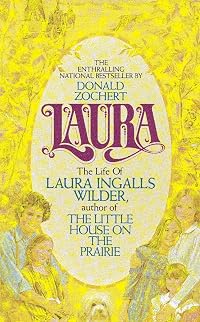
Totally fascinating biography of Laura Ingalls Wilder and the story behind the writing of the Little House books. Some of the information, especially about her early life, I had read before in Donald Zochert's work, Laura, but the second half of the book was new to me. I loved reading about the relationship between Laura and her daughter, Rose, and the way their politics influenced their writing. I'm not sure I would have been friends with them, mostly due to their attitude towards the poor (strange considering Laura was poor for most of her life) but it was fascinating nonetheless.
It was impossible to grow up in the US in the 1970s and not be familiar with Laura Ingalls Wilder. I loved Wilder’s Little House books, and the make-believe they inspired. So when I learned about this Pulitzer Prize-winning biography, I knew I had to read it.
The Little House books presented a sanitized version of life on the American Prairie, glossing over a myriad of social, historic, and economic issues. Caroline Fraser sets the record straight, beginning with a land rush in the 1850s, the 1862 Homestead Act which promised 160 acres to each settler, and the resulting impact on Native American communities which led to the U.S.-Dakota War of 1862. Wilder was born in 1867, to parents whose families were settlers during the show more mid-1800s.
Fraser continues telling the story of Wilder’s life by placing events in historical context, and dispelling romantic notions of “pioneer life” evoked by the novels. Poverty, hunger, and poor living conditions were the norm. The land was poorly suited to farming; both government policy and farming methods were contributing factors to the Dust Bowl of the 1930s. I also enjoyed reading about the adult Wilder: the ways she supplemented her family’s farming income, how she became a writer, and the long journey of writing and publishing a series of novels. Wilder’s daughter, Rose Wilder Lane, was a writer in her own right and instrumental in helping her mother get published; she was also a problematic figure who did not engender any of my sympathies. But Wilder’s story cannot be told without Lane’s, and vice versa.
Towards the end of this book, Fraser turns her attention to contemporary issues surrounding Wilder’s books. Even during her lifetime (Wilder died in 1957), people were attempting discern fact from fiction in the novels, challenging the Wilder/Lane assertion of absolute truth. And then, as 20th-century American society began to grasp the nature of our treatment of Native American populations, some of the stories took on a new light. In 2018, just a few months after the release of Prairie Fires, the American Library Association removed Wilder’s name from its children’s literature award, stating that “her works reflect dated cultural attitudes toward Indigenous people and people of color that contradict modern acceptance, celebration, and understanding of diverse communities.”
The Little House books remain tremendously popular works of children’s literature despite the dissonance with contemporary thought. It’s interesting to learn more about the woman who created this significant body of work. show less
The Little House books presented a sanitized version of life on the American Prairie, glossing over a myriad of social, historic, and economic issues. Caroline Fraser sets the record straight, beginning with a land rush in the 1850s, the 1862 Homestead Act which promised 160 acres to each settler, and the resulting impact on Native American communities which led to the U.S.-Dakota War of 1862. Wilder was born in 1867, to parents whose families were settlers during the show more mid-1800s.
Fraser continues telling the story of Wilder’s life by placing events in historical context, and dispelling romantic notions of “pioneer life” evoked by the novels. Poverty, hunger, and poor living conditions were the norm. The land was poorly suited to farming; both government policy and farming methods were contributing factors to the Dust Bowl of the 1930s. I also enjoyed reading about the adult Wilder: the ways she supplemented her family’s farming income, how she became a writer, and the long journey of writing and publishing a series of novels. Wilder’s daughter, Rose Wilder Lane, was a writer in her own right and instrumental in helping her mother get published; she was also a problematic figure who did not engender any of my sympathies. But Wilder’s story cannot be told without Lane’s, and vice versa.
Towards the end of this book, Fraser turns her attention to contemporary issues surrounding Wilder’s books. Even during her lifetime (Wilder died in 1957), people were attempting discern fact from fiction in the novels, challenging the Wilder/Lane assertion of absolute truth. And then, as 20th-century American society began to grasp the nature of our treatment of Native American populations, some of the stories took on a new light. In 2018, just a few months after the release of Prairie Fires, the American Library Association removed Wilder’s name from its children’s literature award, stating that “her works reflect dated cultural attitudes toward Indigenous people and people of color that contradict modern acceptance, celebration, and understanding of diverse communities.”
The Little House books remain tremendously popular works of children’s literature despite the dissonance with contemporary thought. It’s interesting to learn more about the woman who created this significant body of work. show less
I have been riveted by this book! Although I loved the "Little House" books as a kid, as an adult I've disliked the fetishization of Wilder and been very aware of how problematic her books are, particularly when it comes to the genocide that continues to be carried out against North American indigenous people. "Prairie Fires" makes clear that Manifest Destiny and western expansion were catastrophic in every way, including human rights violations, disastrous economic policies that favored the wealthy, and agricultural practices that destroyed ecosystems -- a forerunner to the even greater catastrophes that we are looking at today and in the future.
Equally disturbing was learning the story of Rose Wilder Lane. Wow, what a damaged human show more being she was! Her apparent lack of empathy, her narcissism, her habits of bending the truth, and her ties to the Libertarian Party that leave no doubt about where her sympathies would lie today were she still alive -- it's not a pretty picture!
I was also saddened to read in the epilogue how the copyrights for her mother's books, which Laura had left to the Mansfield, MO Public Library upon Rose's death, through mishandling on Rose's part became part of the estate of her "ward" Roger McBride (John Bircher and friend of the infamous Charles and David Koch. Ugh.) McBride is the one who gave permission for that godawful television series … sigh.
But what a fascinating story overall! show less
Equally disturbing was learning the story of Rose Wilder Lane. Wow, what a damaged human show more being she was! Her apparent lack of empathy, her narcissism, her habits of bending the truth, and her ties to the Libertarian Party that leave no doubt about where her sympathies would lie today were she still alive -- it's not a pretty picture!
I was also saddened to read in the epilogue how the copyrights for her mother's books, which Laura had left to the Mansfield, MO Public Library upon Rose's death, through mishandling on Rose's part became part of the estate of her "ward" Roger McBride (John Bircher and friend of the infamous Charles and David Koch. Ugh.) McBride is the one who gave permission for that godawful television series … sigh.
But what a fascinating story overall! show less
Like anyone else who grew up in my generation, I watched and loved the tv series Little House on the Prairie as a kid. In fifth grade we read a section of Laura Ingalls Wilder's book Little House on the Prairie and I was entranced. I immediately read all the books in the Little House series in sequence (except I skipped Farmer Boy because I had no interest in Almanzo). The earlier books were my favorites and I read Little House in the Big Woods, Little House on the Prairie, and On the Banks of Plum Creek multiple times. This was an important time in my life as a reader because up to that point I was rather finicky and found it hard to finish books, especially fiction.
Of course, I knew that the books were highly fictionalized stories of show more Wilder's life and the tv show even more greatly removed from reality. It was interesting to read this biography to learn the true story of Wilder's life. Fraser's research and writing is especially good at establishing Wilder's story in the context of historical events - conflicts with Indians, financial crises and depressions, political movements, and even climate change. The period of Wilder's life covered in her 9 books is just a small portion of her long life and is covered in the first 150 pages of the 500+ page book. For all her romance of life on the Great Plains and the admiration of the rugged individualism of farming, Laura and Alamanzo Wilder were not able to find stability and success in life until they left the West for the South (specifically the Ozarks of Missouri) and found work off the farm.
Laura Ingalls Wilder established herself in Mansfield, MO through her activity in local clubs and working for Farm Loan Asssociation, a federal agency that made small loans to farmers. Wilder also worked as a writer and editor, eventually creating a popular column in a publication called The Ruralist. Wilder's entry into writing was inspired by a key figure in this biography, Rose Wilder Lane, who lived in various parts of the country working as a journalist (albeit specializing in "fake news") and freelance writer, and eventually writing novels and political treatises. Fraser is barely able to contain her contempt for Lane, who admittedly is an awful person, but nevertheless its surprising when someone is so bad that a historian can't keep a neutral tone
Wilder writes the Little House books during the Great Depression and Dust Bowl of the 1930s and early 1940s, with the current events informing her reflections on the past. Since the books were written for children, Wilder naturally sanitized some of the darkest times of her childhood, elided events, and created composite characters. But she also chose to use the books to hide her family's deep poverty and multiple failures while idolizing her parents as exemplars of independence. This means leaving out parts of their lives when Charles Ingalls skipped out of town to avoid a debt or when the family had a miserable time working at a hotel in Iowa.
Lane served as an editor for her mother's writing, and the surviving manuscripts includes notes back and forth, of what to retain and what to cut. Fraser indicates Wilder fought to retain many of her own ideas and writing against Lane's edits and suggestions and the finished novels have the same style as Wilder's handwritten manuscripts. Some scholars believe that Lane ghost wrote some or all of the novels, but Fraser use this evidence to attest that Lane mainly did the editing while writing an occasional interpolation. Lane's increasingly radical right wing, libertarian ideology also influenced her mother's political leanings and the underlying messages of the novels.
Fraser also examines the cultural effect of the Little House stories, both as a response to the New Deal when the books were published and in the post-Nixonian era of the television. In both eras, Little House played the role of offering a rose-tinted view of a patriotic past where Americans took initiative and supported themselves through hard work. Ironically, Wilder created a fictional version of her parents as independent farmers by erasing their poverty, their inability to survive as subsistence farmers, and the times they benefited from help of the government. In fact, if the government is to be blamed for an of the suffering of the Ingalls, Wilders, and thousands of other pioneer farming families it is when they acted on laissez-faire and libertarian policies that someone like Lane would support. Examples include the US government ignoring their own scientist's research that showed the Dakotas should not be opened to farming because it was too arid, and state governments offering little aid to farmers suffering from plagues of locusts and droughts because they did not wish to create "dependency."
This is an excellent work of biography and history. While offering a look at the exceptional life of a successful and beloved author, it also is a glimpse into the lives and dreams of many Americans in some of the most turbulent times in our nation's history. Amazingly the book contains contrasting ideas of what it means to be American and the best way to govern this country that are still relevant to the current political debate. If you love the Little House books, this is a good way to deepen your understanding of their author and the books' place in our culture. But even if you have never read or watched any Little House material, this is still a great biography that I'd recommend.
Favorite Passages:
Of course, I knew that the books were highly fictionalized stories of show more Wilder's life and the tv show even more greatly removed from reality. It was interesting to read this biography to learn the true story of Wilder's life. Fraser's research and writing is especially good at establishing Wilder's story in the context of historical events - conflicts with Indians, financial crises and depressions, political movements, and even climate change. The period of Wilder's life covered in her 9 books is just a small portion of her long life and is covered in the first 150 pages of the 500+ page book. For all her romance of life on the Great Plains and the admiration of the rugged individualism of farming, Laura and Alamanzo Wilder were not able to find stability and success in life until they left the West for the South (specifically the Ozarks of Missouri) and found work off the farm.
Laura Ingalls Wilder established herself in Mansfield, MO through her activity in local clubs and working for Farm Loan Asssociation, a federal agency that made small loans to farmers. Wilder also worked as a writer and editor, eventually creating a popular column in a publication called The Ruralist. Wilder's entry into writing was inspired by a key figure in this biography, Rose Wilder Lane, who lived in various parts of the country working as a journalist (albeit specializing in "fake news") and freelance writer, and eventually writing novels and political treatises. Fraser is barely able to contain her contempt for Lane, who admittedly is an awful person, but nevertheless its surprising when someone is so bad that a historian can't keep a neutral tone
Wilder writes the Little House books during the Great Depression and Dust Bowl of the 1930s and early 1940s, with the current events informing her reflections on the past. Since the books were written for children, Wilder naturally sanitized some of the darkest times of her childhood, elided events, and created composite characters. But she also chose to use the books to hide her family's deep poverty and multiple failures while idolizing her parents as exemplars of independence. This means leaving out parts of their lives when Charles Ingalls skipped out of town to avoid a debt or when the family had a miserable time working at a hotel in Iowa.
Lane served as an editor for her mother's writing, and the surviving manuscripts includes notes back and forth, of what to retain and what to cut. Fraser indicates Wilder fought to retain many of her own ideas and writing against Lane's edits and suggestions and the finished novels have the same style as Wilder's handwritten manuscripts. Some scholars believe that Lane ghost wrote some or all of the novels, but Fraser use this evidence to attest that Lane mainly did the editing while writing an occasional interpolation. Lane's increasingly radical right wing, libertarian ideology also influenced her mother's political leanings and the underlying messages of the novels.
Fraser also examines the cultural effect of the Little House stories, both as a response to the New Deal when the books were published and in the post-Nixonian era of the television. In both eras, Little House played the role of offering a rose-tinted view of a patriotic past where Americans took initiative and supported themselves through hard work. Ironically, Wilder created a fictional version of her parents as independent farmers by erasing their poverty, their inability to survive as subsistence farmers, and the times they benefited from help of the government. In fact, if the government is to be blamed for an of the suffering of the Ingalls, Wilders, and thousands of other pioneer farming families it is when they acted on laissez-faire and libertarian policies that someone like Lane would support. Examples include the US government ignoring their own scientist's research that showed the Dakotas should not be opened to farming because it was too arid, and state governments offering little aid to farmers suffering from plagues of locusts and droughts because they did not wish to create "dependency."
This is an excellent work of biography and history. While offering a look at the exceptional life of a successful and beloved author, it also is a glimpse into the lives and dreams of many Americans in some of the most turbulent times in our nation's history. Amazingly the book contains contrasting ideas of what it means to be American and the best way to govern this country that are still relevant to the current political debate. If you love the Little House books, this is a good way to deepen your understanding of their author and the books' place in our culture. But even if you have never read or watched any Little House material, this is still a great biography that I'd recommend.
Favorite Passages:
"The New York Times asked recently, 'Why Do People Who Need Help from the Government Hate It so Much?' It was no mystery to Wilder. As she knew too well, people who are poor are ashamed. It's easier to blame the government than to blame yourself. Wrestling with shame was one of the reasons she wrote her books..." - p. 511show less
Warning: do not read if you want to keep your illusions about Laura Ingalls Wilder and the Little House Books.
Caroline Fraser has written an extremely comprehensive portrait of Laura and Rose's lives from birth to death, and set them in a historical context so that we can more easily understand the factors that determined their fates and the choices they made. It's a long book but it reads quickly, especially the first part (Laura's early life) and third part (how the Little House books came into existence).
Most of us know by now that not everything in the books was true, or rather that the books didn't tell the whole story. Most of us also knew that LIW got a lot of editorial assistance from her daughter Rose. But did you know that show more Rose was either a manic-depressive or borderline personality, fan (and rival) of Ayn Rand, and anti-Semitic to boot? The twisted relationship between mother and daughter was fascinating and horrifying, and although LIW comes across as a nice conservative lady who wanted everyone to pull themselves up by their bootstraps, I wouldn't have wanted to dig too far into her psyche to get her views on Jews, blacks, and other minorities.
Thank goodness there are no long hidden secrets about Laura and Almanzo's marriage - she really loved him and was very attached to him, despite her fiery temper and his occasional financial missteps.
I will never look at the books in the same way again, but I will still read them with great fondness and affection. They were such an important part of my childhood and ultimately I think I can separate them from both author and history, and just enjoy them for the great stories that they are. show less
Caroline Fraser has written an extremely comprehensive portrait of Laura and Rose's lives from birth to death, and set them in a historical context so that we can more easily understand the factors that determined their fates and the choices they made. It's a long book but it reads quickly, especially the first part (Laura's early life) and third part (how the Little House books came into existence).
Most of us know by now that not everything in the books was true, or rather that the books didn't tell the whole story. Most of us also knew that LIW got a lot of editorial assistance from her daughter Rose. But did you know that show more Rose was either a manic-depressive or borderline personality, fan (and rival) of Ayn Rand, and anti-Semitic to boot? The twisted relationship between mother and daughter was fascinating and horrifying, and although LIW comes across as a nice conservative lady who wanted everyone to pull themselves up by their bootstraps, I wouldn't have wanted to dig too far into her psyche to get her views on Jews, blacks, and other minorities.
Thank goodness there are no long hidden secrets about Laura and Almanzo's marriage - she really loved him and was very attached to him, despite her fiery temper and his occasional financial missteps.
I will never look at the books in the same way again, but I will still read them with great fondness and affection. They were such an important part of my childhood and ultimately I think I can separate them from both author and history, and just enjoy them for the great stories that they are. show less
Members
- Recently Added By
Published Reviews
ThingScore 100
Placing the Ingalls family’s homesteading mishaps in a bigger picture of national enterprise is one of many demonstrations of Fraser’s admirable commitment to presenting her research in a broader historical context. But sometimes this causes the literary gears to grind. ... And yet there is far more to admire than to criticize in Fraser’s determination to provide everything needed for a show more responsible and thorough history of Wilder’s life and legacy. show less
added by lquilter
Lists

Best Biographies, Autobiographies and Memoirs
465 works; 160 members

Top Five Books of 2020
982 works; 348 members

Top Five Books of 2018
802 works; 264 members

Books Read in 2018
4,360 works; 110 members

Mothers and Daughters
114 works; 11 members

Non-Fiction Worth Reading
1,025 works; 257 members

Maybe This Year? Books to Look Forward To
413 works; 9 members

Books Set in South Dakota
9 works; 5 members

Books Read in 2025
4,128 works; 98 members

2025 Christmas Gifts
70 works; 19 members
Author Information

All Editions
Some Editions
Awards and Honors
Awards
Work Relationships
Is a commentary on the text of
Common Knowledge
- Original title
- Prairie Fires: The American Dreams of Laura Ingalls Wilder
- Original publication date
- 2017
- People/Characters
- Laura Ingalls Wilder; Almanzo Wilder; Rose Wilder Lane; Charles Ingalls (Charles Phillip Ingalls); Caroline Quiner Ingalls (Caroline Lake Quiner Ingalls); Carrie Ingalls (Caroline Celestia Ingalls Swanzey) (show all 30); Mary Ingalls (Mary Amelia Ingalls); Grace Ingalls (Grace Pearl Ingalls); Roger Lea MacBride; Peter Ingalls; Peter Franklin Ingalls; Cap Garland; Rev. Alden; Nellie Owens; Eliza Jane Wilder; Royal Wilder; William Masters; Eleck Nelson; Henry Quiner; Polly Ingalls Quiner; Claire Gillette Lane; Tom Quiner; Joseph Quiner; Martha Quiner Carpenter; Frank Cooley; James Wilder; Angeline Wilder; Tom Thayer; Neta Seal; Irene V Lichty
- Important places
- American West; Mansfield, Missouri, USA; De Smet, South Dakota, USA; Walnut Grove, Minnesota, USA; Burr Oak, Iowa, USA; Louisiana, USA (show all 8); San Francisco, California, USA; Westville, Florida, USA
- Important events
- Locust Plague (1874); Minnesota Massacre (1862); The Long Depression (1873&ndash | 1879); The Panic of 1893; Dust Bowl Era
- Epigraph
- The prairies burning form some of the most beautiful scenes that are to be witnessed in this country.
--George Catlin - Dedication
- In memory of my mother, Ruth Fraser,
and my grandmother, Ruth Webb - First words
- "Once upon a time . . . a little girl lived in the Big Woods": the opening of the Little House series has the cadence of a fairy tale.
--Body text
Introduction: On a spring day in April of 1924, Laura Ingalls Wilder, a fifty-seven-year-old farm wife in the Missouri Ozarks, received a telegram from South Dakota. - Last words
- (Click to show. Warning: May contain spoilers.)In the end, being there was all she ever wanted.
- Blurbers
- Lear, Linda; Showalter, Elaine; McClure, Wendy
- Original language
- American English
Classifications
- Genres
- Biography & Memoir, Literature Studies and Criticism, Nonfiction
- DDC/MDS
- 813.52 — Literature & rhetoric American literature in English American fiction in English 1900-1999 1900-1945
- LCC
- PS3545 .I342 .Z6455 — Language and Literature American literature American literature Individual authors 1900-1960
- BISAC
Statistics
- Members
- 1,587
- Popularity
- 14,416
- Reviews
- 86
- Rating
- (4.05)
- Languages
- English
- Media
- Paper, Audiobook, Ebook
- ISBNs
- 16
- ASINs
- 4
