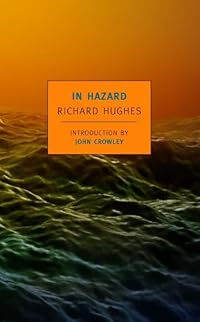
In Hazard
by Richard Hughes
On This Page
Description
The Archimedes is a modern merchant steamship in tip-top condition, and in the summer of 1929 it has been picking up goods along the eastern seaboard of the United States before making a run to China. A little overloaded, perhaps--the oddly assorted cargo includes piles of old newspapers and heaps of tobacco--the ship departs for the Panama Canal from Norfolk, Virginia, on a beautiful autumn day. Before long, the weather turns unexpectedly rough--rougher in fact than even the most show more experienced members of the crew have ever encountered. The Archimedes, it turns out, has been swept up in the vortex of an immense hurricane, and for the next four days it will be battered and mauled by wind and waves as it is driven wildly off course. Caught in an unremitting struggle for survival, both the crew and the ship will be tested as never before. Based on detailed research into an actual event, Richard Hughes's tale of high suspense on the high seas is an extraordinary story of men under pressure and the unexpected ways they prove their mettle--or crack. Yet the originality, art, and greatness of In Hazard stem from something else: Hughes's eerie fascination with the hurricane itself, the inhuman force around which this wrenching tale of humanity at its limits revolves. Hughes channels the furies of sea and sky into a piece of writing that is both apocalyptic and analytic. In Hazard is an unforgettable, defining work of modern adventure. show lessTags
Recommendations





























Member Recommendations

by bertilak
Member Reviews
Considering it starts out like the technical chapters of Moby Dick, without bothering to tell you what any of the technical terms being used actually mean, this is one kick ass book. Hughes somehow manages to move from "here's how a steam boat's engine creates steam" to one of the better symbolic tales I've read. A few things to keep in mind, though, if you're thinking about reading it. The opening chapters really are boring, albeit boring with a purpose. So just know that. Also, it is so far from being a 'man vs nature' narrative that the only reason I can think for so many people to put it in that pigeon-hole is that they're uncomfortable with the fact that, really, man's biggest enemy is himself. Although the middle sections read show more like an adventure tale, the meat of the book is the stories of the crew, and what they've already been through before they get into this mess.
Also, a few reviewers complain that the book is racist. Here's a crash course on 'reading like a professor': just because a character says or thinks racist things doesn't mean the book is racist. In fact, the book goes to great, humorous lengths to show the stupidity of people making assumptions about others based on their race. But hey. It's much easier to quote some dipshit character than to read with any sort of care. show less
Also, a few reviewers complain that the book is racist. Here's a crash course on 'reading like a professor': just because a character says or thinks racist things doesn't mean the book is racist. In fact, the book goes to great, humorous lengths to show the stupidity of people making assumptions about others based on their race. But hey. It's much easier to quote some dipshit character than to read with any sort of care. show less
The author, in his introduction to the Time-Life Reading Program edition of the novel, likens it to a dream as theorised about by Freud: a suppressed anticipation of WWII. Too bad he doesn't explore the Freudian dimensions of the naked underage Sukie, a sexual trope we find throughout Hughes' work. Hughes' narrative voice is unmistakeable and perversely engaging, even when he is wandering far off course. I would encourage you to read this in conjunction with Conrad's "Typhoon" to which In Hazard makes explicit reference.
Weather is seldom a surprise in the modern world. Television, computer models, radar and weather satellites haven't tamed the weather, but they can now instantly alert us to a change in the weather's temperament. For days in advance we know that storms are approaching us from the west, that Tuesday's weather will be wet or dry, sunny or cloudy, hot, mild, cold, or windy, and we can plan accordingly. But it was not always like this.
More than a century ago, the weather was an unchained beast that stalked the world, and this was especially true on the open oceans. The captain of an ocean going vessel knew the weather no further than the horizon and consulted his barometer like a diviner consulting the entrails of a sacrificial lamb. show more Wireless improved the situation. At the dawn of the 20th century, ships could now communicate the weather at their locations in real time. By the 1920's these reports were being collated and radioed out twice a day as weather alerts to merchant vessels plowing the seas. Now a ship's captain could see the weather over the horizon and could act accordingly to protect his ship...and the owner's investment. But though the situation was better, a captain's view of the future was still murky and danger was still waiting over the horizon.
Richard Hughes, novel, In Hazard, first published in 1938, is the fictionalized tale of a steamship, the Archimedes, which finds itself accidentally caught in a late season hurricane of tremendous power. The story is short and simple. A tale of men pitted against nature, their machines and themselves.
Hughes spent four years researching and writing the novel, and the effort can be seen on every page. He presents a detailed picture of the operations of a steamship in the inter-war period. Within a hundred pages, you feel as though you could walk around such a ship and explain the operation of every component. That you could navigate the shipboard politics which divides the vessel into well defined territories--ruled by the Captain and the Chief Engineer--two regimes, separate but equal. Finally, you come to understand the dynamic tension between the ship's captain, who must command the ship at sea, and the "Owners" back home who have entrusted so much into his hands. "In the end they had forgiven him: but not forgotten. Owners do not forget. Or, if they do, they have only to consult their files to be reminded of everything."
The strength of the book lies with these mechanical and sociological aspects of the ship's operation. The characters never seem to be more than the standard adventure story cliches: the redoubtable captain, the gruff engineer, the loyal first mate, the young man experiencing his first trials at sea, and the mid-career officer who's nerve fails under the strain. It's difficult to care about the characters because they are so generic. What saves the book is the immediacy of the writing. One feels drawn into the chaos of the storm and effort of saving the ship despite the characters.
While the book focuses on the ship and the storm, it seldom makes a false step. However, midway through the novel, Hughes unexpectedly vears off course. A Chinese seaman is suddenly introduced and becomes the center of the story. We take a long digression to recount his childhood and history. We see how he became a Communist soldier fighting with Mao Tse-tung only to be forced to flee China and take up service on the Archimedes.
The unexpected intrusion of this new plot line into the story breaks the pace of the action and kills the tension, which Hughes as so carefully built up to that point, the way one might smother a fire with a heavy blanket. It feels as though the book has somehow been temporarily hijacked by a different story--a story which ends almost as abruptly as it emerged.
In Hazard is a wonderful bit of fluff for an afternoon read. It's only problem is the inevitable racist depiction of the Chinese crewmen. The attitudes of the characters (and the author) are fairly typical for Englishmen of the 1930's, but, to a modern reader, the attitudes can be disquieting. "Shootin' is naught tae a Chinaman. They dinna min' daith, whit way a whit' mon min's it. It's a scienteefic fack that a Chinaman has fewer nairves in his body than whit we ha'e; the canna feel pain. Nearer beasts than men, they are!" If you can make allowances for such antiquated thinking, then you'll find In Hazard to be a rousing good yarn with which to pass the time. show less
More than a century ago, the weather was an unchained beast that stalked the world, and this was especially true on the open oceans. The captain of an ocean going vessel knew the weather no further than the horizon and consulted his barometer like a diviner consulting the entrails of a sacrificial lamb. show more Wireless improved the situation. At the dawn of the 20th century, ships could now communicate the weather at their locations in real time. By the 1920's these reports were being collated and radioed out twice a day as weather alerts to merchant vessels plowing the seas. Now a ship's captain could see the weather over the horizon and could act accordingly to protect his ship...and the owner's investment. But though the situation was better, a captain's view of the future was still murky and danger was still waiting over the horizon.
Richard Hughes, novel, In Hazard, first published in 1938, is the fictionalized tale of a steamship, the Archimedes, which finds itself accidentally caught in a late season hurricane of tremendous power. The story is short and simple. A tale of men pitted against nature, their machines and themselves.
Hughes spent four years researching and writing the novel, and the effort can be seen on every page. He presents a detailed picture of the operations of a steamship in the inter-war period. Within a hundred pages, you feel as though you could walk around such a ship and explain the operation of every component. That you could navigate the shipboard politics which divides the vessel into well defined territories--ruled by the Captain and the Chief Engineer--two regimes, separate but equal. Finally, you come to understand the dynamic tension between the ship's captain, who must command the ship at sea, and the "Owners" back home who have entrusted so much into his hands. "In the end they had forgiven him: but not forgotten. Owners do not forget. Or, if they do, they have only to consult their files to be reminded of everything."
The strength of the book lies with these mechanical and sociological aspects of the ship's operation. The characters never seem to be more than the standard adventure story cliches: the redoubtable captain, the gruff engineer, the loyal first mate, the young man experiencing his first trials at sea, and the mid-career officer who's nerve fails under the strain. It's difficult to care about the characters because they are so generic. What saves the book is the immediacy of the writing. One feels drawn into the chaos of the storm and effort of saving the ship despite the characters.
While the book focuses on the ship and the storm, it seldom makes a false step. However, midway through the novel, Hughes unexpectedly vears off course. A Chinese seaman is suddenly introduced and becomes the center of the story. We take a long digression to recount his childhood and history. We see how he became a Communist soldier fighting with Mao Tse-tung only to be forced to flee China and take up service on the Archimedes.
The unexpected intrusion of this new plot line into the story breaks the pace of the action and kills the tension, which Hughes as so carefully built up to that point, the way one might smother a fire with a heavy blanket. It feels as though the book has somehow been temporarily hijacked by a different story--a story which ends almost as abruptly as it emerged.
In Hazard is a wonderful bit of fluff for an afternoon read. It's only problem is the inevitable racist depiction of the Chinese crewmen. The attitudes of the characters (and the author) are fairly typical for Englishmen of the 1930's, but, to a modern reader, the attitudes can be disquieting. "Shootin' is naught tae a Chinaman. They dinna min' daith, whit way a whit' mon min's it. It's a scienteefic fack that a Chinaman has fewer nairves in his body than whit we ha'e; the canna feel pain. Nearer beasts than men, they are!" If you can make allowances for such antiquated thinking, then you'll find In Hazard to be a rousing good yarn with which to pass the time. show less
 This review was written for LibraryThing Early Reviewers.
3
This book is based on the true story of the Phemius, a ship which was sucked into the circular trajectory of a hurricane in 1932. The captain’s report of the experience so intrigued the Holt Line owner that he gave a copy to Richard Hughes ([b:A High Wind in Jamaica|188458|A High Wind in Jamaica|Richard Hughes|http://photo.goodreads.com/books/1172545599s/188458.jpg|2166961]) who turned it into this novel.
The ship was the well-cared-for Archimedes with a very competent captain and crew. The month being mid-November, the likelihood of a West Indian hurricane was more than remote, it was unheard of. The cargo was the usual motley of items including quantities of newspaper, which, because of their lightness, were stored fairly high in the show more hold. The barometer continues to drop precipitously and thinking he is sailing around the storm, Captain Edwardes finds himself in its clutches, perhaps from a twin since this storm doesn’t seem to be following the rules. Dick, the cabin boy, at first mesmerized by the fur of the wind, is in its thrall. “Then the exultation which the storm had raised in him whirled up in his head giddily, and he was sea-sick.”
At first the ship seems to be riding the waves with equanimity until a coir matting becomes lodged in the steering rods and steerage is lost leaving the ship to wallow broadside into the waves. To make matters worse, hatches, which are designed to withstand enormous pressure from above, were now subject to tremendously strong winds blowing across the deck, and, much as with an airplane’s wing, generated lift and creating a vacuum across the top of the hatches pushing them up from below.
It goes without saying (but I will anyway) readers disinclined to enjoy nautical books will not like this book. Tant pis pour toi. The rest of us will love it.
A picture of the Phemius at http://www.uboat.net/allies/merchants/ships/3154.html that gives you a good idea of the superstructure and funnel which was lost in the 1932 hurricane. (The one described in the book took place fictionally in November 1929.)
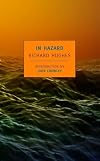
Read the introduction by John Crowley to the NYRB edition. In it, he quotes Ford Maddox Ford as describing Hughes writing as so good as to be almost inhuman. “It’s hard … not to wonder whether Hughes ever made clear to himself the distinction between all-knowing divinity and pitiless chance.” Indeed. show less
The ship was the well-cared-for Archimedes with a very competent captain and crew. The month being mid-November, the likelihood of a West Indian hurricane was more than remote, it was unheard of. The cargo was the usual motley of items including quantities of newspaper, which, because of their lightness, were stored fairly high in the show more hold. The barometer continues to drop precipitously and thinking he is sailing around the storm, Captain Edwardes finds himself in its clutches, perhaps from a twin since this storm doesn’t seem to be following the rules. Dick, the cabin boy, at first mesmerized by the fur of the wind, is in its thrall. “Then the exultation which the storm had raised in him whirled up in his head giddily, and he was sea-sick.”
At first the ship seems to be riding the waves with equanimity until a coir matting becomes lodged in the steering rods and steerage is lost leaving the ship to wallow broadside into the waves. To make matters worse, hatches, which are designed to withstand enormous pressure from above, were now subject to tremendously strong winds blowing across the deck, and, much as with an airplane’s wing, generated lift and creating a vacuum across the top of the hatches pushing them up from below.
It goes without saying (but I will anyway) readers disinclined to enjoy nautical books will not like this book. Tant pis pour toi. The rest of us will love it.
A picture of the Phemius at http://www.uboat.net/allies/merchants/ships/3154.html that gives you a good idea of the superstructure and funnel which was lost in the 1932 hurricane. (The one described in the book took place fictionally in November 1929.)
Read the introduction by John Crowley to the NYRB edition. In it, he quotes Ford Maddox Ford as describing Hughes writing as so good as to be almost inhuman. “It’s hard … not to wonder whether Hughes ever made clear to himself the distinction between all-knowing divinity and pitiless chance.” Indeed. show less
For years, I have been a big fan of Richard Hughes' book A High Wind in Jamaica. When I had a chance to read the newly republished In Hazard (1938) through Librarything's Early Reviewers program, I was thrilled. Unfortunately, I am not able to report on the new introduction by John Crowley, (author of Little, Big) since that was not included in the advance uncorrected proof.
Hughes has framed this compelling tale with a carefully researched account of a ship that was caught in, and dragged by, a hurricane over several days time, barely remaining afloat and soon without any power. Arranging the story by day over one week's time, we come to know how dependent parts of a ship's operating system are with all other parts and areas of the show more ship. The specific details of ship handling and construction were enthralling and horrifying. Into the frame, Hughes has inserted his characters, officers, engineers, Chinese stokers, a young seaman. Each of these becomes very real, and very individual, to the reader. The combination of the terrible storm, its effects on the ship and the men and the suspense of how, and if, the ship will survive make enthralling reading. Men act better, or worse, that you would expect under trials such as these. When you remember that the book came out just before World War II, it really makes you think about all the endangered men at sea in that conflict and what they had to undergo.
I recommend this book without reservation. The reader will gain a great deal of interesting information, and many things to ponder in the lives and interactions of human beings. The sudden event at the end was shocking to me, but I can see how it relates to the very beginning of the book, and makes the whole stronger. show less
Hughes has framed this compelling tale with a carefully researched account of a ship that was caught in, and dragged by, a hurricane over several days time, barely remaining afloat and soon without any power. Arranging the story by day over one week's time, we come to know how dependent parts of a ship's operating system are with all other parts and areas of the show more ship. The specific details of ship handling and construction were enthralling and horrifying. Into the frame, Hughes has inserted his characters, officers, engineers, Chinese stokers, a young seaman. Each of these becomes very real, and very individual, to the reader. The combination of the terrible storm, its effects on the ship and the men and the suspense of how, and if, the ship will survive make enthralling reading. Men act better, or worse, that you would expect under trials such as these. When you remember that the book came out just before World War II, it really makes you think about all the endangered men at sea in that conflict and what they had to undergo.
I recommend this book without reservation. The reader will gain a great deal of interesting information, and many things to ponder in the lives and interactions of human beings. The sudden event at the end was shocking to me, but I can see how it relates to the very beginning of the book, and makes the whole stronger. show less
This review was written for LibraryThing Early Reviewers.Richard Hughes's novel "In Hazard" is a compelling and occasionally lyrical story of men against the sea.
The premise of novels like "In Hazard" is a simple one--we live in a world where technology insulates us and obscures our true nature. Take a man and remove him from that cocoon, strip away from him the trappings of society, place him "in hazard," and you can have an unobstructed view into that man's soul. Books like this, whether they be the short stories of Joseph Conrad, James Dickey's "Deliverance," John Krakauer's "Into Thin Air," or Sebastian Junger's "The Perfect Storm" are, in part, enthralling because they establish a dynamic between external challenges and internal illumination.
Richard Hughes's narrative is also both show more simple and traditional: the 9,000 ton single-screw turbine steamer "Archimedes," finds itself caught in a monstrous hurricane in the Caribbean Sea. As the ships "modern" systems are systematically stripped away by the storm, the crew of the Archimedes must rely upon their own innate abilities to survive. During the course of their epic struggle, these men will show their true character--for better and, in some cases, for worse.
There are three basic characters in "In Hazard" and the novel's success rests on them. First, is the ship. Hughes does a good job of describing the inner workings of the steam ship. Subtle, however, it is not. With lines like "But what are a rough sea and half a gale to a fine modern vessel like the 'Archimedes'?" Hughes makes pretty clear his over-arching thematic vision of the ship. As an aside, one of the ironies recognized by the book is that the "modern" ship is far more vulnerable to the storm than the sailing ships of the past.
The second character of the book is the hurricane itself. Here, I think, Hughes is really at his best. As he describes the storm and how it challenges the men on board, Hughes draws you into the story. I would put this part of the novel right up there with Conrad's "Typhoon." There are passages about the storm that are quite simply brilliant.
Finally, the third character(s) in the book are the actual crew members of the Archimedes. Here, I confess, I felt that Hughes struggled. While some characters stood out -- Captain Edwardes and Dick Watchett in particular -- many seemed one-dimensional. In particular, I found the repeated stereotypical references to "the chinamen" distracting. I realize that's probably an anachronism attributable to when the book was written, but it still distracted me. Also, a majority of the internal monologues and meditations on the characters of the crew come somewhat unexpectedly in the later half of the novel.
Is "In Hazard" a "classic"? Hard to say. It is definitely one of the better "men against the sea" stories that I have read. It also leaves you with a number of clearly defined philosophical questions to ponder once you finish it. Ultimately, however, I think that it falls tantalizingly short of true genius. Nevertheless, I would put it on my recommended reading list. show less
The premise of novels like "In Hazard" is a simple one--we live in a world where technology insulates us and obscures our true nature. Take a man and remove him from that cocoon, strip away from him the trappings of society, place him "in hazard," and you can have an unobstructed view into that man's soul. Books like this, whether they be the short stories of Joseph Conrad, James Dickey's "Deliverance," John Krakauer's "Into Thin Air," or Sebastian Junger's "The Perfect Storm" are, in part, enthralling because they establish a dynamic between external challenges and internal illumination.
Richard Hughes's narrative is also both show more simple and traditional: the 9,000 ton single-screw turbine steamer "Archimedes," finds itself caught in a monstrous hurricane in the Caribbean Sea. As the ships "modern" systems are systematically stripped away by the storm, the crew of the Archimedes must rely upon their own innate abilities to survive. During the course of their epic struggle, these men will show their true character--for better and, in some cases, for worse.
There are three basic characters in "In Hazard" and the novel's success rests on them. First, is the ship. Hughes does a good job of describing the inner workings of the steam ship. Subtle, however, it is not. With lines like "But what are a rough sea and half a gale to a fine modern vessel like the 'Archimedes'?" Hughes makes pretty clear his over-arching thematic vision of the ship. As an aside, one of the ironies recognized by the book is that the "modern" ship is far more vulnerable to the storm than the sailing ships of the past.
The second character of the book is the hurricane itself. Here, I think, Hughes is really at his best. As he describes the storm and how it challenges the men on board, Hughes draws you into the story. I would put this part of the novel right up there with Conrad's "Typhoon." There are passages about the storm that are quite simply brilliant.
Finally, the third character(s) in the book are the actual crew members of the Archimedes. Here, I confess, I felt that Hughes struggled. While some characters stood out -- Captain Edwardes and Dick Watchett in particular -- many seemed one-dimensional. In particular, I found the repeated stereotypical references to "the chinamen" distracting. I realize that's probably an anachronism attributable to when the book was written, but it still distracted me. Also, a majority of the internal monologues and meditations on the characters of the crew come somewhat unexpectedly in the later half of the novel.
Is "In Hazard" a "classic"? Hard to say. It is definitely one of the better "men against the sea" stories that I have read. It also leaves you with a number of clearly defined philosophical questions to ponder once you finish it. Ultimately, however, I think that it falls tantalizingly short of true genius. Nevertheless, I would put it on my recommended reading list. show less
This review was written for LibraryThing Early Reviewers.I am a fan of A High Wind in Jamaica and, upon reading in the author's preface that this book sold even more when it was released, was excited to read it. Unfortunately, I found the book a bit of a disappointment.
As the book's summary tells you, this is a story about the crew of a freighter attempting to survive the onslaught of a monster storm and a synergy of mechanical problems it causes aboard the ship. The description of the storm was realistic and gripping. Hughes did a great job of allowing the reader to empathize with the ever-growing sense of horror felt by the captain and his officers. The exertions of the crew in their efforts to save the ship and themselves were also extremely well done.
The book is full of the blatant racism show more of the day. However, this isn't a fault—merely a reflection of not uncommon prejudices of the 30s.
Where the book falls short is that Hughes loses his way and wanders off into unrelated subplots. These do nothing except distract the reader and water down what could have been the wonderful tension of the struggle of Man against Nature. The fears of those who find their courage wanting, the single-minded determination of the heroes, the individuals who rise above their ordinary selves...these strengthen the tale. Detours into the Chinese nationalist struggle? Meandering, pointless reminiscences about people who were of no great import to the person? These evoked nothing for me but a sense of irritation. The after-the-fact death of one of the heroes is mystifyingly irrelevant to the plot and only served to alienate me more. Even the struggle against the storm started with a bang but ended in an anticlimax.
My recommendation would be to read A High Wind in Jamaica and leave this one alone. show less
As the book's summary tells you, this is a story about the crew of a freighter attempting to survive the onslaught of a monster storm and a synergy of mechanical problems it causes aboard the ship. The description of the storm was realistic and gripping. Hughes did a great job of allowing the reader to empathize with the ever-growing sense of horror felt by the captain and his officers. The exertions of the crew in their efforts to save the ship and themselves were also extremely well done.
The book is full of the blatant racism show more of the day. However, this isn't a fault—merely a reflection of not uncommon prejudices of the 30s.
Where the book falls short is that Hughes loses his way and wanders off into unrelated subplots. These do nothing except distract the reader and water down what could have been the wonderful tension of the struggle of Man against Nature. The fears of those who find their courage wanting, the single-minded determination of the heroes, the individuals who rise above their ordinary selves...these strengthen the tale. Detours into the Chinese nationalist struggle? Meandering, pointless reminiscences about people who were of no great import to the person? These evoked nothing for me but a sense of irritation. The after-the-fact death of one of the heroes is mystifyingly irrelevant to the plot and only served to alienate me more. Even the struggle against the storm started with a bang but ended in an anticlimax.
My recommendation would be to read A High Wind in Jamaica and leave this one alone. show less
This review was written for LibraryThing Early Reviewers.Members
- Recently Added By
Lists

water on the brain: maritime fiction
74 works; 18 members

Tammen Keltainen kirjasto
81 works; 1 member
Author Information

22+ Works 3,653 Members
Some Editions
Series
Belongs to Publisher Series
Common Knowledge
- Canonical title
- In Hazard
- Original title
- In Hazard
- Alternate titles*
- В опасности
- Original publication date
- 1938
*Some information comes from Common Knowledge in other languages. Click "Edit" for more information.
Classifications
Statistics
- Members
- 488
- Popularity
- 61,638
- Reviews
- 19
- Rating
- (3.64)
- Languages
- 8 — Danish, English, Finnish, French, German, Norwegian, Russian, Spanish
- Media
- Paper, Ebook
- ISBNs
- 22
- ASINs
- 27