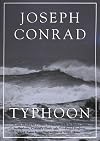
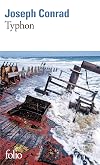
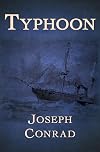
Typhoon
by Joseph Conrad
On This Page
Description
Written the year before Joseph Conrad began his masterpiece Heart of Darkness, Typhoon is a novel that deals with similar themes and shares a nautical setting with many of the author's most renowned works. The climax of the novel is a battering storm that forces many of the characters to take stock of their lives and draw on inner reserves of strength and fortitude they did not know they had..
Tags
Recommendations



































Member Recommendations

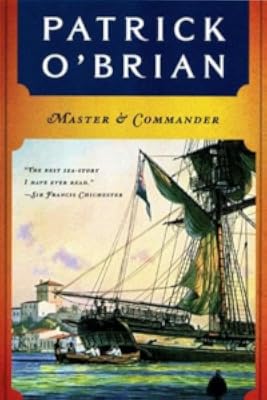
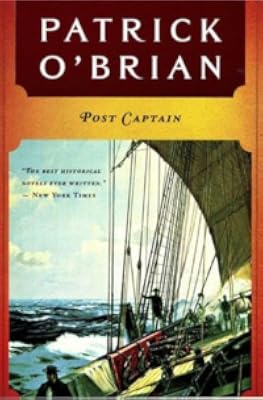
edwinbcn A sailing ship in the South China Sea is hit by a typhoon, Patrick O'Brian reads like a younger version of Joseph Conrad, the romance of the sea and old klippers underway in the Far East.
Member Reviews
A novella informed by Conrad's own experiences with a real-life Captain McWhir (one "r"). It shows the historical switch to metal steamships, the crew are engineers, not sailors, and portrayed as brutes or soulless. The captain reflects his ship - a steely lack of imagination indifferent to the forces of nature - contrary to the romance of sail. The best part is the ending - there is none! At the climactic moment, time jumps back to port. It is up to you to fill in the blank. Post-modernism, or a failure of imagination? The steam ship has lost something of the heroic.
One of the greatest examples in literature of landscape and nature treated as character. Although on one level this classic sea story is about the uneasy relations between the phlegmatic captain and his high-strung first mate, the antagonist, and in many ways the main character, is the storm itself:
This is the disintegrating power of a great wind: it isolates one from one's kind. An earthquake, a landslip, an avalanche, overtake a man incidentally, as it were--without passion. A furious gale attacks him like a personal enemy, tries to grasp his limbs, fastens upon his mind, seeks to rout his very spirit out of him.
This is my favorite of Conrad's novels, simply because the writing is so strong, evoking all the senses--you can feel it, show more hear, smell and taste the wind and water, and of course visualize it in all its shadowy hues, while the currents of man versus man, and men versus the elements, rage around each other like the storm itself. At the end, I felt like I had to rinse the salt water from my body. show less
This is the disintegrating power of a great wind: it isolates one from one's kind. An earthquake, a landslip, an avalanche, overtake a man incidentally, as it were--without passion. A furious gale attacks him like a personal enemy, tries to grasp his limbs, fastens upon his mind, seeks to rout his very spirit out of him.
This is my favorite of Conrad's novels, simply because the writing is so strong, evoking all the senses--you can feel it, show more hear, smell and taste the wind and water, and of course visualize it in all its shadowy hues, while the currents of man versus man, and men versus the elements, rage around each other like the storm itself. At the end, I felt like I had to rinse the salt water from my body. show less
This grips and engrosses, and evokes the fearsome moments anyone who's been in heavy water in heavy weather knows too well without being pedantic about it (no one drowns--just about that helplessness with drowning somewhere at the back of the mind). It does it well, and so you dwell on the weather and water and not on the weird stuff about what makes a bold sailor bold and what turns a Chinaman into a beast.
Compared to Youth and Heart of Darkness, this is screamingly funny, though Conrad's sense of humor is dry as a bone. It's a little like the first part of Darkness, where Marlow is dealing with the corrupt Europeans and before he goes off into the jungle -- it's the sarcastic commentary without the horrific self-scrutiny.
Fieldnotes:
1 Unimaginative Stolid Captain (closely resembling a Bear of Very Little Brain)
1 Excitable First Mate
1 Brand New Ship
200 Irascible Chinese workers
1 Hellacious Titular Typhoon
Several Instances of Regrettable (though Period-Appropriate) Racism
The Short Version
On the whole an interesting enough tale of how people react in a crisis - and how they respond to authority/someone else taking responsibility no matter how ill-conceived the plan. But I was never particularly engaged nor captivated and the little side-story about the Chinese workers locked in the hold fighting over money was distasteful and I'm not sure why it was in the least bit necessary.
1 Unimaginative Stolid Captain (closely resembling a Bear of Very Little Brain)
1 Excitable First Mate
1 Brand New Ship
200 Irascible Chinese workers
1 Hellacious Titular Typhoon
Several Instances of Regrettable (though Period-Appropriate) Racism
The Short Version
On the whole an interesting enough tale of how people react in a crisis - and how they respond to authority/someone else taking responsibility no matter how ill-conceived the plan. But I was never particularly engaged nor captivated and the little side-story about the Chinese workers locked in the hold fighting over money was distasteful and I'm not sure why it was in the least bit necessary.
Typhoon draws on Joseph Conrad's own seagoing experience to tell the story of the crew of the Nan-Shan, who encounter a typhoon of monumental proportions. The nautical and meteorological descriptions were great, but the depiction of the Chinese coolies was not, so I would rate this a 3.5. This is certainly the most straightforward and interesting of the Conrads I've read so far (the other two are The Secret Agent and Heart of Darkness).
Conrad was a Naturalist (determinist). This is the story of a captain and his cargo ship that runs into a typhoon. There is no escaping. The captain and crew are not in control of the typhoon or their fate; destiny will do with them what it will. One of the things Conrad explores is how people behave in such situations. Here, he explores what the captain will do with his passengers, something he does have control over. The captain is a bit of an odd duck and not always a reader's favorite, but ask yourself if he does the right thing?
Members
- Recently Added By
Lists

Conrad ranked
16 works; 2 members

Book Titles Mentioned In Newberry Medal And Honor Books
884 works; 3 members

Books Read in 2006
424 works; 8 members

Read in 2006
140 works; 1 member

2026 Reading List
50 works; 1 member
Author Information

728+ Works 91,293 Members
Joseph Conrad is recognized as one of the 20th century's greatest English language novelists. He was born Jozef Konrad Nalecz Korzeniowski on December 3, 1857, in the Polish Ukraine. His father, a writer and translator, was from Polish nobility, but political activity against Russian oppression led to his exile. Conrad was orphaned at a young age show more and subsequently raised by his uncle. At 17 he went to sea, an experience that shaped the bleak view of human nature which he expressed in his fiction. In such works as Lord Jim (1900), Youth (1902), and Nostromo (1904), Conrad depicts individuals thrust by circumstances beyond their control into moral and emotional dilemmas. His novel Heart of Darkness (1902), perhaps his best known and most influential work, narrates a literal journey to the center of the African jungle. This novel inspired the acclaimed motion picture Apocalypse Now. After the publication of his first novel, Almayer's Folly (1895), Conrad gave up the sea. He produced thirteen novels, two volumes of memoirs, and twenty-eight short stories. He died on August 3, 1924, in England. (Bowker Author Biography) show less
Some Editions
Awards and Honors
Series
Belongs to Publisher Series
KOD (142)
Work Relationships
Common Knowledge
- Canonical title*
- Taifun
- Original title
- Typhoon
- Original publication date
- 1902 (Serialised) (Serialised)
- People/Characters
- Captain MacWhirr; Jukes; Mr. Rout; Nan-Shan (steamer); the typhoon
- Dedication
- to R. B. Cunninghame Graham
- First words
- Captain MacWhirr, of the steamer Nan-Shan, had a physiognomy that, in the order of material appearances, was the exact counterpart of his mind: it presented no marked characteristics of firmness or stupidity; it had no... (show all) pronounced characteristics whatever; it was simply ordinary, irresponsive, and unruffled.
- Last words
- (Click to show. Warning: May contain spoilers.)"This is certainly coming as near as can be to keeping the thing quiet for the benefit of all concerned. What's your opinion, you pampered mail-boat swell? The old chief says that this was plainly the only thing that could be done. The skipper remarked to me the other day, 'There are things you find nothing about in books.' I think that he got out of it very well for such a stupid man."
*Some information comes from Common Knowledge in other languages. Click "Edit" for more information.
Classifications
Statistics
- Members
- 953
- Popularity
- 27,923
- Reviews
- 27
- Rating
- (3.71)
- Languages
- 16 — Catalan, Czech, Dutch, English, Finnish, French, German, Galician, Italian, Norwegian (Bokmål), Norwegian, Farsi/Persian, Portuguese, Russian, Spanish, Swedish
- Media
- Paper, Audiobook, Ebook
- ISBNs
- 177
- ASINs
- 59