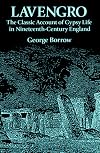
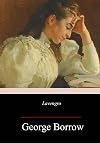
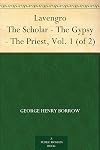
Lavengro
by George Borrow
On This Page
Description
A new scholarly edition of a bold yet overlooked Victorian text that blends the genres of memoir, travelogue, ethnography and the realist novelPermits students and academic researchers to access more subtle assessments of Lavengro, as well as a range of relevant contextsReappraises the relation of Lavengro to nineteenth-century writings on Romani and traveller cultureExplores George Borrow's influence on an array of later Victorian and modernist authors such as Ford Madox Ford and Virginia show more Woolf.Surveys and gauges recent debates and critical accounts of George Borrow's life and literary careerThis critical edition of George Borrow's Lavengro: The Scholar, The Gypsy, The Priest (1851) brings a renewed focus on a formally inventive and original text for scholars of the nineteenth-century autobiographical novel and travelogue. This edition reflects and develops research that anchors Borrow's energetically eccentric vision in a range of notable contexts. The scholarly introduction gives readers unfamiliar with the formidably prolific Borrow an opportunity to discover more about this author's career at home and abroad (as a translator for the British and Foreign Bible Society), his stylistic innovations, and how Lavengro evokes a 'wild England' that became crucial for admirers in the next century such as D.H. Lawrence, Ford Madox Ford, and Virginia Woolf. show lessTags
Recommendations
















Member Reviews
Picked up for free on the e-reader. The two books are sequential; The Romany Rye picks up right where Lavengro left off. They are semiautobiographical; the narrator is never named but is clearly the author, George Borrow. He narrates various adventures around England; as a hack author, a tinker, a blacksmith, and a language scholar. In this last role, he befriends Gypsies (Romani) and learns some of their language; “lavengro”, according to him, means “word master” in Romani. (In the Introduction, it’s commented that one of the meanings of “lavengro” is “liar”). It’s possible this is an intentional joke on Borrow’s part; he’s often self-deprecating, portraying himself (in the persona of the anonymous narrator) as show more ultra-naïve; the funniest example is when he attempts to attract his love interest by teaching her Armenian. There’s an appendix, which is the most unsatisfying part; it’s a long diatribe against Papists, Jacobites, Sir Walter Scott, and Scotsmen in general; Borrow had hinted at some of these in the body of the book but was less vituperative about it. Worth a read. show less
Memoir? Fiction? Nobody seems sure. I loved Wild Wales by Borrow, and I'm interested in the person Borrow, but this was very heavy going indeed. Very longwinded.
Borrow had a passion for gypsy life. History tells us he was not the most reliable narrator but it still is interesting to read this and his other books.
Novel with autobiographical character, written by one of the early great European Travellers
> Babelio : https://www.babelio.com/livres/Borrow-Lavengro-le-maitre-des-mots/405331
> Récit d'une merveilleuse liberté, avec ses adresses au lecteur ; ses invocations à la nature, ses brusques changements de décor, le livre de Borrow vaut aussi par une réflexion sur le langage, ses amboguïtés, l'attrait que peuvent exercer les dialictes minoritaires ou méconnus. C'est incontestablement l'un des livres majeurs du XIXe siècle anglais.
—Danieljean (Babelio)
> Récit d'une merveilleuse liberté, avec ses adresses au lecteur ; ses invocations à la nature, ses brusques changements de décor, le livre de Borrow vaut aussi par une réflexion sur le langage, ses amboguïtés, l'attrait que peuvent exercer les dialictes minoritaires ou méconnus. C'est incontestablement l'un des livres majeurs du XIXe siècle anglais.
—Danieljean (Babelio)
Feb 20, 2021 (Edited)French
Ratings
Members
- Recently Added By
Lists

Books Mentioned In The Chalet School Series
9 works; 1 member

CCE 1000 Good Books List
1,033 works; 12 members

Trinity College Booklist (1951): Class Ten, English Literature
358 works; 5 members
Philip Ward's Lifetime Reading Plan
592 works; 22 members

Slightly Foxed 2
20 works; 1 member
Author Information

61+ Works 1,419 Members
Borrow was employed by the (Protestant) Bible Society to distribute bibles in Catholic Spain in 1835. He encountered much opposition and was on one occasion imprisoned for three weeks. The famous account of his experience has little to do with the Bible and much to do with the people, land, and perils of his journey. Borrow is as racy in his show more descriptions of places as of people. Lavengro (1851) and its sequel, The Romany Rye (1857), are like novels in their interest and excitement. They are stories of gypsies, rich in gypsy lore, superstitions, and customs. Borrow spent many years in close association with Spanish gypsies and translated the Gospel of St. Luke into their language. His linguistic abilities were remarkable; he gives much space to word derivations, particularly in Lavengro. His books abound in pugnacious passages; his attacks on Sir Walter Scott (see Vol. 1), on prizefighters, and on "papists" are indicative of some of his sharp prejudices. He wrote marvelously, however, and those who admire him are devotees for life. (Bowker Author Biography) show less
Some Editions
Awards and Honors
Series
Belongs to Publisher Series
Work Relationships
Is contained in
Common Knowledge
- Original title
- Roving Adventures; or, Lavengro the Scholar - the Gipsy - the Priest
- Alternate titles
- Lavengro: The Scholar, the Gipsy, the Priest
- Original publication date
- 1852
Classifications
Statistics
- Members
- 353
- Popularity
- 88,775
- Reviews
- 5
- Rating
- (3.63)
- Languages
- 5 — Dutch, English, French, German, Spanish
- Media
- Paper, Audiobook, Ebook
- ISBNs
- 50
- ASINs
- 44