Dictée
by Theresa Hak Kyung Cha
On This Page
Description
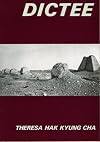
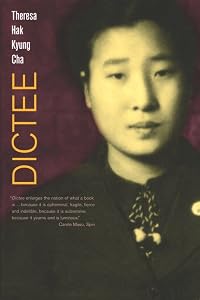
This restored edition reflects Theresa Hak Kyung Cha’s original vision and intentions for Dictee, a foundational and unparalleled text of modern Asian American literature. Dictee is the best-known work of the multidisciplinary Korean American artist Theresa Hak Kyung Cha. This restored edition, produced in partnership with the Berkeley Art Museum and Pacific Film Archive (BAMPFA), reflects Cha’s original vision for the book. Featuring the original cover and high-quality reproductions of show more the interior layout as Cha intended them, this version of Dictee faithfully renders the book as an art object in its authentic form. A formative text of modern Asian American literature, Dictee is a dynamic autobiography that tells the story of several women: the Korean revolutionary Yu Guan Soon, Joan of Arc, Demeter and Persephone, Cha’s mother Hyung Soon Huo (a Korean born in Manchuria to first-generation Korean exiles), and Cha herself. Cha’s work manifests in nine parts structured around the Greek Muses. Deploying a variety of texts, documents, images, and forms of address and inquiry, Cha links these women’s stories to explore the trauma of dislocation and the fragmentation of memory it causes. The result is an enduringly powerful, beautiful, unparalleled work. show lessTags
Recommendations











Member Reviews
Composed by a young Korean-American performance artist who was killed far too early, this text brings together many of the pieces of her early visual and aural life. The reader is asked to follow the author's path in stitching together the sections in different languages and from different parts of her life: the religious stories that the Church tells her as a Catholic convert, the dictation that she must learn as a student under the teacher's watchful eyes, the stories of her family's coming to the United States, the words of many different immigrants scratched into the walls at Ellis Island where they are held. The book is hard to read, because Theresa Hak Kyung Cha's process of coming to America is hard and beset with all sorts of show more road blocks that she recreates here. If we have to stumble over language we cannot understand, it's because she had to do so in coming to the U.S. The images we can't readily identify show us how difficult it is to come to a new culture without an interpreter. show less
How to capture the strangeness of this book? It's haunted me since it was introduced into my consciousness by three unrelated people mentioning it to me in the same day. Inventive, resistant, curiously slippery. A challenge and a call to arms that is also a love poem. Funny, sly and deadly serious.
Reading Dictee was an arresting experience and the parts where I got confused, overwhelmed, engrossed all felt phenomenologically similar to attempting to take in a scene in complete detail in a moment, sensory overload. And the parts of Korean history I learned or had forgotten were a poignant reminder of the resilience of its people.
Inspired me to do wider research into the various histories Cha alludes to; beautifully written.
Needlessly complicated, this work tries diligently to transcend genre and linear trains of thought, but as a result becomes overtly abstract and difficult to follow. More of a collage than a coherent piece of literature, Dictee has interesting moments and movements....but, for this reader at least, it rang hollow and repetitive, more of an experiment than a completed work worth exploring and returning to.
The groundbreaking and ultimately powerful mixed-media prose-poetry work that explores the depths and transcendence of suffering, history, love and survival. Cha tells of Korea's troubled modern history and one of its martyrs, Yu Guan Soo, along with Joan of Arc, her own mother, and the pain and sacrifice (Catholic) of women who live in suffering. Structured around nine Greek heroines, representative of literary forms, Cha suffuses associative poetry, story narration, artwork, photography and calligraphy into a whole that instills tragedy, injustice, loss and silence, and raises questions about the lauded culture of martyrdom around suffering. Many will not find this easy to read, but it's an important literary work and essential show more reading for Korean American literary studies. show less
"Theresa Hak Kyung Cha’s Dictee is both the ancestor and the future of all attempts to remember and rewrite—against the force of being dismembered and rewritten by—colonial/imperial histories and their reiterative, disfiguring shadows. I have, for that reason, the feeling, maybe also the fear, that neither the experience nor the revelation of it will ever come to an end."—Brandon Shimoda, PEN America Literary Award winner and author of The Grave on the Wall
"You think you know what a book can do, then you read Dictee. A life is split by it. A text of multiple modes and languages, moving in a staccato accumulation through histories of war and displacement, Theresa Hak Kyung Cha’s postcolonial classic created ways and privacies show more where there were none. Unimaginable what literature would be today without it."—Solmaz Sharif, author of Customs
" Dictee is part memoir, part history, part experimental meditation; a challenging, innovative exploration of Cha’s life, her mother’s difficult immigrant journey across East Asia and to the United States, the fractured immigrant experience, women warriors, and language itself. . . . An essential work for feminist writers, conceptual artists and Asian American authors and scholars."— New York Times
Newly restored, this version of Theresa Hak Kyung Cha’s masterpiece honors the author's original intentions and vision for the book. Originally published in 1982, Dictee is a classic of modern Asian American literature.
Dictee is the best-known work of the multidisciplinary Korean American artist Theresa Hak Kyung Cha.
This restored edition, produced in partnership with the Berkeley Art Museum and Pacific Film Archive (BAMPFA), reflects Cha’s original vision for the book as an art object in its authentic form, featuring:
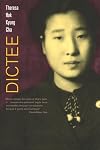
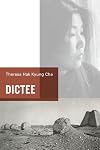
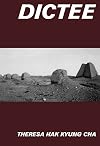
The original cover
High-quality reproductions of the interior layout
Dictee tells the story of several women: the Korean revolutionary Yu Guan Soon, Joan of Arc, Demeter and Persephone, Cha’s mother Hyung Soon Huo (a Korean born in Manchuria to first-generation Korean exiles), and Cha herself.
This dynamic autobiography:
Structures the story in nine parts around the Greek Muses
Deploys a variety of texts, documents, images, and forms of address and inquiry
Links the women’s stories to explore the trauma of dislocation and the fragmentation of memory it causes
The result is an enduringly powerful, beautiful, unparalleled work. show less
"You think you know what a book can do, then you read Dictee. A life is split by it. A text of multiple modes and languages, moving in a staccato accumulation through histories of war and displacement, Theresa Hak Kyung Cha’s postcolonial classic created ways and privacies show more where there were none. Unimaginable what literature would be today without it."—Solmaz Sharif, author of Customs
" Dictee is part memoir, part history, part experimental meditation; a challenging, innovative exploration of Cha’s life, her mother’s difficult immigrant journey across East Asia and to the United States, the fractured immigrant experience, women warriors, and language itself. . . . An essential work for feminist writers, conceptual artists and Asian American authors and scholars."— New York Times
Newly restored, this version of Theresa Hak Kyung Cha’s masterpiece honors the author's original intentions and vision for the book. Originally published in 1982, Dictee is a classic of modern Asian American literature.
Dictee is the best-known work of the multidisciplinary Korean American artist Theresa Hak Kyung Cha.
This restored edition, produced in partnership with the Berkeley Art Museum and Pacific Film Archive (BAMPFA), reflects Cha’s original vision for the book as an art object in its authentic form, featuring:
The original cover
High-quality reproductions of the interior layout
Dictee tells the story of several women: the Korean revolutionary Yu Guan Soon, Joan of Arc, Demeter and Persephone, Cha’s mother Hyung Soon Huo (a Korean born in Manchuria to first-generation Korean exiles), and Cha herself.
This dynamic autobiography:
Structures the story in nine parts around the Greek Muses
Deploys a variety of texts, documents, images, and forms of address and inquiry
Links the women’s stories to explore the trauma of dislocation and the fragmentation of memory it causes
The result is an enduringly powerful, beautiful, unparalleled work. show less
Members
- Recently Added By
Lists

Recommend the 20 best books you've read in the last five years
2,168 works; 607 members
Author Information

9+ Works 667 Members
Awards and Honors
Common Knowledge
- Canonical title
- Dictée
Classifications
Statistics
- Members
- 597
- Popularity
- 49,200
- Reviews
- 7
- Rating
- (3.81)
- Languages
- English
- Media
- Paper, Ebook
- ISBNs
- 9
- ASINs
- 4