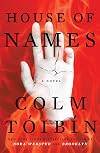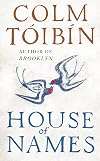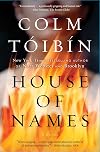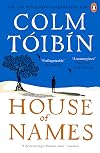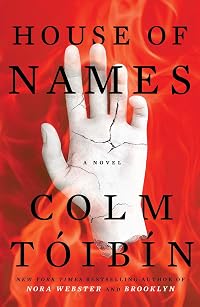
House of Names
by Colm Tóibín
On This Page
Description
A "retelling of the Greek myth of Agamemnon, Clytemnestra and their children -- a spectacularly audacious, violent and riveting story of family and vengeance"--Dust jacket. Since her husband King Agamemnon left ancient Mycenae to sail with his army for Troy, Clytemnestra rules along with her lover Aegisthus. Together they plot the bloody murder of Agamemnon on the day of his return. Clytemnestra reveals how her husband deceived her eldest daughter Iphigeneia with a promise of marriage to show more Achilles, only to sacrifice her because that is what he was told would make the winds blow in his favor and take him to Troy. Agamemnon came back from war with a lover himself; now Clytemnestra will achieve vengeance. But her own fate lies in the hands of her son, Orestes, and her vengeful daughter Electra. show lessTags
Recommendations
















Member Reviews
In this retelling of the Greek tragedy, the author takes a few detours and to some extent reinterprets the story. I found it an interesting take, given other adaptations I've recently read. The sacrifice of Iphigenia is brutal, taking place just after a graphic slaughter of cows, and with both her and her mother attempting to curse the men responsible. Clytemnestra is dragged away and placed in a hole behind a rock: although she saw someone whispering to Agamemnon just beforehand, it seems he must have had more warning of what his womenfolk were liable to do, to have prepared this entombing. Altogether, it is not surprising that she subsequently acts as she does.
The author departs from canon in having Orestes abducted by Aeschylus' men show more and held hostage, then escaping with Leander and another boy. I found the story of how they survive and the contrast in the character of the boys, plus how Orestes learns at such a young age to kill in order to survive, interesting and a little reminiscent of 'Lord of the Flies'. Electra is also different: she develops a network of men loyal to her and it made me wonder who exactly sent "Clytemnestra's men" to carry out atrocities against local opponents, when it was men in her guard who were actually working for Electra. Could she have done such a thing to harden opposition to her mother and further justify her mother's overthrow and murder? Far from being a doormat and a slavish supporter of her brother, she seems to view him as a useful expedient up to the point where he carries out the deed, then as a tool who can be used to legitimise Leander's nephew.
The brief appearance of Cassandra is also a departure from tradition. Far from being tragic and not believed, she is proud and vain. Although she is a 'prize', Agamemnon praises her help in assisting him in his military victories. And Troy as such and Helen aren't really mentioned: instead, Agamemnon's army are embarked on general conquest and plunder, it seems.
The gods, far from playing a dominant role, are actually fading. One of the themes of the book is the loss of their support and rule. Previously, people sensed their presence, especially if someone was about to die. Interestingly, Clytemnestra's actions are condemned because she failed to either take advice from counsellors or to act on divine edict. Given the history of atrocities in the House of Atreus, it seems her actions would have been justified and accepted by her people if a god had ordered her to carry them out. Ironically, Clytemnestra herself has lost all faith in the gods when they failed to prevent her daughter's sacrifice.
Altogether I found it an interesting and well-written interpretation and would rate it as 4 stars.
**** Notes for re-read *****
I read this again after reading 'Clytemnestra' by Costanza Casati to refresh my memory regarding the differences. The two things that stand out is that Aegisthus is a master manipulator in Tobin's novel while being deeply damaged in Casati's, and Clytemnestra is very unevenly written in Tobin's. She is a powerful and convincing character in the section from her own point of view early on, but when viewed by Orestes and others later, is vacillating, trivial and basically a pawn of Aegisthus. It's very uneven and possibly I should reduce the rating to 3 stars but I will let my original rating stand as I did enjoy the book. show less
The author departs from canon in having Orestes abducted by Aeschylus' men show more and held hostage, then escaping with Leander and another boy. I found the story of how they survive and the contrast in the character of the boys, plus how Orestes learns at such a young age to kill in order to survive, interesting and a little reminiscent of 'Lord of the Flies'. Electra is also different: she develops a network of men loyal to her and it made me wonder who exactly sent "Clytemnestra's men" to carry out atrocities against local opponents, when it was men in her guard who were actually working for Electra. Could she have done such a thing to harden opposition to her mother and further justify her mother's overthrow and murder? Far from being a doormat and a slavish supporter of her brother, she seems to view him as a useful expedient up to the point where he carries out the deed, then as a tool who can be used to legitimise Leander's nephew.
The brief appearance of Cassandra is also a departure from tradition. Far from being tragic and not believed, she is proud and vain. Although she is a 'prize', Agamemnon praises her help in assisting him in his military victories. And Troy as such and Helen aren't really mentioned: instead, Agamemnon's army are embarked on general conquest and plunder, it seems.
The gods, far from playing a dominant role, are actually fading. One of the themes of the book is the loss of their support and rule. Previously, people sensed their presence, especially if someone was about to die. Interestingly, Clytemnestra's actions are condemned because she failed to either take advice from counsellors or to act on divine edict. Given the history of atrocities in the House of Atreus, it seems her actions would have been justified and accepted by her people if a god had ordered her to carry them out. Ironically, Clytemnestra herself has lost all faith in the gods when they failed to prevent her daughter's sacrifice.
Altogether I found it an interesting and well-written interpretation and would rate it as 4 stars.
**** Notes for re-read *****
I read this again after reading 'Clytemnestra' by Costanza Casati to refresh my memory regarding the differences. The two things that stand out is that Aegisthus is a master manipulator in Tobin's novel while being deeply damaged in Casati's, and Clytemnestra is very unevenly written in Tobin's. She is a powerful and convincing character in the section from her own point of view early on, but when viewed by Orestes and others later, is vacillating, trivial and basically a pawn of Aegisthus. It's very uneven and possibly I should reduce the rating to 3 stars but I will let my original rating stand as I did enjoy the book. show less
In the House of Names, Colum Toibin re-imagines the Greek tragedy of Clytemnestra, Orestes and Electra. It is a story of betrayal and revenge that spirals out of control.
Agamemnon, the King of the House of Atreus is called to war in Troy. His fleet of ships becomes stalled at the port of Aules. If he wishes for the winds to change, the oracles say, he must appease the Gods by sacrificing, his sixteen year old daughter, Iphigenia. He lures his wife, Clytemnestra and Iphigenia to Aules by telling them that he has arranged Iphigenia's marriage to the great hero Achilles.
The book is written from the viewpoints of Clytemnestra, and her two surviving children, Orestes and Electra. In the first segment, Clytemnestra describes her journey show more to Aules, her husband's treachery and her subsequent murder of her husband when he returns victorious from Troy ten years later. In order to enact her revenge she enlists her lover, Aegisthus. He makes sure that there will be no rebellion among the people by capturing the sons of the elite and holding them captive in an unknown outpost. Without, Clytemnestra's knowledge he sends her son, Orestes into captivity and imprisons her daughter Electra in the palace dungeon "for their own protection." Thus, making Clytemnestra his subordinate.
While Electra is released within a few days, Orestes is away for over five years. The second section of the book, describes his capture, captivity, escape with two friends from the outpost, their five year sojourn at secluded house in the woods and eventual return. The final sections shift from Electra to Orestes and chronicles their revenge for their father's murder during a time of general rebellion and civil unrest.
In an interview with the Guardian, Colm Toibin said that he felt drawn to this tale because of the "perfect parallels to the retributive horrors" he had witnessed during the Troubles in Ireland. His goal in this book was to show how " vengeance begets vengeance" and how ordinary people can become the "agents of atrocity".
Toibin is an excellent writer. His prose is sparse, low key, yet at the same time evocative and powerful. Although the story is embedded in the mythic past, he bring to life characters' whose demise is the result of becoming entrapped in a cycle of vengeance. show less
Agamemnon, the King of the House of Atreus is called to war in Troy. His fleet of ships becomes stalled at the port of Aules. If he wishes for the winds to change, the oracles say, he must appease the Gods by sacrificing, his sixteen year old daughter, Iphigenia. He lures his wife, Clytemnestra and Iphigenia to Aules by telling them that he has arranged Iphigenia's marriage to the great hero Achilles.
The book is written from the viewpoints of Clytemnestra, and her two surviving children, Orestes and Electra. In the first segment, Clytemnestra describes her journey show more to Aules, her husband's treachery and her subsequent murder of her husband when he returns victorious from Troy ten years later. In order to enact her revenge she enlists her lover, Aegisthus. He makes sure that there will be no rebellion among the people by capturing the sons of the elite and holding them captive in an unknown outpost. Without, Clytemnestra's knowledge he sends her son, Orestes into captivity and imprisons her daughter Electra in the palace dungeon "for their own protection." Thus, making Clytemnestra his subordinate.
While Electra is released within a few days, Orestes is away for over five years. The second section of the book, describes his capture, captivity, escape with two friends from the outpost, their five year sojourn at secluded house in the woods and eventual return. The final sections shift from Electra to Orestes and chronicles their revenge for their father's murder during a time of general rebellion and civil unrest.
In an interview with the Guardian, Colm Toibin said that he felt drawn to this tale because of the "perfect parallels to the retributive horrors" he had witnessed during the Troubles in Ireland. His goal in this book was to show how " vengeance begets vengeance" and how ordinary people can become the "agents of atrocity".
Toibin is an excellent writer. His prose is sparse, low key, yet at the same time evocative and powerful. Although the story is embedded in the mythic past, he bring to life characters' whose demise is the result of becoming entrapped in a cycle of vengeance. show less
In this imagining — it wouldn’t be fair to call it a re-imagining — of the events surrounding Agamemnon’s sacrifice of his daughter, Iphigenia, and the horrific consequences of that act, Tóibín once again confirms his mastery of tone and touch and pace. Told from the viewpoints of Agamemnon’s aggrieved wife and mother of Iphigenia, Clytemnestra, Orestes, his son, and Electra, his second daughter, Tóibín gives us a measured and nuanced treatment full of righteous anger, ambivalence, and veils of ignorance.
It is always curious to read a story whose broad outline and specific ends one knows well in advance. Although it is a common enough experience for our appreciation of the standard repertoire of, say, Shakespearean dramas, show more it is less common in literature to tread much furrowed ground. Tóibín concentrates on the impressions and understandings or misunderstandings of each of his serial protagonists in close third-person in order to bring immediacy to his tale. And he is such a master of word choice and subtle shifting of pace that you’ll read this like a paperback thriller, turning page after page after page to chase the outcome. Brilliant!
Highly recommended. show less
It is always curious to read a story whose broad outline and specific ends one knows well in advance. Although it is a common enough experience for our appreciation of the standard repertoire of, say, Shakespearean dramas, show more it is less common in literature to tread much furrowed ground. Tóibín concentrates on the impressions and understandings or misunderstandings of each of his serial protagonists in close third-person in order to bring immediacy to his tale. And he is such a master of word choice and subtle shifting of pace that you’ll read this like a paperback thriller, turning page after page after page to chase the outcome. Brilliant!
Highly recommended. show less
There are writers that choose to build their own work on stories that have existed for an eternity and create their own vision of them, because they know they have the skills to do so.
There are books that you can see they are glorious 5- star material before you even reach page 50. Colm Toibin is one of those writers and House of Names is one of those books.
"I have been acquainted with the smell of death."
Don't tell me I need spoiler alerts...I shall be very disappointed...
Death is always the main character in the Atreides saga. Agamemnon took the throne of Mycenae through death, he sailed to Troy after sacrificing Iphigenia and was killed by Clytemnestra upon his return to the homeland. Orestes and Electra killed their mother to avenge show more their father. It's a mythical family where blood and death rule. Blood, death and murder....
Colm Toibin makes excellent use of the tragedies and fills the gap between Iphigenia's death and Agamemnon's return, as well as the time between the king's murder and Orestes' matricide, in a superbly crafted way. He treats the characters and the source material with utter respect (which is more than can be said for ridiculous filmmakers and films, e.g."Troy"....) and breathes new life in this timeless story of a cursed family. The manner in which he presents the characters and sheds light on their motives of their actions is exquisite.
Toibin narrates the story in a literary detached manner, as is fitting to the material. These are myths known to all, undying, unchanged. There's no need for the "personal voice" of the author, no need for melodrama. We cannot view a novel based on these characters in the same light as any other common book. Able writers know how to make a well-known story without projecting their voice loudly. It's very interesting to note that while Clytemnestra and Electra's chapters are told in First-Person narration, Orestes' chapters are written in the Third- Person technique. Perhaps to further isolate him from all the conniving of his mother and his sister. Orestes' rendition of Iphigenia's sacrifice is hair-raising and one of the most powerful written pieces I've read. There is also a beautiful reference to the myth of Helen's birth and the death of her brothers, Kastor and Polydeuces, the Dioskouroi as they're forever known.
I am praying to no gods."
There are no gods ruling the fate of our Atreides now. There are only insufficient oracles and prophecies, elders that are unable to make a desicion. Each character obeys to their own personal principles, to their own notion of justice and revenge. What is alive, then? The souls of the slain that linger in dark corridors and shady gardens trying to find their way to the world of men. So here, there is no excuse that the gods dictated them. Each one is responsible for their actions. And the consequences....
The greatest success of this novel is that it preserves the spirit of the myth. The beauty of the characters in Ancient Greek Tragedy is that there is no black and white. Even the ones considered "villains" have their own alibies to justify their deeds. How forward were the ancient dramatists looking...What masterpieces they created and handed down to the generations until the end of time....And Toibin respects and listens as our heroes and heroines speak...
Clytemnestra believes she exacts revenge for the unimaginable terror of losing one of her children. I confess I've always been hesitant to blame her, but she falls victim to her rage and to Aegisthus' cruelty and ambition as he finds the chance to revenge Agamemnon's crimes towards his family. Electra and Orestes are the victims, along with Iphigenia, while Electra has an idealized image of a father who's been a monster of greed and ambition. And she's more like her mother than she'd be willing to admit. ...Orestes struggles to find his way to a world that was taken from him and he becomes a murderer in the process.
Characters like Clytemnestra, Electra, Agamemnon and Orestes cannot be "reviewed". It's almost blasphemy. They are larger than life. It is more than possible that they never existed and yet, they are immortal, eternal. To say Clytemnestra "is bad", Electra "is mad", Orestes "is boring" is -in my opinion- foolish and immature. And pointless. Colm Toibin writes them as three-dimensional characters, sometimes powerful, other times full of doubt, full of love and malice and ambition. But above all, they are human beings, complex and fascinating.
The writer chose a difficult subject that can burn any less skilled author bound to fail in the attempt. He created a novel of exquisite beauty. Not boring or cold or dragging, but respectful, vivid, poetic, raw and dark. It's not an easy read. It wouldn't have the Atreides as its protagonists if it were. It wouldn't have murder as its main theme. As a Greek who has grown up with these myths that run in our blood, I can only say that Toibin made me proud to discover how alive our legendary ancestors still are. I'm not interested in trivial technicalities. For me, this is a book that touched perfection..... show less
There are books that you can see they are glorious 5- star material before you even reach page 50. Colm Toibin is one of those writers and House of Names is one of those books.
"I have been acquainted with the smell of death."
Don't tell me I need spoiler alerts...I shall be very disappointed...
Death is always the main character in the Atreides saga. Agamemnon took the throne of Mycenae through death, he sailed to Troy after sacrificing Iphigenia and was killed by Clytemnestra upon his return to the homeland. Orestes and Electra killed their mother to avenge show more their father. It's a mythical family where blood and death rule. Blood, death and murder....
Colm Toibin makes excellent use of the tragedies and fills the gap between Iphigenia's death and Agamemnon's return, as well as the time between the king's murder and Orestes' matricide, in a superbly crafted way. He treats the characters and the source material with utter respect (which is more than can be said for ridiculous filmmakers and films, e.g."Troy"....) and breathes new life in this timeless story of a cursed family. The manner in which he presents the characters and sheds light on their motives of their actions is exquisite.
Toibin narrates the story in a literary detached manner, as is fitting to the material. These are myths known to all, undying, unchanged. There's no need for the "personal voice" of the author, no need for melodrama. We cannot view a novel based on these characters in the same light as any other common book. Able writers know how to make a well-known story without projecting their voice loudly. It's very interesting to note that while Clytemnestra and Electra's chapters are told in First-Person narration, Orestes' chapters are written in the Third- Person technique. Perhaps to further isolate him from all the conniving of his mother and his sister. Orestes' rendition of Iphigenia's sacrifice is hair-raising and one of the most powerful written pieces I've read. There is also a beautiful reference to the myth of Helen's birth and the death of her brothers, Kastor and Polydeuces, the Dioskouroi as they're forever known.
I am praying to no gods."
There are no gods ruling the fate of our Atreides now. There are only insufficient oracles and prophecies, elders that are unable to make a desicion. Each character obeys to their own personal principles, to their own notion of justice and revenge. What is alive, then? The souls of the slain that linger in dark corridors and shady gardens trying to find their way to the world of men. So here, there is no excuse that the gods dictated them. Each one is responsible for their actions. And the consequences....
The greatest success of this novel is that it preserves the spirit of the myth. The beauty of the characters in Ancient Greek Tragedy is that there is no black and white. Even the ones considered "villains" have their own alibies to justify their deeds. How forward were the ancient dramatists looking...What masterpieces they created and handed down to the generations until the end of time....And Toibin respects and listens as our heroes and heroines speak...
Clytemnestra believes she exacts revenge for the unimaginable terror of losing one of her children. I confess I've always been hesitant to blame her, but she falls victim to her rage and to Aegisthus' cruelty and ambition as he finds the chance to revenge Agamemnon's crimes towards his family. Electra and Orestes are the victims, along with Iphigenia, while Electra has an idealized image of a father who's been a monster of greed and ambition. And she's more like her mother than she'd be willing to admit. ...Orestes struggles to find his way to a world that was taken from him and he becomes a murderer in the process.
Characters like Clytemnestra, Electra, Agamemnon and Orestes cannot be "reviewed". It's almost blasphemy. They are larger than life. It is more than possible that they never existed and yet, they are immortal, eternal. To say Clytemnestra "is bad", Electra "is mad", Orestes "is boring" is -in my opinion- foolish and immature. And pointless. Colm Toibin writes them as three-dimensional characters, sometimes powerful, other times full of doubt, full of love and malice and ambition. But above all, they are human beings, complex and fascinating.
The writer chose a difficult subject that can burn any less skilled author bound to fail in the attempt. He created a novel of exquisite beauty. Not boring or cold or dragging, but respectful, vivid, poetic, raw and dark. It's not an easy read. It wouldn't have the Atreides as its protagonists if it were. It wouldn't have murder as its main theme. As a Greek who has grown up with these myths that run in our blood, I can only say that Toibin made me proud to discover how alive our legendary ancestors still are. I'm not interested in trivial technicalities. For me, this is a book that touched perfection..... show less
There are writers that choose to build their own work on stories that have existed for an eternity and create their own vision of them, because they know they have the skills to do so.
There are books that you can see they are glorious 5- star material before you even reach page 50. Colm Toibin is one of those writers and House of Names is one of those books.
"I have been acquainted with the smell of death."
Don't tell me I need spoiler alerts...I shall be very disappointed...
Death is always the main character in the Atreides saga. Agamemnon took the throne of Mycenae through death, he sailed to Troy after sacrificing Iphigenia and was killed by Clytemnestra upon his return to the homeland. Orestes and Electra killed their mother to show more avenge their father. It's a mythical family where blood and death rule. Blood, death and murder....
Colm Toibin makes excellent use of the tragedies and fills the gap between Iphigenia's death and Agamemnon's return, as well as the time between the king's murder and Orestes' matricide, in a superbly crafted way. He treats the characters and the source material with utter respect (which is more than can be said for ridiculous filmmakers and films, e.g."Troy"....) and breathes new life in this timeless story of a cursed family. The manner in which he presents the characters and sheds light on their motives of their actions is exquisite.
Toibin narrates the story in a literary detached manner, as is fitting to the material. These are myths known to all, undying, unchanged. There's no need for the "personal voice" of the author, no need for melodrama. We cannot view a novel based on these characters in the same light as any other common book. Able writers know how to make a well-known story without projecting their voice loudly. It's very interesting to note that while Clytemnestra and Electra's chapters are told in First-Person narration, Orestes' chapters are written in the Third- Person technique. Perhaps to further isolate him from all the conniving of his mother and his sister. Orestes' rendition of Iphigenia's sacrifice is hair-raising and one of the most powerful written pieces I've read. There is also a beautiful reference to the myth of Helen's birth and the death of her brothers, Kastor and Polydeuces, the Dioskouroi as they're forever known.
I am praying to no gods."
There are no gods ruling the fate of our Atreides now. There are only insufficient oracles and prophecies, elders that are unable to make a desicion. Each character obeys to their own personal principles, to their own notion of justice and revenge. What is alive, then? The souls of the slain that linger in dark corridors and shady gardens trying to find their way to the world of men. So here, there is no excuse that the gods dictated them. Each one is responsible for their actions. And the consequences....
The greatest success of this novel is that it preserves the spirit of the myth. The beauty of the characters in Ancient Greek Tragedy is that there is no black and white. Even the ones considered "villains" have their own alibies to justify their deeds. How forward were the ancient dramatists looking...What masterpieces they created and handed down to the generations until the end of time....And Toibin respects and listens as our heroes and heroines speak...
Clytemnestra believes she exacts revenge for the unimaginable terror of losing one of her children. I confess I've always been hesitant to blame her, but she falls victim to her rage and to Aegisthus' cruelty and ambition as he finds the chance to revenge Agamemnon's crimes towards his family. Electra and Orestes are the victims, along with Iphigenia, while Electra has an idealized image of a father who's been a monster of greed and ambition. And she's more like her mother than she'd be willing to admit. ...Orestes struggles to find his way to a world that was taken from him and he becomes a murderer in the process.
Characters like Clytemnestra, Electra, Agamemnon and Orestes cannot be "reviewed". It's almost blasphemy. They are larger than life. It is more than possible that they never existed and yet, they are immortal, eternal. To say Clytemnestra "is bad", Electra "is mad", Orestes "is boring" is -in my opinion- foolish and immature. And pointless. Colm Toibin writes them as three-dimensional characters, sometimes powerful, other times full of doubt, full of love and malice and ambition. But above all, they are human beings, complex and fascinating.
The writer chose a difficult subject that can burn any less skilled author bound to fail in the attempt. He created a novel of exquisite beauty. Not boring or cold or dragging, but respectful, vivid, poetic, raw and dark. It's not an easy read. It wouldn't have the Atreides as its protagonists if it were. It wouldn't have murder as its main theme. As a Greek who has grown up with these myths that run in our blood, I can only say that Toibin made me proud to discover how alive our legendary ancestors still are. I'm not interested in trivial technicalities. For me, this is a book that touched perfection..... show less
There are books that you can see they are glorious 5- star material before you even reach page 50. Colm Toibin is one of those writers and House of Names is one of those books.
"I have been acquainted with the smell of death."
Don't tell me I need spoiler alerts...I shall be very disappointed...
Death is always the main character in the Atreides saga. Agamemnon took the throne of Mycenae through death, he sailed to Troy after sacrificing Iphigenia and was killed by Clytemnestra upon his return to the homeland. Orestes and Electra killed their mother to show more avenge their father. It's a mythical family where blood and death rule. Blood, death and murder....
Colm Toibin makes excellent use of the tragedies and fills the gap between Iphigenia's death and Agamemnon's return, as well as the time between the king's murder and Orestes' matricide, in a superbly crafted way. He treats the characters and the source material with utter respect (which is more than can be said for ridiculous filmmakers and films, e.g."Troy"....) and breathes new life in this timeless story of a cursed family. The manner in which he presents the characters and sheds light on their motives of their actions is exquisite.
Toibin narrates the story in a literary detached manner, as is fitting to the material. These are myths known to all, undying, unchanged. There's no need for the "personal voice" of the author, no need for melodrama. We cannot view a novel based on these characters in the same light as any other common book. Able writers know how to make a well-known story without projecting their voice loudly. It's very interesting to note that while Clytemnestra and Electra's chapters are told in First-Person narration, Orestes' chapters are written in the Third- Person technique. Perhaps to further isolate him from all the conniving of his mother and his sister. Orestes' rendition of Iphigenia's sacrifice is hair-raising and one of the most powerful written pieces I've read. There is also a beautiful reference to the myth of Helen's birth and the death of her brothers, Kastor and Polydeuces, the Dioskouroi as they're forever known.
I am praying to no gods."
There are no gods ruling the fate of our Atreides now. There are only insufficient oracles and prophecies, elders that are unable to make a desicion. Each character obeys to their own personal principles, to their own notion of justice and revenge. What is alive, then? The souls of the slain that linger in dark corridors and shady gardens trying to find their way to the world of men. So here, there is no excuse that the gods dictated them. Each one is responsible for their actions. And the consequences....
The greatest success of this novel is that it preserves the spirit of the myth. The beauty of the characters in Ancient Greek Tragedy is that there is no black and white. Even the ones considered "villains" have their own alibies to justify their deeds. How forward were the ancient dramatists looking...What masterpieces they created and handed down to the generations until the end of time....And Toibin respects and listens as our heroes and heroines speak...
Clytemnestra believes she exacts revenge for the unimaginable terror of losing one of her children. I confess I've always been hesitant to blame her, but she falls victim to her rage and to Aegisthus' cruelty and ambition as he finds the chance to revenge Agamemnon's crimes towards his family. Electra and Orestes are the victims, along with Iphigenia, while Electra has an idealized image of a father who's been a monster of greed and ambition. And she's more like her mother than she'd be willing to admit. ...Orestes struggles to find his way to a world that was taken from him and he becomes a murderer in the process.
Characters like Clytemnestra, Electra, Agamemnon and Orestes cannot be "reviewed". It's almost blasphemy. They are larger than life. It is more than possible that they never existed and yet, they are immortal, eternal. To say Clytemnestra "is bad", Electra "is mad", Orestes "is boring" is -in my opinion- foolish and immature. And pointless. Colm Toibin writes them as three-dimensional characters, sometimes powerful, other times full of doubt, full of love and malice and ambition. But above all, they are human beings, complex and fascinating.
The writer chose a difficult subject that can burn any less skilled author bound to fail in the attempt. He created a novel of exquisite beauty. Not boring or cold or dragging, but respectful, vivid, poetic, raw and dark. It's not an easy read. It wouldn't have the Atreides as its protagonists if it were. It wouldn't have murder as its main theme. As a Greek who has grown up with these myths that run in our blood, I can only say that Toibin made me proud to discover how alive our legendary ancestors still are. I'm not interested in trivial technicalities. For me, this is a book that touched perfection..... show less
House of Names is a novelised retelling of the Greek tragedy surrounding Agamemnon, Clytemnestra and their children. Tóibín commences his tale with Clytemnestra's account of Agamemnon's deceit, which leads to the sacrifice of her daughter, Iphigenia, to appease the gods before the start of the Trojan War.
As the story develops, Tóibín shifts the narrative viewpoint to Orestes and Electra, the remaining children, and how they survive the plotting of their mother and her lover, Aeschylus. Eventually that tragedy unfolds to its inevitable conclusion, which Tóibín delivers with quite a narrative punch, considering that most readers would be well aware that it is coming.
Tóibín captures Clytemnestra's seething fury at Agamemnon and show more her daughter's long-simmering desire for revenge against her very well. Their stories are rendered in a riveting first-person account, whereas Orestes' story is told in the third person, a subtle indication of his lack of autonomy over his own part in these intrigues. show less
As the story develops, Tóibín shifts the narrative viewpoint to Orestes and Electra, the remaining children, and how they survive the plotting of their mother and her lover, Aeschylus. Eventually that tragedy unfolds to its inevitable conclusion, which Tóibín delivers with quite a narrative punch, considering that most readers would be well aware that it is coming.
Tóibín captures Clytemnestra's seething fury at Agamemnon and show more her daughter's long-simmering desire for revenge against her very well. Their stories are rendered in a riveting first-person account, whereas Orestes' story is told in the third person, a subtle indication of his lack of autonomy over his own part in these intrigues. show less
House of Names, Colm Toibin, author; Juliet Stevenson, Charlie Anson, Pippa Nixon, narrators
I really enjoyed the narration of this short novel about a famous Greek myth. In order to retain power and success in battle, Agamemnon has arranged for the murder of his own first born daughter, Iphigenia, to appease the gods who have demanded it. The elders agree that this must be done to save their own lives and protect their families. They agree to tear asunder his family and to take the life of an innocent young girl to save their own. This they believe will turn the tide of battle in their favor. So begins a cycle of deception and violence.
Clytemnestra was deceived into preparing her daughter to be the bride of Achilles. Unwittingly, she show more brought her daughter to her place of slaughter. When her husband, Agamemnon, returns victorious after battle, she is ready to take action to avenge her daughter’s death. Clytemnestra teams up with a prisoner, Aegisthus, to carry out her deed. One murder leads to another in a cycle of violence and betrayal.
Meanwhile, Elektra, sister to Iphigenia, draws her own conclusions about her sister’s death, blaming her mother. Orestes knows his father ordered her murder, but is unaware of anything else that has happened. Both sister and brother have been temporarily neutralized by order of Aegisthus and are imprisoned.
As Toibin reimagines how these characters feel and react, the reader is drawn into the palace and their lives. The secrets that are kept and the deceptions that are planned lead to more and more confusion, rumor and disloyalty. Toibin breathes life into their introspection and behavior.
In this retelling of the story, the characters deal with all the pain of human suffering and the duplicity of those around them. The narrators brought them to life as their performance was not only insightful, but their portrayals felt genuine. I could actually see the shade of Clytemnestra walking in the corridor, feel the blade plunge into the neck of Agamemnon, hear the cries of Iphigenia as she was brought to the slaughter, feel the fear of Orestes as he tried to pretend to be brave and grown up when he was kidnapped and didn’t fully understand his position, and the deceitfulness of Elektra as she carried out her own plans.
I wondered how it would have turned out if Orestes had been a more active participant in the entire process of the palace intrigue. Although he is not, and is rather an observer forced to be on the sidelines, it felt to me like Orestes was the dupe, the foil, the Job like character who was the catalyst for bringing about the events that would take them all into the future. At the end of the novel, there is a germ of greater freedom planted and the yoke of slavery begins to be questioned.
Each character modeled his/her behavior on someone who may or may not have been worthy. Power was constantly changing hands. Fealty was questioned, people were murdered. Elektra’s character was hard to read as she seemed to be part heroine and part villain, as did Aegisthus and even Leander. Orestes seemed to be caught in the trap each laid. I believe the author has done a wonderful job of reimagining this myth, making the inner workings and feelings of the palace and the characters real, rather than objects of imagination.
I am not sure if it is as good a read in a print book, but as an audio, I found it captivating. I could not stop listening and felt regret when I was forced to put it down for awhile by other earthly needs. show less
I really enjoyed the narration of this short novel about a famous Greek myth. In order to retain power and success in battle, Agamemnon has arranged for the murder of his own first born daughter, Iphigenia, to appease the gods who have demanded it. The elders agree that this must be done to save their own lives and protect their families. They agree to tear asunder his family and to take the life of an innocent young girl to save their own. This they believe will turn the tide of battle in their favor. So begins a cycle of deception and violence.
Clytemnestra was deceived into preparing her daughter to be the bride of Achilles. Unwittingly, she show more brought her daughter to her place of slaughter. When her husband, Agamemnon, returns victorious after battle, she is ready to take action to avenge her daughter’s death. Clytemnestra teams up with a prisoner, Aegisthus, to carry out her deed. One murder leads to another in a cycle of violence and betrayal.
Meanwhile, Elektra, sister to Iphigenia, draws her own conclusions about her sister’s death, blaming her mother. Orestes knows his father ordered her murder, but is unaware of anything else that has happened. Both sister and brother have been temporarily neutralized by order of Aegisthus and are imprisoned.
As Toibin reimagines how these characters feel and react, the reader is drawn into the palace and their lives. The secrets that are kept and the deceptions that are planned lead to more and more confusion, rumor and disloyalty. Toibin breathes life into their introspection and behavior.
In this retelling of the story, the characters deal with all the pain of human suffering and the duplicity of those around them. The narrators brought them to life as their performance was not only insightful, but their portrayals felt genuine. I could actually see the shade of Clytemnestra walking in the corridor, feel the blade plunge into the neck of Agamemnon, hear the cries of Iphigenia as she was brought to the slaughter, feel the fear of Orestes as he tried to pretend to be brave and grown up when he was kidnapped and didn’t fully understand his position, and the deceitfulness of Elektra as she carried out her own plans.
I wondered how it would have turned out if Orestes had been a more active participant in the entire process of the palace intrigue. Although he is not, and is rather an observer forced to be on the sidelines, it felt to me like Orestes was the dupe, the foil, the Job like character who was the catalyst for bringing about the events that would take them all into the future. At the end of the novel, there is a germ of greater freedom planted and the yoke of slavery begins to be questioned.
Each character modeled his/her behavior on someone who may or may not have been worthy. Power was constantly changing hands. Fealty was questioned, people were murdered. Elektra’s character was hard to read as she seemed to be part heroine and part villain, as did Aegisthus and even Leander. Orestes seemed to be caught in the trap each laid. I believe the author has done a wonderful job of reimagining this myth, making the inner workings and feelings of the palace and the characters real, rather than objects of imagination.
I am not sure if it is as good a read in a print book, but as an audio, I found it captivating. I could not stop listening and felt regret when I was forced to put it down for awhile by other earthly needs. show less
Members
- Recently Added By
Lists

EU Fiction: 1950-2022
223 works; 70 members

Books Read in 2020
4,379 works; 124 members

Agamemnon's legacy
38 works; 4 members
Author Information

88+ Works 25,433 Members
Colm Tóibín was born in Enniscorthy, Ireland in 1955. He studied history and English at University College Dublin, earning his B.A. in 1975. After graduating he moved to Barcelona for three years and taught at the Dublin School of English. In 1978 he returned to Dublin and began working on an M.A. in Modern English and American Literature. He show more wrote for In Dublin, Hibernia, and The Sunday Tribune. He became the Features Editor of In Dublin in 1981, and then a year later accepted the position of Editor for the Irish current affairs magazine Magill. His first book, Walking Along the Border, was published in 1987 and his first novel, The South, was published in 1990. He wrote for The Sunday Independent as a drama or television critic and political commentator. He writes regularly for The London Review of Books. He has written several other novels including The Story of the Night, The Blackwater Lightship, Brooklyn, The Testament of Mary, and Nora Webster. The Heather Blazing received the 1993 Encore Award and The Master received the 2006 International IMPAC Dublin Literary Award, the Stonewall Book Award, and the Lambda Literary Award. In 2015 he made The New Zealand High Profile Titles List with All The Light We Cannot See. He was short listed for the 2015 Folio Prize for his title Nora Webster. (Bowker Author Biography) show less
Some Editions
Awards and Honors
Awards
Distinctions
Notable Lists
Common Knowledge
- Canonical title
- House of Names
- Original title
- House of Names
- Original publication date
- 2017-05-09
- People/Characters
- Clytemnestra; Iphigenia; Agamemnon; Aegisthus; Orestes; Electra (show all 12); Achilles; Leander; Mitros; Cassandra; Theodotus; Ianthe
- Important places
- Mycenae, Argolis, Greece; Greece
- Dedication
- For Hedi El Kholti
- First words
- I have been acquainted with the smell of death.
- Last words
- (Click to show. Warning: May contain spoilers.)Almost afraid to look at each other, the two went back into the corridor and stood together without saying a word, listening to every sound.
- Original language
- English
Classifications
Statistics
- Members
- 888
- Popularity
- 30,435
- Reviews
- 43
- Rating
- (3.67)
- Languages
- 8 — Danish, Dutch, English, French, German, Italian, Spanish, Swedish
- Media
- Paper, Audiobook, Ebook
- ISBNs
- 38
- ASINs
- 7