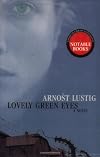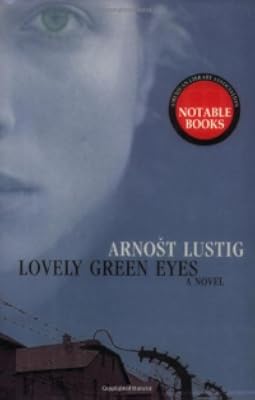
Lovely Green Eyes
by Arnošt Lustig
On This Page
Description
Fifteen-year-old Hanka Kaudersov has ginger hair and clear, green eyes. When her family is deported to Auschwitz, her mother, father and younger brother are sent to the gas chamber. By a twist of fate, Hanka is faced with a simple alternative: follow her family, or work in an SS brothel behind the eastern front. She chooses to live, her Aryan looks allowing her to disguise the fact that she is Jewish. As the German army retreats from the Russian front, Hanka battles cold, hunger, fear, and show more shame, sustained by her hatred for the men she entertains, her friendship with the mysterious Estelle, and her fierce, burning desire for life. Lovely Green Eyes explores the compromises and sacrifices that an individual may make in order to survive, the way a woman can retain her identity in the face of appalling trauma, and the value of human life itself. This is a remarkable novel, which soars beyond nightmare, leaving the reader with a transcendent sense of hope. show lessTags
Recommendations
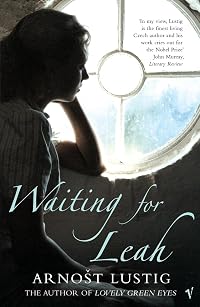


















Member Reviews
I had to read Lovely Green Eyes by Arnos Lustig in small increments. This is the story of a young girl caught up in the horrors of Auschwitz and then being forced to choose between the gas chamber or to disguise her Jewish origins and become a prostitute servicing 12 or more soldiers every day. At age fifteen she had already seen the deaths of her mother, father and brother, that she still had the will to survive is a testament to her inner strength and human spirit.
This is a book that I will not soon forget, the story felt so very real and personal. The author is himself a survivor of Auschwitz and Buchenwald and so knows of what he writes about. The writing style took a little time to adjust to, as it tended to be choppy and jumped show more around somewhat, but as the story was meant to be told to the reader as if by a narrator who is giving up his memories so it made the work seem all the more life-like.
“That was what it was like, and she know it could not be otherwise because that otherwise meant the gas chamber, the crematorium and ashes.”
The story is overwhelmingly sad and yet my admiration toward these girls who had to use their bodies in order to survive is unlimited. Lovely Green Eyes was difficult to read at times, but never salacious. This is a story of surviving Nazi war atrocities, but is relevant as the horror of sexual slavery is very prevalent in many countries even today. show less
This is a book that I will not soon forget, the story felt so very real and personal. The author is himself a survivor of Auschwitz and Buchenwald and so knows of what he writes about. The writing style took a little time to adjust to, as it tended to be choppy and jumped show more around somewhat, but as the story was meant to be told to the reader as if by a narrator who is giving up his memories so it made the work seem all the more life-like.
“That was what it was like, and she know it could not be otherwise because that otherwise meant the gas chamber, the crematorium and ashes.”
The story is overwhelmingly sad and yet my admiration toward these girls who had to use their bodies in order to survive is unlimited. Lovely Green Eyes was difficult to read at times, but never salacious. This is a story of surviving Nazi war atrocities, but is relevant as the horror of sexual slavery is very prevalent in many countries even today. show less
This is not an easy book to read as it about a 15 year-old Jewish girl who chooses to become a prostitute in a German brothel rather than face death in the gas chambers like the rest of her family did. Throughout the book there are lists of names: 12 German men, presumably Hanka's quota for the day. At times there is graphic violence and the sex that Hanka has to endure day after day is stomach churning. Hanka's youth, confusion and guilt is all too real as she keeps asking herself if she made the right decision. Whilst I didn't enjoy the writing style of the book and found the story horribly depressing, it is one that will be hard to forget in a hurry.
I'm always drawn in by accounts or stories of what people went through at the hands of the Nazi mindset. I appreciated this book because it discussed two sides I'd not really read anything on before. On one hand there were the survivors, those who managed to drag themselves through right to the end of the war & face the no doubt near impossible task of trying to move on. And then there was the side of those who fought for the Nazi side, & believed strongly in everything that side fought for. The writing itself was a bit flowery at points, & this didn't always work. But what I did appreciate was that the author didn't use the subject of the girl's work (as a prostitute for the Nazi army) as an excuse to be graphic. I far prefer reading show more things about sex which don't really describe the sex at all, even more so in contexts such as this one as the act itself has little to do with it, its a by-product of the power games & coldness of the whole thing. Overall, good book...I suppose it made me think more than I gave it credit for. show less
This is a story of young lovely girls who were mainly 13 or 15 years old pretending they are 18. In order to stay alive in the Czech concentration prison camps, they pretend to be 18 in order to be prostitutes who spent time in small little cells where they met German high rank men who met the girls who provide any pleasure they demand.
This is the story of the girls who survived. The girl who tells the story was, like all others who were forced to live a life of servitude, or be ordered to the gas chambers.
The story ends with one of the survivors telling her tale to a Rabbi. As she point by point tells the Rabbi what it was like to give your soul to a man who has the power to kill you. As many stories of all impacted by the Holocaust, show more The world was left with the question of WHY? Why did the finger point one way where death occurs, and the other where a life of servitude and pain occurs. As the young girl, now a grown woman tells her story, all who hear it are left wounded. show less
This is the story of the girls who survived. The girl who tells the story was, like all others who were forced to live a life of servitude, or be ordered to the gas chambers.
The story ends with one of the survivors telling her tale to a Rabbi. As she point by point tells the Rabbi what it was like to give your soul to a man who has the power to kill you. As many stories of all impacted by the Holocaust, show more The world was left with the question of WHY? Why did the finger point one way where death occurs, and the other where a life of servitude and pain occurs. As the young girl, now a grown woman tells her story, all who hear it are left wounded. show less
Incredibly depressing but well written account of a wman who survived in a Nazi whore house during World War II.
this book was tough to read for lots of reasons. The subject matter of course made it tough. I found it very graphic.Horrible images of what the nazi's did and their mindset. Another reason it was tough to read may be because of the translation. It was quite disjointed. Character development was sketchy.
i am glad I read this book. I must say I was glad to have finished it.
i am glad I read this book. I must say I was glad to have finished it.
A thought provoking novel. The German Nazi treatment of all prisoners including their sex slaves. War indeed brings out the evil in human being. I thought the translation was average.
Members
- Recently Added By
Lists

Holocaust
100 works; 13 members

A Rainbow of Books: Colors in the Title
570 works; 24 members
Author Information

Arnost Lustig (December 21,1926 - February 26, 2011) was a renowned Czech Jewish author of novels, short stories, plays, and screenplays whose works have often involved the Holocaust. Lustig himself was a survivor of the Holocaust. He was born in Prague. As a young boy, he was sent in 1942 to the Theresienstadt concentration camp, from there he show more was later transported to the Auschwitz concentration camp, followed by time in the Buchenwald concentration camp. In 1945, he escaped from a train carrying him to the Dachau concentration camp. When he returned to Prague, he took part in the anti-Nazi uprising. After the war, he studied journalism at Charles University in Prague and then worked for a number of years at Radio Prague. Lustig later taught at the American University in Washington, D. C. His most renowned books are A Prayer For Katerina Horowitzowa (published and nominated for a National Book Award in 1974), Dita Saxová (1962, trans. 1979 as Dita Saxova), Night and Hope (1957, trans. 1985), and Lovely Green Eyes (2004). Lustig's short story selections included "Children of the Holocaust," "Indecent Dreams," and "Street of Lost Brothers." He was awarded an Emmy, a National Jewish Book Award, and the Karel Capek Award for Literary Achievement by President Valclav Havel. After his retirement from the American University in 2003, he became a full-time resident of Prague. In 2008, Lustig became the eighth recipient of the Franz Kafka Prize, and the third recipient of the Karel Capek Prize in 1996. Lustig died at age 84 in Prague on February 26, 2011, after suffering from Hodgkin lymphoma for five years. (Bowker Author Biography) show less
Some Editions
Awards and Honors
Awards
Distinctions
Notable Lists
Series
Belongs to Publisher Series
Harvill (279)
Common Knowledge
- Canonical title*
- Deine grünen Augen
- Original title
- Krásné zelené oči
- Original publication date
- 2000
- People/Characters
- Hanka Kaudersova; Estelle
- Important places
- Auschwitz concentration camp, Oświęcim, Lesser Poland, Poland; Poland; Russia; Pécs, Hungary
- Important events
- World War II; Holocaust
- Epigraph*
- Wie viele Menschen haben Geheimnisse, die nie entdeckt werden?
- Dedication
- For Eva and all who are and will be with her.A.L.To the memory of my mother, on of the millions who perished in the Holocaust.E.O.
- First words
- From early morning, units of the Waffen-SS had been arriving.
- Quotations*
- Sie wollte nicht mehr überlegen, ob der Wunsch, leben zu wollen, unrecht war. Oder die Tatsache, dass sie noch auf der Welt war.
- Last words
- (Click to show. Warning: May contain spoilers.)When Skinny was fifteen, getting on for sixteen, she had clear skin, shiny hair — carefully brushed and growing long again — and lovely green eyes.
*Some information comes from Common Knowledge in other languages. Click "Edit" for more information.
Classifications
- Genres
- General Fiction, Fiction and Literature, Historical Fiction
- DDC/MDS
- 813 — Literature & rhetoric American literature in English American fiction in English
- LCC
- PG5038 .L85 .K713 — Language and Literature Slavic languages and literatures. Baltic languages. Albanian language Slavic. Baltic. Albanian Slavic Czech
- BISAC
Statistics
- Members
- 244
- Popularity
- 133,743
- Reviews
- 8
- Rating
- (3.74)
- Languages
- 6 — Czech, English, French, German, Italian, Spanish
- Media
- Paper, Ebook
- ISBNs
- 16
- ASINs
- 3