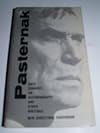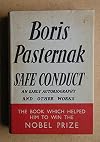
Safe Conduct
by Boris Pasternak
On This Page
Description
The awarding of the 1958 Nobel Prize for Literature to Boris Pasternak and the subsequent calumny of his fellow citizens in Soviet Russia focused unusual attention on Pasternak's great novel,Dr. Zhivago, and the small body of his other work. At the time, the latter was only available (in any language, as far as is known) in New Directions'Selected Writings of Pasternak, first published in 1949. The 1958 edition was issued with a new introduction by Babette Deutsch under the title of the show more book's main component, Pasternak's autobiography. Written when he was forty,Safe Conduct puzzled many readers in Russia and when it appeared in English, because its isolated sharp impressions and juxtapositions seem to deny chronology, but at least one critic recognized it as "the most original of autobiographies, employing a new technique of great important." Also included is a group of remarkable short stories, translated by Robert Payne, dealing with the mysteries of life and art, and a selection of the poems that have made Pasternak known, to the few at last, as the "outstanding Russian poet of the century." these are translated by the British Critic and poet C. M. Bowra, and by Miss Deutsch. show lessTags
Recommendations















Member Reviews
This collection of writings by Boris Pasternak is not easy reading, but it is beautiful. He is first and foremost a poet, not just any poet, but a modernist poet who wrote prose--the most well-known of which is "Dr. Zhivago", a novel that is a wholly unique experience and completely unlike the straightforward romantic/historical epic movie called "Dr. Zhivago". The first piece is an 'autobiography' of Pasternak's early years. He studied music (his mother was a pianist) until he realized his beloved teacher was tone deaf which bothered him greatly. He studied philosophy in Germany with amazing professors until that also disappointed him. He relates his experiences of Italy and Marburg and his infatuations all through his sometimes show more telescopic, sometimes microscopic poetic vision. The "Childhood of Luvers" is especially intriguing, as he projects the feelings and thoughts of a young girl, unloved by her self-involved mother, growing into womanhood. Highly recommended.
Contents:
Safe Conduct (Autobiography)
Aerial Ways
Letters from Tula
The Childhood of Luvers
Selected Poems show less
Contents:
Safe Conduct (Autobiography)
Aerial Ways
Letters from Tula
The Childhood of Luvers
Selected Poems show less
As an avid fan of Soviet literature, I wanted to enjoy this, Pasternak's mid-life autobiography, more than I did. For me his medium, a dense and lofty form of prose, often got in the way of the message.
I found msyself re-reading certain particularly tricky paragraphs over and over, meaning still escaping me after several reads. (I'm not an impatient reader, but my patience was tried on several occasions.) Long passages involving Pasternak's take on literary theory weighed particularly heavily.
I found most engaging Pasternak's description of Venice in the nineteen-teens, an admirable account that gives ample credit to the city's reputation as a gem in the European crown; and the passionate and boyish devotion Pasternak expresses towards show more the poet Vladimir Mayakovsky, an immortal artist apotheosized by his suicide. show less
I found msyself re-reading certain particularly tricky paragraphs over and over, meaning still escaping me after several reads. (I'm not an impatient reader, but my patience was tried on several occasions.) Long passages involving Pasternak's take on literary theory weighed particularly heavily.
I found most engaging Pasternak's description of Venice in the nineteen-teens, an admirable account that gives ample credit to the city's reputation as a gem in the European crown; and the passionate and boyish devotion Pasternak expresses towards show more the poet Vladimir Mayakovsky, an immortal artist apotheosized by his suicide. show less
(I-22): Re-read parts. Dislike the effusive language. Pasternak himself writes 20 years later: „Unfortunately, the book [i.e. ’Safe Conduct/Geleitbrief’] was spoiled by its affected manner, the besetting sin of those days.“ P. wrote these sketches in the 1920s; in his second attempt of an autobiography (engl. title: ‘An Essay in Autobiography’ ) he often refers to ‘Safe Conduct’ so both should be read together.
October 2013 I wrote: Ich tu dem Buch Unrecht: lese es stückweise, ein paar Seiten immer nur; es braucht Zeit und Aufmerksamkeit, um in Pasternaks Gedankenwelt, die er hier skizziert, einzudringen, die ich nicht aufgebracht habe. Darum einige kleine Bemerkungen nur.
Seine Ideen zur Kunst: „Sie [die Kunst] show more interessiert sich nicht für den Menschen, sondern für das Bild vom Menschen. Das Bild des Menschen ist, wie sich erweist, größer als der Mensch. Es kann nur in der Fortentwicklung entstehen, und dabei nicht in jeder.“ (68) Und: „In der Kunst schweigt der Mensch, und das Bild spricht.[...] In diesem Sinne [dem der Übertreibung] lügt die Kunst. [..]. Ihre Wahrheiten lassen sich nicht beschreiben, sind jedoch unendlicher Entwichlung fähig. [...] Eine Generation, die die Barrieren einer neuen geistigen Entwichlung genommen hat wirft eine lyrische Wahrheit nicht weg, sondern bewahrt sie, so daß man sich aus sehr großer Entfernung vorstellen kann, daß gerade kraft dieser lyrischen Wahrheit aus Generationen allmählich die Menschheit entsteht.“ (69) In diesen wenigen Sätzen eine ganze Gedankenwelt: zu diskutieren, zu akzeptieren oder zu verwerfen! Liegt darin nicht ein Fortschrittsglaube und damit eine positive Entwicklung? Diese teile ich sicher nicht! Und auch die fast einstimmig akzeptierte Auffassung, dass die Kunst immer auch eine positive Kraft ist? Auch das möchte ich in Frage stellen! Später (84-86), zu lang, um hier zu zitieren, schreibt er, dass das Thema der großen Werke, über die Darstellung großer Leidenschaften herausgehe: es sei das Thema der Kraft: „Als Figur all ihrer bewegenden Kraft ist die Kunst symbolisch. Ihr einziges Symbol besteht in der Konvertierbarkeit der Bilder, die für die ganze Kunst chrakteristisch ist. [...] Die Konvertierbarkeit der Bilder,das heißt die Kunst, ist ein Symbol der Kraft.“ Dies ist nur eine Andeutung einer Gedankenkette, die in dieser Kurzform unverständlich bleibt. Schade!
Seine Begegnungen mit Venedig (105-125), mit Moskau (129-), mit Majakowskij (135-): interessant! Wenn nicht ein besonderes Interesse in Pasternaks Leben, dann lohnt sich das Lesen vor allem wegen dieser Beschreibungen und weil er viele Fragen anschneidet, die zum Weiterdenken anregen.
Ich sollte es noch einmal mit größerer Aufmerksamkeit lesen, obwohl, wie es im Untertitel heißt, es nur ein Entwurf ist, also skizzierte Gedanken zu einer umfassenderen Arbeit, die nie ausgeführt wurde. (X-13) show less
October 2013 I wrote: Ich tu dem Buch Unrecht: lese es stückweise, ein paar Seiten immer nur; es braucht Zeit und Aufmerksamkeit, um in Pasternaks Gedankenwelt, die er hier skizziert, einzudringen, die ich nicht aufgebracht habe. Darum einige kleine Bemerkungen nur.
Seine Ideen zur Kunst: „Sie [die Kunst] show more interessiert sich nicht für den Menschen, sondern für das Bild vom Menschen. Das Bild des Menschen ist, wie sich erweist, größer als der Mensch. Es kann nur in der Fortentwicklung entstehen, und dabei nicht in jeder.“ (68) Und: „In der Kunst schweigt der Mensch, und das Bild spricht.[...] In diesem Sinne [dem der Übertreibung] lügt die Kunst. [..]. Ihre Wahrheiten lassen sich nicht beschreiben, sind jedoch unendlicher Entwichlung fähig. [...] Eine Generation, die die Barrieren einer neuen geistigen Entwichlung genommen hat wirft eine lyrische Wahrheit nicht weg, sondern bewahrt sie, so daß man sich aus sehr großer Entfernung vorstellen kann, daß gerade kraft dieser lyrischen Wahrheit aus Generationen allmählich die Menschheit entsteht.“ (69) In diesen wenigen Sätzen eine ganze Gedankenwelt: zu diskutieren, zu akzeptieren oder zu verwerfen! Liegt darin nicht ein Fortschrittsglaube und damit eine positive Entwicklung? Diese teile ich sicher nicht! Und auch die fast einstimmig akzeptierte Auffassung, dass die Kunst immer auch eine positive Kraft ist? Auch das möchte ich in Frage stellen! Später (84-86), zu lang, um hier zu zitieren, schreibt er, dass das Thema der großen Werke, über die Darstellung großer Leidenschaften herausgehe: es sei das Thema der Kraft: „Als Figur all ihrer bewegenden Kraft ist die Kunst symbolisch. Ihr einziges Symbol besteht in der Konvertierbarkeit der Bilder, die für die ganze Kunst chrakteristisch ist. [...] Die Konvertierbarkeit der Bilder,das heißt die Kunst, ist ein Symbol der Kraft.“ Dies ist nur eine Andeutung einer Gedankenkette, die in dieser Kurzform unverständlich bleibt. Schade!
Seine Begegnungen mit Venedig (105-125), mit Moskau (129-), mit Majakowskij (135-): interessant! Wenn nicht ein besonderes Interesse in Pasternaks Leben, dann lohnt sich das Lesen vor allem wegen dieser Beschreibungen und weil er viele Fragen anschneidet, die zum Weiterdenken anregen.
Ich sollte es noch einmal mit größerer Aufmerksamkeit lesen, obwohl, wie es im Untertitel heißt, es nur ein Entwurf ist, also skizzierte Gedanken zu einer umfassenderen Arbeit, die nie ausgeführt wurde. (X-13) show less
Gelezen toen ik 17 was; ik herinner me alleen nog de paginalange, telkens terugkerende beschrijving van berkenbossen. Op een of andere manier vatte ik nadien een passie op om ooit de Transsiberische expresse te nemen.
Jan 21, 2014Dutch
Ik herinner me weinig van dit werk, behalve: de eindeloze, troosteloze berkenlandschappen die langs de treinraampjes schuiven.
Oct 29, 2010Dutch
Ratings
Members
- Recently Added By
Lists

Books Read in 2020
4,379 works; 123 members
Author Information

259+ Works 15,488 Members
Pasternak was acclaimed as a major poet some 30 years before Doctor Zhivago (1955) made him world famous. After first pursuing promising careers in music and philosophy, he started to write around 1909 and published his first collection of verse in 1914. His first genuine triumph came with the collection My Sister, Life (1917), in which a love show more affair stimulates a rapturous celebration of nature. The splendid imagery and difficult syntax of this volume are a hallmark of the early Pasternak. During the 1920s, Pasternak tried to accept the reality of the new society and moved from the lyric to the epic, taking up historical and contemporary subjects. The long poem The Year 1905 (1926) is an example. While tolerated by the literary establishment, Pasternak turned increasingly in the 1930s to translation rather than original verse. He was a prolific translator; his versions of major Shakespeare plays are the standard texts used in Soviet theaters. From the start, however, prose was an important focus for Pasternak. The most notable early work is the story "Zhenia's Childhood," written in 1918, which explored a girl's developing consciousness of her surroundings. There is also his artistic and intellectual autobiography Safe Conduct (1931). But Pasternak's greatest prose achievement came later with the novel Doctor Zhivago, written over a number of years and completed in 1955. Its hero, a physician and poet, confronts the great changes of the early twentieth century including world war, revolution, and civil war, and travels a path through life that creates a parallel between his fate and that of Christ. (The theme of preordained sacrifice is strengthened by the cycle of poems included as the last section of the book.) Doctor Zhivago was rejected for publication but appeared in 1957 in the West and won its author worldwide acclaim. A Nobel Prize followed in 1958. This led the Soviet authorities to launch a major public campaign against Pasternak and to make his personal life even more difficult. So successful were they that the poet officially turned down the award. After that, he was left in relative peace and died two years later. He was but the first of many writers in the post-Stalin period to challenge the Soviet state. During the 1970s and 1980s, Pasternak's heritage was cautiously brought into public purview in the Soviet Union. The Gorbachev period saw the removal of all restrictions on his work, and publication of Doctor Zhivago followed at long last. Several major editions of Pasternak's writings have appeared. (Bowker Author Biography) show less
Some Editions
Series
Belongs to Publisher Series
Common Knowledge
- Canonical title
- Safe Conduct
- Original publication date
- 1949
- People/Characters
- Boris Pasternak
Classifications
- Genre
- Biography & Memoir
- DDC/MDS
- 891.734 — Literature & rhetoric Literatures of other languages East Indo-European and Celtic literatures Russian and East Slavic languages Russian fiction USSR 1917–1991
- LCC
- PG3476 .P27 .A25 — Language and Literature Slavic languages and literatures. Baltic languages. Albanian language Slavic. Baltic. Albanian Russian literature Individual authors and works 1917-1960
- BISAC
Statistics
- Members
- 289
- Popularity
- 111,903
- Reviews
- 5
- Rating
- (3.50)
- Languages
- 10 — Catalan, Dutch, English, French, German, Italian, Portuguese, Russian, Serbian, Swedish
- Media
- Paper
- ISBNs
- 12
- ASINs
- 16