Please see my complete chapter-by-chapter reviews of this book at smartbitchestrashybooks.com!
For a protracted, chapter-by-chapter review of this book, see my posts on smartbitchestrashybooks.com or judgeabook.blogspot.com.
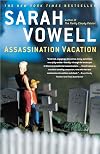
This book offers a sometimes whimsical, sometimes morbid account of one woman's step-by-step tour of any and all places relevant to the assassinations of Presidents Lincoln, Garfield, and McKinley. Along the way she fills the reader in on the historical roots of each murder and on the details (some trivial, some not) surrounding the murders themselves. I found Vowell's account of the Garfield assassination a bit banal, more so than the other two chapters. It's an easy read, and worth the few hours it will take to finish it.
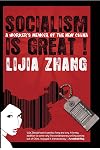
This book offers an enjoyable and enlightening look on China's opening up to the world that took place in the 1980s. Journalist Lijia Zhang reflects on this period, during which time she grew from a gangly teen to a self-assertive twenty-something, by giving the reader insight into both her quotidian life in the factory and her slowly-blossoming intellectual life as she learned more and more about the world outside of China.

This somber yet delightful tale of one man's anomic quest for fulfillment and meaning in interwar Britain is the first of Waugh's works that I've read. (I'm now looking forward to reading some of his earlier, more satirical novels.) Waugh's hero Charles Ryder, no doubt fashioned semi-autobiographically, searches high and low for some evanescent thing (I'm not sure he knows exactly what) that's not to be found, not in academia, nor in art, nor in a sterile and unhappy marriage. Was it there in the Arcadia of his youth, an idyll visited by death? Will it rest in the newfound Catholic faith to which he turns in the book's closing pages?
The reader is left wondering. This novel's brilliance stems more from what it doesn't say than from what it does; it's definitely worth the read. (Incidentally, bear with the Prologue; I found it the most tiresome part of the book. Thereafter the writing is as sharp as any English prose ever penned, particularly the opening chapters of the second book.)
The reader is left wondering. This novel's brilliance stems more from what it doesn't say than from what it does; it's definitely worth the read. (Incidentally, bear with the Prologue; I found it the most tiresome part of the book. Thereafter the writing is as sharp as any English prose ever penned, particularly the opening chapters of the second book.)

This compendium comprises every story Rosten ever wrote about H*Y*M*A*N K*A*P*L*A*N, the world's most determined, enervating, yet endearing night school student of the English language. The jokes are few in number, but well-told. You'll laugh.

If you can squint past the pancaked layer of sexism and other brazen stereotypes that pepper this book that could be no more clearly written for 15-year-old boys than it is, the story is a passably interesting and relatively scientifically accurate account of what a peopled expedition to the Red Planet might actually be like. The story kept me reading, even while the dialogue was tired and the characters made me want to smack them.
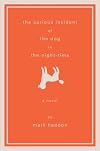
This well-written novel is an account of a series of traumatic events that befall a young autistic man, told from the point of view of the man himself. The author explores both what it means to be human within the human self and what it means to be human among other humans. The excursions into the mathematical realm are intelligent and apt. It is an easy and enjoyable read, and is the first book I've read in a single sitting in a long, long time.
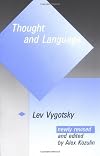
While a bit dated, Vygotsky's work is still heavily cited by current pedagogical theorists like Marcia Baxter-Magolda and her collaborators. It was through reading Baxter-Magolda's work that I was first led to Vygotsky, and having seen his name just about everywhere I've since dug into the study of teaching and learning, I thought it high time I got back to the source.
This translation is a readable, and as indicated in the book's preface, it's more than a translation, but also a rearrangement: as Vygotksy's organization suffered during his tubercular convalescence, the original Russian manuscript of his work was often redundant and difficult to read. Hanfmann and Vakar have eliminated much of the redundancy and have streamlined Vygotsky's arguments, making the resulting test more readable.
Seeking to better understand the organic and functional relationships between language and thought, Vygotsky begins by critiquing theories of language and thought development that were in vogue at the time of writing (early 1930s). Specifically, he points to Jean Piaget and to William Stern, indicating difficulties in their theories. Piaget's development from egocentric thought and speech to society-driven thought and speech is criticized for assuming the existence of bonds between speech and thought that do not necessarily exist. His chief problem with Stern's theory of language development has to do with its insistence on "intentionality" as a root cause of vocalization, and rather show more than an aspect of it. (It should be noted to Piaget's later work, though suffering from a number of weaknesses that would be pointed out by others [for instance, Carol Gilligan], would later respond to some of Vygotsky's criticisms.)
Vygotsky then moves to better understand the genetic roots of thought and speech in his fourth chapter, indicating how data support no clear-cut linear relationships between the development of thought and speech. This chapter is devoted to a deeper analysis of what he calls the "pre-intellectual elements of speech" and the "prelinguistic elements of thought."
This is as far as I've read to date.
So far the text is dense but accessible, and I'm finding many of the philosophical discussions fascinating. I'm particularly interested to continue reading the next chapters, which promise to discuss "concept formation" in children, and the roots of scientific learning. Ultimately my hope is to better understand the way that social forces (and in particular society-driven communication through speech and writing) purport to serve the development of scientific (and therefore mathematical) thinking. show less
This translation is a readable, and as indicated in the book's preface, it's more than a translation, but also a rearrangement: as Vygotksy's organization suffered during his tubercular convalescence, the original Russian manuscript of his work was often redundant and difficult to read. Hanfmann and Vakar have eliminated much of the redundancy and have streamlined Vygotsky's arguments, making the resulting test more readable.
Seeking to better understand the organic and functional relationships between language and thought, Vygotsky begins by critiquing theories of language and thought development that were in vogue at the time of writing (early 1930s). Specifically, he points to Jean Piaget and to William Stern, indicating difficulties in their theories. Piaget's development from egocentric thought and speech to society-driven thought and speech is criticized for assuming the existence of bonds between speech and thought that do not necessarily exist. His chief problem with Stern's theory of language development has to do with its insistence on "intentionality" as a root cause of vocalization, and rather show more than an aspect of it. (It should be noted to Piaget's later work, though suffering from a number of weaknesses that would be pointed out by others [for instance, Carol Gilligan], would later respond to some of Vygotsky's criticisms.)
Vygotsky then moves to better understand the genetic roots of thought and speech in his fourth chapter, indicating how data support no clear-cut linear relationships between the development of thought and speech. This chapter is devoted to a deeper analysis of what he calls the "pre-intellectual elements of speech" and the "prelinguistic elements of thought."
This is as far as I've read to date.
So far the text is dense but accessible, and I'm finding many of the philosophical discussions fascinating. I'm particularly interested to continue reading the next chapters, which promise to discuss "concept formation" in children, and the roots of scientific learning. Ultimately my hope is to better understand the way that social forces (and in particular society-driven communication through speech and writing) purport to serve the development of scientific (and therefore mathematical) thinking. show less
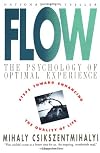
I'm not yet finished reading this book, so my feelings regarding it are as yet incomplete. I have to say I'm a little disappointed so far; I think that disappointment stems from my expectations that the book would have a little more "meat" to it. I realize now that this isn't a fair assessment, since this is not meant to be a strictly academic work (but rather a popular distillation of decades of work on the topic of optimal experience).
Simply put, according to Csikszentmihalyi "flow" is the state in which one's skills are matched well with the challenges one is meant to face when armed with those skills, and both skills and challenges are high. If one's skills are inadequate to meet the challenges one is met with, one will tend to feel anxious, overwhelmed, terrified. If one's skills overmaster one's challenges, one will instead feel bored and stultified. If skills and challenges match but are of a low order, one may feel eager to raise the stakes and proceed to a higher "flow" state. Csikszentmihalyi's thesis is that in order to perform this increase in stakes, one must become adept at focusing one's attention consciously in rule-bound, goal-oriented activities that require a high degree of skill and result in a "complexification" of the individual self as one gains greater, more well-refined skills.
Read for what it is, the book is solid and provides good insight into the ways in which one can train oneself to get more out of life. Moreover, the book has already given show more me a number of pointers to more specific (and more academic) references I may be able to use to hone my pedagogy. For instance, the references on pp. 88-89 to Kevin Rathunde's work with optimal experience in the context of the family should lead to concrete measures for constructing a classroom environment conducive to "flow" experiences.
I'll check back in once I've finished this book, and once we've had discussions on it in the faculty learning circle of which I'm a part this summer. show less
Simply put, according to Csikszentmihalyi "flow" is the state in which one's skills are matched well with the challenges one is meant to face when armed with those skills, and both skills and challenges are high. If one's skills are inadequate to meet the challenges one is met with, one will tend to feel anxious, overwhelmed, terrified. If one's skills overmaster one's challenges, one will instead feel bored and stultified. If skills and challenges match but are of a low order, one may feel eager to raise the stakes and proceed to a higher "flow" state. Csikszentmihalyi's thesis is that in order to perform this increase in stakes, one must become adept at focusing one's attention consciously in rule-bound, goal-oriented activities that require a high degree of skill and result in a "complexification" of the individual self as one gains greater, more well-refined skills.
Read for what it is, the book is solid and provides good insight into the ways in which one can train oneself to get more out of life. Moreover, the book has already given show more me a number of pointers to more specific (and more academic) references I may be able to use to hone my pedagogy. For instance, the references on pp. 88-89 to Kevin Rathunde's work with optimal experience in the context of the family should lead to concrete measures for constructing a classroom environment conducive to "flow" experiences.
I'll check back in once I've finished this book, and once we've had discussions on it in the faculty learning circle of which I'm a part this summer. show less
Good book! Eminently readable, accessible to even the least experienced of undergraduates (math majors and non-math majors), and full of understandable distillations of realistic game theory applications. After reading it, I decided to use this book as a reference for an individual undergraduate research project I'm conducting right now.
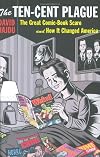
How can one write a book about something as unassailably cool as the history of comic books and come away with a dud?
David Hajdu has managed to do just that.
He sets out with neither helm nor rudder: I believe Hajdu's goal is to describe the end of the golden era of comic bookery, brought about by pitchfork-wielding civic groups and well-intentioned government officials acting in the name of god-fearing families and their innocent and impressionable children everywhere...but Hajdu's lack of thesis and sometimes chaotic development make the story proceed in fits and starts. I'm never really sure of where he's going, and I'm not convinced that he's ever sure, either.
I made it to page 113 before calling it quits.
All in all, the book's thesis is promising, but it never delivers. Hajdu's writing is dull and trite, regardless of how lively his topic could be made. I can find better ways to spend my time, especially now that my summer reading list is stacking up.
David Hajdu has managed to do just that.
He sets out with neither helm nor rudder: I believe Hajdu's goal is to describe the end of the golden era of comic bookery, brought about by pitchfork-wielding civic groups and well-intentioned government officials acting in the name of god-fearing families and their innocent and impressionable children everywhere...but Hajdu's lack of thesis and sometimes chaotic development make the story proceed in fits and starts. I'm never really sure of where he's going, and I'm not convinced that he's ever sure, either.
I made it to page 113 before calling it quits.
All in all, the book's thesis is promising, but it never delivers. Hajdu's writing is dull and trite, regardless of how lively his topic could be made. I can find better ways to spend my time, especially now that my summer reading list is stacking up.
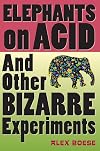
This book, as its title purports, is intended to shed light on notable experiments (most from the 20th century) considered in some way "bizarre." While some of the experiments are indeed strange (often intruding far past the border between ethical and unethical...a good number of these would never today receive IRB approval), just as many are actually reputable experiments in psychology that seem strange to someone not familiar with psychological experimentation. And while many of the experiments Boese (a graduate student at UC San Diego) describes have since been debunked, just as many have been reinforced by independent retesting. Most of the experiments Boese catalogues one will encounter in a first-year college psychology text.
All in all, the book is mildly amusing lightweight reading, perfect for a rainy Saturday afternoon such as the one today offered. Boese is generally entertaining, though sometimes dismissive, flippant, and condescending.
All in all, the book is mildly amusing lightweight reading, perfect for a rainy Saturday afternoon such as the one today offered. Boese is generally entertaining, though sometimes dismissive, flippant, and condescending.
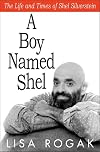
What's most enjoyable about this book, clearly, is the subject. The centerpiece of this biography is Shel Silverstein's magical ability to entertain both young and old with his stories, songs, pictures, and poems. Meanwhile, the writing is trite and hackneyed; Rogak is little more than a pulp biographer, and is clearly outclassed by her subject. The best thing I can say about this book is that it made me want to track down some of Shel Silverstein's more obscure books and recordings.

This period piece is set in the "modern times" of the 1920s and '30s. It's a decade-long bildungsroman detailing the adolescence and young adulthood of a dozen or so young Jews as they come of age in depression-era Chicago. Some go east, some go west, all struggle with self-doubt, loss of identity, loss of livelihood, loss of life. Some marry, some divorce, some just sleep around. Some find what they're looking for, others don't.
The book is refreshingly sharp for its time and pulls no punches. I have to admit that the first few hundred pages dragged a bit (it's about 970 pages long), but the next few hundred made up for the poor pace of the opening chapters. By page 600 I'd come to appreciate that Levin had considerable skill in characterization: though his characters were slow to take shape, they aged subtly and suitably, and by the time I'd spent several hundred pages with them, they all made sense.
In fact, I was at the top of page 565 in the edition I've now read when I mused about how wonderful it was I'd come to know well all of the novel's characters, how their lives, once fully fictitious, now seemed very real. I thought about how it is that our own friends and family develop like the characters in the novel: a new friendship is rarely made overnight, but instead takes shape over the course of years. New friends tell stories, share secrets, reveal themselves to one another in fits and starts, and after several years have passed the new friends have become old show more friends.
Of the "old bunch" I identified most closely with Joe Freedman (the wanderlust-stricken artist) and Sam Eisen (the idealist attorney). These two characters seemed to me the most real; in their searches for self I sense a sort of universal searching, a truly human enterprise.
For instance, Joe travels the world over in trying to find his muse. More than once he finds his inspiration, only to let it go again each time. At the novel's end one senses he's no closer to his goal than where he began. His struggle through the novel's nearly thousand pages could stand for that of anyone who's ever felt lost, betrayed, confused, at sea.
Levin writes well. He lacks Potok's style and Singer's simply incomparable knack for storytelling, but his characterizations are deft and strong, and his plot is engaging. show less
The book is refreshingly sharp for its time and pulls no punches. I have to admit that the first few hundred pages dragged a bit (it's about 970 pages long), but the next few hundred made up for the poor pace of the opening chapters. By page 600 I'd come to appreciate that Levin had considerable skill in characterization: though his characters were slow to take shape, they aged subtly and suitably, and by the time I'd spent several hundred pages with them, they all made sense.
In fact, I was at the top of page 565 in the edition I've now read when I mused about how wonderful it was I'd come to know well all of the novel's characters, how their lives, once fully fictitious, now seemed very real. I thought about how it is that our own friends and family develop like the characters in the novel: a new friendship is rarely made overnight, but instead takes shape over the course of years. New friends tell stories, share secrets, reveal themselves to one another in fits and starts, and after several years have passed the new friends have become old show more friends.
Of the "old bunch" I identified most closely with Joe Freedman (the wanderlust-stricken artist) and Sam Eisen (the idealist attorney). These two characters seemed to me the most real; in their searches for self I sense a sort of universal searching, a truly human enterprise.
For instance, Joe travels the world over in trying to find his muse. More than once he finds his inspiration, only to let it go again each time. At the novel's end one senses he's no closer to his goal than where he began. His struggle through the novel's nearly thousand pages could stand for that of anyone who's ever felt lost, betrayed, confused, at sea.
Levin writes well. He lacks Potok's style and Singer's simply incomparable knack for storytelling, but his characterizations are deft and strong, and his plot is engaging. show less
Judaism in a Secular Age: An Anthology of Secular Humanistic Jewish Thought (Library of Secular Humanistic Judaism) by Renee Kogel

This poorly-planned collection of agnostic apologia reads like a tract written by well-intentioned but short-sighted pseudo-intellectuals. The anthology brings together a wide variety of Jewish authors from Spinoza onward, each of whom is shrunk (as needed) to fit a predefined "secular humanistic Jewish" mold. The excerpts chosen from each work cited are without exception so short as to be utterly free of context and to provide practically no insight on the original author's intentions.
In short, the editing is awful. Having braved the bland introduction, I made it about forty pages into the actual text before calling it quits. The topic is a worthy one, but is poorly addressed by this volume.
Note: I've since picked up and have begun reading an earlier and much superior anthology of Jewish literature, about which I'll here blog later.
In short, the editing is awful. Having braved the bland introduction, I made it about forty pages into the actual text before calling it quits. The topic is a worthy one, but is poorly addressed by this volume.
Note: I've since picked up and have begun reading an earlier and much superior anthology of Jewish literature, about which I'll here blog later.
Not much to say about this one, I only made through the first five pages. What little I read made it out to be a bland political whitewashing of a once-dramatic bit of American folklore worthy of Zora Neal Hurston. No thanks.
Hansell's book offers a refreshingly skeptical view of the incidence and importance of construction, toolmaking, and tool use by non-human animals.
This author's central thesis is that however beautiful and seemingly complicated animal architecture may be, it can best be explained by appealing to genetically transmitted stereotypical behaviors whose efficacy relies more on the sophistication of the materials involved than on the skill of the constructor. Pooh-poohing anthropomorphism, Hansell avoids the trap of granting our non-human fellow-travelers the know-how needed to create either sophisticated machinery or works of art as we understand them.
Though his thesis may come as a shock to those who hope to ascribe to animals (particularly our close cousins the great apes) the intelligence needed to construct useful tools, not all romance is lost: Hansell does a great job of describing some of the beautiful means by which even the simplest of architecturally-oriented animals (the social insects, for instance) have achieved the ability to create their impressive artifacts. As a mathematician, I was most impressed with termites' used of pheromonal gradients in building appropriately-sized royal chambers (pp. 112-113) and ants' use of a "Buffon's needle" Monte Carlo estimate to determine the size of a particular nest chamber (pp. 100-101). The inherent energy-dissipating properties of spider silk, discussed quite well on pp. 168-170, might even offer me a future application for show more my Calculus II students!
In short, if you're hoping to find evidence of the brilliance of birds in nest design, or if you're hoping to learn that chimpanzees might someday show a knack for complicated tool construction, you're looking at the wrong book. But if you're hoping for a level-headed discussion of the evolutionary biology underlying some of the most magnificent artificial constructions in nature, this might be the book for you. show less
This author's central thesis is that however beautiful and seemingly complicated animal architecture may be, it can best be explained by appealing to genetically transmitted stereotypical behaviors whose efficacy relies more on the sophistication of the materials involved than on the skill of the constructor. Pooh-poohing anthropomorphism, Hansell avoids the trap of granting our non-human fellow-travelers the know-how needed to create either sophisticated machinery or works of art as we understand them.
Though his thesis may come as a shock to those who hope to ascribe to animals (particularly our close cousins the great apes) the intelligence needed to construct useful tools, not all romance is lost: Hansell does a great job of describing some of the beautiful means by which even the simplest of architecturally-oriented animals (the social insects, for instance) have achieved the ability to create their impressive artifacts. As a mathematician, I was most impressed with termites' used of pheromonal gradients in building appropriately-sized royal chambers (pp. 112-113) and ants' use of a "Buffon's needle" Monte Carlo estimate to determine the size of a particular nest chamber (pp. 100-101). The inherent energy-dissipating properties of spider silk, discussed quite well on pp. 168-170, might even offer me a future application for show more my Calculus II students!
In short, if you're hoping to find evidence of the brilliance of birds in nest design, or if you're hoping to learn that chimpanzees might someday show a knack for complicated tool construction, you're looking at the wrong book. But if you're hoping for a level-headed discussion of the evolutionary biology underlying some of the most magnificent artificial constructions in nature, this might be the book for you. show less
About two and a half years ago, returning from a holiday visit to my boyhood home, I brought with me a stack of battered graphic novels that had spent the last decade collecting dust in the basement of my parents' home. I'd read each of the Tintin novels probably twenty or more times during my adolescence, and though some were dry and sometimes incomprehensible (particularly those heavily soaked with political intrigue), each offered an exciting storyline with fast-paced action and sharp, clear characters. Clearly there was something compelling in them that transcended both their European origin and the two and a half decades that had passed since the last of Herge's novels was completed (and that had rendered the topics of some of the novels obsolete).
Back home, I sat down and re-read each Tintin adventure from start to finish, and if anything I found them more captivating as an adult than I had as a child. I was better able to appreciate Herge's knack for political satire, his witty punnery, his attention to detail and historical and linguistic accuracy, his mastery of character, plot, and often deceptively complicated slapstick humor.
Farr's thoroughly researched and insightful work offers a unique look at Herge as an artist and author, and adds depth to the appreciation of the Tintin adventures. Farr traces Tintin to his earliest days in the Catholic Belgian children's weekly, Le Petit Vingtieme, following him from there to Tintin Magazine and beyond, placing each show more successive novel in the context of Herge's life and explaining how the world in which Herge worked served to influence each novel as it was born.
This book is well-written, well-designed, and well-edited; it's a must-read for any Tintinophile! show less
Back home, I sat down and re-read each Tintin adventure from start to finish, and if anything I found them more captivating as an adult than I had as a child. I was better able to appreciate Herge's knack for political satire, his witty punnery, his attention to detail and historical and linguistic accuracy, his mastery of character, plot, and often deceptively complicated slapstick humor.
Farr's thoroughly researched and insightful work offers a unique look at Herge as an artist and author, and adds depth to the appreciation of the Tintin adventures. Farr traces Tintin to his earliest days in the Catholic Belgian children's weekly, Le Petit Vingtieme, following him from there to Tintin Magazine and beyond, placing each show more successive novel in the context of Herge's life and explaining how the world in which Herge worked served to influence each novel as it was born.
This book is well-written, well-designed, and well-edited; it's a must-read for any Tintinophile! show less

This book poses a wonderful hypothesis, in opposition to the views espoused by purists of reason in ages past (Plato and Descartes among them): that not only are emotion and feelings quite inextricably interlaced with reason and rationality, they are also essential to reason's proper functioning.
Damasio introduces the reader to the issue at hand by providing case histories like that of Phineas Gage, the famous 19th century railroad worker whose personality underwent profound change on account of a horrific accident in which an iron rod was driven through his skull, resulting in the destruction of a portion of his brain somehow responsible for making sense of critical events arising in the social and personal spheres of his life. Damasio compares Gage with a modern counterpart, a man named "Elliot" who is able "to know but not to feel" (p. 45). Elliot, like Gage, made disastrous decisions, and his life, like that of his 19th century counterpart, spiraled out of control.
What is it that causes such subjects to lose control of their lives? How is it that one can retain one's knowledge, memory, intellect, and power to reason, yet find one's decision-making ability in ruins? How is it that the destruction of neural substance more concerned with "emotional" matters can so profoundly affect "intellectual" ones?
Damasio's central thesis deals with "somatic markers": as neural images of scenarios resulting from potential decisions on our part arise in our minds, unconscious feelings show more ("background feelings") accompany those images, disposing us to positively or negatively consider the images and the scenarios they represent (see p. 173). The resulting marking narrows our list of potential scenarios by allowing us to discount various options outright, or by strongly encouraging us to pursue various others.
Much of Damasio's book comprises the development of the neural machinery to support this hypothesis, the testing of the hypothesis through experiments performed on Elliot and others with brain damage like his, and the erecting of defenses against possible attacks on the hypothesis.
I've not found this book as engaging as the one that led me to it (Stanislas Dehaene's "The number sense"), but it's been an interesting read nonetheless.
On a personal note, I'm saddened that I most likely won't make it through many more books before Spring Break is over! show less
Damasio introduces the reader to the issue at hand by providing case histories like that of Phineas Gage, the famous 19th century railroad worker whose personality underwent profound change on account of a horrific accident in which an iron rod was driven through his skull, resulting in the destruction of a portion of his brain somehow responsible for making sense of critical events arising in the social and personal spheres of his life. Damasio compares Gage with a modern counterpart, a man named "Elliot" who is able "to know but not to feel" (p. 45). Elliot, like Gage, made disastrous decisions, and his life, like that of his 19th century counterpart, spiraled out of control.
What is it that causes such subjects to lose control of their lives? How is it that one can retain one's knowledge, memory, intellect, and power to reason, yet find one's decision-making ability in ruins? How is it that the destruction of neural substance more concerned with "emotional" matters can so profoundly affect "intellectual" ones?
Damasio's central thesis deals with "somatic markers": as neural images of scenarios resulting from potential decisions on our part arise in our minds, unconscious feelings show more ("background feelings") accompany those images, disposing us to positively or negatively consider the images and the scenarios they represent (see p. 173). The resulting marking narrows our list of potential scenarios by allowing us to discount various options outright, or by strongly encouraging us to pursue various others.
Much of Damasio's book comprises the development of the neural machinery to support this hypothesis, the testing of the hypothesis through experiments performed on Elliot and others with brain damage like his, and the erecting of defenses against possible attacks on the hypothesis.
I've not found this book as engaging as the one that led me to it (Stanislas Dehaene's "The number sense"), but it's been an interesting read nonetheless.
On a personal note, I'm saddened that I most likely won't make it through many more books before Spring Break is over! show less
Dehaene is a psychologist specializing in the neurobiology of mathematical acquisition, his book is a record of many of the facts that have been discovered concerning the way in which people learn mathematics, they way they organize its ideas in our minds, the way math is retrieved from memory. (All of these are approached from the point of view of neurobiology.) At its most basic level, our sense of mathematics is very little advanced beyond that of many animals, who share with us a precise sense only of the numbers 1, 2, and 3; beyond this is a roughly-reckoned haze of numeric quantities. Dehaene compares our mental conception of number with an "accumulator" with approximate graduations allowing us to give rough estimates of large quantities, but which fails to give precise values for these same quantities.
A few snippets:
1. Even as soon as a few days after birth, babies are able to discern between the numbers 2 and 3. (See p. 50.)
2. We (adults included!) are susceptible to "the magnitude effect": it's harder for us to discern the difference between 90 objects and 100 than it is the difference between 10 objects and 20. Various factors (symmetry, density, etc.) militate and mitigate this effect. (See pp. 71 ff.) Similar to this is the "distance effect," positing that it's more difficult to discern quickly between 8 and 9 than it is between 8 and 19.
3. Studies show that when asked to compare numbers, such as 5 and 7, and state which is the larger, instead of behaving show more reflexively and answering based upon our knowledge that the symbol "7" represents a larger quantity than the symbol "5," we instead convert each of these abstract digits into collections of the requisite number of objects before performing the comparison on these collections. (See pp. 75 ff.)
4. We have a tendency to "compress" numbers as they grow, storing them in our minds as though on a logarithmic scale. One corollary of this behavior is that when asked to provide a random sample of numbers in a certain range, people will tend to elect an overrepresentation of smaller values, as though these were more widely spaced than their larger compatriots. (See pp. 77 ff.)
5. Since adults compute sums and products (for example) by retrieving the resultant quantity from a memorized table, those whose native languages have exceedingly short names for the ten numerals (like Chinese and Japanese) are able to more efficiently memorize the desired sums and products, and so perform much more quickly and with fewer errors than their counterparts speaking other tongues. (See pp. 130 ff.)
These are just a few of the fascinating facts this book has taught me about the development and refinement of mathematical thought processes in and by the human mind. Ultimately, one of Dehaene's primary points is summed up nicely on pp. 118-119: "Although our knowledge of this issue is still far from complete, one thing is certain: Mental arithmetic poses serious problems for the human brain. Nothing ever prepared it for the task of memorizing dozens of intermingled multiplication facts, or of flawlessly executing the ten or fifteen steps of a two-digit subtraction. An innate sense of approximate numerical quantities may well be embedded in our genes; but when faced with exact symbolic calculation, we lack proper resources."
The final chapter considers more philosophical matters, comparing the Platonist, formalist, and intuitionist schools of mathematical thought, and indicating the repercussions these movements have had on (primarily 20th century) mathematics.
This was a positively fascinating read, I recommend it to anyone with an interest in the psychology of learning, or in the philosophy of mathematics. show less
A few snippets:
1. Even as soon as a few days after birth, babies are able to discern between the numbers 2 and 3. (See p. 50.)
2. We (adults included!) are susceptible to "the magnitude effect": it's harder for us to discern the difference between 90 objects and 100 than it is the difference between 10 objects and 20. Various factors (symmetry, density, etc.) militate and mitigate this effect. (See pp. 71 ff.) Similar to this is the "distance effect," positing that it's more difficult to discern quickly between 8 and 9 than it is between 8 and 19.
3. Studies show that when asked to compare numbers, such as 5 and 7, and state which is the larger, instead of behaving show more reflexively and answering based upon our knowledge that the symbol "7" represents a larger quantity than the symbol "5," we instead convert each of these abstract digits into collections of the requisite number of objects before performing the comparison on these collections. (See pp. 75 ff.)
4. We have a tendency to "compress" numbers as they grow, storing them in our minds as though on a logarithmic scale. One corollary of this behavior is that when asked to provide a random sample of numbers in a certain range, people will tend to elect an overrepresentation of smaller values, as though these were more widely spaced than their larger compatriots. (See pp. 77 ff.)
5. Since adults compute sums and products (for example) by retrieving the resultant quantity from a memorized table, those whose native languages have exceedingly short names for the ten numerals (like Chinese and Japanese) are able to more efficiently memorize the desired sums and products, and so perform much more quickly and with fewer errors than their counterparts speaking other tongues. (See pp. 130 ff.)
These are just a few of the fascinating facts this book has taught me about the development and refinement of mathematical thought processes in and by the human mind. Ultimately, one of Dehaene's primary points is summed up nicely on pp. 118-119: "Although our knowledge of this issue is still far from complete, one thing is certain: Mental arithmetic poses serious problems for the human brain. Nothing ever prepared it for the task of memorizing dozens of intermingled multiplication facts, or of flawlessly executing the ten or fifteen steps of a two-digit subtraction. An innate sense of approximate numerical quantities may well be embedded in our genes; but when faced with exact symbolic calculation, we lack proper resources."
The final chapter considers more philosophical matters, comparing the Platonist, formalist, and intuitionist schools of mathematical thought, and indicating the repercussions these movements have had on (primarily 20th century) mathematics.
This was a positively fascinating read, I recommend it to anyone with an interest in the psychology of learning, or in the philosophy of mathematics. show less

This book is a treasury of jokes, folk sayings, witticisms, criticisms, and general kibbitzment surrounding one of our world's most expressive languages and the literary love of Leo Rosten, Yiddish. While his etymologies are sometimes specious and his jokes are older than Methuselah, Rosten delivers a strike with this sequel to his famous The joys of Yiddish. I highly recommend this book to anyone interested in the language, or merely in Jewish culture.

As a newbie regarding Asian art, I very much appreciated this simple and approachable edition of Hokusai's famous set of ukiyo-e prints from the 1830s. In addition to a robust historical and biographical introduction, Smith offers comprehensive analysis of each of the 102 images of Fuji created by the master of 19th century Japanese printmaking. This edition is informative and entertaining, I definitely recommend it for a rainy-day read.

An early anthology of Singer's work, this volume is characteristically wonderful. There is truth to Singer's writing, and simplicity. His characters are real, even those as unreal as imps and dybbukim. There is true, unfettered joy in works like that that bears this name ("Joy," the seventh story of this volume). Even from the wreckage of war-torn villages, even from the clutches of Satan himself, Singer manages to snatch glimmerings of hope and peace and love.
My favorite from this collection is "The little shoemakers," a short saga of several generations of cobblers in a small Polish village. The story focuses its attention on the symbolically-named Abba, the last of the line to live out much of his life in Poland before emigrating to America. So vivid, the descriptions of his town, the portrait of his home. So real, his hands, his work, his world. So well do we feel we know poor Abba that we cry when his home is destroyed, his life uprooted, he and his small satchel of tools carried across the sea to begin a new life late in his appointed years. "Oh Lord, Judele!"
Absent from this collection were Singer's tales of mid-century New York, a fare that offers delicious variety in many of his other collections of short prose. This absence is perhaps the volume's only drawback. Otherwise, read, rejoice!
My favorite from this collection is "The little shoemakers," a short saga of several generations of cobblers in a small Polish village. The story focuses its attention on the symbolically-named Abba, the last of the line to live out much of his life in Poland before emigrating to America. So vivid, the descriptions of his town, the portrait of his home. So real, his hands, his work, his world. So well do we feel we know poor Abba that we cry when his home is destroyed, his life uprooted, he and his small satchel of tools carried across the sea to begin a new life late in his appointed years. "Oh Lord, Judele!"
Absent from this collection were Singer's tales of mid-century New York, a fare that offers delicious variety in many of his other collections of short prose. This absence is perhaps the volume's only drawback. Otherwise, read, rejoice!

While the artwork contained in this volume ranges from interesting to positively awesome, the beauty of this collection of Victoriana and Art Nouveau is marred by the book's downright pathetic writing, editing, and typesetting.
The book reprints hundreds of posters, trade cards, billboards, and other assorted media from the period extending roughly from 1815 to 1915. There are some real beauties in here, from the gorgeous posters of Art Nouveau's finest theatrical designers (Mucha, Beardsley, Penfield, et al.), to the simple, straightforward creations churned out by the nineteenth century's anonymous mass of advertising artists, extolling the virtues of everything from snake oil and meat grinders to transcontinental trips on the Rock Island Line.
Meanwhile, the integumentary text reads as though written by an aphasic five-year-old, with inept analysis, repetitive unenlightened commentary, and enough typographic and editorial errors to fill five volumes its size. Captions are misplaced, often repeated out of context a dozen pages later; whole blocks of text are cut free of their moorings and float about pointlessly, promised passages never appear, and solecisms shoot up like crocuses in spring. The author is simultaneously pompous and ignorant, at his best tiresome and at his worst unreadable. Though the book purports to be informative, I learned next to nothing by reading it.
In short, enjoy the pictures, and ignore the text. The best use one could make of this book is to show more cut out and frame some of the more wonderful of the images it contains. show less
The book reprints hundreds of posters, trade cards, billboards, and other assorted media from the period extending roughly from 1815 to 1915. There are some real beauties in here, from the gorgeous posters of Art Nouveau's finest theatrical designers (Mucha, Beardsley, Penfield, et al.), to the simple, straightforward creations churned out by the nineteenth century's anonymous mass of advertising artists, extolling the virtues of everything from snake oil and meat grinders to transcontinental trips on the Rock Island Line.
Meanwhile, the integumentary text reads as though written by an aphasic five-year-old, with inept analysis, repetitive unenlightened commentary, and enough typographic and editorial errors to fill five volumes its size. Captions are misplaced, often repeated out of context a dozen pages later; whole blocks of text are cut free of their moorings and float about pointlessly, promised passages never appear, and solecisms shoot up like crocuses in spring. The author is simultaneously pompous and ignorant, at his best tiresome and at his worst unreadable. Though the book purports to be informative, I learned next to nothing by reading it.
In short, enjoy the pictures, and ignore the text. The best use one could make of this book is to show more cut out and frame some of the more wonderful of the images it contains. show less
This book offers a whirlwind tour of the roles played (or not played) by women throughout the history of art in the "Western World," from the age of the Greek city-state to the end of the twentieth century. Tackling taboos century by century, the book's anonymous authors explode sexist myths as they cast light on the achievements of many of the underrated, underreported, damned-near invisible female artists who've labored mightily over the past few millennia to make marks on the male-dominated world of fine art. The book is a response to the chauvinistic "canonical" texts on art history and analysis that virtually exclude from their pages any mention of women artists and their accomplishments.
I appreciate the theme of this book, and its reason for being. The authors' voice offers the timbre needed to fill out the art world's oratorio. I've definitely learned from reading it, and have been left with a longing to learn more.
That said, the book is laid out like a modern middle school textbook, replete with eye-catching graphics, boxed trivial tidbits on the margins, whimsical fonts and photo montages. All of this offers ample opportunity for distraction. The medium reinforces the fact that the book's authors spend no more than two pages on any single artist, painting the merest outline of each. Many of these character sketches read like quickly-researched essays written by attention-deficit high schoolers, and do little justice to the artists they treat. Thankfully the book show more ends with an extensive list of texts for further reading.
In summary, the book was an eye-opener, and worth reading, but not exceedingly well-done, and mercifully short. show less
I appreciate the theme of this book, and its reason for being. The authors' voice offers the timbre needed to fill out the art world's oratorio. I've definitely learned from reading it, and have been left with a longing to learn more.
That said, the book is laid out like a modern middle school textbook, replete with eye-catching graphics, boxed trivial tidbits on the margins, whimsical fonts and photo montages. All of this offers ample opportunity for distraction. The medium reinforces the fact that the book's authors spend no more than two pages on any single artist, painting the merest outline of each. Many of these character sketches read like quickly-researched essays written by attention-deficit high schoolers, and do little justice to the artists they treat. Thankfully the book show more ends with an extensive list of texts for further reading.
In summary, the book was an eye-opener, and worth reading, but not exceedingly well-done, and mercifully short. show less

There is truth to this book of a sort one doesn't often find in literature: truth to oneself as a creator, mated with truth to one's traditions, even when the two find themselves in apparent opposition to one another.
The novel offers the story of a young Jewish man's coming-of-age, from a boyish six through to his 23rd year, in which he finally leaves his parents' Bronx apartment to pursue an education elsewhere.
As he grows he grows in wisdom, educated by life about death, duty, hatred, tradition. "We each have a job to do," his father is fond of saying, yet it takes our hero David Lurie a very long time to determine just what his own job may be. His cousin's path is a sure one, just as has been his mother's, his father's, his uncle's, each way dictated by custom, by family, by law. His own path is a trickier one, and only through nearly constant and literally feverish introspection is he able to find it and to find the courage to pursue it.
This book is a magnificent one, rich in detail, alive with the simple observational brilliance that make Potok such an exceptional author.
The novel offers the story of a young Jewish man's coming-of-age, from a boyish six through to his 23rd year, in which he finally leaves his parents' Bronx apartment to pursue an education elsewhere.
As he grows he grows in wisdom, educated by life about death, duty, hatred, tradition. "We each have a job to do," his father is fond of saying, yet it takes our hero David Lurie a very long time to determine just what his own job may be. His cousin's path is a sure one, just as has been his mother's, his father's, his uncle's, each way dictated by custom, by family, by law. His own path is a trickier one, and only through nearly constant and literally feverish introspection is he able to find it and to find the courage to pursue it.
This book is a magnificent one, rich in detail, alive with the simple observational brilliance that make Potok such an exceptional author.

As an avid fan of Soviet literature, I wanted to enjoy this, Pasternak's mid-life autobiography, more than I did. For me his medium, a dense and lofty form of prose, often got in the way of the message.
I found msyself re-reading certain particularly tricky paragraphs over and over, meaning still escaping me after several reads. (I'm not an impatient reader, but my patience was tried on several occasions.) Long passages involving Pasternak's take on literary theory weighed particularly heavily.
I found most engaging Pasternak's description of Venice in the nineteen-teens, an admirable account that gives ample credit to the city's reputation as a gem in the European crown; and the passionate and boyish devotion Pasternak expresses towards the poet Vladimir Mayakovsky, an immortal artist apotheosized by his suicide.
I found msyself re-reading certain particularly tricky paragraphs over and over, meaning still escaping me after several reads. (I'm not an impatient reader, but my patience was tried on several occasions.) Long passages involving Pasternak's take on literary theory weighed particularly heavily.
I found most engaging Pasternak's description of Venice in the nineteen-teens, an admirable account that gives ample credit to the city's reputation as a gem in the European crown; and the passionate and boyish devotion Pasternak expresses towards the poet Vladimir Mayakovsky, an immortal artist apotheosized by his suicide.
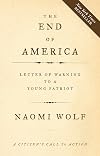
Naomi Wolf's latest work offers a concise account of the dirty dealings of the latest presidential administration, aptly comparing the doings of Bush and Company to actions undertaken by well-known dictatorial regimes of the twentieth century, most notably those of Mussolini's Italy and Hitler's Germany. "Many people are understandably overwhelmed when the term 'Nazism' or the name 'Hitler' is introduced into a debate," Wolf admits (p. 13). "I also know that there is a kind of intellectual etiquette, an unwritten rule, that Nazism and Hitler should be treated as stand-alone categories. But I believe that this etiquette is actually keeping us from learning what we have to learn right now."
The parallels she draws offer a terrifying picture of American decadence: while each of the individual governmental actions Wolf mentions, taken alone, paints a portrait of prideful, corrupted power, taken as a whole they indicate a democracy in decline.
Wolf's thesis is simple: "There are ten steps that are taken in order to close down a democracy or crush a prodemocratic movement, whether by capitalists, communists, or right-wing fascists. These ten steps, taken together, are more than the sum of their parts. Once all ten have been put in place, each magnifies the power of the others and of the whole. Impossible as it may seem, we are seeing each of these ten steps taking hold in the United States today" (p. 11).
Wolf's laundry list includes items such as "invoke an external and internal show more threat," "develop a paramilitary force," and "arbitrarily detain and release citizens." For these and seven other generalized forms of governmental suppression she is able to cite dozens of instances of malfeasance on the part of the American government, instances in line with steps taken by fascistic leaders of the twentieth century.
The book is well-written, but while Wolf attempts to package her campaign as an across-the-board appeal to American citizens of every stripe, her message is obviously aimed at people towards the political spectrum's left end. My fear is that the book will end up preaching to the choir: those who read it and enjoy it will likely already be well aware of the misdeeds being perpetrated, and will already be doing all they can to counteract the effects of those deeds. Many more conservative readers will simply not believe much of what Wolf has to say in the first place.
The book's a quick read, and if you can stomach so concentrated an account of the Bush administration's treachery, I recommend it. It's a solid book, despite its sometimes purple prose. show less
The parallels she draws offer a terrifying picture of American decadence: while each of the individual governmental actions Wolf mentions, taken alone, paints a portrait of prideful, corrupted power, taken as a whole they indicate a democracy in decline.
Wolf's thesis is simple: "There are ten steps that are taken in order to close down a democracy or crush a prodemocratic movement, whether by capitalists, communists, or right-wing fascists. These ten steps, taken together, are more than the sum of their parts. Once all ten have been put in place, each magnifies the power of the others and of the whole. Impossible as it may seem, we are seeing each of these ten steps taking hold in the United States today" (p. 11).
Wolf's laundry list includes items such as "invoke an external and internal show more threat," "develop a paramilitary force," and "arbitrarily detain and release citizens." For these and seven other generalized forms of governmental suppression she is able to cite dozens of instances of malfeasance on the part of the American government, instances in line with steps taken by fascistic leaders of the twentieth century.
The book is well-written, but while Wolf attempts to package her campaign as an across-the-board appeal to American citizens of every stripe, her message is obviously aimed at people towards the political spectrum's left end. My fear is that the book will end up preaching to the choir: those who read it and enjoy it will likely already be well aware of the misdeeds being perpetrated, and will already be doing all they can to counteract the effects of those deeds. Many more conservative readers will simply not believe much of what Wolf has to say in the first place.
The book's a quick read, and if you can stomach so concentrated an account of the Bush administration's treachery, I recommend it. It's a solid book, despite its sometimes purple prose. show less

This book wages an unflinching satirical assault on the crimes and misdemeanors of the first Nixon administration (imagine Roth writing this after Watergate!) in the form of tongue-in-cheek press conferences, newscasts, and presidential policy sessions. Whip-like wit and absurdist farce carry the story forward as President Trick E. Dixon invades Denmark in order to forcibly extradite baseball player Curt Flood, hoping to frame him for inciting ten thousand boy scouts to demonstrate against Dixon's proposed enfranchisement of the unborn.
As closely as the dystopian dialogue matches that of Nixon and his advisers, handlers, and public relations personnel, with its gall and swagger it more closely still resembles the pandering and pablum of the current Bush administration.
As closely as the dystopian dialogue matches that of Nixon and his advisers, handlers, and public relations personnel, with its gall and swagger it more closely still resembles the pandering and pablum of the current Bush administration.