On This Page
Description
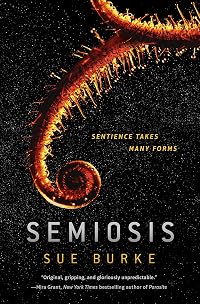
"Colonists from Earth wanted the perfect home, but they'll have to survive on the one they found. They don't realize another life form watches and waits. Only mutual communication can forge an alliance with the planet's sentient species and prove that humans are more than tools"--Tags
Recommendations








Member Recommendations

GreenVelvet It's the sequel - haven't finished yet but so far I'm loving it as much as the first. Such an inventive world full of thought-provoking scenarios.
Member Reviews
Purely as a story, this works very well, from the landing on the planet Pax through the growth of the colony and its struggles to adapt to the environment. As a lesson in how cultures adapt to strangers and the balance between confrontation and accommodation, it offers lessons that are entirely relevant to the state of the world today.
This book should be compulsory reading for all politicians everywhere.
This book should be compulsory reading for all politicians everywhere.
Utopia-seeking humans exploring a world full of alien biology. The book covers a century or so in half a dozen parts, each from a different point-of-view character in a different generation, beginning before they realise the plants are sentient and journeying through the development of a sometimes-uneasy alliance with one in particular. For self-named Pacifists there's an ironic (but ultimately unsurprising) amount of violence in their internal relations but they do hold relatively true to their principles of living in harmony with their environment: both humans and their alien ally have seen the devastation of environmental collapse and are determined to avoid repeating the mistakes of the past. The lingering question is the extent to show more which such change is possible, on either the individual or the species level. Especially when they end up after all at war....
This is a gorgeous delve into an alien world. Every viewpoint character has an immediately distinct voice. The plant the humans ally with is ambiguously sinister: seeing things from its point of view in some ways detracts from that but in others enhances the theme and gives us a deeper insight into the broader ecosystem the humans have barely scratched the surface of. show less
This is a gorgeous delve into an alien world. Every viewpoint character has an immediately distinct voice. The plant the humans ally with is ambiguously sinister: seeing things from its point of view in some ways detracts from that but in others enhances the theme and gives us a deeper insight into the broader ecosystem the humans have barely scratched the surface of. show less
The dominant theme in this book is the alienness of the aliens. Characterization of aliens is often attempted in science fiction but rarely does an author manage to make aliens both non-human and understandable. A delicate balance, neatly hit here, not once but twice, with two different sets of non-humans.
I'm giving this one five stars, not for storytelling, not for literary quality, but for concept. In a time like the present, when so many books focus on how society can go wrong, this one takes a crack at examining a human society that attempts to abandon the mistakes of the past and rebuild a community based on lofty ideals. Can it be done?
I'm giving this one five stars, not for storytelling, not for literary quality, but for concept. In a time like the present, when so many books focus on how society can go wrong, this one takes a crack at examining a human society that attempts to abandon the mistakes of the past and rebuild a community based on lofty ideals. Can it be done?
Semiosis combines a political story about the struggle to create a utopian society--this time a space colony on another planet--and a first contact story with a truly alien alien--a sentient rainbow-colored bamboo. The story covers several human generations with different points of view so the reader can experience how both the society and its relationship to the alien evolve, and it ends with a suspenseful encounter with a third alien species that introduces ethical questions about genocide and assimilation. I always enjoy when an author does something different within the science fiction genre, and Semiosis certainly qualifies.
This was shortlisted for the Arthur C Clarke Award, and while I often disagree with the jury’s choices, there’s at least some expectation of quality in the books they pick. I mean, this is a national award. For science fiction. They might define the genre a little oddly every now and again, but they at least recognise good fiction when they see it. Except, well, maybe not last year. That was a really shit short list. Happily, the best book did indeed win. This year was quite an odd shortlist – the final book of a trilogy, a book of sf art, a horror novel, a debut novel, a mainstream novel that’s really sf, and… this, Semiosis. Which is certainly science fiction. It is, in fact, a first contact novel, and it says so on the show more cover. But it’s also surprisingly old-fashioned. I was reading sf like this back in the 1990s. The fact it’s done well doesn’t make it any more twenty-first century. The novel is structured as the diaries of members of a colony that has settled an alien world – a private venture, with very fixed ideas on minimising the colony’s impact on the alien world. The personal accounts follow on one generation from the next, first outlining the accommodations the colonists have made to survive, then the perversion of those accommodations in order to preserve ideals that no longer are relevant. Then the colonists learn there are others on the planet, descendants of colonists from an alien world. Where Semiosis differs from other first contact novels is that the major intelligence the colonists discover is a plant. And it more or less programmes the humans according to its own needs, which happily also result in some degree of success for the humans. That is until the humans meet the descendants of the prior alien colonists. There’s no denying Semiosis is done well, but there’s nothing I can see in it that makes it stand out from other well-crafted science fiction novels that privilege science. And while that may be a rarity in this day and age, it should not on its own be enough to merit appearance on a major genre award shortlist. Semiosis was good but I don’t think it deserved to be a Clarke finalist. show less
3,9 stars
This wasn't quite as good as I was hoping for, but still very original and enjoyable. Based on the ending I figured this would be a standalone, but I'm not mad about the upcoming sequel.
I think this book would have been better (for me) had it been around 600 pages longer. I enjoy multi-generational stories, but I prefer them with enough heft to leave me some room to form attachments to the characters. As it is, this was a fascinating story about a half-dozen generations in a curious world, but it read more like a summary than a full fledged history.
Also, the graphic rape scene was an unpleasant surprise I could have done without. I don't really feel like it brought anything to the story that couldn't have been conveyed less show more graphically with just as much impact. show less
This wasn't quite as good as I was hoping for, but still very original and enjoyable. Based on the ending I figured this would be a standalone, but I'm not mad about the upcoming sequel.
I think this book would have been better (for me) had it been around 600 pages longer. I enjoy multi-generational stories, but I prefer them with enough heft to leave me some room to form attachments to the characters. As it is, this was a fascinating story about a half-dozen generations in a curious world, but it read more like a summary than a full fledged history.
Also, the graphic rape scene was an unpleasant surprise I could have done without. I don't really feel like it brought anything to the story that couldn't have been conveyed less show more graphically with just as much impact. show less
This novel was a most pleasant surprise, driving way beyond my character-oriented expectations and diving right into some hardcore generational storytelling on an alien world with an EXTREMELY interesting dominant life form. :)
I really loved the whole pacifist angle and loved how many problems it caused. But on the other hand, it set up a very cool mutualism with the aggressive bamboo.
I recommend this book for all you folks who loved Children of Time, Grass, or any other hard-SF author dealing with awesomely alien worlds with unique problems for colonists. Make no mistake, this IS a generational starship kind of novel. The starship happens to be a planet and it has a lot of nasty challenges, but the premise kept me on the edge of my show more seat during the entire read.
Oh, and while I said this wasn't designed to be a character-driven novel, I happened to love almost all the characters in it. Especially the naive ones. I knew something bad would happen to them. It always does. :)
But the real treat here? The biology and chemistry!
I might just rank this book into one of my favorites lists. It's been a while since I read some truly serious SF that takes itself seriously. show less
I really loved the whole pacifist angle and loved how many problems it caused. But on the other hand, it set up a very cool mutualism with the aggressive bamboo.
I recommend this book for all you folks who loved Children of Time, Grass, or any other hard-SF author dealing with awesomely alien worlds with unique problems for colonists. Make no mistake, this IS a generational starship kind of novel. The starship happens to be a planet and it has a lot of nasty challenges, but the premise kept me on the edge of my show more seat during the entire read.
Oh, and while I said this wasn't designed to be a character-driven novel, I happened to love almost all the characters in it. Especially the naive ones. I knew something bad would happen to them. It always does. :)
But the real treat here? The biology and chemistry!
I might just rank this book into one of my favorites lists. It's been a while since I read some truly serious SF that takes itself seriously. show less
Members
- Recently Added By
Lists

Favorite Science Fiction by Women Authors
737 works; 202 members

Best Science Fiction Novels
816 works; 430 members

2019 Hugo Eligible Novels
40 works; 12 members

Science Fiction by female authors
43 works; 4 members

Truly alien aliens (SF)
42 works; 3 members

Arthur C. Clarke Award Winners and Shortlisted Books
219 works; 14 members

Top Five Books of 2018
802 works; 265 members

Nonhuman Protagonists
235 works; 34 members
Best Books With Aliens
67 works; 10 members
Books Read in 2018
4,360 works; 110 members

2018 New SF Releases
24 works; 1 member

infjsarah's wishlist
408 works; 2 members

Books Read in 2019
4,052 works; 110 members

Alien Contact Stories
5 works; 1 member

War Literature
101 works; 19 members
Favorite Science Fiction
456 works; 218 members
Author Information

14+ Works 1,658 Members
Some Editions
Awards and Honors
Awards
Series

Common Knowledge
- Canonical title
- Semiosis
- Original title
- Semiosis
- Original publication date
- 2018-02
- People/Characters
- Stevland
- Important places
- Pax
- Publisher's editor
- Gunnels, Jen
- Blurbers
- Grant, Mira; Tchaikovsky, Adrian; Kelly, James Patrick; Frost, Gregory; Nichols, David Andrew; Chamovitz, Daniel
- Original language
- English
Classifications
Statistics
- Members
- 1,147
- Popularity
- 21,954
- Reviews
- 53
- Rating
- (3.78)
- Languages
- English, French, Spanish
- Media
- Paper, Audiobook, Ebook
- ISBNs
- 12
- ASINs
- 4