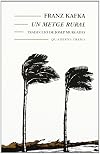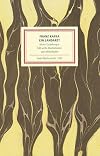
A Country Doctor: Short Stories
by Franz Kafka 
On This Page
Description
"A Country Doctor" is a short story written in 1919 by Franz Kafka. The plot follows a country doctor's hapless struggle to attend a sick young boy on a cold winter's night. A series of surreal events occur in the process, including the appearance of a mysterious groom in a pig shed. (Excerpt from Wikipedia)Tags
Recommendations






















Member Reviews
A doctor is needed, but he has no transport. It is winter, he has no horse to harness to his buggy. His own is dead, and no one else will risk their own animals on a journey of ten miles or more in the snow and ice. He has sent his servant girl out searching, but has very little hope. Suddenly, out of his own abandoned pig-sty a man crawls, followed by two horses. The doctor can leave. But the groom immediately bites Rose, the servant girl on the cheek. He says he will not be going but will stay behind with Rose. The doctor protests but can do nothing as before he knows it the horses are galloping off and he is in the farm where his patient awaits.
If that all seems a bit crazy to you, well, you might have some understanding of how it show more feels to read this story. It is short. There are no explanations for anything. One thing happens. Then something changes and another happens. Is it all a dream? is the doctor hallucinating from exposure standing out in the cold of winter? Is the groom a strange sort of representation of what the doctor wants to do?
The only answer I can give is maybe. There is no way to know. Reading it the first time I was totally lost. It made no sense to me. So I reread it. It still didn’t seem to make much sense, only after watching the lecture on the story did it really start to fall into place.
But even when I didn’t understand it I still liked it. I think I may be turning into a fan of Kafka, even if he is terribly depressing. show less
If that all seems a bit crazy to you, well, you might have some understanding of how it show more feels to read this story. It is short. There are no explanations for anything. One thing happens. Then something changes and another happens. Is it all a dream? is the doctor hallucinating from exposure standing out in the cold of winter? Is the groom a strange sort of representation of what the doctor wants to do?
The only answer I can give is maybe. There is no way to know. Reading it the first time I was totally lost. It made no sense to me. So I reread it. It still didn’t seem to make much sense, only after watching the lecture on the story did it really start to fall into place.
But even when I didn’t understand it I still liked it. I think I may be turning into a fan of Kafka, even if he is terribly depressing. show less
The Country Doctor is the title of one of the stories published in a collection of the same name. They are also included in some versions of The Metamorphosis.
Report to the Academy
This is an amusingly surreal slant on Jewish integration, reminiscent of Gerald the Gorilla in the 1980s comedy show, Not the Nine O'clock News (watch here), but much sadder.
Red Peter tells of “my past life as an ape”, but reminds his audience that they are not far removed from that state themselves. He was wild, captured, and eventually made a conscious choice, “I would cease to be an ape”, because he realised “the way out was not to run away” but to act like a human. So he did - for purely utilitarian reasons, not because he had a desire to be show more human. Nevertheless, he has now “attained the cultural level of the average European”.
All very impressive. and he claims to have achieved what he wished to achieve. In some ways, he thinks himself superior humans (who all look much the same to him, which is telling).
The (tr)icky aspect is that he keeps a “half-trained” chimpanzee at home:
“I take my pleasure with her the way apes do. During the day I don’t want to see her. For she has in her gaze the madness of a bewildered trained animal. I’m the only one who recognizes that, and I cannot bear it”.
He has exiled himself from his own kind, except for the most basic urges, and it's painfully hypocritical to keep her captive. Red Peter though, explicitly does not want judgement - something few Kafka characters escape.
Read the whole story here (8 pages):
http://www.kafka-online.info/a-report-for-an-academy.html
See my review of the stage adaptation, Kafka's Monkey:
https://www.goodreads.com/review/show/51574137
The New Advocate
A short, surreal animal story: a war horse gives up war to become a lawyer!
A Country Doctor
A disturbing story, with nightmarish unreality (magical realism, even?), coupled with sinister snow (as in The Castle) and a suffering child.
The doctor has to get to the child, but the snow is heavy and he is without a horse. Yet somehow, horses and groom appear in his disused pigsty and he arrives at the child's house unnaturally fast. Once there, he is tormented by fears that the groom will assault his maid, and confusion about whether the child is healthy or dying (or in his imagination), and the strange behaviour and expectations of the family. Grim, uneasy doom. And snow.
You can read the full story here (5 pages):
http://www.kafka-online.info/a-country-doctor.html
Up in the Gallery
This perhaps better belongs in The Hunger Artist collection (https://www.goodreads.com/review/show/23324204) of performance-related stories. It's an observation of a young woman, riding a circus horse.
You can read the whole page of it here:
http://www.kafka-online.info/up-in-the-gallery.html
A Leaf from an Old Manuscript
Timely when he wrote it and sadly so today. It's about fear and revulsion of immigrants and difference. Those who dislike them, portray them as violent, dirty, liars, robbers, who can't communicate properly, and "even their horses eat meat". The emperor is effectively trapped in his palace, gazing (like many Kafka characters) out of his window.
Before the Law
A chillingly allegorical, often published on its own, and reviewed here, with a link to the full text:
https://www.goodreads.com/review/show/1117329266
Jackals and Arabs
Back to immigrants, but with a more mythical feel. A traveller is greeted by jackals who treat him as a saviour from, or at least a mediator with, the Arabs, with whom they have an ancient blood feud. (The traveller registers no surprise that the jackals can speak.) It's not clear who is in the right, as as with the traveller In The Penal Colony (https://www.goodreads.com/review/show/123462555), it raises the question of what an outsider can or should do to change things.
You can read the full story here (3 pages):
http://www.kafka-online.info/jackals-and-arabs.html
A Visit to the Mine
This has similarities with In The Penal Colony (but is more real, and lacking in gore) and the descriptions of the individual quirks of each of the ten engineers is rather like a more comical version of Eleven Sons (below). For one "responsibility has hollowed his eyes", and "while the gentlemen... have long since shed any trace of arrogance, the attendant seem to have accumulated it all in his own person."
The Next Village
Doom in a single, short paragraph.
A Message from the Emperor
A short insight into futility, and gazing through a window.
You can read the full story here (one page):
http://www.kafka-online.info/an-imperial-message.html
A Problem for the Father of the Family aka Odradek
One of Kafka's most surreal snippets, Odradek is a sort of cotton reel, but he moves and talks. His very existence hints at creationism ("one might be tempted to suppose that this object had once been designed") and issues of mortality: "the idea that he might also outlive me I find almost painful", a fear Kafka might well have had about friends and family. But what is the meaning of life anyway? "Everything that dies has previously had some kind of goal" - with the possible exception of the mysterious Odradek.
Eleven Sons
This is an especially sad (though occasionally humorous) but pertinently perceptive description of a man's 11 sons, and the different ways each has disappointed him. Several have acknowledged good qualities, but they are always balanced or exceeded by faults.
One has a minor eye problem, and also, his father thinks, "a slight irregularity of the spirit that somehow corresponds to it". Another is "good-looking" but "not the kind of good looks that I admire". As for the sixth son, who many praise, the father dislikes this because "it really seems to make praise a little too easy if one bestows it on someone so obviously praiseworthy."
Knowing of the fraught relationship between Kafka and his own father (Kafka was his only surviving son), I assumed that each was a facet of the author. However, the introduction to my copy says they were intended as the basis for eleven separate stories (which does not preclude them being based on himself, and some have very close parallels).
A Fratricide
A murder weapon is "superfluous blood-stained ballast"!
A Dream
Well, a nightmare. Who hasn't contemplated their own mortality, wondered what would be said about them when they are gone, and maybe even imagined their burial?
See my Kafka-related bookshelf for other works by and about Kafka: HERE. show less
Report to the Academy
This is an amusingly surreal slant on Jewish integration, reminiscent of Gerald the Gorilla in the 1980s comedy show, Not the Nine O'clock News (watch here), but much sadder.
Red Peter tells of “my past life as an ape”, but reminds his audience that they are not far removed from that state themselves. He was wild, captured, and eventually made a conscious choice, “I would cease to be an ape”, because he realised “the way out was not to run away” but to act like a human. So he did - for purely utilitarian reasons, not because he had a desire to be show more human. Nevertheless, he has now “attained the cultural level of the average European”.
All very impressive. and he claims to have achieved what he wished to achieve. In some ways, he thinks himself superior humans (who all look much the same to him, which is telling).
The (tr)icky aspect is that he keeps a “half-trained” chimpanzee at home:
“I take my pleasure with her the way apes do. During the day I don’t want to see her. For she has in her gaze the madness of a bewildered trained animal. I’m the only one who recognizes that, and I cannot bear it”.
He has exiled himself from his own kind, except for the most basic urges, and it's painfully hypocritical to keep her captive. Red Peter though, explicitly does not want judgement - something few Kafka characters escape.
Read the whole story here (8 pages):
http://www.kafka-online.info/a-report-for-an-academy.html
See my review of the stage adaptation, Kafka's Monkey:
https://www.goodreads.com/review/show/51574137
The New Advocate
A short, surreal animal story: a war horse gives up war to become a lawyer!
A Country Doctor
A disturbing story, with nightmarish unreality (magical realism, even?), coupled with sinister snow (as in The Castle) and a suffering child.
The doctor has to get to the child, but the snow is heavy and he is without a horse. Yet somehow, horses and groom appear in his disused pigsty and he arrives at the child's house unnaturally fast. Once there, he is tormented by fears that the groom will assault his maid, and confusion about whether the child is healthy or dying (or in his imagination), and the strange behaviour and expectations of the family. Grim, uneasy doom. And snow.
You can read the full story here (5 pages):
http://www.kafka-online.info/a-country-doctor.html
Up in the Gallery
This perhaps better belongs in The Hunger Artist collection (https://www.goodreads.com/review/show/23324204) of performance-related stories. It's an observation of a young woman, riding a circus horse.
You can read the whole page of it here:
http://www.kafka-online.info/up-in-the-gallery.html
A Leaf from an Old Manuscript
Timely when he wrote it and sadly so today. It's about fear and revulsion of immigrants and difference. Those who dislike them, portray them as violent, dirty, liars, robbers, who can't communicate properly, and "even their horses eat meat". The emperor is effectively trapped in his palace, gazing (like many Kafka characters) out of his window.
Before the Law
A chillingly allegorical, often published on its own, and reviewed here, with a link to the full text:
https://www.goodreads.com/review/show/1117329266
Jackals and Arabs
Back to immigrants, but with a more mythical feel. A traveller is greeted by jackals who treat him as a saviour from, or at least a mediator with, the Arabs, with whom they have an ancient blood feud. (The traveller registers no surprise that the jackals can speak.) It's not clear who is in the right, as as with the traveller In The Penal Colony (https://www.goodreads.com/review/show/123462555), it raises the question of what an outsider can or should do to change things.
You can read the full story here (3 pages):
http://www.kafka-online.info/jackals-and-arabs.html
A Visit to the Mine
This has similarities with In The Penal Colony (but is more real, and lacking in gore) and the descriptions of the individual quirks of each of the ten engineers is rather like a more comical version of Eleven Sons (below). For one "responsibility has hollowed his eyes", and "while the gentlemen... have long since shed any trace of arrogance, the attendant seem to have accumulated it all in his own person."
The Next Village
Doom in a single, short paragraph.
A Message from the Emperor
A short insight into futility, and gazing through a window.
You can read the full story here (one page):
http://www.kafka-online.info/an-imperial-message.html
A Problem for the Father of the Family aka Odradek
One of Kafka's most surreal snippets, Odradek is a sort of cotton reel, but he moves and talks. His very existence hints at creationism ("one might be tempted to suppose that this object had once been designed") and issues of mortality: "the idea that he might also outlive me I find almost painful", a fear Kafka might well have had about friends and family. But what is the meaning of life anyway? "Everything that dies has previously had some kind of goal" - with the possible exception of the mysterious Odradek.
Eleven Sons
This is an especially sad (though occasionally humorous) but pertinently perceptive description of a man's 11 sons, and the different ways each has disappointed him. Several have acknowledged good qualities, but they are always balanced or exceeded by faults.
One has a minor eye problem, and also, his father thinks, "a slight irregularity of the spirit that somehow corresponds to it". Another is "good-looking" but "not the kind of good looks that I admire". As for the sixth son, who many praise, the father dislikes this because "it really seems to make praise a little too easy if one bestows it on someone so obviously praiseworthy."
Knowing of the fraught relationship between Kafka and his own father (Kafka was his only surviving son), I assumed that each was a facet of the author. However, the introduction to my copy says they were intended as the basis for eleven separate stories (which does not preclude them being based on himself, and some have very close parallels).
A Fratricide
A murder weapon is "superfluous blood-stained ballast"!
A Dream
Well, a nightmare. Who hasn't contemplated their own mortality, wondered what would be said about them when they are gone, and maybe even imagined their burial?
See my Kafka-related bookshelf for other works by and about Kafka: HERE. show less
Another Kafka story which equally baffled me and even more sinister if you found that Noh-influenced Japanese short anime film. Its a story about a doctor and the snow stormy night when he was called out to meet a patient but weird things started happening to him which is hard to explain what happened exactly.
Personally this is more in line towards the Absurdist element than Melville's Bartleby does since this novel is like a ride with Fringe's Dr Walter Bishop on LSD. Unfortunately this story seemed to revolve around the idea of rape too. In fact, when the doctor's horse died from the chill, a man gave him horses for his trip and seemingly went after the maid while the doctor speed to his patient house. Then later the patient's family show more undress him and push him inside the bed naked and everything seemed to went against all sense of reasoning and so we're left in a paranoid loop by the author and his character and neither of us could even make sense of anything.
Honestly, if there are more clarity in this story, I would have been impressed by it. There are moment when I got suck into the story like Edgar Allan Poe's Tell-tale Heart and Raven, but then Kafka just pull out every strand of conscience and reality and jumble it all out and throw it out of the window.
There's also a recurrent element of self-deprecating and suicide which was again the focus from the style and it wouldn't be as menacing had it be more subtle. Kafka was an interesting character with a really dark passenger inside him. But it became obvious that while most touted him as a great influence in "existentialism", all I see was a man grasping at his sanity and becoming aware of the futility of his reality which was suffocating him. show less
Personally this is more in line towards the Absurdist element than Melville's Bartleby does since this novel is like a ride with Fringe's Dr Walter Bishop on LSD. Unfortunately this story seemed to revolve around the idea of rape too. In fact, when the doctor's horse died from the chill, a man gave him horses for his trip and seemingly went after the maid while the doctor speed to his patient house. Then later the patient's family show more undress him and push him inside the bed naked and everything seemed to went against all sense of reasoning and so we're left in a paranoid loop by the author and his character and neither of us could even make sense of anything.
Honestly, if there are more clarity in this story, I would have been impressed by it. There are moment when I got suck into the story like Edgar Allan Poe's Tell-tale Heart and Raven, but then Kafka just pull out every strand of conscience and reality and jumble it all out and throw it out of the window.
There's also a recurrent element of self-deprecating and suicide which was again the focus from the style and it wouldn't be as menacing had it be more subtle. Kafka was an interesting character with a really dark passenger inside him. But it became obvious that while most touted him as a great influence in "existentialism", all I see was a man grasping at his sanity and becoming aware of the futility of his reality which was suffocating him. show less
Another Kafka story which equally baffled me and even more sinister if you found that Noh-influenced Japanese short anime film. Its a story about a doctor and the snow stormy night when he was called out to meet a patient but weird things started happening to him which is hard to explain what happened exactly.
Personally this is more in line towards the Absurdist element than Melville's Bartleby does since this novel is like a ride with Fringe's Dr Walter Bishop on LSD. Unfortunately this story seemed to revolve around the idea of rape too. In fact, when the doctor's horse died from the chill, a man gave him horses for his trip and seemingly went after the maid while the doctor speed to his patient house. Then later the patient's family show more undress him and push him inside the bed naked and everything seemed to went against all sense of reasoning and so we're left in a paranoid loop by the author and his character and neither of us could even make sense of anything.
Honestly, if there are more clarity in this story, I would have been impressed by it. There are moment when I got suck into the story like Edgar Allan Poe's Tell-tale Heart and Raven, but then Kafka just pull out every strand of conscience and reality and jumble it all out and throw it out of the window.
There's also a recurrent element of self-deprecating and suicide which was again the focus from the style and it wouldn't be as menacing had it be more subtle. Kafka was an interesting character with a really dark passenger inside him. But it became obvious that while most touted him as a great influence in "existentialism", all I see was a man grasping at his sanity and becoming aware of the futility of his reality which was suffocating him. show less
Personally this is more in line towards the Absurdist element than Melville's Bartleby does since this novel is like a ride with Fringe's Dr Walter Bishop on LSD. Unfortunately this story seemed to revolve around the idea of rape too. In fact, when the doctor's horse died from the chill, a man gave him horses for his trip and seemingly went after the maid while the doctor speed to his patient house. Then later the patient's family show more undress him and push him inside the bed naked and everything seemed to went against all sense of reasoning and so we're left in a paranoid loop by the author and his character and neither of us could even make sense of anything.
Honestly, if there are more clarity in this story, I would have been impressed by it. There are moment when I got suck into the story like Edgar Allan Poe's Tell-tale Heart and Raven, but then Kafka just pull out every strand of conscience and reality and jumble it all out and throw it out of the window.
There's also a recurrent element of self-deprecating and suicide which was again the focus from the style and it wouldn't be as menacing had it be more subtle. Kafka was an interesting character with a really dark passenger inside him. But it became obvious that while most touted him as a great influence in "existentialism", all I see was a man grasping at his sanity and becoming aware of the futility of his reality which was suffocating him. show less
The early Kafka represented in this work is only a pale foreshadowing of the mind that would produce The Trial, The Castle, and Metamorphosis. Many of these stories are simply jotted down thoughts that are only partially developed.
Loved: Before the Law, Kafka couldn't have presented our law in a better analogy! Th brilliance of it all left me breathless and sad because there was sooooo much truth in his words!
Hated: Jackals and Arabs, that was just one mean story! Why point out a certain nation? If he wanted to write this he could have used the Martians for all anyone cared! But just using a race shows that here Kafka's main aim was not presenting a story or even good story telling technique but to present his mere hatred for a nation...
Hated: Jackals and Arabs, that was just one mean story! Why point out a certain nation? If he wanted to write this he could have used the Martians for all anyone cared! But just using a race shows that here Kafka's main aim was not presenting a story or even good story telling technique but to present his mere hatred for a nation...
impecable
Members
- Recently Added By
Lists

Books Read By artturnerjr - 2015
27 works; 1 member
Author Information

1,513+ Works 104,075 Members
Franz Kafka -- July 3, 1883 - June 3, 1924 Franz Kafka was born to middle-class Jewish parents in Prague, Czechoslovakia on July 3, 1883. He received a law degree at the University of Prague. After performing an obligatory year of unpaid service as law clerk for the civil and criminal courts, he obtained a position in the workman's compensation show more division of the Austrian government. Always neurotic, insecure, and filled with a sense of inadequacy, his writing is a search for personal fulfillment and understanding. He wrote very slowly and deliberately, publishing very little in his lifetime. At his death he asked a close friend to burn his remaining manuscripts, but the friend refused the request. Instead the friend arranged for publication Kafka's longer stories, which have since brought him worldwide fame and have influenced many contemporary writers. His works include The Metamorphosis, The Castle, The Trial, and Amerika. Kafka was diagnosed with tuberculosis (TB) in August 1917. As his disease progressed, his throat became affected by the TB and he could not eat regularly because it was painful. He died from starvation in a sanatorium in Kierling, near Vienna, after admitting himself for treatment there on April 10, 1924. He died on June 3 at the age of 40. (Bowker Author Biography) show less
Franz Kafka has a Legacy Library. Legacy libraries are the personal libraries of famous readers, entered by LibraryThing members from the Legacy Libraries group.
Some Editions
Awards and Honors
Series
Belongs to Publisher Series
Work Relationships
Is contained in
Contains
Has as a student's study guide
Common Knowledge
- Canonical title
- A Country Doctor: Short Stories
- Original title
- Ein Landarzt
- Alternate titles
- A Country Doctor
- Original publication date
- 1919
- Dedication*
- Meinem Vater
- First words*
- Der neue Advokat: Wir haben einen neuen Advokaten, den Dr. Bucephalus.
Ein Landarzt: Ich war in grosser Verlegenheit: eine dringende Reise stand mir bevor; ein Schwerkranker wartete auf mich in einem zehn Meilen entfernten Dorfe; starkes Schneegestöber füllte den weiten Raum zwischen mir und i... (show all)hm; einen Wagen hatte ich, leicht, grossräderig, ganz wie er für unsere Landstrassen taugt; in den Pelz gepackt, die Instrumententasche in der Hand, stand ich reisefertig schon auf dem Hofe; aber das Pferd fehlte, das Pferd.
Auf der Galerie: Wenn irgendeine hinfällige, lungensichtige Kunstreiterin in der Manege auf schwankendem Pferd vor einem unermüdlichen Publikum vom peitschenschwingenden erbarmungslosen Chef monatelang ohne Unterbrechung im... (show all) Kreise rundum getrieben würde, auf dem Pferde schwirrend, Küsse werfend, in der Taille sich wiegend, und wenn dieses Spiel unter dem nichtaussetzenden Brausen des Orchesters und der Ventilatoren in die immerfort weiter sich öffnende graue Zukunft sich fortsetzte, begleitet vom vergehenden und neu anschwellenden Beifallsklatschen der Hände, die eigentlich Dampfhämmer sind -
Ein altes Blatt: Es ist, als wäre viel vernachlässigt worden in der Verteidigung unseres Vaterlandes.
Vor dem Gesetz: Vor dem Gesetz steht ein Türhüter.
Schakale und Araber: Wir lagerten in der Oase.
Ein Besuch im Bergwerk: Heute waren die obersten Ingenieure bei uns unten.
Das nächste Dorf: Mein Grossvater pflegte zu sagen: "Das Leben ist erstaunlich kurz.
Eine kaiserliche Botschaft: Der Kaiser - so heisst es - hat Dir, dem Einzelnen, dem jämmerlichen Untertanen, dem winzig vor der kaiserlichen Sonne in die fernste Ferne geflüchteten Schatten, gerade Dir hat der Kaiser von se... (show all)inem Sterbebett aus eine Botschaft gesendet.
Die Sorge des Hausvaters: Die einen sagen, das Wort Odradek stamme aus dem Slawischen und sie suchen auf Grund dessen die Bildung des Wortes nachzuweisen.
Elf Söhne: Ich habe elf Söhne.
Ein Brudermord: Es ist erwiesen, dass der Mord auf folgende Weise erfolgte: Schmar, der Mörder, stellte sich gegen neun Uhr abends in der mondklaren Nacht an jener Strassenecke auf, wo Wiese, das Opfer, aus der Gasse, in wel... (show all)cher sein Bureau lag, in jene Gasse einbiegen musste, in der er wohnte.
Ein Traum: Josef K. träumte: Es war ein schöner Tag und K. wollte spazieren gehen.
Ein Bericht für eine Akademie: Hohe Herren von der Akademie! Sie erweisen mir die Ehre, mich aufzufordern, der Akademie einen Bericht über mein äffisches Vorleben einzureichen. - Last words*
- (Click to show. Warning: May contain spoilers.)Der neue Advokat: Frei, unbedrückt die Seiten von den Lenden des Reiters, bei stiller Lampe, fern dem Getöse der Alexanderschlacht, liest und wendet er die Blätter unserer alten Bücher.
(Click to show. Warning: May contain spoilers.)Ein Landarzt: Einmal dem Fehlläuten der Nachtglocke gefolgt - es ist niemals gutzumachen.
(Click to show. Warning: May contain spoilers.)Auf der Galerie: - da dies so ist, legt der Galeriebesucher das Gesicht auf die Brüstung und, im Schlussmarsch wie in einem schweren Traum versinkend, weint er, ohne es zu wissen.
(Click to show. Warning: May contain spoilers.)Ein altes Blatt: Ein Missverständnis ist es, und wir gehen daran zugrunde.
(Click to show. Warning: May contain spoilers.)Vor dem Gesetz: Ich gehe jetzt und schliesse ihn.
(Click to show. Warning: May contain spoilers.)Schakale und Araber: Und wie sie uns hassen!
(Click to show. Warning: May contain spoilers.)Ein Besuch im Bergwerk: Auch geht unsere Arbeitsschicht bald zu Ende; wir werden die Rückkehr der Herren nicht mehr mit ansehen.
(Click to show. Warning: May contain spoilers.)Das nächste Dorf: - schon die Zeit des gewöhnlichen, glücklich ablaufenden Lebens für einen solchen Ritt bei weitem nicht hineinreicht.
(Click to show. Warning: May contain spoilers.)Eine kaiserliche Botschaft: Du aber sitzt an Deinem Fenster und erträumt sie Dir, wenn der Abend kommt.
(Click to show. Warning: May contain spoilers.)Die Sorge des Hausvaters: Er schadet ja offenbar niemandem; aber die Vorstellung, dass er mich auch noch überleben sollte, ist mir eine fast schmerzliche.
(Click to show. Warning: May contain spoilers.)Elf Söhne: Das sind die elf Söhne.
(Click to show. Warning: May contain spoilers.)Ein Brudermord: Schmar, mit Mühe die letzte Übelkeit verbeissend, den Mund an die Schulter des Schutzmannes gedrückt, der leichtfüssig ihn davonführt.
(Click to show. Warning: May contain spoilers.)Ein Traum: Entzückt von diesem Anblick erwachte er.
(Click to show. Warning: May contain spoilers.)Ein Bericht für eine Akademie: Im übrigen will ich keines Menschen Urteil, ich will nur Kenntnisse verbreiten, ich berichte nur, auch Ihnen, hohe Herren von der Akademie, habe ich nur berichtet. - Original language*
- Alemany
- Disambiguation notice
- Contains 14 short fictions. Please don't combine with editions containing the single story or a different selection of stories!
*Some information comes from Common Knowledge in other languages. Click "Edit" for more information.
Classifications
- Genres
- Fiction and Literature, General Fiction
- DDC/MDS
- 833.912 — Literature & rhetoric German & related literatures German fiction 1900- 1900-1990 1900-1945
- LCC
- PT2621 .A26 — Language and Literature German, Dutch and Scandinavian literatures German literature Individual authors or works 1860/70-1960
- BISAC
Statistics
- Members
- 375
- Popularity
- 83,901
- Reviews
- 9
- Rating
- (3.68)
- Languages
- 11 — Catalan, Czech, Dutch, English, French, German, Italian, Norwegian (Bokmål), Portuguese, Spanish, Swedish
- Media
- Paper, Audiobook, Ebook
- ISBNs
- 49
- ASINs
- 18