On This Page
Description
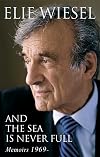
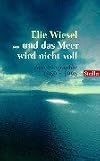
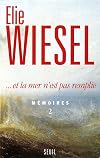
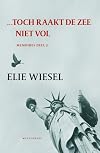
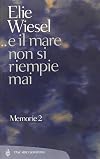
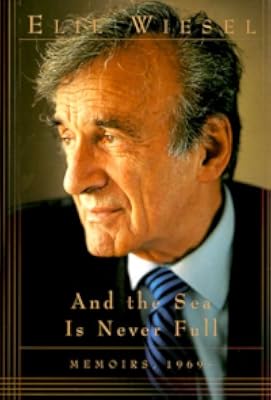
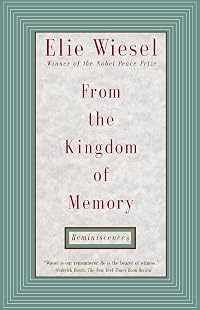
As this concluding volume of his moving and revealing memoirs begins, Elie Wiesel is forty years old, a writer of international repute. Determined to speak out more actively for both Holocaust survivors and the disenfranchised everywhere, he sets himself a challenge: "I will become militant. I will teach, share, bear witness. I will reveal and try to mitigate the victims' solitude." He makes words his weapon, and in these pages we relive with him his unstinting battles. We see him meet with show more world leaders and travel to regions ruled by war, dictatorship, racism, and exclusion in order to engage the most pressing issues of the day. We see him in the Soviet Union defending persecuted Jews and dissidents; in South Africa battling apartheid and supporting Mandela's ascension; in Cambodia and in Bosnia, calling on the world to face the atrocities; in refugee camps in Albania and Macedonia as an emissary for President Clinton. He chastises Ronald Reagan for his visit to the German military cemetery at Bitburg. He supports Lech Walesa but challenges some of his views. He confronts Francois Mitterrand over the misrepresentation of his activities in Vichy France. He does battle with Holocaust deniers. He joins tens of thousands of young Austrians demonstrating against renascent fascism in their country. He receives the Nobel Peace Prize. Through it all, Wiesel remains deeply involved with his beloved Israel, its leaders and its people, and laments its internal conflicts. He recounts the behind-the-scenes events that led to the establishment of the Holocaust Museum in Washington, D.C. He shares the feelings evoked by his return to Auschwitz, by his recollections of Yitzhak Rabin, and by his memories of his own vanished family. show lessTags
Recommendations



















Member Reviews
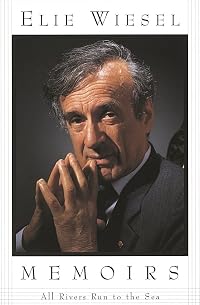
The second volume of Elie Wiesel's memoirs. 'I confidently predict that nothing Weisel has written hitherto will be as widely read, or vividly remembered, as this.' CHAIM BERMANT on the first volume, All Rivers Run to the Sea. In the first volume of his memoirs, All Rivers Run to The Sea, Elie Wiesel recounted how he was born in Hungarian Roumania in 1928 and how, when he was fifteen, he and his family were taken to Auschwitz, and then onto Buchenwald concentration camp, where his parents and eight-year-old sister were killed. Of the 750,000 Hungarian Jews deported to camps in the years 1944-5, only a few thousand survived to be liberated, including the young Elie Wiesel. In this second volume, we meet Wiesel the Witness and Humitarian show more Campaigner: how he highlighted the plight of Soviet Jewry and of the dissidents of the communist system generally; the development of his friendships with the prime ministers and presidents of Israel, the United States and France; his tireless championing of the rights of the oppressed in Bosnia, the Soviet Union and Africa; his receipt of the Nobel Peace Prize show less
Ratings
Members
- Recently Added By
Lists

Books available on Open Library
171 works; 4 members
Author Information

Eliezer "Elie" Wiesel was born in Sighet, Romania on September 30, 1928. In 1944, he and his family were deported along with other Jews to the Nazi death camp Auschwitz. His mother and his younger sister died there. He loaded stones onto railway cars in a labor camp called Buna before being sent to Buchenwald, where his father died. He was show more liberated by the United States Third Army on April 11, 1945. After the war ended, he learned that his two older sisters had also survived. He was placed on a train of 400 orphans that was headed to France, where he was assigned to a home in Normandy under the care of a Jewish organization. He was educated at the Sorbonne and supported himself as a tutor, a Hebrew teacher and a translator. He started writing for the French newspaper L'Arche. In 1948, L'Arche sent him to Israel to report on that newly founded state. He also became the Paris correspondent for the daily Yediot Ahronot. In this capacity, he interviewed the novelist Francois Mauriac, who urged him to write about his war experiences. The result was La Nuit (Night). After the publication of Night, Wiesel became a writer, literary critic, and journalist. His other books include Dawn, The Accident, The Gates of the Forest, The Jews of Silence: A Personal Report on Soviet Jewry, and Twilight. He received a numerous awards and honors for his literary work including the William and Janice Epstein Fiction Award in 1965, the Jewish Heritage Award in 1966, the Prix Medicis in 1969, and the Prix Livre-International in 1980. He received the Nobel Peace Prize in 1986 for his work in combating human cruelty and in advocating justice. He had a leading role in the creation of the United States Holocaust Memorial Museum in Washington, D. C. He died on July 2, 2016 at the age of 87. (Bowker Author Biography) show less
Series

Common Knowledge
- Canonical title*
- ... Et la mer n'est pas remplie
- People/Characters
- Elie Wiesel
- Epigraph
- What profit hath a man of all his labor which he taketh under the sun? One generation passeth away and another generation cometh; but the earth abideth forever. The sun also riseth, and the sun goeth down, and hasteth to his ... (show all)place where he arose. The wind goeth toward the south, and turneth about unto the north; it whirleth about continually, and the wind returneth again according to his circuits. All rivers run to the sea; and the sea is never full; unto the place from whence the rivers come, thither they return again. All things are full of labor; man cannot utter it: the eye is not satisfied with seeing, nor the ear filled with hearing.
-Ecclesiastes - Dedication
- For Inge and Ira
- First words
- A chronicle has it that the celebrated Rabbi Shneur Zalman of Lyady was locked up in a St. Petersburg prison after being denounced by a foe of the Hasidic movement as an agitator against the Czar.
- Last words
- (Click to show. Warning: May contain spoilers.)I answer: "Yes, my son, I called you."
*Some information comes from Common Knowledge in other languages. Click "Edit" for more information.
Classifications
- Genres
- Biography & Memoir, Literature Studies and Criticism
- DDC/MDS
- 843.914 — Literature & rhetoric French Literature French fiction 1900- 20th Century 1945-1999
- LCC
- PQ2683 .I32 .Z52313 — Language and Literature French, Italian, Spanish and Portuguese literatures French literature Modern literature 1961-2000
- BISAC
Statistics
- Members
- 385
- Popularity
- 81,190
- Reviews
- 1
- Rating
- (4.00)
- Languages
- 6 — Czech, Dutch, English, French, German, Italian
- Media
- Paper, Ebook
- ISBNs
- 14
- ASINs
- 2