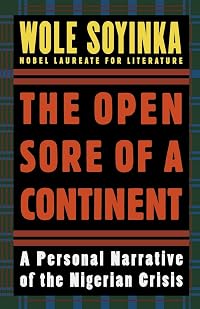
The Open Sore of a Continent: A Personal Narrative of the Nigerian Crisis
by Wole Soyinka
On This Page
Description
On November 10, 1995, the Nigerian military government under General Sani Abacha executed dissident writer Ken Saro-Wiwa along with eight other activists, and the international community reacted with outrage. From the Geneva based International Commission of Jurists (who called the executionsa criminal act of state murder) to governments around the world (including the United States) who recalled their ambassadors, to the Commonwealth of Former British Colonies, who suspended Nigeria from show more the group, the response was quick, decisive, and nearly unanimous: Nigeria is an outcast in theglobal village. The events that led up to Saro-Wiwa's execution mark Nigeria's decline from a post-colonial success story to its current military dictatorship, and few writers have been more outspoken in decrying and lamenting this decline than Nobel Prize laureate and Nigerian exile Wole Soyinka. In The Open Sore of a Continent, Soyinka, whose own Nigerian passport was confiscated by General Abacha in 1994, explores the history and future of Nigeria in a compelling jeremiad that is as intense as it is provocative, learned, and wide-ranging. He deftly explains the shifting dramatis personaeof Nigerian history and politics to westerners unfamiliar with the players and the process, tracing the growth of Nigeria as a player in the world economy, through the corrupt regime of Babangida, the civil war occasioned by the secession of Biafra under the leadership of Chief Odumegwu Ojukwu, thelameduck reign of Ernest Sonekan, and the coup led by General Sani Abacha, arguing that "a glance at the mildewed tapestry of the stubbornly unfinished nation edifice is necessary" to explain where Nigeria can go next. And, in the process of elucidating the Nigerian crisis, Soyinka opens readers tothe broader questions of nationhood, identity, and the general state of African culture and politics at the end of the twentieth century. Here are a range of issues that investigate the interaction of peoples who have been shaped by the clash of cultures: nationalism, power, corruption, violence,and the enduring legacy of colonialism. In a world tormented by devastation from Bosnia to Rwanda, how do we define a nation: is it simply a condition of the collective mind, a passive, unquestioned habit of cohabitation? Or is what we think of as a nation a rigorous conclusion that derives fromhistory? Is it geography, or is it a bond that transcends accidents of mountain, river, and valley? How do these varying definitions of nationhood impact the people who live under them? Soyinka concludes with a resounding call for international attention to this question: the global community mustaddress the issue of nationhood to prevent further religious mandates and calls for ethnic purity of the sort that have turned Algeria, Rwanda, Bosnia, and Sri Lanka into killing fields. Soyinka brings a lifetime of study and experience to bear on his writing, combining the skills of a poet and playwright with the astute political observations of a seasoned activist. An important and timely volume, The Open Sore of a Continent will be required reading for anyone who cares aboutAfrica, human rights, and the future of the global village. show lessTags
Recommendations




Member Reviews
you might need a dictionary
author is a major literary figure and his vocabulary is superb
he is Nigerian (not an outside journalist)
author is a major literary figure and his vocabulary is superb
he is Nigerian (not an outside journalist)
Ratings
Members
- Recently Added By
Author Information

139+ Works 5,080 Members
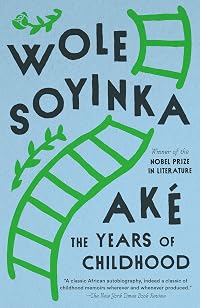
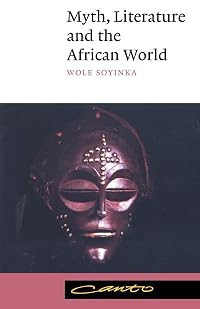
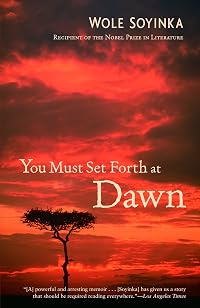
Wole Soyinka was born in Abeokuta, Ogun State of Nigeria on July 13, 1934. He attended Government College and University College in Ibadan before receiving a degree in English from the University of Leeds in England in 1958. He has held research and teaching appointments at several universities including the University of Ibadan, the University of show more Ife, Cornell University, Emory University, the University of Nevada, Las Vegas, and Loyola Marymount. He is a distinguished playwright, poet, novelist, essayist, social critic, political activist, and literary scholar. His plays include The Swamp Dwellers, The Lion and the Jewel, A Dance of the Forests, The Bacchae of Euripides, A Play for Giants, Death and the King's Horsemen, From Zia with Love, The Beatification of Area Boy, and King Baabu. His collections of poetry include Idanre and Other Poems, A Shuttle in the Crypt, and Mandela's Earth and Other Poems. His novels include The Interpreters, which won the 1968 Jock Campbell Literary Award, and Season of Anomy. His autobiographical works include Ake: The Years of Childhood, Isara: A Voyage Around Essay, The Open Sore of a Continent: A Personal Memoir of the Nigerian Crisis, and You Must Set Forth at Dawn. His literary essays collections include Myth, Literature and the African World and Art, Dialogue and Outrage. During the civil war in Nigeria, he appealed for cease-fire in an article. Accused of treason, he was held in solitary confinement for 22 months. Two of his works, The Man Died: Prison Notes of Wole Soyinka and Poems from Prison, were secretly written on toilet paper and smuggled out of prison. He won the Nobel Prize for Literature in 1986. (Bowker Author Biography) show less
Series
Belongs to Publisher Series
Common Knowledge
- Canonical title
- The Open Sore of a Continent: A Personal Narrative of the Nigerian Crisis
Classifications
Statistics
- Members
- 113
- Popularity
- 288,451
- Reviews
- 1
- Rating
- (3.33)
- Languages
- English
- Media
- Paper
- ISBNs
- 2
- ASINs
- 1