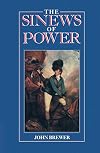
The Sinews of Power: War, Money and the English State, 1688-1783
by John Brewer
On This Page
Description
This powerful interpretation of English history provides a completely new framework for understanding how Britain emerged in the eighteenth century as a major international power. John Brewer's brilliant analysis makes clear that the drastic increase in Britain's military involvement (and success) in Europe and the expansion of her commercial and imperial interests would not have happened without a concurrent radical increase in taxation, along with a surge in deficit financing and the show more growth of a substantial public administration. Warfare and taxes reshaped the English economy, and at the heart of these dramatic changes lay an issue that is still very much with us today: the tension between a nation's aspirations to be a major power and fear of the domestic consequences of such an ambition--namely, the loss of liberty. show lessTags
Recommendations











































Member Recommendations
Member Reviews
This is an unusual history book which narrates the strengthening of the English state through internal changes in state organs rather than through the external actions of the state. So instead of recapitulating its wars and royal succession, the author explains why taxation came to be carried out comparatively efficiently by the English state, and how political conflict could be centralized in England and political accountability thereby strengthened.
Anyone who understands that historical causality goes much deeper than the outcomes of warfare or the decisions of monarchs will appreciate this aptly titled book. The fundamental reasons why England was able to dominate much of the world in the 19th century did not lie in its muscular army show more or smart decision-makers, but in the sinews which connected the different parts of the state to each other. A relatively incorrupt state capable of taxing its citizens in a manner which was, if not fully consensual, at least participatory, was much more capable of coordinated and forceful action than its competitors.
True political history of this kind can help readers understand much more not only about 18th century political life, but modern politics as well. The basic dilemmas of good state administration will always be the same, and England managed to solve many of them earlier than any other state. Many problems which needed solving then are still acute in a multitude of countries today. show less
Anyone who understands that historical causality goes much deeper than the outcomes of warfare or the decisions of monarchs will appreciate this aptly titled book. The fundamental reasons why England was able to dominate much of the world in the 19th century did not lie in its muscular army show more or smart decision-makers, but in the sinews which connected the different parts of the state to each other. A relatively incorrupt state capable of taxing its citizens in a manner which was, if not fully consensual, at least participatory, was much more capable of coordinated and forceful action than its competitors.
True political history of this kind can help readers understand much more not only about 18th century political life, but modern politics as well. The basic dilemmas of good state administration will always be the same, and England managed to solve many of them earlier than any other state. Many problems which needed solving then are still acute in a multitude of countries today. show less
Ratings
Members
- Recently Added By
Lists

Bibliography of How the Old World Ended by Jonathan Scott
308 works; 1 member
Author Information

21+ Works 1,028 Members
Classifications
- Genres
- History, Nonfiction, General Nonfiction, Economics, Politics and Government
- DDC/MDS
- 941.07 — History & geography History of Europe British Isles Historical periods of British Isles 1714-1837 Period of House of Hanover
- LCC
- DA480 .B74 — History of Europe, Asia, Africa and Oceania Great Britain History of Great Britain England History By period Modern, 1485-
- BISAC
Statistics
- Members
- 207
- Popularity
- 157,358
- Reviews
- 1
- Rating
- (4.20)
- Languages
- English
- Media
- Paper, Ebook
- ISBNs
- 10
- ASINs
- 1