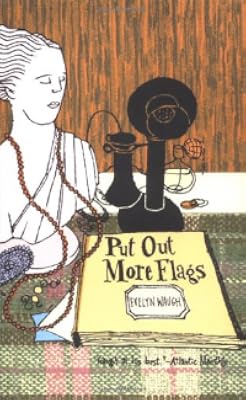
Put Out More Flags
by Evelyn Waugh 
On This Page
Description
Upper-class scoundrel Basil Seal, mad, bad, and dangerous to know, creates havoc wherever he goes, much to the despair of the three women in his life-his sister, his mother, and his mistress. When Neville Chamberlain declares war on Germany, it seems the perfect opportunity for more action and adventure. So Basil follows the call to arms and sets forth to enjoy his finest hour-as a war hero. Basil's instincts for self-preservation come to the fore as he insinuates himself into the Ministry show more of Information and a little-known section of Military Security. With Europe frozen in the "phoney war," when will Basil's big chance to fight finally arrive? show lessTags
Recommendations



















Member Recommendations

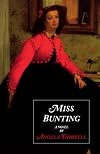
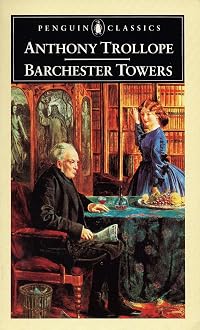
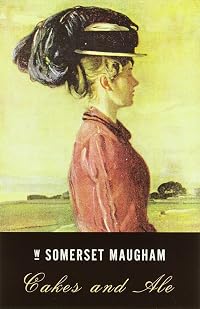
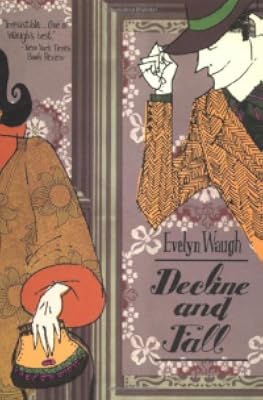
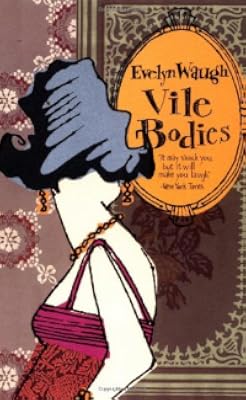
thorold Quite apart from the appalling pun in Thirkell's title, it's pretty obvious that Waugh and Thirkell enjoyed each other's books. It's fun comparing their approaches to the wartime home-front situation.

shaunie Waugh goes deeper into human emotions in his best book, but the two authors are otherwise very similar and great fun. These books both move along at a cracking pace.
Member Reviews
Just as acerbic as Vile Bodies but less charming; just as morally outraged as Sword of Honour but with less pathos; Put Out More Flags falls uncomfortably between two stools. It bruises its rump, and retreats into an air of umbrage that undermines the humour, frequently. It's an appropriate document of the "phony war" in that sense, embodying-not-just-depicting a lot of the pettiness and irrelevance of an interwar Britain that hadn't yet cottoned on to the fact that the war was no longer "inter." And as a result it's cool in the last pages how all that falls away (goodbye, all that!) as everyone starts to catch up and understand that they've entered a time to try their souls. A purification, but one with ironic bite when you know about show more Waugh's own history in the war--this book was written in 1942, after a couple of bungled attempts on his part to nobly give his all to make the world safe for patrician constitutional toffness, but when the victory still hung in the balance and he still had hopes of reaching his apotheosis. There would be more bungles, and a deeper disillusionment devastatingly chronicled in Sword of Honour, which makes this book seem small--a blinkered smallness mistaking itself for realism, the Chamberlain to Sword of Honour's (cos albeit the man was a warmonger and war criminal, a racist and a glutton, and we reject big man history and find the Allied win in the overwhelming industrial economics of the thing, he was still in some wise a titan) Churchill. show less
Waugh begins with two quotes from Lin Yutang's The Importance of Living. Interestingly, Washington Post columnist Dana Milbank used the epigraph as a critique of President Trump's February 2018 plans to hold a "grand military parade" in Washington. Yutang's epigraph provides Waugh's title:
A man getting drunk at a farewell party should strike a musical tone, in order to strengthen his spirit . . . and a drunk military man should order gallons and put out more flags in order to increase his military splendor.A second quote from Yutang applies equally to the work of Waugh and Trump:
A little injustice in the heart can be drowned by wine; but a great injustice in the world can be drowned only by the sword.Yet Milbank's critique of Trump show more refers to the Classical Roman triumphal parades, sans the ego check:
There’s only one problem with this plan, as I see it. In the Roman triumph, a slave would ride with the general in his chariot and repeatedly whisper into his ear, “Memento mori”: Remember, you are mortal. For our parading president, this could be a dealbreaker.The Evelyn Waugh Society was chuffed that Put Out More Flags got a guernsey. But here is the "dealbreaker" for comparing the theme of Waugh's story with contemporary conflicts: Waugh's characters all act like petty scammers and nepotists during the Phoney War, but by the time the conflict begins, and reality hits the first casualty, we see a change of heart as the characters step up and do their duty. Nonetheless, the period before the evacuation of Dunkirk and the ensuing Battle of Britain was remarkably un-warlike. Waugh captures this time satirically. I was confused about the theme of this work and so I turned to John Chamberlain's 1942 review in The New York Times. Chamberlain wrote:
[The story] starts out as a wicked satire in the well-known Waugh manner and ends up as a morality play.I rather thought it otherwise - that Waugh was looking at human nature when there was nothing to lose, versus once the first blood is spilt. Once our first war casualty appears, everyone except the author rushes to become a commando or refuses a commission so they can serve as private soldiers. Otherwise, they are all silver-tails who try to gain obscure roles in safe office jobs. There is one scene, however, where the author is exiled to Ireland, that reminds me of the present. Basil Seal, in his attempt to increase his tenuous status in the bureaucracy, accuses the author of being a Nazi (a situation which Basil himself orchestrated). This results in the author's exile and I watched the movie Trumbo immediately after finishing the book. To be un-American (or indeed, un-Australian) seems to be a timeless farce. Chamberlain thought the change in attitude of the elites rather absurd, that it was not "good Waugh". Yet the book remains a classic, with Bridey Heing writing for Pank Magazine in 2015 claiming that:
...telling a story that is humorous without making a joke of war itself can be extremely difficult [and] Put Out More Flags is laugh-out-loud funny, and the humor being at the expense of the war industry makes that laughter cathartic.I certainly didn't laugh out loud, but I intend to read more of Waugh's work. Once I started, I barely put this book down. This is the first Evelyn Waugh novel I have read, and I have A Handful of Dust to read next. show less
The highest quality in satire by a writer whose ear was perfectly tuned to the observation of his generation. That acute observation was not always approving of the often shameless behaviour of his contemporaries, however.
The main characters, Ambrose Silk and Basil Silk, both past their youth, have, now that World War II has arrived, lost what shine they might have possessed as "bright young men". The onset of war is yet one more mortal blow to the increasingly ramshackle upper class youth culture of 1939 England. Many of them had turned communist by this time. Basil's and Ambrose's positions have drifted into outdatedness, but it is their lack of appeal that predominates our perception of them.
Highly recommended and great fun to read.
The main characters, Ambrose Silk and Basil Silk, both past their youth, have, now that World War II has arrived, lost what shine they might have possessed as "bright young men". The onset of war is yet one more mortal blow to the increasingly ramshackle upper class youth culture of 1939 England. Many of them had turned communist by this time. Basil's and Ambrose's positions have drifted into outdatedness, but it is their lack of appeal that predominates our perception of them.
Highly recommended and great fun to read.
The general image of Britain at the beginning of the second World War is very different from the polite, quietly ridiculous society portrayed here. The story follows an aging rascal (Basil, who I came to hate), his aristocratic family, and his friend Ambrose, a flamboyantly gay writer. The talk is witty, the characters vivid, and the plot mostly serves to show how wrong all the experts where when it came time for war.
From what I hear, "Put Out More Flags" isn't thought to be one of Evelyn Waugh's strongest novels. I'm hardly old Ev's biggest fan, but I'm not sure that this reputation is particularly deserved. It is, in my opinion, more polished and more consciously humorous piece than "Decline and Fall" and serves as a pretty good wartime update of the feckless, spineless, wealthy layabouts that typically populate Waugh's books. I think I even recognized Peter Pastmaster, whom we met in "Decline and Fall." Basil Seal and Ambrose Silk, the two central characters of "Put Out More Flag's" large cast, are memorably ridiculous London dandies and there's also the Connellys to recommend this novel, three perfectly awful lower-class children on a mission to show more disturb the quiet country lives of the local gentry. (Obnoxious children seem to be something of a Waugh trademark, and one that I particularly enjoy.) Waugh isn't exactly a likeable writer, but, as other readers have commented, after having enjoyed, or endured, a good deal of "Greatest Generation" mythologizing, it is positively refreshing to encounter an uncharacteristically sardonic, low-key take on the Second World War, though, as Waugh notes in his introduction, the book is set before the bombs began falling on London in earnest. As the novel ends, some of these formerly frivolous characters even begin to make themselves useful to the war effort, though, also in typical Waugh fashion, their transformations are largely a question of falling into place rather than the fruits of a Woolfian search for inner resolve. A good war, it seems is just what some of these upper-class airheads needed.
I'm moved to wonder, though, and not for the first time, why Waugh felt the need to spend so much time on them in the first place. After all, the nineteenth century gave us plenty of good novels about characters striving to find their proper place in society, and he doesn't seem particularly interested in their inner lives. Since Waugh's socialites are a tiny, unrepresentative portion of an already tiny upper class, it's curious that Waugh should choose them to illustrate Britain's experience in World War II, or any aspect of twentieth century society. I suspect, again, that the author's attitude toward them might have been motivated by personal spite, even when his creations are trying, in their limited, self-centered ways, to do their best for king and country. show less
I'm moved to wonder, though, and not for the first time, why Waugh felt the need to spend so much time on them in the first place. After all, the nineteenth century gave us plenty of good novels about characters striving to find their proper place in society, and he doesn't seem particularly interested in their inner lives. Since Waugh's socialites are a tiny, unrepresentative portion of an already tiny upper class, it's curious that Waugh should choose them to illustrate Britain's experience in World War II, or any aspect of twentieth century society. I suspect, again, that the author's attitude toward them might have been motivated by personal spite, even when his creations are trying, in their limited, self-centered ways, to do their best for king and country. show less
It took more than a bit of concentration (I reread the first 20 pages over before I understood where I thought it was going--''thought'' being the key word). While it was of course witty and funny and at times divinely written (I even found myself marking pages to record some floral language I loved), there wasn't really a definable plot at all, and the characters didn't go much of anywhere. I wanted to hear more of the misbehaved kids and could swear it would come back into play later in the book. However, like most parts of the book resembling a brewing story, it did not come to fruition. It was a lovely painting of wartime and while, yes, I did catch the satire--i thought the more poignant parts were those that spoke the truth of show more that era. The last half was increasingly hard to get through, and I almost gave up and surely gave up paying full attention in the last 30 pages or so. It was worth reading for a unique WWII perspective, but more cohesion and plot could've changed this book from several pasted-together character portraits into a very fulfilling novel. show less
Light, wry and amusing, with a gentle edge of cynicism underpinning all of it. Pretty much standard Waugh fare (geddit?)
Members
- Recently Added By
Published Reviews
ThingScore 100
For my money, Waugh is the greatest stylistic craftsman of the 20th century. Tone-deaf to music, he was pitch-perfect when it came to the music of the English language. I love the limpidness of his writing, its shocking clarity. Put Out More Flags is as tightly constructed — point and counterpoint — as a baroque fugue.
added by davidcla
[Put Out More Flags} is the best record I have read of England in the first year of the Second War. In it, at the very height of his powers, Waugh somehow fuses the savage, deadly comedy of his earlier books with the ominous seriousness of his later ones. . . . If I'm not mistaken, Put Out More Flags is the greatest of Evelyn Waugh's great novels. As such, it deserves to be revived and reread show more as long as we read English show less
added by davidcla
Lists

The Guardian's 1000 Novels Everyone Must Read
1,005 works; 550 members
20th Century Literature
1,161 works; 55 members

Harold Bloom - The Western Canon: D. The Chaotic Age
833 works; 24 members

Books I Own But Haven't Read
144 works; 2 members

Books mentioned in Julian Symons’ Bloody Murder
438 works; 6 members

THE WAR ROOM
813 works; 24 members

Books Read in 2024
4,623 works; 126 members
Author Information

131+ Works 56,624 Members
Born in Hampstead and educated at Oxford University, Evelyn Waugh came from a literary family. His elder brother, Alec was a novelist, and his father, Arthur Waugh, was the influential head of a large publishing house. Even in his school days, Waugh showed sings of the profound belief in Catholicism and brilliant wit that were to mark his later show more years. Waugh began publishing his novels in the late 1920's. He joined the Royal Marines at the beginning of World War II and was one of the first to volunteer for commando service. In 1944 he survived a plane crash in Yugoslavia and, while hiding in a cave, corrected the proofs of one of his novels. Waugh's early novels, Decline and Fall (1927), Vile Bodies (1930), and A Handful of Dust (1934), established him as one of the funniest and most brilliant satirists the British had seen in years. He was particularly skillful at poking fun at the scramble for prominence among the upper classes and the struggle between the generations. He lived for a while in Hollywood, about which he wrote The Loved One (1948), a scathing attack on the United States's overly sentimental funeral practices. His greatest works, however, are Brideshead Revisited (1945), which has been made into a highly popular television miniseries, and the trilogy Sword of Honor (1965), composed of Men at Arms (1952), Officers and Gentlemen (1955), and The End of the Battle (1961). (Bowker Author Biography) show less
Evelyn Waugh has a Legacy Library. Legacy libraries are the personal libraries of famous readers, entered by LibraryThing members from the Legacy Libraries group.
Some Editions
Awards and Honors
Notable Lists
Series
Belongs to Publisher Series
Work Relationships
Common Knowledge
- Canonical title*
- Hissez le grand pavois
- Original title
- Put Out More Flags
- Original publication date
- 1942
- People/Characters
- Basil Seal; Geoffrey Bentley; Popette Green; Angela Lyne (Basil's mistress); Ambrose Silk; Lady Cynthia Seal (Basil's mother) (show all 17); Grainger, Cynthia Lyne's maid; Cedric Lyne (husband of Cynthia Lyne); Nigel Lyne (son of Cedric and Cynthia); Margot Metroland; Peter Pastmaster; Mary Meadowes (Molly); Barbara Sothill (Basil's sister); Freddy Sothill (Barbara's husband); Alastair Trumpington; Sonia Trumpington; Sir Joseph Mainwaring
- Important places
- London, England, UK (1939-40)
- Important events
- World War II (1939 | 1945)
- Epigraph
- A man getting drunk at a farewell party should strike a musical tone, in order to strengthen his spirit . . . and a drunk military man should order gallons and put out more flags in order to increase his military splendour.
--Chinese Sage, quoted and translated by Lin Yutang in The Importance of Living.
A little injustice in the heart can be drowned by wine; but a great injustice in the world can be drowned only by the sword.
--Epigrams of Chang Ch'ao; quoted and translated by Lin Yutang in The Importance of Living. - Dedication
- To Randolph Churchill
- First words
- In the week which preceded the outbreak of the Second World War -- days of surmise and apprehension which cannot, without irony, be called the last days of "peace" -- and on the Sunday morning when all doubts were finally res... (show all)olved and misconceptions corrected, three rich women thought first and mainly of Basil Seal.
- Quotations
- [Spoken by Ambrose Silk:]
"To the Chinese scholar the military hero was the lowest of human types, the subject for ribaldry. We must return to Chinese scholarship."
[Thought by Cedric Lyne:]
The great weapons of modern war did not count in single lives; it took a whole section to make a target worth a burst of machine-gun fire; a platoon or a motor lorry to be worth a bomb. No one had... (show all) anything against the individual; as long as he was alone he was free and safe; there's danger in numbers; divided we stand, united we fall, thought Cedric, striding happily towards the enemy, shaking from his boots all the frustration of corporate life. He did not know it but he was thinking exactly what Ambrose had thought when he announced that culture must cease to be conventual and become coenobitic.
"No one ever suspects a soldier of taking a serious interest in the war."
"We can't go arresting people for what they say in a private conversation in a café. I've no doubt we shall come to that eventually, but at the present stage of our struggle for freedom, it just can't be done." - Last words
- (Click to show. Warning: May contain spoilers.)"There's a new spirit abroad," he said. "I see it on every side."
And, poor booby, he was bang right. - Original language
- English
- Canonical DDC/MDS
- 823.912
*Some information comes from Common Knowledge in other languages. Click "Edit" for more information.
Classifications
Statistics
- Members
- 1,310
- Popularity
- 18,446
- Reviews
- 18
- Rating
- (3.67)
- Languages
- 6 — English, French, German, Italian, Spanish, Swedish
- Media
- Paper, Audiobook, Ebook
- ISBNs
- 35
- ASINs
- 38