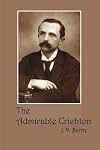
The Admirable Crichton
by J. M. Barrie
On This Page
Description
Though today he is best remembered as the creator of Peter Pan, British author J.M. Barrie was a playwright with wide-ranging interests and an irreverent sense of humor. The Admirable Crichton is a witty send-up of clashes between the social classes in turn-of-the-century England..
Tags
Recommendations


















Member Recommendations

Member Reviews
A quick return to a play last read at school around 50 years ago. A satire on the topic of class in society - the butler and the Lord trade places when shipwrecked on a Pacific Island, where the butler's abilities allow the group to thrive in the wilderness, followed by some uncomfortable times on return to England. The scenario is clearly dated, but one could imagine an updated version set in society today where rank is not inherited, but where the children of the well off are given a healthy nudge forward in life, compared to their poorer fellow cohort members.
Firstly, this would be quite difficult to produce, because there are too many characters. Second, there are too many tedious stage directions (yes especially for the acting edition). Third, the trajectory of the play is muddied. Crichton is a proper butler, á la Downton Abbey. Lord Loam, his master, has a notion that the underclass is just as worthy as the upper class, and has a tea for his servants every month to prove it. Crichton despises this charade. In the second act, however, Loam, his daughters, Crichton and a few more of the household retinue are stranded on a desert island, and because Crichton is the only one who can assure their survival, he becomes the lord of the party. When the party is rescued a few years later, the show more upstairs denizens, as they return to their previous London roles, no longer entertain ideas of "equality" and Crichton, having proven himself to himself, resigns. What is the point, here? The play certainly doesn't upend the class system--or even challenge it. Drawing room comedies are the worst! show less
M Barrie is mainly remembered today for his wonderful Peter Pan stories, but his literary talents extended far afield. He wrote this play in 1902 as a social commentary. In it, a haughty, Victorian family is presented, with their upstairs/downstairs, ironclad class prejudices. No-one is more of a supporter of this state of affairs than their butler, Crichton. But, when they are all shipwrecked on a desert island, a new social order is born - what was natural in England is unnatural on the island. And, if they should be rescued, what will happen then?
This play makes an absolutely wonderful read. Highly recommended.
This play makes an absolutely wonderful read. Highly recommended.
Philip, the protagonist in Of Human Bondage, didn't have a lot of friends when he was young, so he spent a lot of his time reading. One of the things he read was The Honorable Crichton, which I discovered was by James M. Barrie, the guy who came up with Peter Pan. Then I discovered that The Honorable Crichton is actually a play. Well, I thought I'd not read a play since college, but realized that I was actually in a couple of plays, musicals actually, after I'd settled down and begun having children. So, I must have read those "plays". Whatever, I figured that one of these days, I should read a play or two, and now I have.
So this play is about an upper-class British family that has an oh-so proper butler, Crichton (sort of like Jeeves, show more I suppose). He knows his place, which is below the titled family members, and above the footmen and scullery maids. All works like clock work in the household. But then, they go off on a sailing trip and become stranded on a desert island. Once the party finds themselves in a state of nature, the natural order changes. And so forth. Basically it's a light comedy, and not at all bad. I spent a lot of time casting the play with the various regulars involved in my town's community theater. Unfortunately, the ideal actor for the role of Crichton died a year ago. show less
So this play is about an upper-class British family that has an oh-so proper butler, Crichton (sort of like Jeeves, show more I suppose). He knows his place, which is below the titled family members, and above the footmen and scullery maids. All works like clock work in the household. But then, they go off on a sailing trip and become stranded on a desert island. Once the party finds themselves in a state of nature, the natural order changes. And so forth. Basically it's a light comedy, and not at all bad. I spent a lot of time casting the play with the various regulars involved in my town's community theater. Unfortunately, the ideal actor for the role of Crichton died a year ago. show less
It has the advantage of being a quick read.And also free.
James Barrie's literary fame has never disappeared, but it has shrunk terribly. Although of late this seems to be changing, in reality it is still grounded on one work of his. He wrote the novel and then the play PETER PAN, immortalizing Peter, Wendy, her brothers, the lost boys, Captain Cook, Smee, the pirate crew, Tiger Lily and the Indians, and Tinker Bell the fairy. The recent film about how Barrie created the play was a success last year - but it remains firmly in place dealing with the one story everyone recalls Barrie created. Ironically the term "the admirable Crichton" which was to complement the man for his achievements survived his actual achievements, so that he is but a footnote today. But the phrase now means (when it is show more used) that the person to whom it is applied is quite a clever and capable fellow in several fields.
Barrie took this to examine society and its hypocrisy. Lord Loam is an outspoken "Liberal" peer of the realm who talks a great deal about equality and democracy. But his daughter is going to be married to another aristocrat soon. But first Loam and his family are going on a short vacation to the south seas. With them is the family butler, Crichton, who is extremely capable to do all sorts of things that his betters just take for granted. He has good executive and organizational abilities as well. But he is from a class that produces butlers. Moreover he is supposedly engaged to one of the parlor-maids. The family and Crichton board a chartered yacht. Ah, but it is sunk in a collision off a deserted island, and while everyone survives the social order does not. Crichton is the only one in the group who knows how to survive. When some of the men try to put him in his place, he knocks them down firmly putting them in theirs. Soon Crichton is ruling the group and the island, and his Lordship and the others are his vassals. This includes Lady Mary who finds she and Crichton are in love. The turning point comes when their is a possibility of rescue: will Crichton send the signal or let it pass to continue his uninterrupted reign over his mental inferiors? show less
Barrie took this to examine society and its hypocrisy. Lord Loam is an outspoken "Liberal" peer of the realm who talks a great deal about equality and democracy. But his daughter is going to be married to another aristocrat soon. But first Loam and his family are going on a short vacation to the south seas. With them is the family butler, Crichton, who is extremely capable to do all sorts of things that his betters just take for granted. He has good executive and organizational abilities as well. But he is from a class that produces butlers. Moreover he is supposedly engaged to one of the parlor-maids. The family and Crichton board a chartered yacht. Ah, but it is sunk in a collision off a deserted island, and while everyone survives the social order does not. Crichton is the only one in the group who knows how to survive. When some of the men try to put him in his place, he knocks them down firmly putting them in theirs. Soon Crichton is ruling the group and the island, and his Lordship and the others are his vassals. This includes Lady Mary who finds she and Crichton are in love. The turning point comes when their is a possibility of rescue: will Crichton send the signal or let it pass to continue his uninterrupted reign over his mental inferiors? show less
Jan 13, 2026English (UK)
Members
- Recently Added By
Lists

Books Read in 2013
1,630 works; 51 members

Plays I Like
230 works; 31 members

Robinsonade Novels
55 works; 4 members

Books Set on Islands
190 works; 24 members

Novels featuring siblings
133 works; 8 members

Best 20th Century Books as of 1924
100 works; 6 members
My Play Collection
769 works; 3 members
Author Information

439+ Works 31,613 Members
James Matthew Barrie, the creator of Peter Pan, was born on May 9, 1860, in Kirriemuir, Angus, Scotland. His idyllic boyhood was shattered by his brother's death when Barrie was six. His own grief and that of his mother influenced the rest of his life. Through his work, he sought to recapture the carefree joy of his first six years. Barrie came to show more London as a freelance writer in 1885. His early fiction, Auld Licht Idylls (1888) and A Window in Thrums (1889), were inspired by his youth in Kirriemuir. After publishing a biography of his mother Margaret Ogilvy and the autobiographical novel Sentimental Tommy, about a boy living in a dream world (1896), he concentrated on writing plays. The Admirable Crichton (1902), the story of a butler who becomes king of a desert island, helped to establish Barrie's reputation as a playwright. Meanwhile, he began to relive his childhood by telling the first Peter Pan stories to the sons of his friend, Sylvia Llewellyn Davies. The play Peter Pan was first performed in 1904 and published as a novel seven years later. Its imaginative drama, featuring the eternal boy's triumph over the grownup Captain Hook, idealizes childhood and underscores adults' inability to regain it. These resonant themes made it a classic of world literature. Barrie's later work shows his increasingly cynical view of adulthood, particularly in Dear Brutus (1917). Often considered his finest play, it concerns nine men and women whose caprices destroy a miraculous opportunity to relive their lives. Barrie married the former Mary Ansell in 1894. They divorced in 1909, never having any children. Barrie died in London on June 19, 1937. (Bowker Author Biography) show less
Some Editions
Series
Belongs to Publisher Series
Project Gutenberg EBook (3490, 51566)
Work Relationships
Is contained in
Has as a commentary on the text
Common Knowledge
- Original publication date
- 1902 (performed) (performed); 1903 (printed) (printed)
- Related movies
- The Admirable Crichton (1918 | IMDb); The Admirable Crichton (1957 | IMDb); Hallmark Hall of Fame: The Admirable Crichton (1968 | IMDb)
Classifications
Statistics
- Members
- 265
- Popularity
- 121,824
- Reviews
- 7
- Rating
- (3.63)
- Languages
- English, German
- Media
- Paper, Audiobook, Ebook
- ISBNs
- 49
- ASINs
- 35