On This Page
Description
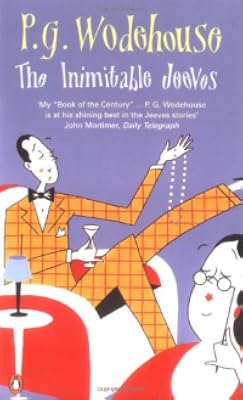
Bertie Wooster is in trouble again as his lovesick pal, Bingo Little, falls in love with every girl he lays eyes on. The real problem starts when Bingo decides to marry one of the girls and he enlists Bertie's help. Luckily for Bertie, Jeeves once again comes to the rescue! With his usual savoir-faire and panache, Jeeves unties the tangles and irons out the creases in his unflappable and inimitable way.Tags
Recommendations


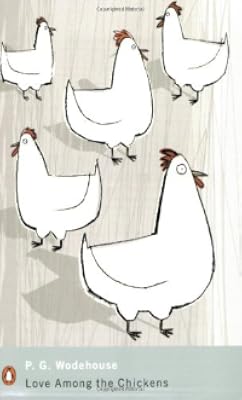
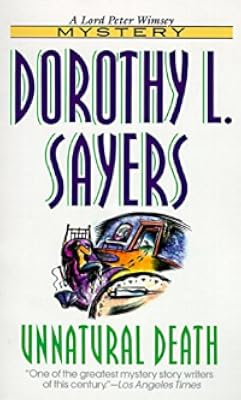
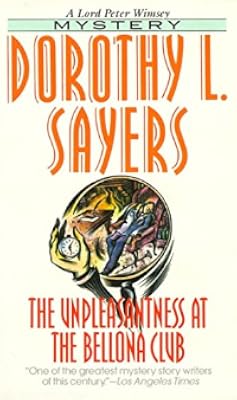

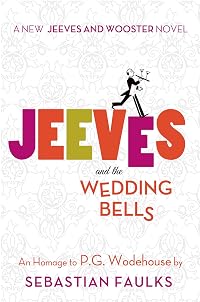
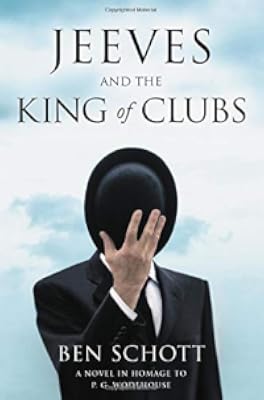
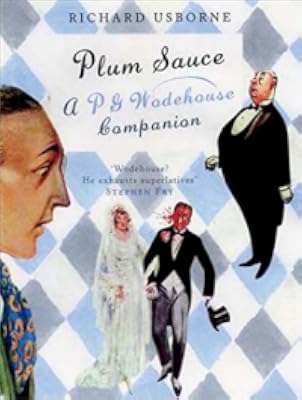

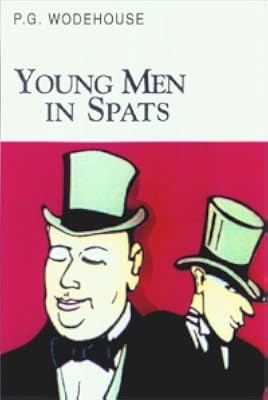
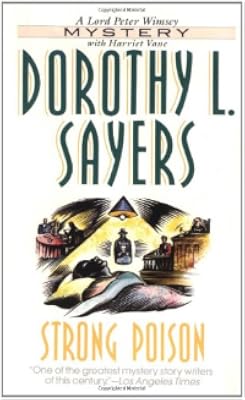











Member Recommendations
casvelyn Lord Peter Wimsey and Bertie Wooster are rather similar characters, and they both have loyal and competent valets. Peter, of course, solves mysteries, while Bertie is more of a comic figure.
43
themulhern This may seem odd, but in the hilarious scene where Charles Ryder is being taunted by his father for having run out of money, the expressions used are almost identical. Almost as if Waugh was drawing on his memories of Wodehouse books read.

aulsmith Indispensible servants
Member Reviews
I understand this was the first of the Bertie & Jeeves "novels," actually a series of short stories stitched together through the expediency of recurring characters: Bingo Little (a chum from school), a cheating bookmaker named Steggles, a couple of rascally nephews (Eustace and Claude) and – of course – the omnipresent and eternally disapproving Aunt Agatha. The resulting product hits as episodic, but none the worse for it: the format provides ample scope for Wodehouse’s dazzling wordplay and appreciation for all things farcical and preposterous.
Bingo Little has never met a woman he wasn’t prepared to fall instantly in love with, but each romance (a waitress, a socialist agitator, the niece of a parson, and a romance authoress) show more somehow ends up requiring the involvement of Bertie. Perpetually in want of money to woo aforementioned ladies, Bingo's other schemes tend to involve unconventional wagers (on such things as the lengths of sermons and the sports at the local fete), which also tend to entangle Bertie in the sort of quandaries that only Jeeves can resolve ... usually in exchange for Bertie giving up some objectionable item of clothing (a gaudy scarlet cummerbund, an ill-advised set of Eton spats) that offends Jeeves’ sensibilities. Along the way, Aunt Agatha endeavors to maneuver her nephew into marriage with a lovely girl who, alas, turns out to be a con artist; Bertie endeavors to prevent an acquaintance from a disastrous turn on the stage; and aspersions are repeatedly cast on our genial protagonist’s native intelligence, work ethic, sanity, and fashion sense. A lovely introduction to Bertie, Jeeves, and the Wodehouse canon! show less
Bingo Little has never met a woman he wasn’t prepared to fall instantly in love with, but each romance (a waitress, a socialist agitator, the niece of a parson, and a romance authoress) show more somehow ends up requiring the involvement of Bertie. Perpetually in want of money to woo aforementioned ladies, Bingo's other schemes tend to involve unconventional wagers (on such things as the lengths of sermons and the sports at the local fete), which also tend to entangle Bertie in the sort of quandaries that only Jeeves can resolve ... usually in exchange for Bertie giving up some objectionable item of clothing (a gaudy scarlet cummerbund, an ill-advised set of Eton spats) that offends Jeeves’ sensibilities. Along the way, Aunt Agatha endeavors to maneuver her nephew into marriage with a lovely girl who, alas, turns out to be a con artist; Bertie endeavors to prevent an acquaintance from a disastrous turn on the stage; and aspersions are repeatedly cast on our genial protagonist’s native intelligence, work ethic, sanity, and fashion sense. A lovely introduction to Bertie, Jeeves, and the Wodehouse canon! show less
“How does he look, Jeeves?"
"Sir?"
"What does Mr Bassington-Bassington look like?"
"It is hardly my place, sir, to criticize the facial peculiarities of your friends.”
Another fresh breeze from the wonderland of Wodehouse. The best of the Jeeves and Wooster-short story collections I have read so far.
Bertie and Jeeves again and again have to help love-struck Bingo Little out of scrapes as he continues to fall in love at first sight.
However the most funny story is not about Bingo Little, but “The Great Sermon Handicap” as Wooster and his friends tries to predict which priest will deliver the longest sermon on a given sunday. Of course there’s a lot of foul play - and Jeeves outsmarts them all. Hilarious.
“What are the chances of show more a cobra biting Harold, Jeeves?"
"Slight, I should imagine, sir. And in such an event, knowing the boy as intimately as I do, my anxiety would be entirely for the snake.”
Honoria, you see, is one of those robust, dynamic girls with the muscles of a welter-weight and a laugh like a squadron of cavalary charging over a tin bridge. show less
"Sir?"
"What does Mr Bassington-Bassington look like?"
"It is hardly my place, sir, to criticize the facial peculiarities of your friends.”
Another fresh breeze from the wonderland of Wodehouse. The best of the Jeeves and Wooster-short story collections I have read so far.
Bertie and Jeeves again and again have to help love-struck Bingo Little out of scrapes as he continues to fall in love at first sight.
However the most funny story is not about Bingo Little, but “The Great Sermon Handicap” as Wooster and his friends tries to predict which priest will deliver the longest sermon on a given sunday. Of course there’s a lot of foul play - and Jeeves outsmarts them all. Hilarious.
“What are the chances of show more a cobra biting Harold, Jeeves?"
"Slight, I should imagine, sir. And in such an event, knowing the boy as intimately as I do, my anxiety would be entirely for the snake.”
Honoria, you see, is one of those robust, dynamic girls with the muscles of a welter-weight and a laugh like a squadron of cavalary charging over a tin bridge. show less
'It is young men like you, Bertie, who make the person with the future of the race at heart despair. Cursed with too much money, you fritter away in idle selfishness a life which might have been made useful, helpful and profitable. You do nothing but waste your time on frivolous pleasures. You are simply an antisocial animal, a drone. Bertie, it is imperative that you marry.'
To listen to his Aunt Agatha, one would think that Bertie Wooster was worthless, but for the prospect of a good marriage. To his friends, however, he is a splendid chap, excellent host, and friend of the finest order. One friend in particular is always coming to Bertie for help with his seemingly endless, disastrous love affairs. Being a good sport, but rather show more obtuse, Bertie jumps in with advice for Bingo, and it is up to Bertie's valet, Jeeves, to sort things out. Jeeves is the quintessential British butler, proper to a fault, with impeccable taste, and a genius for solving problems. Bertie relies on him as his "guide, philosopher, and friend." Through a series of interrelated stories, Jeeves saves Bingo from his fickle love affairs and keeps Bertie from fashion mistakes that might jeopardize his standing as a gentleman.
This is the first book that P.G. Wodehouse wrote about Bertie and Jeeves, and it was published in 1923. I love the witty writing and the ludicrous situations. My one complaint about this book is that the situations with Bingo and his loves get a bit tedious. But interspersed are a couple of stories about Bertie's irrepressible cousins, Claude and Eugene, and even one about a marital near miss for the ultimate bachelor himself. The next time I need a good laugh, I will pick up the second Jeeves novel and settle in. Great fun. show less
To listen to his Aunt Agatha, one would think that Bertie Wooster was worthless, but for the prospect of a good marriage. To his friends, however, he is a splendid chap, excellent host, and friend of the finest order. One friend in particular is always coming to Bertie for help with his seemingly endless, disastrous love affairs. Being a good sport, but rather show more obtuse, Bertie jumps in with advice for Bingo, and it is up to Bertie's valet, Jeeves, to sort things out. Jeeves is the quintessential British butler, proper to a fault, with impeccable taste, and a genius for solving problems. Bertie relies on him as his "guide, philosopher, and friend." Through a series of interrelated stories, Jeeves saves Bingo from his fickle love affairs and keeps Bertie from fashion mistakes that might jeopardize his standing as a gentleman.
This is the first book that P.G. Wodehouse wrote about Bertie and Jeeves, and it was published in 1923. I love the witty writing and the ludicrous situations. My one complaint about this book is that the situations with Bingo and his loves get a bit tedious. But interspersed are a couple of stories about Bertie's irrepressible cousins, Claude and Eugene, and even one about a marital near miss for the ultimate bachelor himself. The next time I need a good laugh, I will pick up the second Jeeves novel and settle in. Great fun. show less
I usually read Wodehouse's Wooster and Jeeves when I'm in a reading slump. The warm, sunny prose sets me right after a chapter and then I go off and read whatever I fancy.
This time, however, I decided to finish the entire book. And I did enjoy it! It was so witty and if there's ever a man to write proper British banter, it would be Wodehouse. However, after some time, I found Bertie Wooster to be seriously irritating. I found myself rolling my eyes a lot at his general incompetence, which I know is the point, but some of the chapters were difficult to finish.
I did appreciate the writing and how neatly Jeeves managed to wrap up everyone's loose ends by the end of each chapter but I need a little break from Wooster's gentlemanly show more exploits, bets and trifles.
I think I'll save my next Wodehouse for a rainy day, when I don't know what to read. But I'll probably only read a chapter at a time. c:
3.5 stars show less
This time, however, I decided to finish the entire book. And I did enjoy it! It was so witty and if there's ever a man to write proper British banter, it would be Wodehouse. However, after some time, I found Bertie Wooster to be seriously irritating. I found myself rolling my eyes a lot at his general incompetence, which I know is the point, but some of the chapters were difficult to finish.
I did appreciate the writing and how neatly Jeeves managed to wrap up everyone's loose ends by the end of each chapter but I need a little break from Wooster's gentlemanly show more exploits, bets and trifles.
I think I'll save my next Wodehouse for a rainy day, when I don't know what to read. But I'll probably only read a chapter at a time. c:
3.5 stars show less
I love the Jeeves stories. Yes, I know that it's really the same story told over and over again in the same book and in different books and the only things that change -- occasionally -- are the character names, but still... it's funny every damn time.
And that is why, when I really need something sharp to make me chortle, I turn to Wodehouse's Jeeves. Those who do not appreciate British humor or who don't have any understanding of the old class system will probably lose patience with these books quite quickly, but for the rest of us, there is no one like Jeeves. And, of course, our ridiculous narrator, Bertie Wooster. The antics of the aforementioned individuals -- though "antic" really only describes one of them -- inform a hundred show more other novels and authors, from Evelyn Waugh to Terry Pratchett to Connie Willis. Anyone who thinks the classics are stuffy should read a good bit of Wodehouse. Recommended. show less
And that is why, when I really need something sharp to make me chortle, I turn to Wodehouse's Jeeves. Those who do not appreciate British humor or who don't have any understanding of the old class system will probably lose patience with these books quite quickly, but for the rest of us, there is no one like Jeeves. And, of course, our ridiculous narrator, Bertie Wooster. The antics of the aforementioned individuals -- though "antic" really only describes one of them -- inform a hundred show more other novels and authors, from Evelyn Waugh to Terry Pratchett to Connie Willis. Anyone who thinks the classics are stuffy should read a good bit of Wodehouse. Recommended. show less
I’ve said it before (in my 3/21/14 review of My Man Jeeves, to be specific), and I’ll say it again: the prose of P. G. Wodehouse is delísh … the bee’s knees … or if “hell-brew” (p. 67) is your choice for metaphor, good to the last drop! How he does it, how he nails it with every word and never grows stale or hackneyed remains a complete mystery to me. I can only imagine what it must’ve cost him to remain so piquantly original in his wit—not just line after line, but book after book.
In the vernacular peculiar to Wodehouse, people don’t just drop in for a spot of tea or a chat, they “toddle round” to the same end and “have a dash at it” (both on p. 11). They also “curvet” (p. 83); “scud off” (p. 84); show more “pop off” (p. 86); “whizz for” (p. 88); “pour [silently] in” (p. 89); “sally forth (p. 97); and “trickle round” (p. 210). One of Wodehouse’s characters doesn’t just look a bit down on his luck, but rather resembles “a sheep with a secret sorrow” (p. 30). When Bertie — the principal character, along with Jeeves, of almost all of Wodehouse’s books — himself runs into a little unexpected luck, the right words to express his pleasure come roiling out: “Well, then, dash it, I’m on velvet. Absolutely reclining on the good old plush!” (p. 36). And if you should happen to visit the same archly conservative Senior Liberal Club where Bingo and Bertie decide to meet one day, you may also conclude — if somewhat less colorfully — that it is indeed “the eel’s eyebrows” (p. 205).
I could easily strike up the band all day with P. G.’s metaphors and similes, but I’d prefer to leave that little surprise to you, a possible reader of The Inimitable Jeeves (just for starters). Instead, I’ll strike up that same band with the opening paragraph of Chapter 10 (“Startling Dressiness of a Lift Attendant”):
“The part which old George had written for the chump Cyril took up about two pages of typescript; bit it might have been Hamlet, the way that poor, misguided pinhead worked himself to the bone over it. I suppose, if I heard him read his lines once I did it a dozen times in the first couple of days. He seemed to think that my only feeling about the whole affair was one of enthusiastic admiration, and that he could rely on my support and sympathy. What with trying to imagine how Aunt Agatha was going to take this thing, and being woken up out of the dreamless in the small hours every other night to give my opinion of some new bit of business which Cyril had invented, I became more or less the good old shadow. And all the time Jeeves remained still pretty cold and distant about the purple socks. It’s this sort of thing that ages a chappie, don’t you know, and makes his youthful joie-de-vivre go a bit groggy in the knees” (p. 87).
If I had to venture a guess as to what it is (other than his choice of vocabulary – or ‘vocab,’ as P. G. would no doubt have it) that Wodehouse employs in the way of literary device to achieve his comedic effect, I’d have to say that it’s his peculiar combination, often in close proximity if not in precise juxtaposition, of hyperbole and typical British understatement. This combination is a source of constant titillation to whatever cluster of sympathetic ganglia rides herd from a reader’s eye, via the brain, clear down to that same reader’s funny-bone.
It takes a true master, however, to do this and not overdo it — and P. G. Wodehouse is just such a master.
And as Wodehouse would no doubt write if he were reading this claptrap that passes for a review: “‘Sorry to interrupt the feast of reason and flow of soul and so forth, but—’” (p. 88).
RRB
04/18/14
Brooklyn, New York, U.S.A. show less
In the vernacular peculiar to Wodehouse, people don’t just drop in for a spot of tea or a chat, they “toddle round” to the same end and “have a dash at it” (both on p. 11). They also “curvet” (p. 83); “scud off” (p. 84); show more “pop off” (p. 86); “whizz for” (p. 88); “pour [silently] in” (p. 89); “sally forth (p. 97); and “trickle round” (p. 210). One of Wodehouse’s characters doesn’t just look a bit down on his luck, but rather resembles “a sheep with a secret sorrow” (p. 30). When Bertie — the principal character, along with Jeeves, of almost all of Wodehouse’s books — himself runs into a little unexpected luck, the right words to express his pleasure come roiling out: “Well, then, dash it, I’m on velvet. Absolutely reclining on the good old plush!” (p. 36). And if you should happen to visit the same archly conservative Senior Liberal Club where Bingo and Bertie decide to meet one day, you may also conclude — if somewhat less colorfully — that it is indeed “the eel’s eyebrows” (p. 205).
I could easily strike up the band all day with P. G.’s metaphors and similes, but I’d prefer to leave that little surprise to you, a possible reader of The Inimitable Jeeves (just for starters). Instead, I’ll strike up that same band with the opening paragraph of Chapter 10 (“Startling Dressiness of a Lift Attendant”):
“The part which old George had written for the chump Cyril took up about two pages of typescript; bit it might have been Hamlet, the way that poor, misguided pinhead worked himself to the bone over it. I suppose, if I heard him read his lines once I did it a dozen times in the first couple of days. He seemed to think that my only feeling about the whole affair was one of enthusiastic admiration, and that he could rely on my support and sympathy. What with trying to imagine how Aunt Agatha was going to take this thing, and being woken up out of the dreamless in the small hours every other night to give my opinion of some new bit of business which Cyril had invented, I became more or less the good old shadow. And all the time Jeeves remained still pretty cold and distant about the purple socks. It’s this sort of thing that ages a chappie, don’t you know, and makes his youthful joie-de-vivre go a bit groggy in the knees” (p. 87).
If I had to venture a guess as to what it is (other than his choice of vocabulary – or ‘vocab,’ as P. G. would no doubt have it) that Wodehouse employs in the way of literary device to achieve his comedic effect, I’d have to say that it’s his peculiar combination, often in close proximity if not in precise juxtaposition, of hyperbole and typical British understatement. This combination is a source of constant titillation to whatever cluster of sympathetic ganglia rides herd from a reader’s eye, via the brain, clear down to that same reader’s funny-bone.
It takes a true master, however, to do this and not overdo it — and P. G. Wodehouse is just such a master.
And as Wodehouse would no doubt write if he were reading this claptrap that passes for a review: “‘Sorry to interrupt the feast of reason and flow of soul and so forth, but—’” (p. 88).
RRB
04/18/14
Brooklyn, New York, U.S.A. show less
Jeeves and Wooster are at it again! This time it's a trail of love affairs that Jeeves must sort out — and they aren't even all Bertie's! His friend Bingo Little (with whom he went to school) has an unfortunate aptitude for falling in love with "every second girl he sees." Usually the girl is from a lower social class, and Bingo is forever haranguing Bertie to smooth things over for him with Bingo's uncle. Of course Bingo is dependent on that uncle for an allowance. In other cases, the object of Bingo's affections is his equal or superior in rank, and Bingo enlists Bertie's help in persuading the lady that Bingo isn't such a bad type after all, and all that sort of rot.
Mixed up in all this are Bertie's and Bingo's sporting bets on show more the length of the local clergy's sermons. They also get mixed up in betting on the events of a church picnic. I don't know much about betting, but it seems to read just like betting on horses, which is hilarious when the race is the Girls' Egg-Balancing Race or some such thing. Later, bets are made on Bingo's ability to woo his current love-goddess. As a general rule, Bertie's bets are doomed to failure unless he asks Jeeves for advice.
Through it all, Jeeves and Bertie fight a quiet battle over Bertie's terrible taste in clothing. It pains prim Jeeves to have to help Bertie into some of the more outlandish colors the latter likes, and this divisive element more than once causes Bertie to try to figure things out himself rather than trust Jeeves' brilliant old bean. Hilarity ensues. The little spats are usually sorted out after a show of Jeeves' inspired diplomacy, when, in gratitude, Bertie screws himself up to make a manful sacrifice of his beloved finery — only to be informed quite politely that Jeeves has already taken the liberty of disposing of the offending article of clothing.
This book is very episodic and there are guest appearances of Bolsheviks, church plays, Tough Eggs, three cats, Bertie's dreadful cousins Claude and Eustace, Aunt Agatha (of course!), authoress Rosie M. Banks, and waitresses. As usual, Bertie's narration is hilarious. When I read this book on my lunch break, my co-workers asked me what I was laughing about. Plenty of books can make me smile, but only Wodehouse and a few others can make me laugh out loud. The over-the-top Britishness, slangy euphemisms, and ridiculous situations are just too funny. Everything ends happily (well, for the most part) and you close the book wishing for a Jeeves of your own, don't you know. Tip-top stuff! show less
Mixed up in all this are Bertie's and Bingo's sporting bets on show more the length of the local clergy's sermons. They also get mixed up in betting on the events of a church picnic. I don't know much about betting, but it seems to read just like betting on horses, which is hilarious when the race is the Girls' Egg-Balancing Race or some such thing. Later, bets are made on Bingo's ability to woo his current love-goddess. As a general rule, Bertie's bets are doomed to failure unless he asks Jeeves for advice.
Through it all, Jeeves and Bertie fight a quiet battle over Bertie's terrible taste in clothing. It pains prim Jeeves to have to help Bertie into some of the more outlandish colors the latter likes, and this divisive element more than once causes Bertie to try to figure things out himself rather than trust Jeeves' brilliant old bean. Hilarity ensues. The little spats are usually sorted out after a show of Jeeves' inspired diplomacy, when, in gratitude, Bertie screws himself up to make a manful sacrifice of his beloved finery — only to be informed quite politely that Jeeves has already taken the liberty of disposing of the offending article of clothing.
This book is very episodic and there are guest appearances of Bolsheviks, church plays, Tough Eggs, three cats, Bertie's dreadful cousins Claude and Eustace, Aunt Agatha (of course!), authoress Rosie M. Banks, and waitresses. As usual, Bertie's narration is hilarious. When I read this book on my lunch break, my co-workers asked me what I was laughing about. Plenty of books can make me smile, but only Wodehouse and a few others can make me laugh out loud. The over-the-top Britishness, slangy euphemisms, and ridiculous situations are just too funny. Everything ends happily (well, for the most part) and you close the book wishing for a Jeeves of your own, don't you know. Tip-top stuff! show less
Members
- Recently Added By
Lists

Best of British Literature
226 works; 41 members

New York Public Library's Books of the Century
120 works; 19 members

Favourite Books
1,819 works; 316 members

20th Century Literature
1,161 works; 54 members

New York Public Library's Books of the Century - All
170 works; 14 members

Classic British Humor
41 works; 8 members
In and About the 1920s
181 works; 31 members

Favorite Series
238 works; 94 members

A Novel Cure
742 works; 23 members
1920s
141 works; 6 members

Authors from England
147 works; 4 members

Books Read in 2023
5,638 works; 147 members

Books Read in 2015
3,299 works; 129 members

Books Read in 2022
5,226 works; 112 members
Books Read in 2016
4,666 works; 199 members

Books Read in 2020
4,379 works; 123 members

20 books to cheer you up now.
20 works; 2 members

Books Read in 2011
684 works; 20 members

Books Read in 2013
1,630 works; 51 members

Books Read in 2018
4,360 works; 110 members
Talk Discussions
Past Discussions
who is your favorite Wodehouse narrator? in Audiobooks (November 2011)
Author Information

657+ Works 110,781 Members
P. G. Wodehouse was born in Guildford, United Kingdom on October 15, 1881. After completing school, he spent two years as a banker at the Hong Kong and Shanghai Bank in London and then took a job as a sports reporter and columnist for the Globe newspaper. His first novel, The Pothunters, was published in 1902. He wrote over 100 novels and short show more story collections during his lifetime including A Perfect Uncle, Love Among the Chickens, The Swoop, P. Smith in the City, Meet Mr. Milliner, Doctor Sally, Quick Service, The Old Reliable, Uneasy Money, A Damsel in Distress, Jill the Reckless, The Adventures of Sally, A Pelican at Blandings, The Girl in Blue, and Aunts Aren't Gentlemen. His most famous characters, Bertie Wooster and his manservant, Jeeves, appeared in books such as Much Obliged, Jeeves. He also wrote lyrics for musical comedies and worked as screenwriter in Hollywood in the 1930s. In 1939, he bought a villa in Le Touquet on the coast of France. He remained there when World War II started in 1939. The following year, the Germans appropriated the villa, confiscated property, and arrested him. He was detained in various German camps for almost one year before being released in 1941. He went to Berlin and spoke of his experience in five radio talks to be broadcast to America and England. The talks themselves were completely innocuous, but he was charged with treason in England. He was cleared, but settled permanently in the United States. He became a citizen in 1955. He was made a Knight Commander of the Order of the British Empire in 1975. He died from a heart attack after a long illness on February 14, 1975 at the age of 93. (Bowker Author Biography) show less
Some Editions
Awards and Honors
Distinctions
Series

Belongs to Publisher Series
Work Relationships
Is contained in
The Jeeves Omnibus: No. 1 (Thank You, Jeeves ; The Code of the Woosters ; The Inimitable Jeeves) by P. G. Wodehouse
The Jeeves Omnibus: Carry on, Jeeves; The Inimitable Jeeves; Stiff Upper Lip, Jeeves by P. G. Wodehouse
Contains
Has the adaptation
Is abridged in
Common Knowledge
- Canonical title
- The Inimitable Jeeves
- Original title
- The Inimitable Jeeves
- Original publication date
- 1923
- People/Characters
- Honoria Glossop; Sir Roderick Glossop; Agatha Gregson (Aunt Agatha, later Lady Worplesdon); Reginald Jeeves; Bingo Little; Bertram Wilberforce Wooster (Bertie) (show all 10); Claude Wooster; Eustace Wooster; Rupert Steggles; Rosie M. Banks (later married name Little)
- Important places
- England, UK
- Related movies
- Jeeves and Wooster (1990 | IMDb); The World of Wooster (1965 | IMDb)
- First words
- 'Morning, Jeeves,' I said.
- Last words
- (Click to show. Warning: May contain spoilers.)'Very good, sir', said Jeeves.
- Blurbers
- Waugh, Evelyn; Mortimer, John
- Original language
- English
- Canonical DDC/MDS
- 823.912
- Disambiguation notice
- UK title "The Inimitable Jeeves", US title "Jeeves"
Classifications
Statistics
- Members
- 3,862
- Popularity
- 4,102
- Reviews
- 93
- Rating
- (4.02)
- Languages
- 14 — Czech, Danish, Dutch, English, Finnish, French, German, Hungarian, Italian, Norwegian (Bokmål), Russian, Serbian, Spanish, Swedish
- Media
- Paper, Audiobook, Ebook
- ISBNs
- 128
- UPCs
- 4
- ASINs
- 74