On This Page
Description
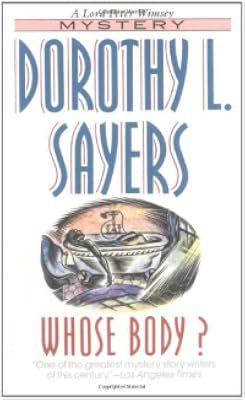
After a corpse wearing pince-nez glasses is found in a bathtub, Lord Peter Wimsey undertakes the case and investigates the deed privately. But determining whether the corpse belongs to a well-known banker or a group of mischief-making medical students is just the beginning of this tangled mystery plot. This atmospheric novel put Dorothy L. Sayers in the ranks with Agatha Christie as a mystery writer nonpareil.Tags
Recommendations









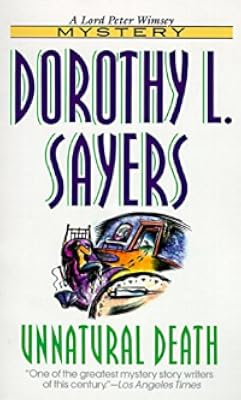
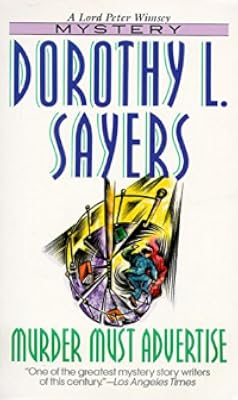

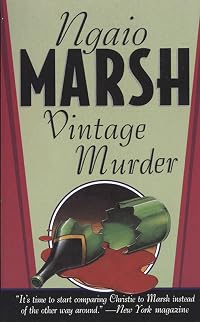
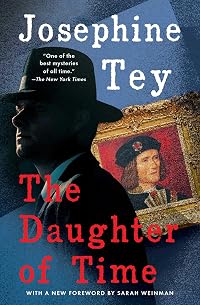















Member Recommendations
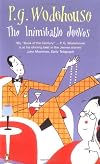
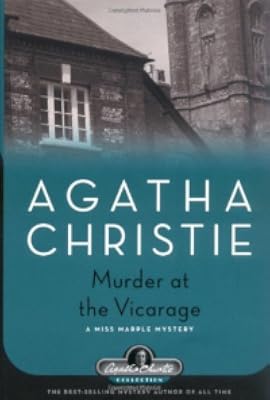
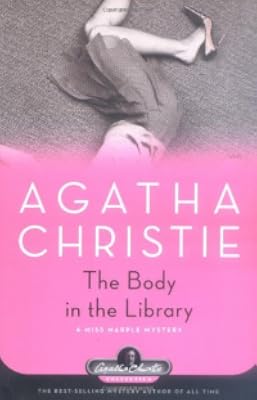
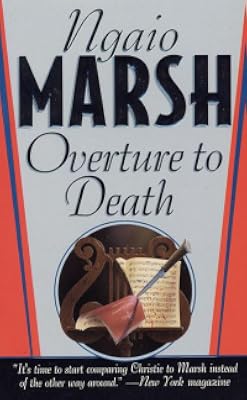
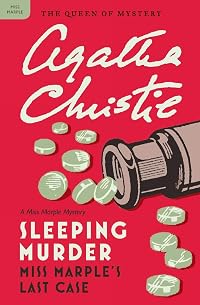
casvelyn Lord Peter Wimsey and Bertie Wooster are rather similar characters, and they both have loyal and competent valets. Peter, of course, solves mysteries, while Bertie is more of a comic figure.
30

themulhern Lord Peter is pretty obviously inspired by Bertie, as Bunter by Jeeves. This just seems impossible to deny.

majkia similar focus on shellshock.

themulhern The med school student Lord Peter interviewed could just as well have been C. S. Forester himself (before he dropped out of med school and became a novelist).
Member Reviews
On second reading (this time via audio book), I still find Wimsey an utter delight -- I had forgotten or not noticed his interest in early printed works, so that just added to the story for me -- and I found myself chuckling at his witty conversation more than once. Also, I have missed Bunter.
That said -- wow, what a product of its time. While there was nothing fully anti-semitic expressed, the constant need to comment on one of the victim's Jewishness and offer sweeping stereotypical views caused me quite a bit of dismay. I'm taking the opportunity to explore how things I didn't consciously examine in my previous reading may have tainted my worldview, and we'll see how far I get in the re-read of the series.
Also, hilariously, the show more audio version that I listened to was a legitimately published copy, but had clearly been copied off the CD, including both the change-CD now prompts and a portion obscured by disk damage. It surprises me that a publisher would release digital content in such a poorly edited state. The reader also took some getting used to -- very British, very lugubrious and languid in his speech, with a great many mouth noises as the the tale progressed. Very... authentic. show less
That said -- wow, what a product of its time. While there was nothing fully anti-semitic expressed, the constant need to comment on one of the victim's Jewishness and offer sweeping stereotypical views caused me quite a bit of dismay. I'm taking the opportunity to explore how things I didn't consciously examine in my previous reading may have tainted my worldview, and we'll see how far I get in the re-read of the series.
Also, hilariously, the show more audio version that I listened to was a legitimately published copy, but had clearly been copied off the CD, including both the change-CD now prompts and a portion obscured by disk damage. It surprises me that a publisher would release digital content in such a poorly edited state. The reader also took some getting used to -- very British, very lugubrious and languid in his speech, with a great many mouth noises as the the tale progressed. Very... authentic. show less
A delightfully clever story staring the absolutely adorable Lord Peter Wimsey as a gentleman detective who takes up cases at his fancy. Here, he works with Scotland Yard detective Charles Parker to determine (1) whose body it is that's found in poor Mr. Thripp's bath, and (2) what connection, if any, it may have to a missing financier.
The whodunit is twisty and smart, and the unravelling has that nice feeling of anticipation and dread that comes with suspecting the least-possible suspect, or so it appears on the surface.
The length of this is closer to a novella than a novel (142 pages, or 70% of the Kindle file), and its not quite as tightly written as the Wimsey short stories, but it is just as much fun. We get a bit more of Lord show more Peter's character here, too, beyond the witty book collector. Looking forward to the next! show less
The whodunit is twisty and smart, and the unravelling has that nice feeling of anticipation and dread that comes with suspecting the least-possible suspect, or so it appears on the surface.
The length of this is closer to a novella than a novel (142 pages, or 70% of the Kindle file), and its not quite as tightly written as the Wimsey short stories, but it is just as much fun. We get a bit more of Lord show more Peter's character here, too, beyond the witty book collector. Looking forward to the next! show less
What a difference a narrator makes. I first tried to read ‘Whose Body?’ back in 2017, but the audiobook was so chaotic that I abandoned it. This time, I was listening to the newest audiobook (recorded 100 years after the book was published) narrated by Robert Bathurst, who did a splendid job. He seems to be working his way through Sayers’ novels. I look forward to hearing more from him.
At the start, ‘Whose Body’ felt like Bertie Wooster and Jeeves Do Crime. Sayers was obviously having fun, and so was Wimsey, despite being confronted with a naked body of a stranger in a bath. The book and Wimsey became more serious as what at first seemed like a jolly interesting puzzle was overtaken by the realities of investigating a gruesome show more murder. I liked that Wimsey’s seriousness wasn’t triggered by gathering more pieces of the puzzle but by understanding that there were consequences for solving the puzzle on all of those touched by the deaths, including the killer.
The plot was a little elaborate, partly because of a last-minute improvisation by the murderer, although iz just about held together. What kept me engaged with the novel was getting to know Lord Peter Wimsey and the people whom he values.
I admired how Dorothy Sayers gradually made it clear that Wimsey wears his dizzy Wooster-like persona partly as a form of camouflage so that people underestimate him and partly to keep a self-protective emotional distance from the case. I think it said much about who Wimsey is that, having understood the reality of the evil he’s investigating and the consequences of solving the puzzle, he felt he could not walk away, even though continuing put his sometimes fragile mental health at risk.
I enjoyed the relationship between Wimsey and his valet, Bunter, who was also his batman during World War I. In some ways, Bunter is more competent and more worldly than Wimsey. He’s protective of Wimsey, but he also admires him. I thought the letter that Bunter sent to Wimsey, detailing the interview Bunter had with the valet of a suspect, was a splendid piece of writing. It managed what could have been a clunky piece of exposition with charm and humour. It displayed Bunter’s intellect, his ever-present awareness of class distinctions and appropriate behaviour, his ability subtly to make fun of Wimesy and his certainty that his humour will be noticed and well-recieved.
Wimsey’s friendship with Inspector Charles Parker also enhanced the novel. It was good to see an intelligent, thoughtful policeman in a book about an amateur sleuth. Parker is a cautious, serious-minded, well-educated man. He’s not Watson to Wimsey’s Holmes; he’s a partner whose opinion and expertise Wimsey values. I rather liked that Parker was a man who relaxes by reading discourses on Christian theology.
Wimsey’s mother made me smile. She’s a force of nature: indomitable but benign. She clearly has a soft spot for Wimsey and his enthusiasms. Having met Wimsey’s sober, serious, entitled older brother, a man untroubled by imagination and obsessed with reputation, I can see why.
The thing that most surprised me in the novel was that the murderer was such a chilling creation. The confession letter the murderer left for Wimsey was another piece of clever exposition that was also a character sketch. It gave an insight into the mind of a man who felt neither remorse nor shame and whose confession seems to have been written in the expectation of admiration of his cleverness rather than condemnation of his crimes. This must be one of the earliest depictions of a sociopath in crime fiction.
All in all, this was an impressive start to the series and a remarkable debut novel. show less
At the start, ‘Whose Body’ felt like Bertie Wooster and Jeeves Do Crime. Sayers was obviously having fun, and so was Wimsey, despite being confronted with a naked body of a stranger in a bath. The book and Wimsey became more serious as what at first seemed like a jolly interesting puzzle was overtaken by the realities of investigating a gruesome show more murder. I liked that Wimsey’s seriousness wasn’t triggered by gathering more pieces of the puzzle but by understanding that there were consequences for solving the puzzle on all of those touched by the deaths, including the killer.
The plot was a little elaborate, partly because of a last-minute improvisation by the murderer, although iz just about held together. What kept me engaged with the novel was getting to know Lord Peter Wimsey and the people whom he values.
I admired how Dorothy Sayers gradually made it clear that Wimsey wears his dizzy Wooster-like persona partly as a form of camouflage so that people underestimate him and partly to keep a self-protective emotional distance from the case. I think it said much about who Wimsey is that, having understood the reality of the evil he’s investigating and the consequences of solving the puzzle, he felt he could not walk away, even though continuing put his sometimes fragile mental health at risk.
I enjoyed the relationship between Wimsey and his valet, Bunter, who was also his batman during World War I. In some ways, Bunter is more competent and more worldly than Wimsey. He’s protective of Wimsey, but he also admires him. I thought the letter that Bunter sent to Wimsey, detailing the interview Bunter had with the valet of a suspect, was a splendid piece of writing. It managed what could have been a clunky piece of exposition with charm and humour. It displayed Bunter’s intellect, his ever-present awareness of class distinctions and appropriate behaviour, his ability subtly to make fun of Wimesy and his certainty that his humour will be noticed and well-recieved.
Wimsey’s friendship with Inspector Charles Parker also enhanced the novel. It was good to see an intelligent, thoughtful policeman in a book about an amateur sleuth. Parker is a cautious, serious-minded, well-educated man. He’s not Watson to Wimsey’s Holmes; he’s a partner whose opinion and expertise Wimsey values. I rather liked that Parker was a man who relaxes by reading discourses on Christian theology.
Wimsey’s mother made me smile. She’s a force of nature: indomitable but benign. She clearly has a soft spot for Wimsey and his enthusiasms. Having met Wimsey’s sober, serious, entitled older brother, a man untroubled by imagination and obsessed with reputation, I can see why.
The thing that most surprised me in the novel was that the murderer was such a chilling creation. The confession letter the murderer left for Wimsey was another piece of clever exposition that was also a character sketch. It gave an insight into the mind of a man who felt neither remorse nor shame and whose confession seems to have been written in the expectation of admiration of his cleverness rather than condemnation of his crimes. This must be one of the earliest depictions of a sociopath in crime fiction.
All in all, this was an impressive start to the series and a remarkable debut novel. show less
There’s a chance that I already read this book, but it was so long ago that it would have been on cassette tapes checked out of the public library in the late 1990s or early 2000s. At any rate, I didn’t remember the plot at all, so it’s as good as a brand-new mystery to me.
Whose Body? is the first outing for Dorothy L. Sayers’ Lord Peter Wimsey. In her early books, the younger son of an earl was in danger of becoming a parody of himself. (Indeed, Margery Allingham began her creation, Albert Campion, as an actual parody of Lord Peter; the resulting The Crime at Black Dudley is delightful, by the way.) I fear that if I had read Lord Peter Wimsey’s debut book first, I might not have come back for a second. He begins the book as show more an annoying absolute clown. A lumbering medical student describes Lord Peter as someone who “talking the most fatuous nonsense, certainly, but in a disconcerting way.” Quite right. It almost makes you pity the conceited, stubborn Inspector Sugg, Wimsey’s enemy.
By about midway through the book, he’s sobered up a bit, and Sayers’ plot is so intricate and so clever I could forgive Lord Peter his foolishness. I have decided to read the series in order (maybe skipping the long-winded Gaudy Night), so I better prepare myself for more foolishness until Sayers decides that Peter should give up his own Neverland and grow up. show less
Whose Body? is the first outing for Dorothy L. Sayers’ Lord Peter Wimsey. In her early books, the younger son of an earl was in danger of becoming a parody of himself. (Indeed, Margery Allingham began her creation, Albert Campion, as an actual parody of Lord Peter; the resulting The Crime at Black Dudley is delightful, by the way.) I fear that if I had read Lord Peter Wimsey’s debut book first, I might not have come back for a second. He begins the book as show more an annoying absolute clown. A lumbering medical student describes Lord Peter as someone who “talking the most fatuous nonsense, certainly, but in a disconcerting way.” Quite right. It almost makes you pity the conceited, stubborn Inspector Sugg, Wimsey’s enemy.
By about midway through the book, he’s sobered up a bit, and Sayers’ plot is so intricate and so clever I could forgive Lord Peter his foolishness. I have decided to read the series in order (maybe skipping the long-winded Gaudy Night), so I better prepare myself for more foolishness until Sayers decides that Peter should give up his own Neverland and grow up. show less
Sayers, Dorothy L. Whose Body? 1923. Lord Peter Wimsey No. 1. Harper, 1995.
No one better represents the golden age of British detective fiction than Dorothy Sayers. Rereading this first Lord Peter novel, I was struck by two things: its parody of Edwardian comedy (a la P. G. Wodehouse) and its response to changes in British culture wrought by the Great War. From his first words (“Oh Damn”—already non-Edwardian), Wimsey almost never shuts up. He chatters continuously, creating his flippant character, who, if you don’t look too closely, resembles Wodehouse’s Bertie Wooster. Both are moneyed gentry—Lord Peter has given up his title—with refined tastes and an almost magical butler. Although crimes appear often in Wodehouse, show more none of the crimes in Bertie’s life have any serious consequences. But Lord Peter describes dead bodies in detail and takes us into the dissection lab. Bertie almost never rubs up against history. For him, neither World War ever makes an impression. Detective stories, by contrast, seem to thrive in a postwar milieu. American hard-boiled detectives are almost always vets, of World War II, Vietnam, of, more recently, Afghanistan and the Gulf wars. Lord Peter suffers from post-traumatic stress—then called battle fatigue—and his relationship with his butler Bunter is built on their shared wartime experiences. Jeeves can bring Bertie a foolproof remedy for hangover, but Bunter holds Lord Peter’s head and soothes him through his nightmares. Lord Peter’s chattering fatuousness is all pretense, covering a little noir at the core. show less
No one better represents the golden age of British detective fiction than Dorothy Sayers. Rereading this first Lord Peter novel, I was struck by two things: its parody of Edwardian comedy (a la P. G. Wodehouse) and its response to changes in British culture wrought by the Great War. From his first words (“Oh Damn”—already non-Edwardian), Wimsey almost never shuts up. He chatters continuously, creating his flippant character, who, if you don’t look too closely, resembles Wodehouse’s Bertie Wooster. Both are moneyed gentry—Lord Peter has given up his title—with refined tastes and an almost magical butler. Although crimes appear often in Wodehouse, show more none of the crimes in Bertie’s life have any serious consequences. But Lord Peter describes dead bodies in detail and takes us into the dissection lab. Bertie almost never rubs up against history. For him, neither World War ever makes an impression. Detective stories, by contrast, seem to thrive in a postwar milieu. American hard-boiled detectives are almost always vets, of World War II, Vietnam, of, more recently, Afghanistan and the Gulf wars. Lord Peter suffers from post-traumatic stress—then called battle fatigue—and his relationship with his butler Bunter is built on their shared wartime experiences. Jeeves can bring Bertie a foolproof remedy for hangover, but Bunter holds Lord Peter’s head and soothes him through his nightmares. Lord Peter’s chattering fatuousness is all pretense, covering a little noir at the core. show less
Rereading Sayers’ first Wimsey book, Whose Body? reminding this reviewer why it was they had so loved this genre of story. Sayers’ writing style is unobtrusively good. One is seldom consciously aware of the fact that the author has managed to draw deep and nuanced word portraits in a few sentences. Words are used carefully yet the author seldom makes a point of her erudition save for her choice not to translate the portions of a conversation that take place in French.
Although the method by which the murderer carried out his plans strains credulity Sayers does not resort to the all too common plot device of a massive international criminal conspiracy that one encounters among so many of English mystery writers of this time. This show more murderer’s motivations are almost mundane in comparison to those found in many of the author’s contemporaries.
A number of things stand out to this reader.
First, there is a base level of anti-Semitism in the Britain of the 1920s that may take a modern reader aback. People are described as “Hebrew” as if that was an identifier no different from “blond.” And many of the characters in this book are clearly prejudiced against Jews. Yet Sir Reuben Levy, the “self-made” and wealthy Jew around whose disappearance much of the book revolves, is not characterized as miserly or money-grubbing. Yes, he holds to the personal economies that helped him become a very wealthy man but he is also shown to be extremely generous to his wife and daughter. His marriage is portrayed as happy and sound and his wife, who braved criticism when she chose to marry a Jew is shown as having never had a reason to regret that decision.
Second, near the end of this book there is a short and stunningly effective depiction of PTSD. It was at that time known as shell-shock but there can be no question that that is what Lord Peter is victim of. This PTSD functions as the reason why he sometimes withdraws in apparent fatuity. As a man who knows that deep emotions may trigger flashbacks he uses a variety of techniques to dampen down those emotions at moments of stress. This grounds Wimsey’s behaviour, and the acceptance of that behaviour on the part of those around him, not in his “class” or the fashion of his social circle but in their knowledge that he has, in a sense, earned the right to sometimes withdraw both intellectually and emotionally.
Third, Sayers treats her non-aristocratic characters as intelligent and rational people. One understands why Lord Peter would find Mr. Parker an enjoyable person to dine with. Parker himself is well-educated and is shown to read books that are as intellectually challenging as those that interest Wimsey. Indeed, when he and Lord Peter discuss the morality and rationale of detective work and law on a serious level it is often Parker who seems to make the better argument.
Bunter, is another character who, written by a lesser author, could easily fall into caricature rather than characterization. Bunter does not drop letters from his speech and fall back on cant and argot. He, it is pointed out in the text, has been educated well. And the last line in the “shell-shock” scene makes it clear that what ties Bunter to Wimsey is not loyalty based on a class relationship but the loyalty that is forged by shared experiences in combat and physical deprivation.
Whose Body? is not the “perfect” mystery novel the plot is over complicated and the denouement under impressive. This is, however, an impressive first outing for a detective, and a cast of characters, whose motivations and psychologies are better drawn in a scant few hundred pages than other authors can achieve after several books. show less
Although the method by which the murderer carried out his plans strains credulity Sayers does not resort to the all too common plot device of a massive international criminal conspiracy that one encounters among so many of English mystery writers of this time. This show more murderer’s motivations are almost mundane in comparison to those found in many of the author’s contemporaries.
A number of things stand out to this reader.
First, there is a base level of anti-Semitism in the Britain of the 1920s that may take a modern reader aback. People are described as “Hebrew” as if that was an identifier no different from “blond.” And many of the characters in this book are clearly prejudiced against Jews. Yet Sir Reuben Levy, the “self-made” and wealthy Jew around whose disappearance much of the book revolves, is not characterized as miserly or money-grubbing. Yes, he holds to the personal economies that helped him become a very wealthy man but he is also shown to be extremely generous to his wife and daughter. His marriage is portrayed as happy and sound and his wife, who braved criticism when she chose to marry a Jew is shown as having never had a reason to regret that decision.
Second, near the end of this book there is a short and stunningly effective depiction of PTSD. It was at that time known as shell-shock but there can be no question that that is what Lord Peter is victim of. This PTSD functions as the reason why he sometimes withdraws in apparent fatuity. As a man who knows that deep emotions may trigger flashbacks he uses a variety of techniques to dampen down those emotions at moments of stress. This grounds Wimsey’s behaviour, and the acceptance of that behaviour on the part of those around him, not in his “class” or the fashion of his social circle but in their knowledge that he has, in a sense, earned the right to sometimes withdraw both intellectually and emotionally.
Third, Sayers treats her non-aristocratic characters as intelligent and rational people. One understands why Lord Peter would find Mr. Parker an enjoyable person to dine with. Parker himself is well-educated and is shown to read books that are as intellectually challenging as those that interest Wimsey. Indeed, when he and Lord Peter discuss the morality and rationale of detective work and law on a serious level it is often Parker who seems to make the better argument.
Bunter, is another character who, written by a lesser author, could easily fall into caricature rather than characterization. Bunter does not drop letters from his speech and fall back on cant and argot. He, it is pointed out in the text, has been educated well. And the last line in the “shell-shock” scene makes it clear that what ties Bunter to Wimsey is not loyalty based on a class relationship but the loyalty that is forged by shared experiences in combat and physical deprivation.
Whose Body? is not the “perfect” mystery novel the plot is over complicated and the denouement under impressive. This is, however, an impressive first outing for a detective, and a cast of characters, whose motivations and psychologies are better drawn in a scant few hundred pages than other authors can achieve after several books. show less
The "who" of this "done it" was obvious fairly early on, but this was a thoroughly enjoyable introduction to one of the great British detectives of literature. My wife across the bed knew I had settled my head on the pillow to begin a murder mystery and was puzzled when I soon began laughing my head off. I'm looking forward to reading more Wimsical books.
Members
- Recently Added By
Lists

The Guardian's 1000 Novels Everyone Must Read
1,005 works; 551 members

Favorite Series
238 works; 94 members

Crime and Mysteries to Read
746 works; 31 members

Survey of Mysteries and Crime Fiction
96 works; 17 members

British Mystery
469 works; 14 members

Best Books Set in London
157 works; 42 members

Top Five Books of 2013
1,562 works; 721 members

Murder Mysteries
57 works; 11 members

Haycraft Queen Cornerstones
181 works; 3 members

Books About Murder
313 works; 7 members

Female Author
1,234 works; 67 members
Detective Stories
343 works; 5 members

the L2go shelf
15 works; 2 members

Top Five Books of 2021
604 works; 181 members

Books Read in 2020
4,379 works; 123 members

Books Read in 2022
5,226 works; 115 members

Books Read in 2024
4,727 works; 128 members

Ambleside Books
459 works; 18 members

Books Read in 2021
5,361 works; 114 members

Books With Body Parts in the Title
153 works; 9 members

Books Set in London
49 works; 3 members

Books Read in 2019
4,052 works; 110 members
Books Read in 2018
4,360 works; 110 members

First Novels
373 works; 17 members

Books on my Kindle
162 works; 3 members

Books Read in 2017
4,249 works; 130 members

KayStJ's to-read list
1,616 works; 11 members

In and About the 1920s
181 works; 31 members

Books Read in 2014
2,344 works; 86 members

2024-25 reading
36 works; 1 member
Author Information

281+ Works 70,961 Members
Dorothy Sayers's impressive reputation as a contemporary master of the classic detective story is eclipsed only by Agatha Christie's. Sayers was born in Oxford and attended Somerville College, where she received a B.A. in 1915 and an M.A. in 1920. During that period, Sayers worked as an instructor of modern languages at Hull High School for Girls show more in Yorkshire and as a reader for a publisher in Oxford. Her early literary work was in poetry; she published several volumes and served as an editor for the journal Oxford Poetry from 1917 to 1919. Sayers also worked as a copywriter for a major advertising firm in London. She was president of the Modern Language Association from 1939 to 1945 and of the Detection Club in the 1950s. Around 1920 Sayers developed the idea for her detective hero Lord Peter Wimsey, and she soon published her first mystery, Whose Body? (1923), in which Lord Peter is introduced. For the next dozen or so years, Sayers wrote prolifically about Wimsey, creating in the process what many critics of the genre consider to be the finest detective novels in the English language. Perhaps her most famous Wimsey mystery was The Nine Tailors (1934). Although Sayers essentially followed the classic form in her detective fiction---a formula in which the plot assumes a greater importance than do the characters---Sayers maintained that a detective hero's greatness depended on how effectively the character was portrayed. All but one of Sayers's mysteries feature Lord Peter Wimsey. By the late 1930s, Sayers had apparently tired of writing detective fiction. She stated in 1947 that she would write no more mysteries, that she wrote detective fiction only when she was young and in need of money. Thus saying, Sayers turned her attention to her early loves, medieval and religious literature, spending her remaining years lecturing on and translating Dante (see Vol. 2). (Bowker Author Biography) show less
Some Editions
Awards and Honors
Series

Belongs to Publisher Series
Work Relationships
Is contained in
The Lord Peter Wimsey Collection: Books 1-5: Whose Body?; Clouds of Witness; Unnatural Death; Lord Peter Views the Body; The Unpleasantness at the Bellona Club by Dorothy L. Sayers
Whose Body? | Unnatural Death | The Unpleasantness at the Bellona Club | Strong Poison | Have His Carcase | Busman's Honeymoon | In the Teeth of Evidence by Dorothy L. Sayers
Has the adaptation
Is abridged in
Is expanded in
Common Knowledge
- Canonical title
- Whose Body?
- Original title
- Whose Body?
- Alternate titles*
- Ein Toter zu wenig
- Original publication date
- 1923-05
- People/Characters
- Peter Death Bredon Wimsey (Lord Peter Wimsey); Mervyn Bunter; Honoria Lucasta Delagardie (Dowager Duchess of Denver); Sir Julian Freke; Christine Ford Levy (Lady Levy); Charles Parker (Inspector) (show all 10); Inspector Sugg; Freddy Arbuthnot; Mr. Thipps; Sir Reuben Levy
- Important places
- 110A Piccadilly, London, England, UK; London, England, UK
- Dedication
- To M. J. Dear Jim: This book is your fault. If it had not been for your brutal insistence, Lord Peter would never have staggered through to the end of the enquiry. Pray consider that he thanks you with his accustomed suavi... (show all)ty. Yours ever, D. L. S.
- First words
- 'Oh damn!' said Lord Peter Wimsey at Piccadilly Circus.
- Quotations
- "Look here, Peter," said the other [Parker] with some earnestness, "Suppose you get this playing-fields-of-Eton complex out of your system once and for all. There doesn't seem to be much doubt that something unpleasant has ha... (show all)ppened to Sir Reuben Levy. Call it murder, to strengthen the argument. If Sir Reuben has been murdered, is it a game? and is it fair to treat it as a game?"
"That is what I'm ashamed of, really," said Lord Peter. "It IS a game to me, to begin with, and I go on cheerfully, and then I suddenly see that somebody is going to be hurt, and I want to get out of it." (Chapter VII, Leipzig: The Albatross 1938, p. 176)
"There's nothing you can't prove if your outlook is sufficiently limited."
"But when you can really investigate, Mr. Parker, and break up the dead, or for preference the living body with the scalpel, you always find the footmarks---the little train of ruin or disorder left by madness or disease or d... (show all)rink or any other similar pest. But the difficulty is to trace them back, merely by observing the surface symptoms---the hysteria, crime, religion, fear, shyness, conscience, or whatever it may be; just as you observe a theft or a murder and look for the footsteps of the criminal, so I observe a fit of hysterics or an outburst of piety and hunt for the little mechanical irritation which has produced it."
"All these men work with a bias in their minds, one way or another," he said; "they find what they are looking for."
"Yes, yes, I know," said the detective, "but that's because you're thinking about your attitude. You want to be consistent, you want to look pretty, you want to swagger debonairly through a comedy of puppets or else to stalk ... (show all)magnificently through a tragedy of human sorrows and things. But that's childish. If you've any duty to society in the way of finding out the truth about murders, you must do it in any attitude that comes handy. You want to be elegant and detached? That's all right, if you find the truth out that way, but it hasn't any value in itself, you know. You want to look dignified and consistent---what's that got to do with it? You want to hunt down a murderer for the sport of the thing and then shake hands with him and say, 'Well played---hard luck---you shall have your revenge tomorrow!' Well, you can't do it like that. Life's not a football match. You want to be a sportsman. You can't be a sportsman. You're a responsible person."
"I don't think you ought to read so much theology," said Lord Peter. "It has a brutalizing influence."
Mind and matter were one thing, that was the theme of the physiologist. Matter could erupt, as it were, into ideas. You could carve passions in the brain with a knife. You could get rid of imagination with drugs and cure an o... (show all)utworn convention like a disease. "The knowledge of good and evil is an observed phenomenon, attendant upon a certain condition of the brain cells, which is removable." That was one phrase; and again:
"Conscience in man may, in fact, be compared to the sting of a hive-bee, which, so far from conducing to the welfare of its possessor, cannot function, even in a single instance, without occasioning its death. The survival-value in each case is thus purely social; and if humanity ever passes from its present phase of social development into that of a higher individualism, as some of our philosophers have ventured to speculate, we may suppose that this interesting mental phenomenon may gradually cease to appear; just as the nerves and muscles which once controlled the movements of our ears and scalps have, in all save a few backward individuals, become atrophied and of interest only to the physiologist.
He remembered quite suddenly, how, years ago, he had stood before the breakfast table at Denver Castle---a small, peaky boy in blue knickers, with a thunderously beating heart. The family had not come down; there was a great ... (show all)silver urn with a spirit lamp under it, and an elaborate coffee-pot boiling in a glass dome. He had twitched the corner of the tablecloth---twitched it harder, and the urn moved ponderously forward and all the teaspoons rattled. He seized the tablecloth in a firm grip and pulled his hardest---he could feel now the delicate and awful thrill as the urn and the coffee machine and the whole of a Sevres breakfast service had crashed down in one stupendous ruin---he remembered the horrified face of the butler, and the screams of a lady guest.
Lord Peter is not without authority for his opinion: "With respect to the alleged motive, it is of great importance to see whether there was a motive for committing such a crime, or whether there was not, or whether there is ... (show all)an improbability of its having been committed so strong as not to be overpowered by positive evidence. But if there be any motive that can be assigned, I am bound to tell you that the inadequacy of that motive is of little importance. We know, from the experience of criminal courts, that atrocious crimes of this sort have been committed from very slight motives; not merely from malice and revenge, but to gain a small pecuniary advantage, and to drive off for a time pressing difficulties." --- L. C. J. Campbell, summing up in Reg. v. Palmer, Shorthand Report, p.308 C. C. C. May, 1856, Sess. Pa. 5. (Italics mine. D. L. S.)
Lord Peter settled down to a perusal of his Dante. It afforded him no solace. Lord Peter was hampered in his career as a private detective by a public-school education. Despite Parker's admonitions, he was not always able to ... (show all)discount it. His mind had been warped in its young growth by "Raffles" and "Sherlock Holmes" or the sentiments for which they stand. He belonged to a family which had never shot a fox.
"I am an amateur", said Lord Peter.
The really essential factors of success in any undertaking are money and opportunity, and as a rule, the man who can make the first can make the second. - Last words
- (Click to show. Warning: May contain spoilers.)"On no account," said Lord Peter, "would I deprive myself of the pleasure of Mrs. Thipps's company. Bunter!"
"My lord?"
"The Napoleon brandy." - Original language*
- English
- Canonical DDC/MDS
- 823.912
- Canonical LCC
- PR6037.A95
*Some information comes from Common Knowledge in other languages. Click "Edit" for more information.
Classifications
Statistics
- Members
- 5,572
- Popularity
- 2,395
- Reviews
- 222
- Rating
- (3.64)
- Languages
- 17 — Czech, Danish, Dutch, English, Estonian, Finnish, French, German, Hungarian, Italian, Japanese, Norwegian, Portuguese, Russian, Spanish, Swedish, Turkish
- Media
- Paper, Audiobook, Ebook
- ISBNs
- 187
- UPCs
- 3
- ASINs
- 95